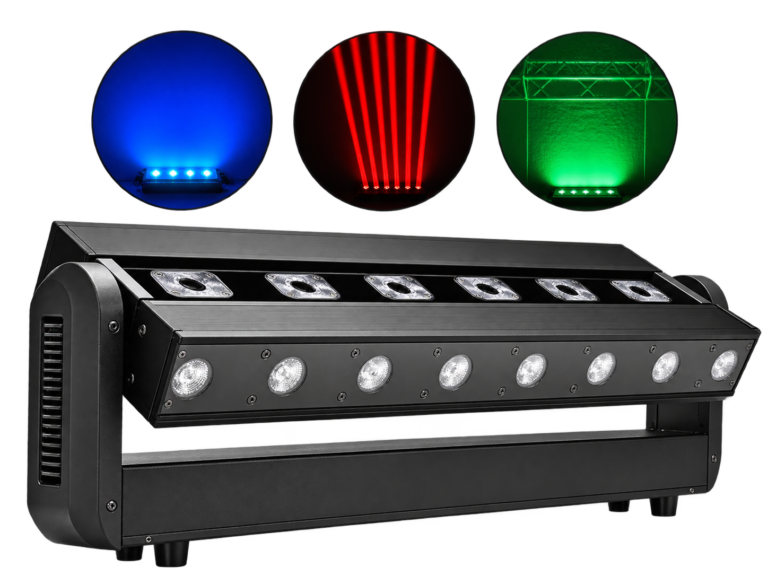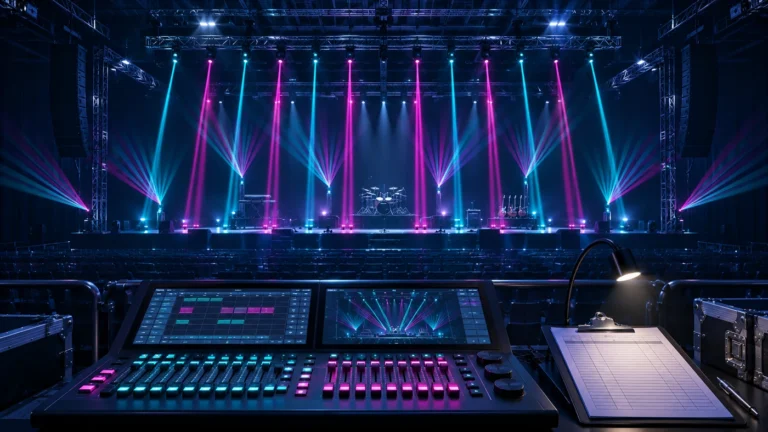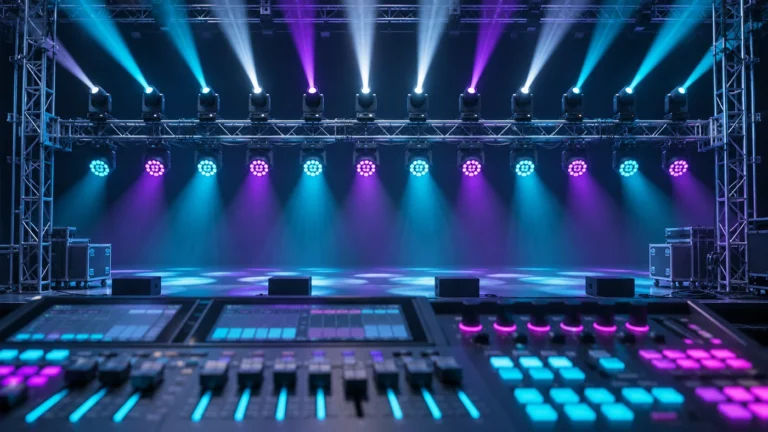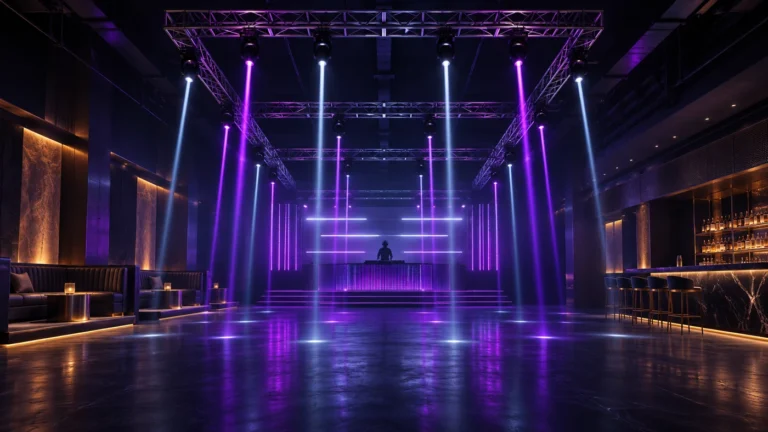
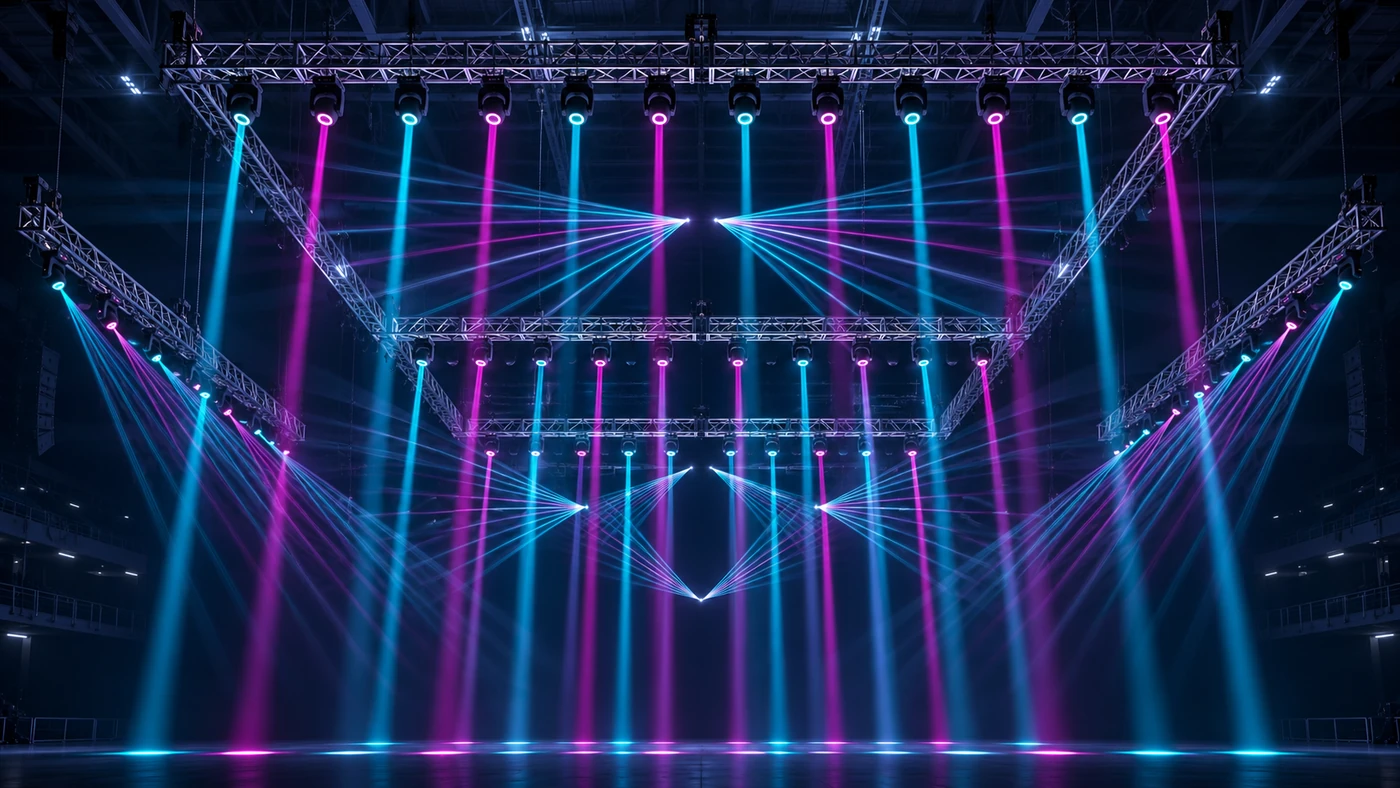
What is a beam light? In stage and live-event production, a beam light (most commonly a moving head beam light) is a high-intensity fixture engineered with an ultra-narrow optical beam angle—typically 1.5° to 4°—to project razor-sharp, nearly parallel shafts of light through mid-air haze across concerts, nightclubs, festivals, and broadcast stages.
Unlike a wash light designed to paint wide color across performers or a spot fixture built to focus sharp graphic gobos onto a surface, a stage beam light treats the air itself as its canvas. When paired with bidirectional rotating prisms, fast pan-tilt motors, and light atmospheric haze, matched banks of beam lights turn empty ceiling space into moving architectural cages, aerial fans, and high-impact concert drops.
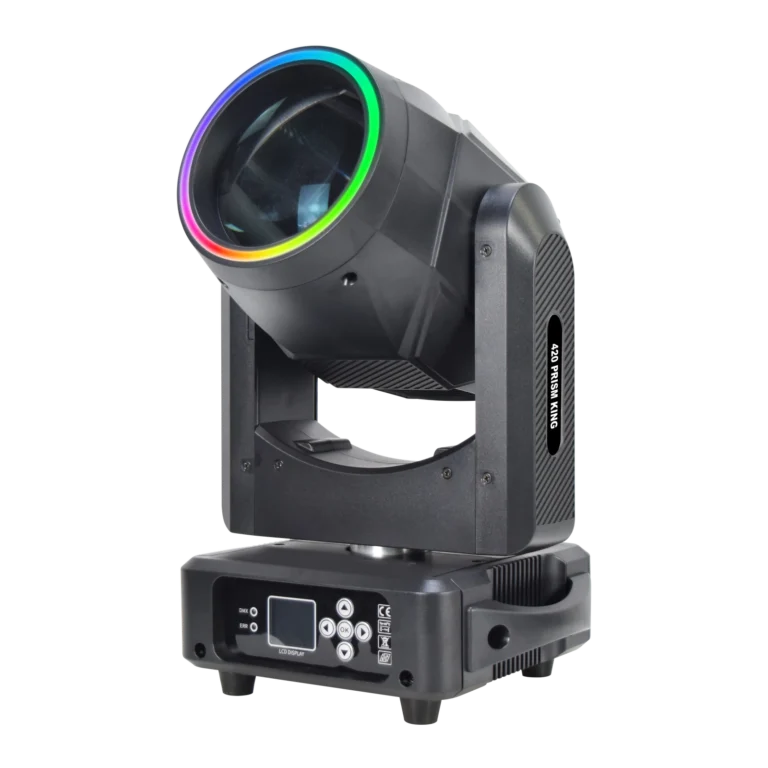
This engineering guide explains what a beam light is, what beam lights are used for, how a 2° optical train stays tight across 15–30 meters, how to calculate beam spread and rated electrical load before buying, and how to pair a real multi-prism benchmark fixture—the 420 Prism King Beam Moving Head Light—with wash, strobe, and haze layers.
1. How a Stage Beam Light Works (Inside the 2° Optical Train)
Direct answer: A beam light achieves its iconic solid-pillar look by combining a compact high-luminance light source (usually a short-arc discharge lamp or high-density LED engine) with an oversized front collimating lens. Because the source sits precisely at the focal point of the reflector and front optic, outgoing rays exit almost parallel instead of flaring wide.
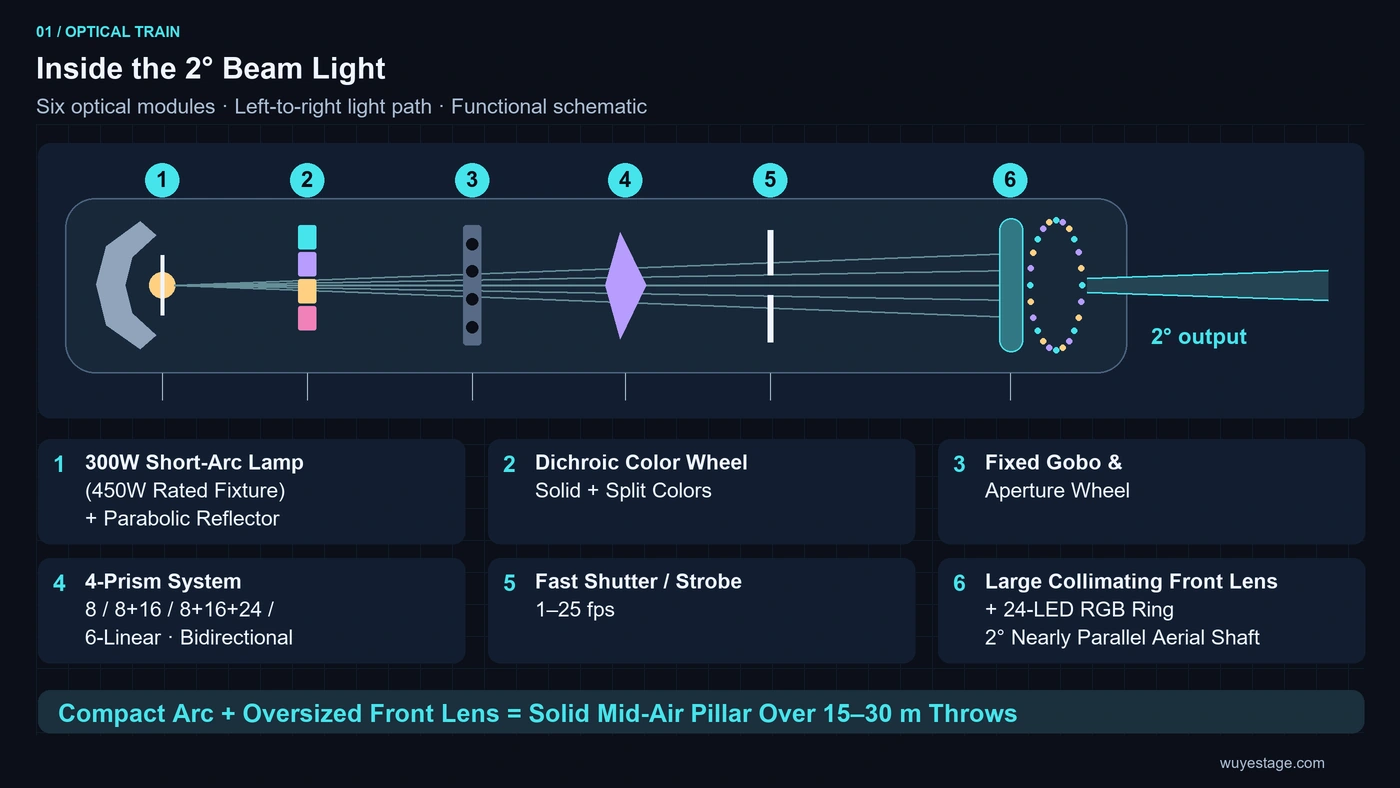
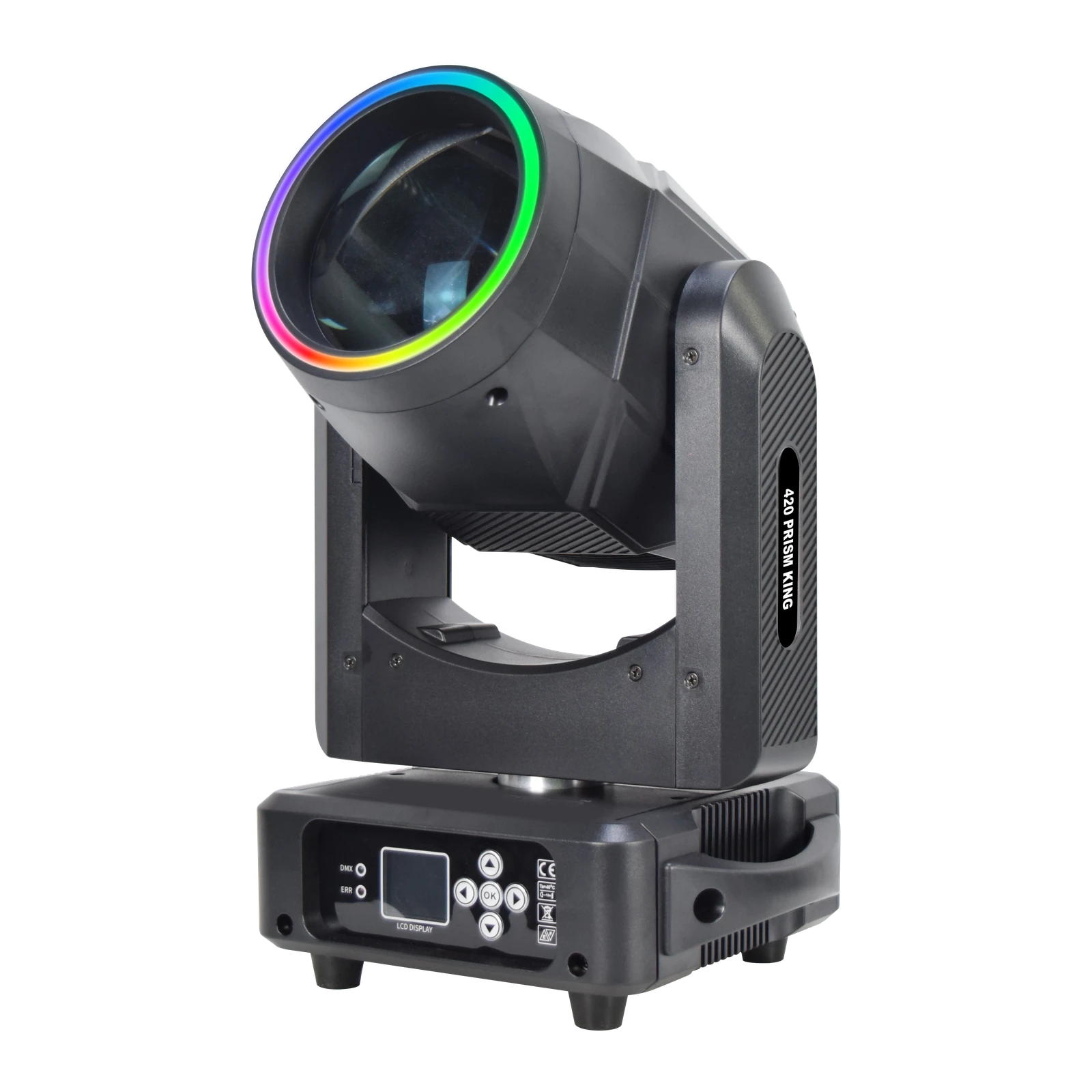
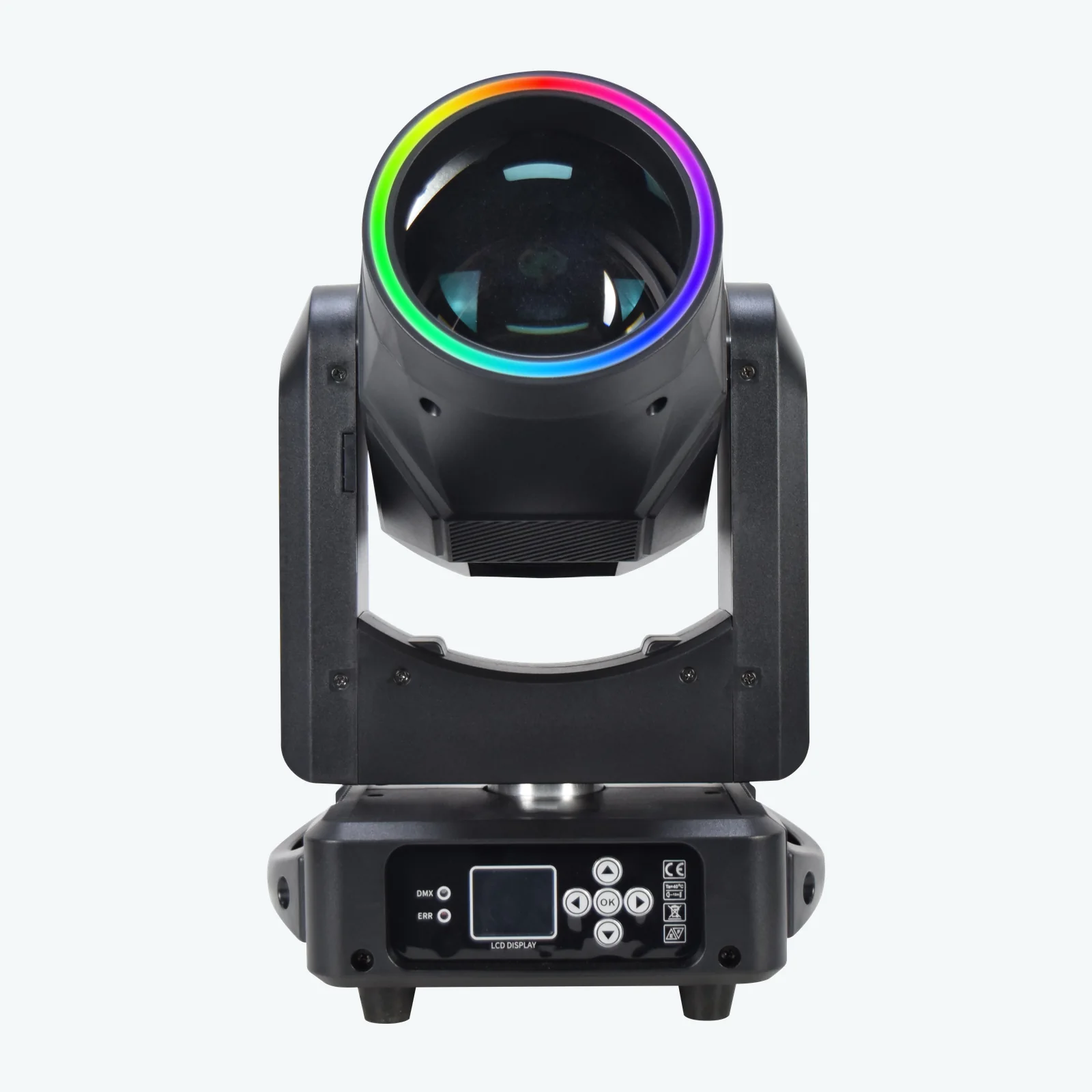
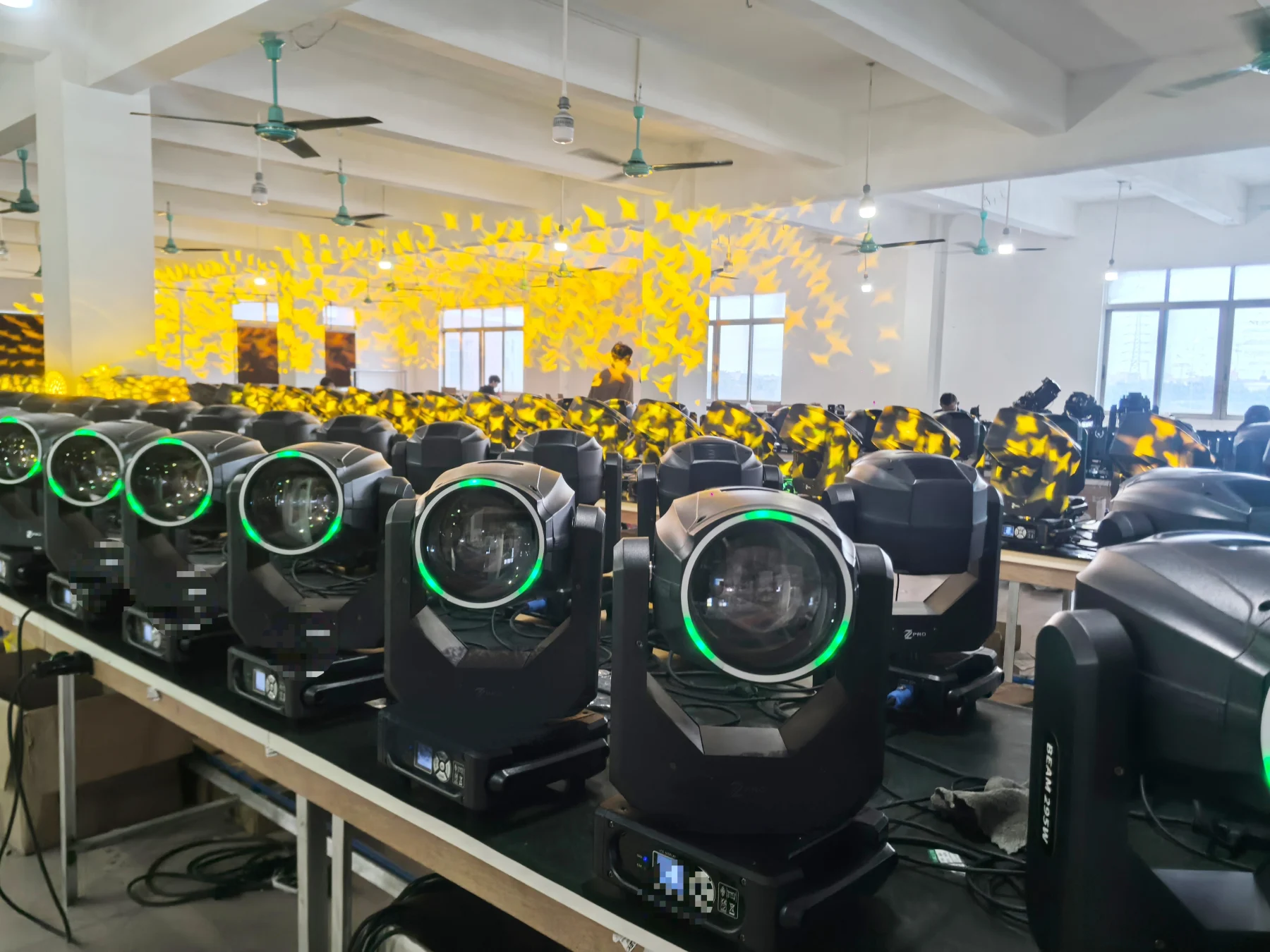
Inside a modern moving head beam light such as the 420 Prism King Beam Moving Head Light, six coordinated subsystems shape every cue:
- High-Intensity Short-Arc Source: A
300Wdischarge lamp (drawing450Wtotal rated fixture power) produces an ultra-compact arc that collimates far more tightly than a wide multi-chip LED array, maintaining high center-beam punch over long indoor and covered-stage throws. - Color Wheel & Split Colors: A mechanical dichroic color wheel delivers saturated solid colors, fast rainbow scrolls, and half-color splits without sacrificing core beam intensity.
- Fixed Gobo & Beam-Shaping Wheel: Micro-apertures and crisp fixed gobos narrow the shaft further or slice it into tighter textured air rays.
- Multi-Prism Optical System: Motorized glass prisms swing into the beam path to multiply one
2°shaft into 6, 8, 16, or 24+ rotating aerial beams—turning a single fixture into a wide sky-filling fan on demand. - Fast Strobe / Mechanical Shutter: Rapid 1–25 flashes-per-second shutter cuts synchronize cleanly with kick drums and EDM drops.
- RGB Front Aperture Ring: Modern club and touring beam lights wrap the main lens in an auxiliary ring (such as
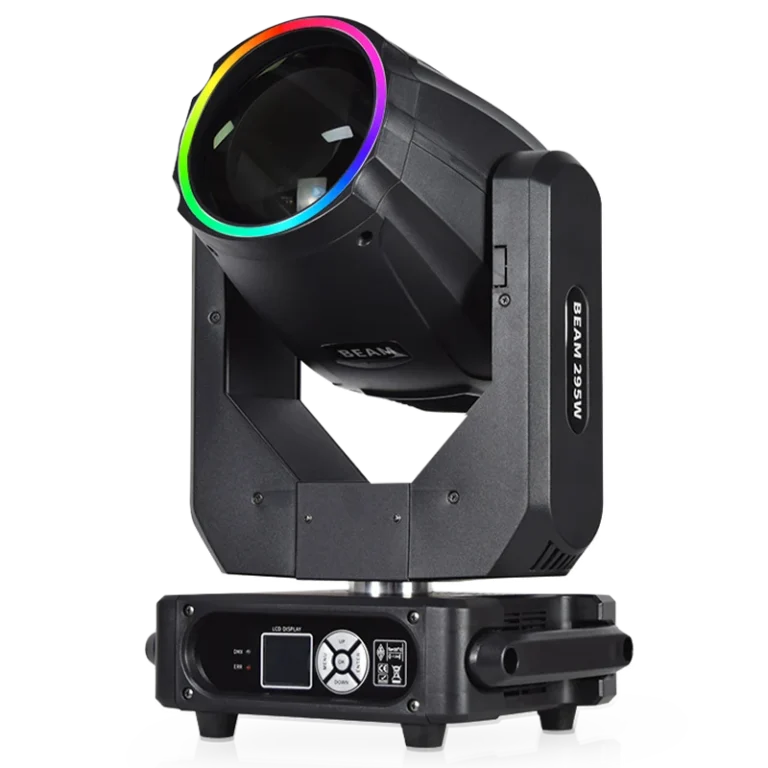
24 × 0.5WRGB 3-in-1 LEDs on the 420 Prism King or27 × 5050RGB LEDs on the Beam 295 Moving Head Light), giving cameras and crowds glowing lens-face color even during low-intensity warm-up cues.
2. Beam Light vs. Spot vs. Wash vs. Laser: What Is Each Fixture Actually For?
Understanding what a beam light is starts with separating it from wider fixtures. Most first-time buyers waste budget by purchasing narrow beam lights when they actually needed soft front face wash—or buying wash fixtures and wondering why they cannot create crisp aerial shafts above a dance floor:
| Fixture Type | Typical Beam Angle | Primary Visual Job | Needs Haze? | What It Cannot Replace |
|---|---|---|---|---|
| Beam Moving Head (e.g., 420 Prism King) | 1.5° – 4° (2° on 420) | Solid mid-air shafts, multi-prism aerial canopies, fast drop sweeps | Yes (thin continuous haze makes shafts pop) | Wide even performer wash or soft theatrical face key light |
| Spot / Profile Moving Head (e.g., 200W LED Spot) | 10° – 30° | Crisp projected gobo patterns on floors/walls, framed performer highlights | Optional | Razor-thin long-throw parallel shafts across 20 m+ rooms |
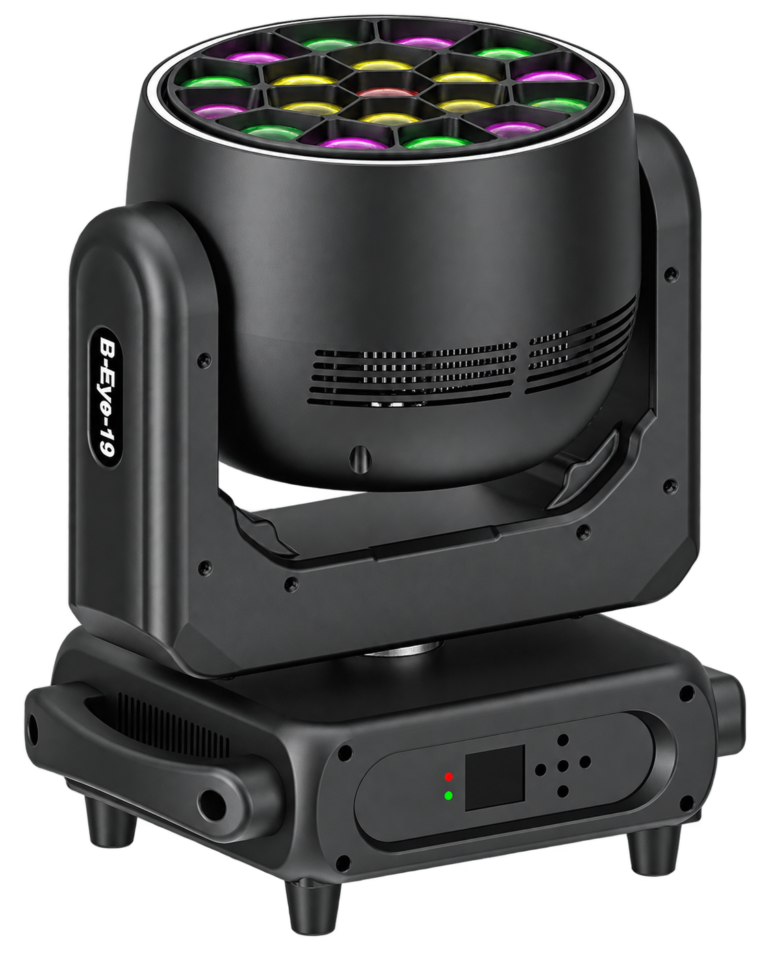
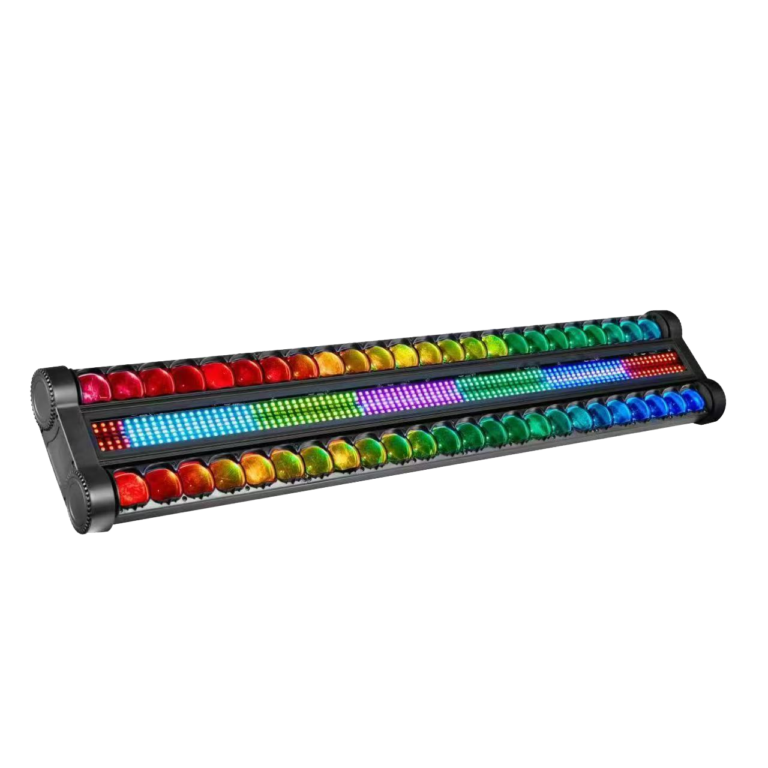
| Wash / Rotating Bee-Eye (e.g., 19×40W Bee Eye) | 4° – 60° zoom | Smooth broad stage color fill, wide dance-floor wash, lens eye-candy | Optional (helpful for vortex) | Tight 2° lamp-driven long-throw punch |
| Stage Laser Light (e.g., 6-Head Red Laser Bar) | < 0.2° ultra-thin | Razor-sharp geometric planes, tunnels, and graphic sheets above crowd height | Yes | Multi-color thick beams, gobos, or audience-level sweeps (strict laser safety rules apply) |
For deeper side-by-side testing before finalizing a mixed fleet, read our dedicated comparisons on beam vs. spot vs. wash moving heads and beam light vs. laser light buying checks.
3. Interactive 2° Beam Spread, Throw & 420 Rig Sizing Calculator
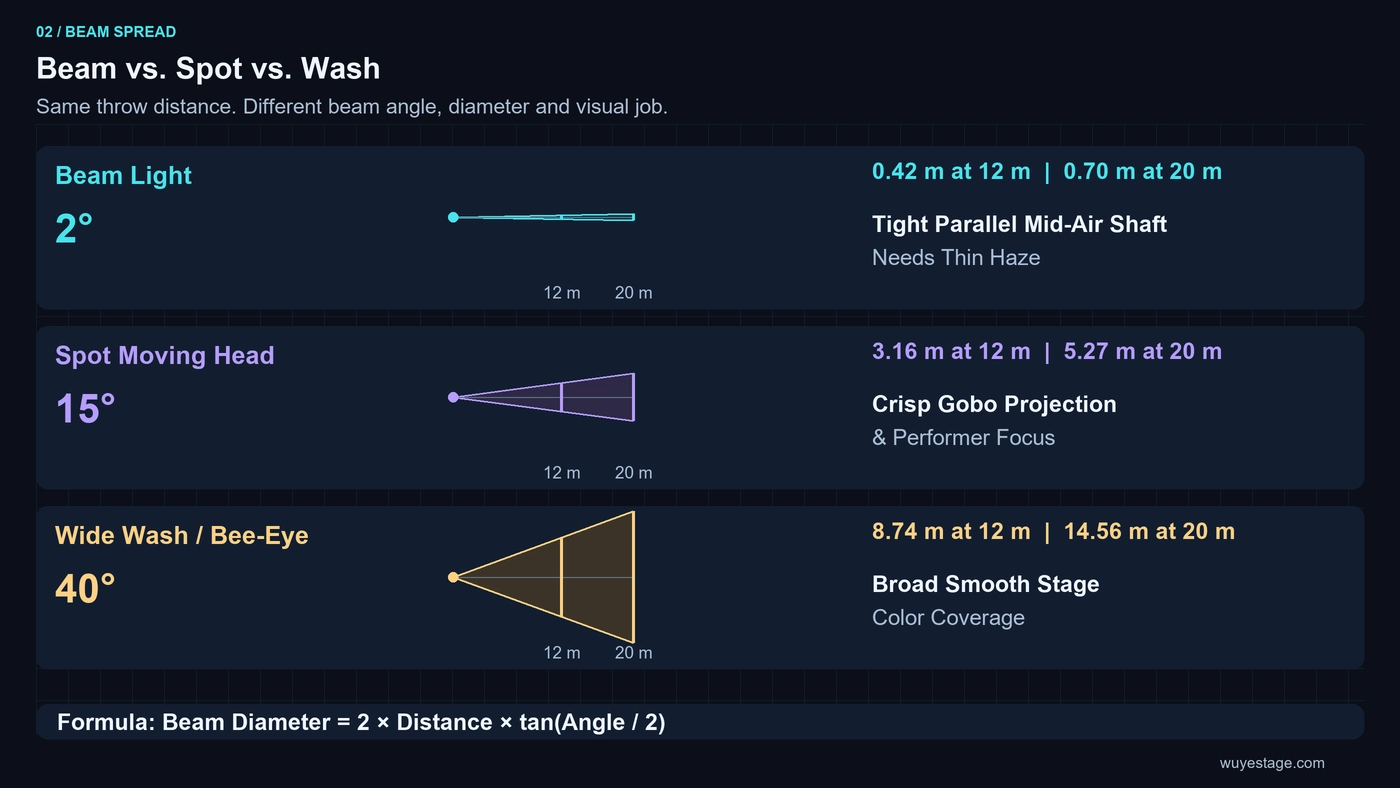
Why does a 2° beam light look dramatically different from a 15° spot or 40° wash at 15 meters? Use this interactive calculator to check exact beam diameter (D = 2 × Distance × tan(Angle / 2)), total rated electrical load (with a 20% breaker margin), DMX universe channel count, and truss rigging weight for a matched WUYESTAGE beam bank.
2° Stage Beam Spread, Throw & 420 Rig Calculator
| Optical Comparison at Selected Throw | Angle | Beam Diameter (m) | Beam Diameter (ft) | Visual Role |
|---|
Quick Beam Diameter Reference at Standard Stage Throws
| Throw Distance | 2° Beam Light (420 Prism King) | 15° Spot Moving Head | 40° Wide Wash Light | Practical Stage Takeaway |
|---|---|---|---|---|
| 6 m (Small Club) | 0.21 m (0.7 ft) | 1.58 m (5.2 ft) | 4.37 m (14.3 ft) | 2° stays a tight pencil beam; keep ≥3.5 m ceiling height to prevent eye glare |
| 12 m (Mid-Size Club / Hall) | 0.42 m (1.4 ft) | 3.16 m (10.4 ft) | 8.74 m (28.7 ft) | Sweet spot for symmetrical 6–8 unit aerial fans & prism cross-beams |
| 20 m (Concert / Ballroom) | 0.70 m (2.3 ft) | 5.27 m (17.3 ft) | 14.56 m (47.8 ft) | 2° shaft stays clearly visible to back rows; wash becomes diffuse background |
| 30 m (Large Arena / Festival) | 1.05 m (3.4 ft) | 7.90 m (25.9 ft) | 21.84 m (71.6 ft) | Only narrow 2° beam optics preserve distinct aerial structure at 30 m |
Want the exact geometric formula behind beam vs. field angle specifications? Review our beam angle calculation guide and beam angle vs. field angle explainer.
4. What Are Beam Lights Used For? Five High-Impact Applications
When buyers search what is a beam light used for or what are beam lights best suited to, they are almost always planning one of five real-world production roles:
| Venue / Event Type | Recommended Beam Count | Ideal Ceiling / Trim Height | Signature Beam Look | Key Pairing Rule |
|---|---|---|---|---|
| Nightclubs & EDM Lounges | 6 – 12 matched units (4+4 or 6+6) | 3.5 m – 6.5 m | Intersecting 2° aerial canopies, 8+16+24 rotating prism drops, RGB ring warm-up | Pair with 19×40W Rotating Bee Eyes & 253W Swing Strobes |
| Live Concerts & Touring Stages | 8 – 24 units across upstage/midstage truss | 6.0 m – 12.0 m+ | Symmetrical back-light fans behind the band, 6-linear horizontal light curtains | Keep dedicated front key wash on vocalists—never aim 2° beams into performers’ eyes |
| Mobile DJs & High-End Weddings | 2 – 4 compact 9 kg units on vertical totems | 3.5 m – 5.5 m | Clean slow ceiling cross-beams during dance sets; RGB front ring accents during dinner | Choose compact 9 kg heads like the 420 Prism King for fast solo totem rigging |
| Corporate Keynotes & Product Launches | 6 – 12 units along stage perimeter | 5.0 m – 9.0 m | Crisp reveal fan during executive walk-ons and car/product unveilings | Pair with silent LED PAR lights for camera-safe keynote faces |
| Covered Outdoor Festivals & Rallies | 12 – 24+ units under stage roof | 7.0 m+ | Long-throw skyward beams cutting through ambient twilight | Verify IP rating carefully: IP20 heads require full roof protection; use outdoor stage lights for exposed trusses |
Explore venue-specific beam plans in our nightclub lighting ideas 5-zone blueprint, how to choose moving head beam lights for nightclubs, and concert lighting guide.
5. Multi-Prism Effects Explained: Why 4 Prism Geometries Transform One Beam Light
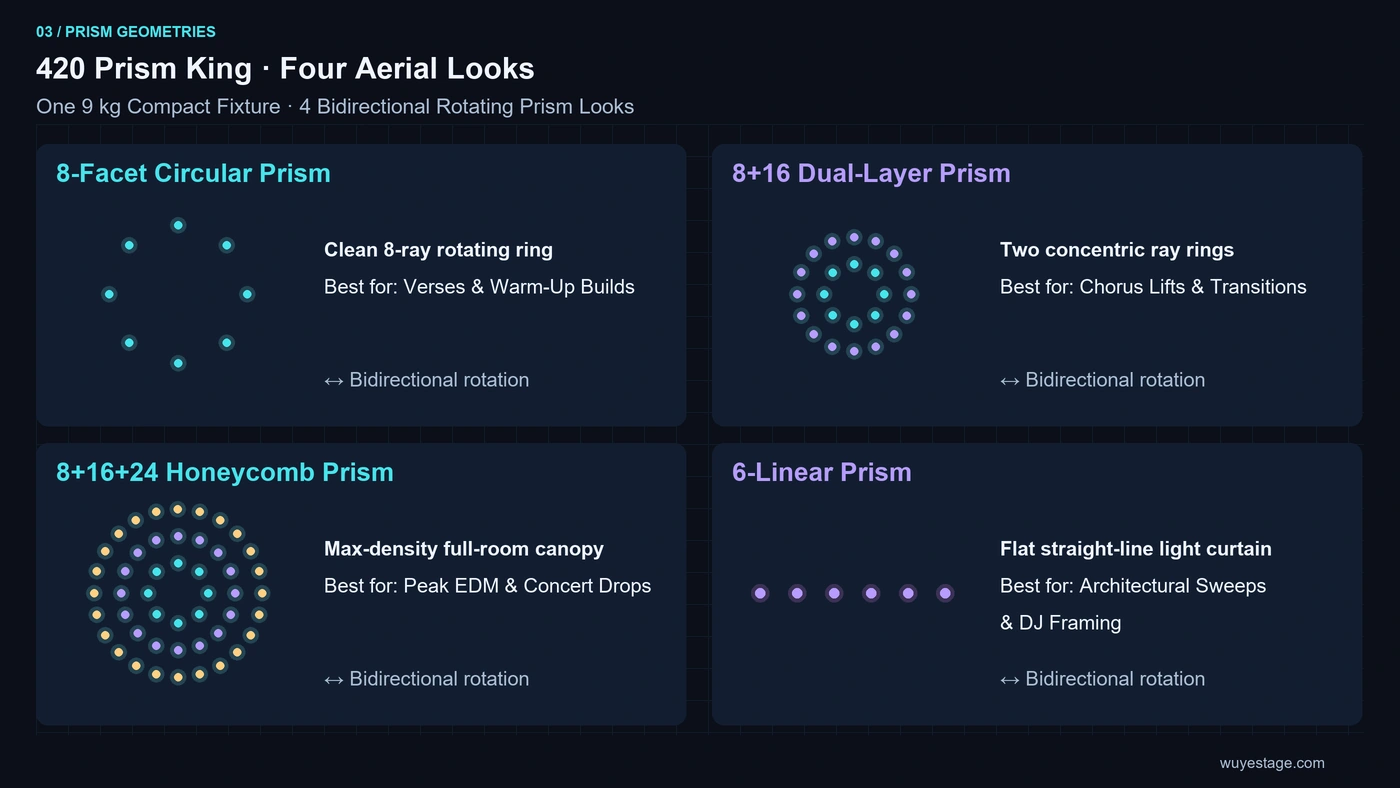
A single raw 2° shaft looks sharp, but running only plain single beams all night gets repetitive fast. That is why professional rental companies evaluate a beam fixture’s prism system before anything else. On the 420 Prism King Beam Moving Head Light, four bidirectional rotating prism options let one compact 9 kg head shift seamlessly across four distinct visual densities:
| Prism Geometry on 420 Prism King | Visual Pattern Structure | Best Musical / Show Moment | Programming Tip |
|---|---|---|---|
| 8-Facet Circular Prism | Clean, well-separated 8-ray circular flower | Mid-tempo verses, warm-up builds, small-to-mid dance floors | Run slow bidirectional rotation (5–15% speed) for smooth hypnotic ceiling sweeps |
| 8+16 Dual-Layer Prism | Dense two-ring concentric ray field | Chorus lifts, DJ transition builds, medium concert rooms | Pair with split dichroic colors for multi-tone layered fans |
| 8+16+24 Honeycomb Prism | Highest-density full-room aerial canopy | Peak EDM drops, concert finales, wide festival stages | Combine with brief blackout pauses before snapping the shutter open |
| 6-Linear Prism | Flat straight-line fan (light curtain geometry) | Architectural sweeps, framing the DJ booth, dramatic runway/reveal lines | Tilt slowly across haze to slice the room into crisp geometric planes |
6. Comparing WUYESTAGE’s Two Core Discharge Beam Lights: 420 Prism King vs. Beam 295
If you are shortlisting a factory-direct 2° discharge beam light for a club install or rental fleet, compare verified complete-fixture numbers—not just lamp wattage labels:
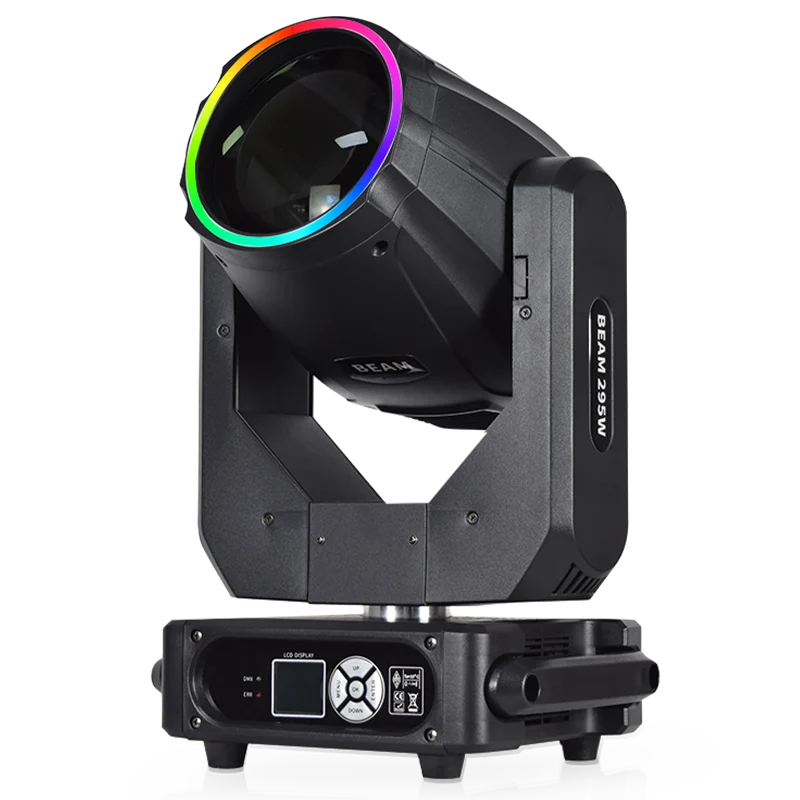
| Verified Specification | 420 Prism King Beam Moving Head | Beam 295 Moving Head Light | Why This Matters for Buyers |
|---|---|---|---|
| Light Source | 300W discharge lamp | 295W discharge lamp | Both deliver tight lamp-driven mid-air collimation |
| Complete Rated Power | 450W rated fixture power | 380W rated fixture power | Always size breakers from rated W (8 × 450W = 3,600W, not 2,400W) |
| Prism System | 4 geometries: 8-facet, 8+16, 8+16+24, and 6-linear (bidirectional) | 16-facet + 8+16+24 layered prisms | Choose 420 Prism King if you want both circular fans AND 6-linear curtain geometry |
| RGB Front Lens Ring | 24 × 0.5W RGB 3-in-1 ring | 27 × 5050 RGB LED ring | Adds camera-visible front lens color before the main beam fires |
| DMX Channel Modes | 18CH / 22CH (+ Auto / Sound / Master-Slave) | 18CH / 22CH (+ Auto / Sound / Master-Slave) | Up to 28 units per 512CH universe in 18CH mode (keep physical daisy chains ≤32) |
| Net Weight & Protection | 9 kg compact chassis, IP20 | Compact indoor chassis, IP20 | Fast rigging on club box truss and DJ totems; keep covered outdoors |
For full procurement criteria across rental fleets and distributors, see our beam moving head light buying guide and moving head beam lights prism guide.
7. Five Essential Rules to Make Stage Beam Lights Look Pro (Not Amateur)
Even the brightest 2° stage light beams disappoint if rigged or programmed poorly. Follow these five field-tested rules from working concert and club lighting designers:
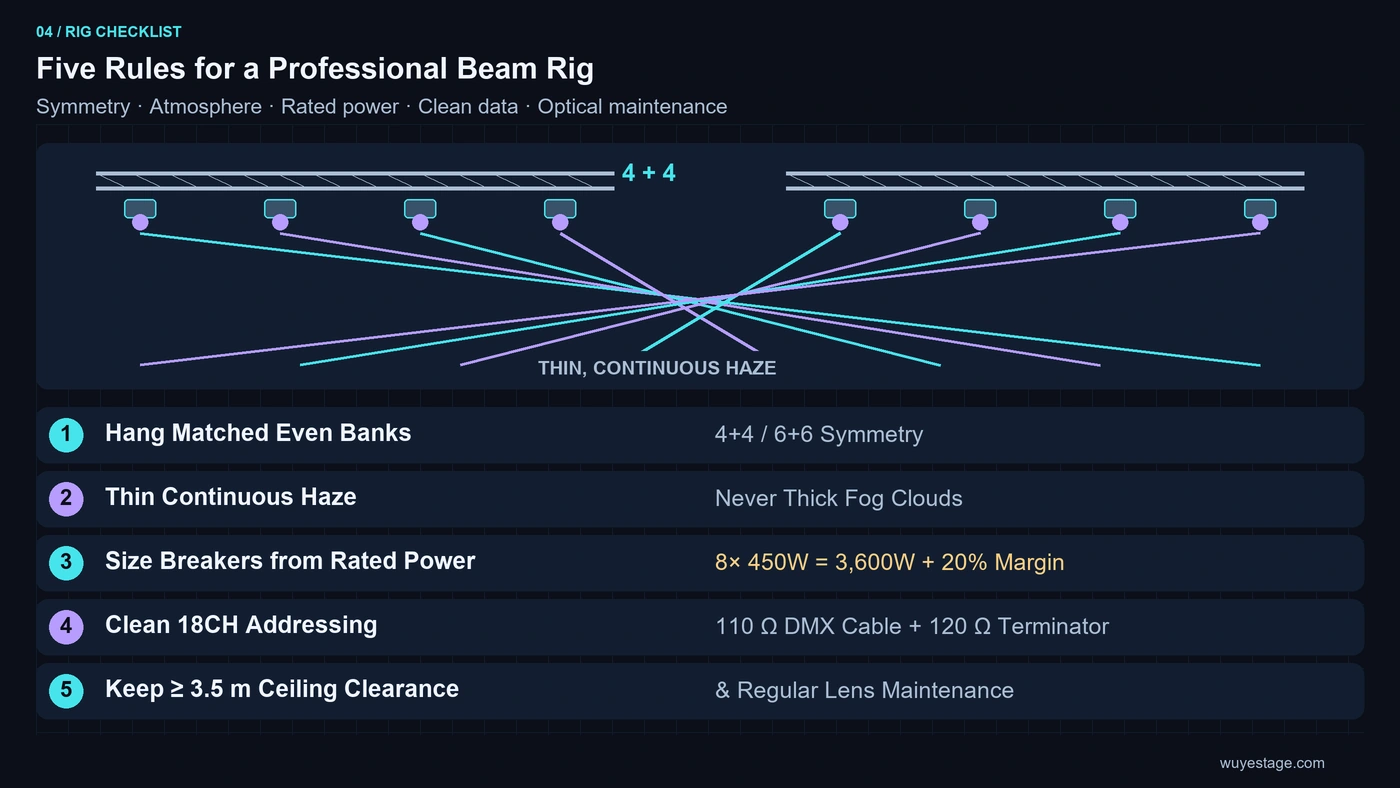
- Always buy and hang matched even banks (4, 6, 8, or 12 identical fixtures): Symmetry creates immediate visual scale. Six identical 420 Prism King units running mirrored pan/tilt phase offsets look far more expensive on video than ten mismatched fixtures.
- Use thin, continuous haze—never thick fog clouds: Without microscopic suspended particles, a
2°beam only shows a tiny bright dot on the far wall. Run a steady hazer so the entire mid-air shaft glows evenly without obscuring performers. Compare options in our moving head lights without haze and haze machine vs. fog machine guides. - Size electrical circuits from rated power + 20% headroom: Eight 420 Prism King fixtures draw
3,600Wrated (8 × 450W). Keep lighting breakers strictly separate from audio subwoofers—see our moving head light power consumption breakdown. - Address every beam cleanly and terminate the DMX chain: Running 8 beams in
18CHmode uses144 / 512slots (001, 019, 037, 055, 073, 091, 109, 127). Use true110 ΩDMX cable, a120 Ωterminator on the last unit, and an opto-isolated DMX splitter on multi-truss rigs. Build your exact patch sheet with our DMX addressing guide & calculator. - Respect minimum ceiling height (≥ 3.5 m) and optical maintenance: Give
2°beams enough vertical clearance to travel above guests’ eye level, and schedule periodic dust and lens cleaning in smoky clubs—follow our stage lighting maintenance checklist and how to program moving head lights workflow.
Frequently Asked Questions
What is a beam light used for on stage?
A stage beam light projects tight 1.5°–4° parallel shafts of light through thin haze to create mid-air geometric fans, rotating multi-prism canopies, and high-energy concert or nightclub drops. It is built for dramatic aerial effects rather than wide soft face lighting.
Do stage beam lights require haze or fog to be visible?
Yes. Light beams are invisible in completely clean air—you only see the lens and the small spot where the beam hits a wall or floor. A thin, continuous hazer suspends fine droplets evenly across the room so every 2° shaft and prism ray stays crisp without creating cloudy fog patches.
What is the difference between a beam light and a spotlight?
A beam light uses an ultra-narrow 1.5°–4° angle to keep a concentrated column of light tight over long distances for mid-air effects. A spot moving head uses a wider 10°–30° beam with focusing optics to project sharp gobos, logos, or pools of light onto performers and stage surfaces.
How many beam moving head lights do I need for a nightclub or concert stage?
For a small-to-midsize club (150–300 m², 3.5–5 m ceiling), 6 to 8 matched beam lights hung in symmetrical pairs deliver clean intersecting fans. Larger concert halls and festival stages typically scale to 12 to 24+ units across parallel upstage and midstage trusses, paired with wash or rotating bee-eye fixtures.
How many watts does a 300W-lamp beam moving head actually draw?
Never size electrical circuits from lamp wattage alone. On the WUYESTAGE 420 Prism King (300W discharge lamp), complete rated fixture power is 450W to cover the ballast, pan/tilt motors, cooling fans, and 24 × 0.5W RGB ring. Eight fixtures draw 3,600W rated—always add a 20% breaker safety margin.
How many 420 beam moving head lights fit on one DMX512 universe?
In 18CH DMX mode, up to 28 fixtures (28 × 18 = 504 / 512 channels) fit inside one DMX512 universe; in 22CH mode, up to 23 fixtures (506 / 512 channels) fit per universe. For mixed rigs or runs approaching the 32-device RS-485 physical limit, branch lines with an optically isolated DMX splitter.
Ready to Spec 420 Prism King Beam Lights for Your Venue or Rental Fleet?
Now that you know what a beam light is and how to size a 2° multi-prism rig accurately, our engineering team can build a matched beam + wash + strobe quotation with verified DMX channel charts, rated power math, and flight-case packing options.
- Explore the flagship 4-prism fixture: 420 Prism King Beam Moving Head Light
- Compare compact lamp beams: Beam 295 Moving Head Light or browse all Moving Head Lights
- Request a factory project quote with your room dimensions, ceiling height, quantity, and voltage standard on our Contact Page.