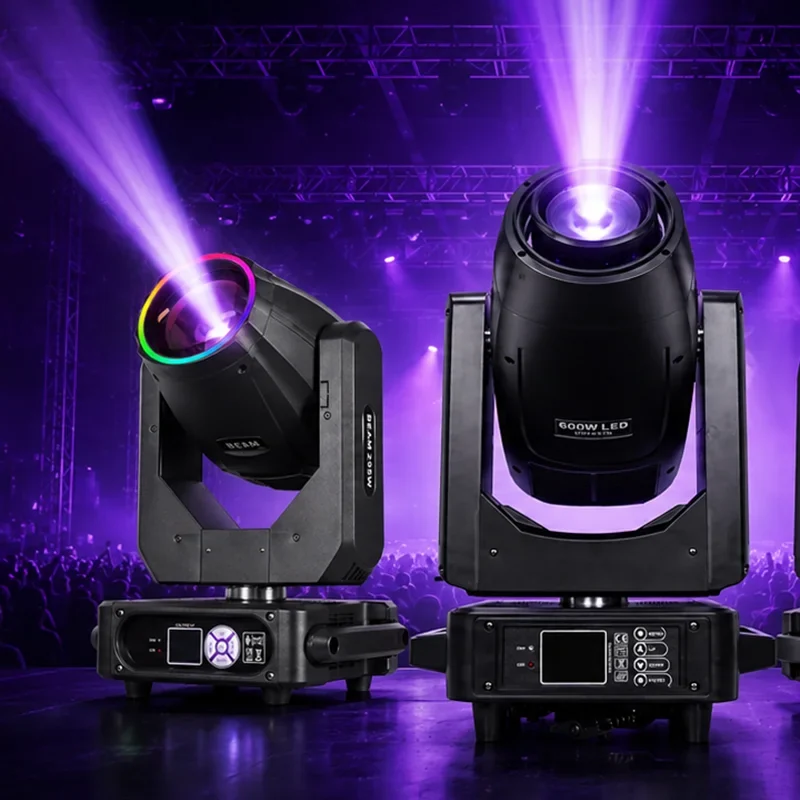
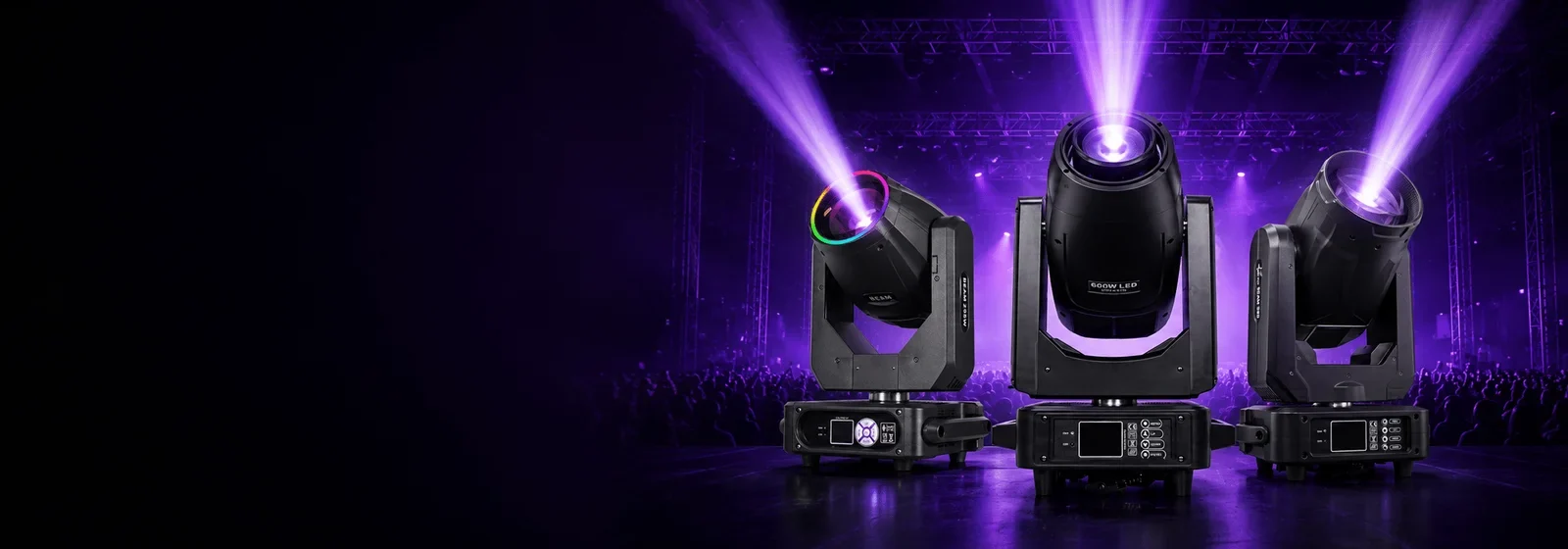
Beam moving head lights are one of the most popular products in professional stage lighting equipment. For rental companies, event suppliers, clubs, theaters, wedding stages and project contractors, a powerful beam moving head light can create sharp aerial effects, strong stage atmosphere and high-impact visual performance.
When buyers search for moving head lights for sale, many only compare price and wattage. But for B2B buyers, choosing the right moving head beam light is not only about brightness. Stability, optical effect, cooling system, packing, spare parts, reorder consistency and factory support are also important.
If you are a distributor, wholesaler, rental company or stage lighting contractor, this guide will help you understand how to choose suitable beam moving head lights for different business needs.
What Is a Beam Moving Head Light?
A beam moving head light is a professional stage light that produces a narrow and powerful beam. Compared with wash lights or PAR lights, beam lights are designed for stronger aerial effects, sharper movements and more dynamic stage looks. When integrating beam heads with wash fixtures in compact event rigs, review our DJ lighting setup guide.
They are widely used for:
- Wedding and event rental
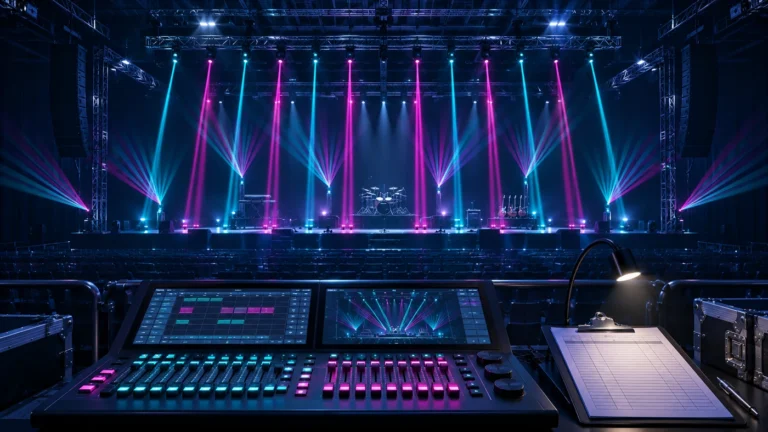
- Concert stage lighting
- Club and bar lighting
- DJ stage lighting
- Theater and church projects
- Outdoor stage events
- Distributor and wholesale stock
- Professional stage lighting projects
Before including a beam in the purchase, identify a cue that needs a visible light path, movement or prism pattern. If the job instead requires even light on people or readable projected artwork, start with the appropriate wash, spot or profile. The beam, spot and wash comparison explains the separate sample tests.
Why Beam Moving Head Lights Are Important for Rental Business
For rental stock, map the beam role to recurring bookings before deciding quantity. Record the normal throw distances, haze permission, required cue looks and peak simultaneous rigs. A dramatic demonstration does not establish utilization; compare the complete fixture, control, transport and service workflow against the events you actually supply. If you are also choosing wash or multi-lens eye-candy fixtures alongside beams, read our bee eye vs wash moving head comparison.
For distributors and wholesalers, beam moving head lights are also suitable for repeat sales. Many customers start with a small quantity, test the market, and then reorder more units if the quality is stable.
For project contractors, beam moving head lights are often used together with LED PAR lights, wash moving head lights, LED strobe lights and stage LED screens to build a complete stage lighting solution.
How to Choose the Right Beam Moving Head Light
1. Compare the Source and Optical Performance
Separate the lamp or LED source rating from total fixture power. Neither wattage nor a model name establishes brightness at the required distance.
For weddings, clubs and mobile events, compare the exact configuration at the planned throw distance. Check beam definition, prism cues, movement, handling and noise before approving a sample.
For longer throws, compare samples at the same distance, beam angle and target. Request measurements with stated test conditions; higher source wattage alone does not prove stronger usable output.
When several optical roles are required, test the selected beam, spot and wash modes separately. Confirm the actual color system and source configuration rather than assuming a BSW or LED label includes CMY mixing.
2. Check the Beam Effect and Optical System
Brightness is important, but it is not the only factor. A professional beam moving head light should also have a clean beam, sharp output and stable optical performance.
B2B buyers should check:
- Beam angle
- Prism effect
- Color wheel
- Gobo wheel
- Frost effect
- Dimmer performance
- Strobe speed
- Pan and tilt movement
- DMX control stability
For rental companies, prism and gobo effects are very important because they help create more stage looks with fewer fixtures.
3. Choose Indoor or Waterproof Beam Moving Head Lights
Not every beam moving head light is suitable for outdoor use.
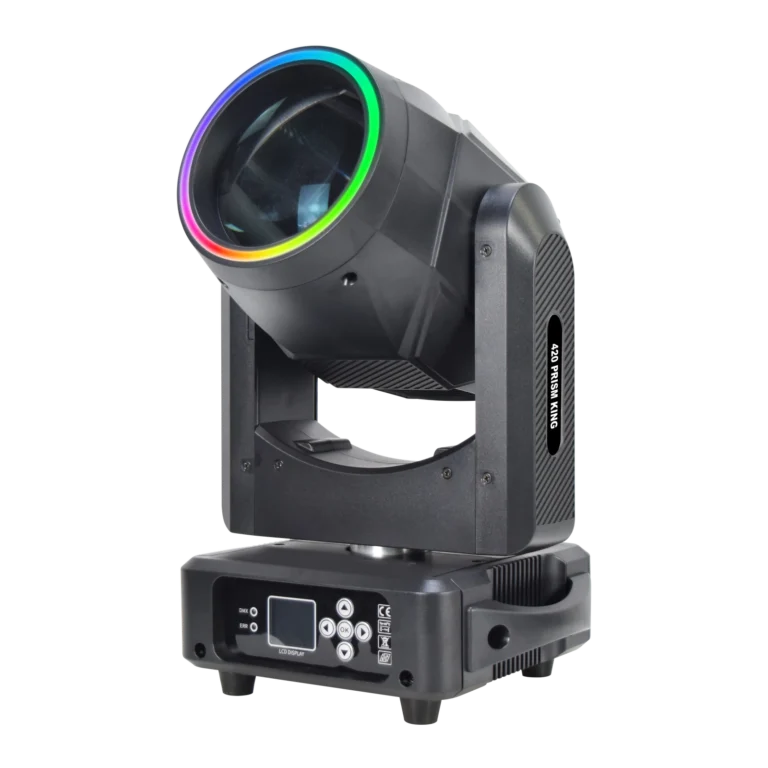
For indoor use, check the exact fixture rating, ventilation, ambient conditions and mounting clearance. The 420 Prism King, for example, is an IP20 narrow-beam configuration with a 300W lamp and 450W rated fixture power. It supports beam and prism cues, rather than broad coverage or exposed rain use.
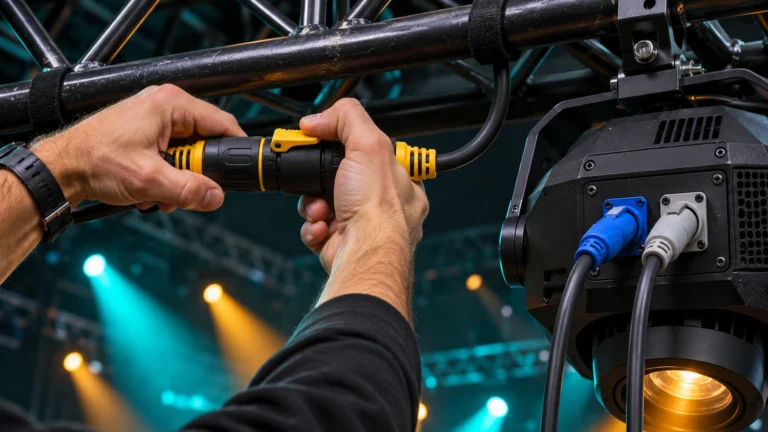
For exposed outdoor use, request the exact model and configuration with its declared protection rating, connection requirements and operating limits. Include power and signal distribution, rigging, weather exposure and shutdown arrangements in the installation plan. The word “waterproof” alone cannot approve a complete event system.
For distributors, it is often better to prepare both indoor and outdoor beam light options, so you can serve more buyer types.
4. Check Cooling, Stability and Long-Time Performance
Approve a sample against your operating conditions, then use its configuration as the order reference.
Request dated records for the offered sample or batch, covering these checks:
- Cooling and run test: record duration, ambient conditions and operating mode, plus any shutdowns or output changes.
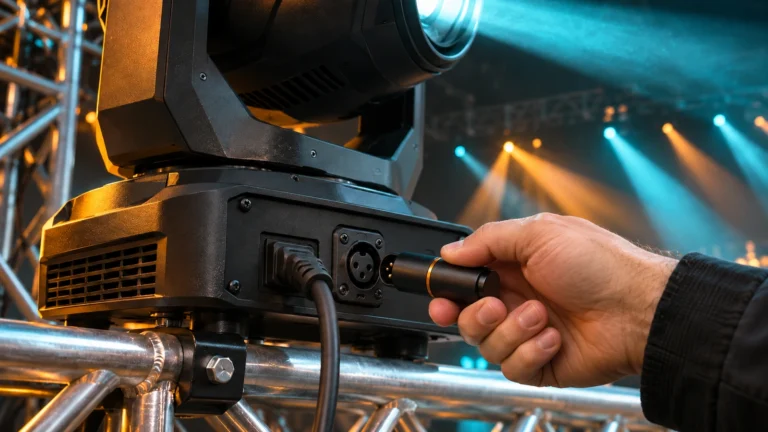
- DMX: use the exact channel chart and console profile; confirm required cues respond without unexpected resets.
- Movement: repeat pan/tilt cues and return to marked positions; flag missed positions or abnormal noise.
- Electrical: request recorded input power and supply-test results for the ordered voltage and configuration; leave electrical checks to qualified personnel.
- Packing: match fixture IDs, quantities, accessories and protection to the packing list.
- Spares: list included parts and identifiers; confirm compatibility before accepting substitutions.
Agree the run duration, position tolerance and fault handling in writing. Hold approval if required cues fail, control drops or unexplained shutdowns occur; a generic test video does not prove your batch passed.
5. Pay Attention to Packing and Shipping
International buyers should not ignore packing. Beam moving head lights are professional stage lighting fixtures, and poor packing can cause damage during shipping.
Before ordering, confirm:
- Carton size
- Gross weight
- Flight case option
- Packing quantity
- Spare parts package
- Shipping method
- Delivery time
For distributors and wholesalers, good packing helps protect profit. A damaged light is not only a product problem, but also a customer service problem.
Beam Moving Head Light Options for Different Buyers
For Rental Companies
Rental companies need repeatable effects and practical handling. Choose the fixture from typical throw distances, required prism looks, control modes, operating conditions and packing. Compare samples under the same conditions; wattage alone cannot determine which model suits a larger stage.
For Distributors and Wholesalers
For distributor stock, compare configurations against recurring customer requests and preserve a repeat-order record: model, source, optics, channel modes, connectors, accessories and accepted sample. Identify which parts and control profiles are shared and which require separate inventory before expanding the range.
For Project Contractors
Project contractors usually need complete stage lighting solutions. Beam moving head lights can be combined with LED PAR lights, wash moving head lights, LED strobe lights and LED display screens for concerts, theaters, churches, clubs and event venues.
For Outdoor Event Suppliers
Outdoor event suppliers should consider waterproof beam moving head lights. These fixtures are more suitable for open-air stages, festivals and touring events where weather conditions are harder to control.
Why Work with a Factory Moving Head Light Supplier?
Compare factory suppliers using written evidence tied to the accepted sample and quotation.
Confirm these points before a bulk order:
- Test evidence: records identify the sample or batch and show the checks agreed above.
- Order configuration: source, optics, control modes, connectors and accessories match the accepted sample.
- Customization: approved artwork and configuration changes are recorded before production.
- Support scope: list covered faults, exclusions, applicable period and claim evidence in writing.
- Costs and route: agree who pays for parts, labor, freight and returns, who authorizes action, and the repair, replacement or return process.
- Part matching: provide the original order, fixture model/version, part label, symptoms, settings and photos or video. Appearance or wattage alone cannot establish compatibility.
- Reorders: obtain written agreement on changes to parts, firmware or channel modes; check compatibility with existing stock.
Parts supplied with a WUYESTAGE fixture order should be listed in the quotation; spare parts can also be supplied to existing customers. Confirm the required part and order-specific terms.
Build Your Beam Moving Head Light Product Line
If you are planning to import beam moving head lights, it is better to build a clear product structure instead of choosing only one model.
A practical product line can include:
- A dedicated beam configuration tested for recurring rental jobs
- A longer-throw beam option selected from controlled sample tests
- An outdoor-rated beam configuration with protection verified for the order
- A hybrid/BSW option with each required mode and color system verified
Build the range around distinct project requirements and verified configurations, rather than ranking models by wattage or assuming every hybrid includes the same functions.
Find the Right Beam Moving Head Light for Your Business
Before approving a bulk order, keep one agreed record of the model/version, accepted sample, required cues, test conditions, included items and support terms. Compare quotations against that record and resolve substitutions or missing evidence before payment.
WUYESTAGE provides professional stage lighting and LED display solutions for distributors, wholesalers, rental companies and project contractors. We support beam moving head lights, waterproof stage lights, LED PAR lights, wash moving head lights and complete stage lighting solutions for different markets.
For a useful quotation, include your event use, throw distance, haze and weather conditions, quantity, destination and console/channel mode. Explore the beam options below and identify the configuration you want to compare.