
STAGE EFFECT LIGHTS
Stage Effect Lights for Concerts, Events and Rental
Compare strobe, blinder, pixel and combination effect lights by visual role, control depth, camera behavior, environment and rental workflow.
UNDERSTAND THE CATEGORY
Choose the visual role before comparing fixtures.
Stage effect lighting covers different jobs. Start with the cue the audience should see, then verify the source layout, control and operating conditions.
01IMPACT
Strobe Accents
Use controlled flashes and segmented chases for musical accents, transitions and audience-facing energy.
02AUDIENCE HIT
Blinder Output
Use broad white or warm audience-facing output for high-impact cues rather than continuous stage coverage.
03MOTION
Pixel Effects
Use independently controlled zones when chases, gradients and mapped graphic movement are part of the design.
04ATMOSPHERE
Color Layers
Compare source layout and color mixing when one fixture must add both background color and effect cues.
05EFFICIENCY
Combination Fixtures
Combine roles only when the optical layout, programming depth and output balance suit the intended show.
06ENVIRONMENT
Indoor or Outdoor
Choose the complete fixture and connections for the actual environment; do not infer weather resistance.
PROJECT-TO-EFFECT GUIDE
Match each show requirement to a controllable effect system.
Use the intended visual result and production workflow to narrow the range before testing individual models.
VERIFY BEFORE ORDERING
Flash behavior, dimming, segments, camera response and operator safety
Color temperature, beam spread, output duration, heat and mounting position
Pixel count, zones, channel modes, mapping workflow and fixture profile
Balance between systems, simultaneous operation and control complexity
Cases, setup, addressing, accessories, spares, packing and batch consistency
Complete IP rating, connectors, housing, cooling and operating limits
STAGE EFFECT PRODUCT RANGE
Compare effect lights by cue, source layout and control depth.
Open a model page to review its documented output layers, segmentation, channel modes and operating details.
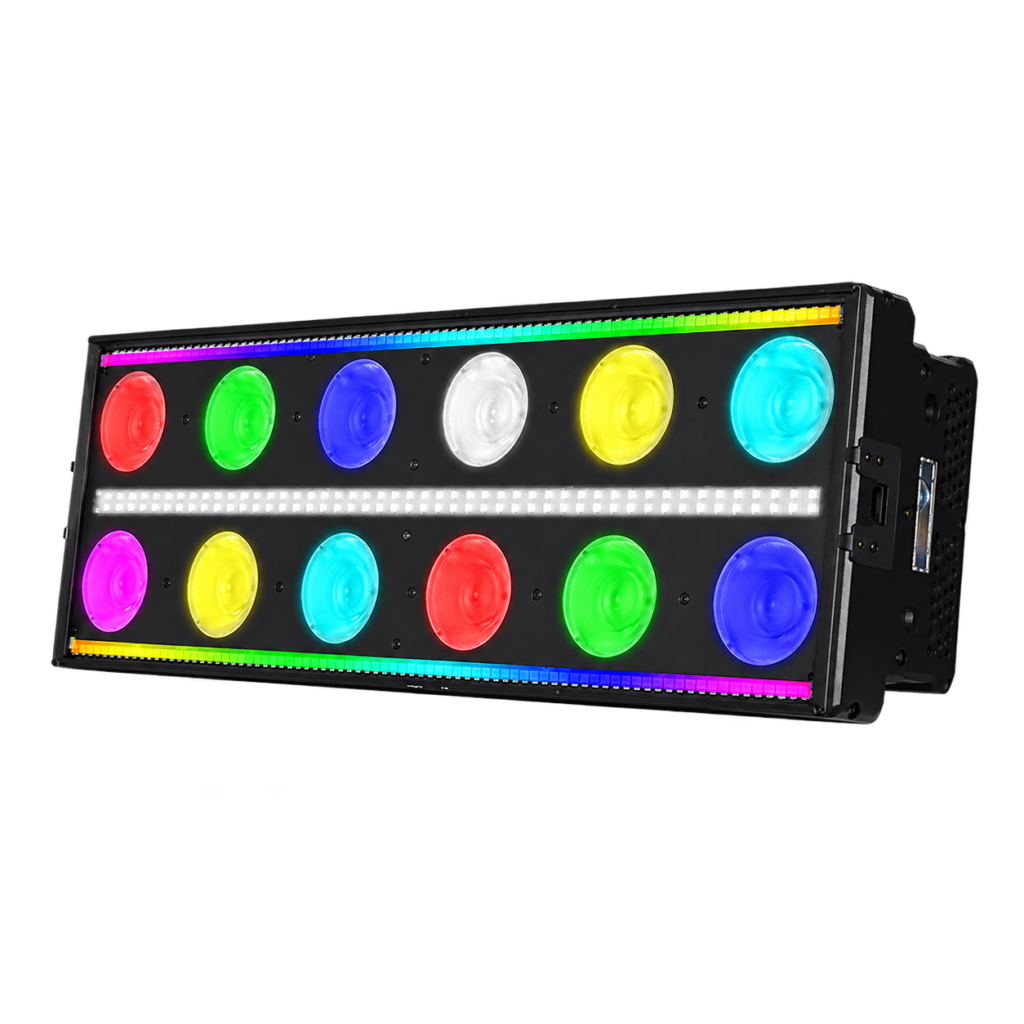
STAGE EFFECT · RG-907
RGBW Stage Effect Light
A 12-lens RGBW stage effect light with an eight-segment 600W white strobe, segmented RGBW pixel bars and 10/46/119CH DMX control.
- 12 × 60W RGBW; 600W pure-white strobe; 32 × 3W RGBW pixel bar
- DMX512 / Auto / Sound / Master-Slave
BUYER COMPARISON
Six checks beyond the advertised wattage.
Effect Role
Define whether the show needs flashes, audience hits, pixel movement or layered output.
Source & Zones
Confirm source layout, colors, segment count and usable simultaneous effects.
Dimming & Strobe
Test transitions, flash behavior and the actual cue range required by the show.
DMX & Pixels
Check channel modes, mapping workflow, profiles and blackout behavior.
Camera & Safety
Test real cameras and plan controlled use around audience and production needs.
Environment
Match the complete fixture rating, connectors and cooling to actual conditions.
REAL EFFECT REFERENCE
Judge strobe, blinder and pixel behavior from actual output.
Compare flash character, audience-facing intensity, color layers, segmentation and camera response under representative conditions.
Strobe Reference
A real output image showing the verified flash or segmented-chase behavior.
Blinder Reference
A real audience-facing image showing beam spread and the intended impact cue.
Pixel & Color Reference
A real effect image showing zones, chases, gradients or layered color output.
APPLICATION FIT
Plan the effect around the audience, camera and operating workflow.
Venue scale, rig positions, camera use, transport and programming priorities change across projects.
Concerts & Touring
Plan cue intensity, camera use, sightlines, rig positions and repeatable programming for each production.
Clubs & Events
Match effect density, control skill, room scale, audience distance and operating policy.
Rental & Production
Balance visual versatility with transport, setup, fixture profiles, service access and spares.
SAMPLE-TO-ORDER FLOW
Confirm the actual effect system before a batch order.
Define the visual task
Share applications, required effects, environment, quantity and destination.
Compare verified models
Shortlist suitable source layouts, control depths and operating configurations.
Test the ordered sample
Run the exact fixture through effects, cameras, control and workflow checks.
Finalize the batch
Confirm voltage, plugs, profiles, accessories, spares, packing and markings.
STAGE EFFECT LIGHT FAQ
Questions to answer before comparing quotations.
Direct guidance on effect roles, control, cameras, environments, testing and wholesale configuration.
What is a stage effect light?
A stage effect light creates short visual accents, audience hits, pixel movement, color patterns or layered effects. It supports the show design rather than replacing the fixtures used for general performer coverage.
How do strobe, blinder and pixel effects differ?
Strobes emphasize flashes and rhythmic impact, blinders create broad audience-facing hits, and pixel effects create controlled movement across multiple zones. Combination fixtures may include more than one role.
Does higher wattage mean a better effect light?
No. Buyers should compare the optical layout, usable output, dimming, color behavior, segment control, channel modes, thermal design and the actual effect required by the project.
How many DMX channels should a stage effect light have?
The useful mode depends on the programming workflow. Simpler modes speed setup, while expanded modes can expose more segments or pixels. Confirm the exact channel chart and console profile for each model.
What should be checked for camera-facing events?
Test the actual fixture with the production cameras, frame rates, shutter settings, exposure, playback and programmed cues. Keep a non-flashing fallback look when necessary.
Can a stage effect light replace a wash light?
Usually not. An effect fixture may add color, but its optical layout and control are designed for visual accents. General stage coverage should use a suitable wash, profile, PAR or other dedicated fixture.
Can indoor effect lights be used outdoors?
Only when the complete fixture is designed and rated for the required environment. A temporary cover does not turn an indoor product into an outdoor-rated light.
What information is needed for a wholesale quotation?
Share the application, required effects, quantity, indoor or outdoor use, control workflow, voltage, plug, destination, packing, accessories, spares and any customization request.
Need to compare a wider lighting system?
Explore Stage LightingSTART YOUR PROJECT
Let’s Talk About
Your Project.
Tell us who you are, what products you need and your expected order size. Our team will review your requirements and recommend the right next step.