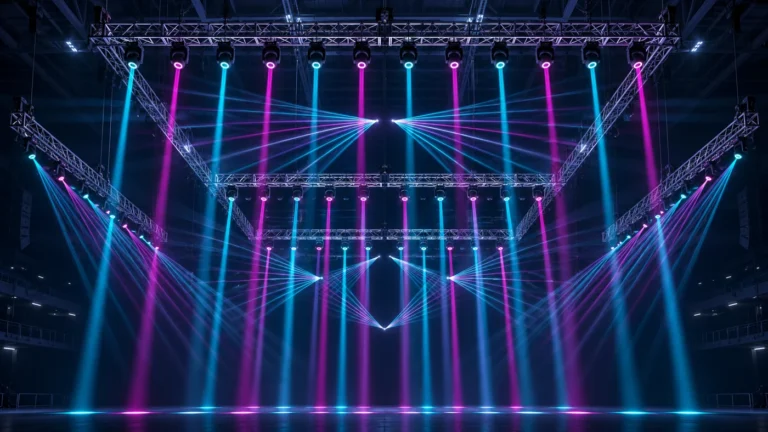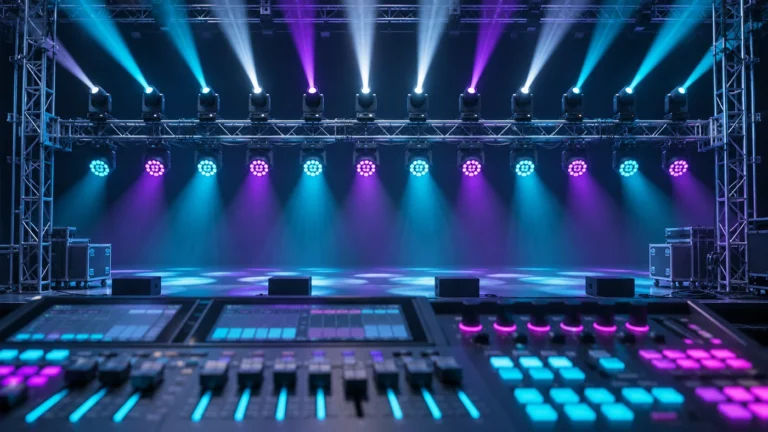
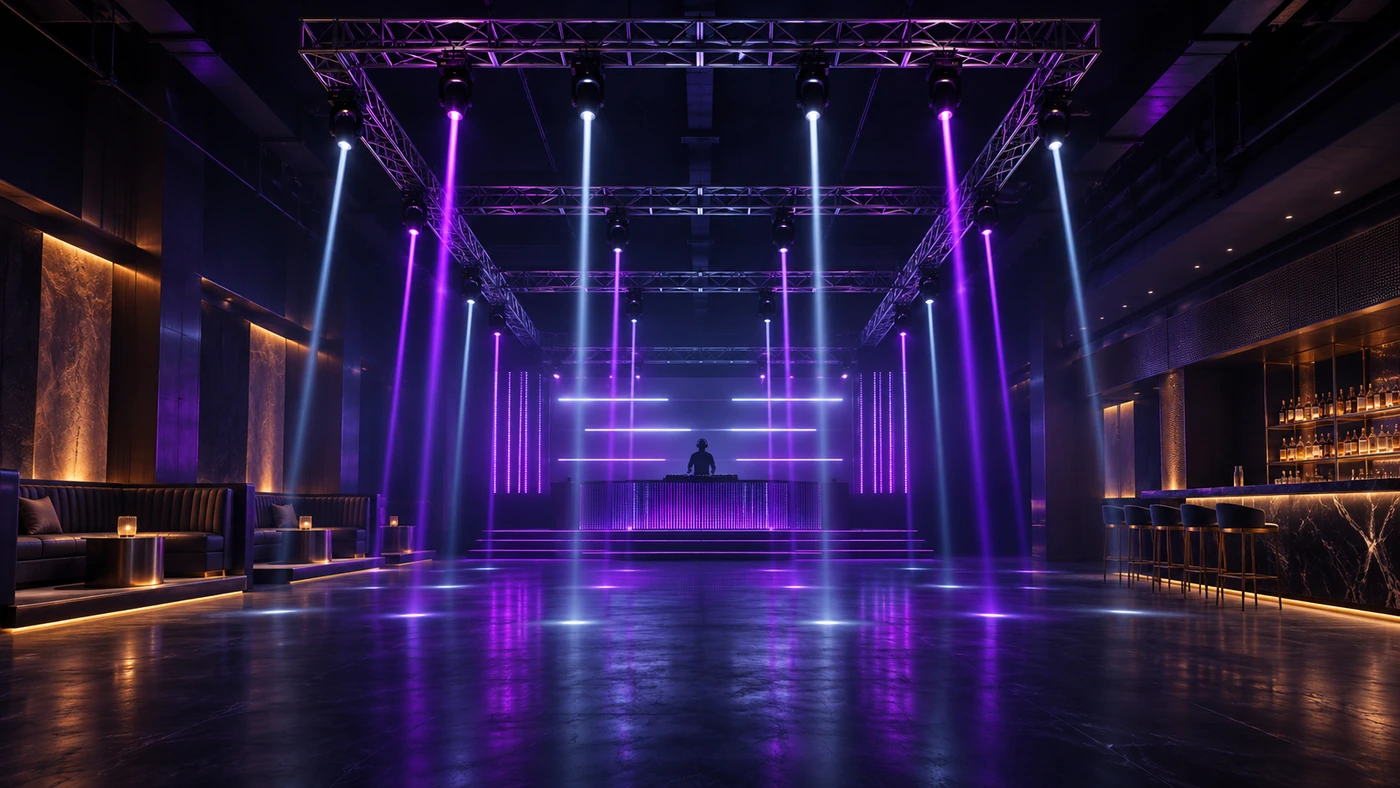
The strongest nightclub lighting ideas do not start by buying the brightest moving heads in a catalog. They start by dividing the venue into distinct visual zones, matching beam angles to real ceiling height, and coordinating DMX cues so the dance floor feels electric while VIP tables and bars stay comfortable enough to drive beverage revenue.
Most club owners and integrators run into the same three headaches after opening night: blinding glare across VIP booths, washed-out mid-air beams because haze and optics are mismatched, or tripped circuits and overloaded DMX universes during peak sets. A disciplined nightclub lighting design prevents all three before a single clamp touches the ceiling grid.
This guide gives club owners, lighting designers, and AV contractors a complete engineering blueprint—covering 5-zone layout strategy, three ceiling-height thresholds, a worked mid-size club DMX and power plan, four nightly cue phases, and verified WUYESTAGE fixture pairings.
1. The 5-Zone Nightclub Lighting Design Matrix
Rule of thumb: Treat every nightclub as five separate lighting environments with different brightness ceilings, glare limits, and control priorities. Never let high-intensity dance-floor beams sweep straight through bartenders’ eyes or VIP bottle-service tables.
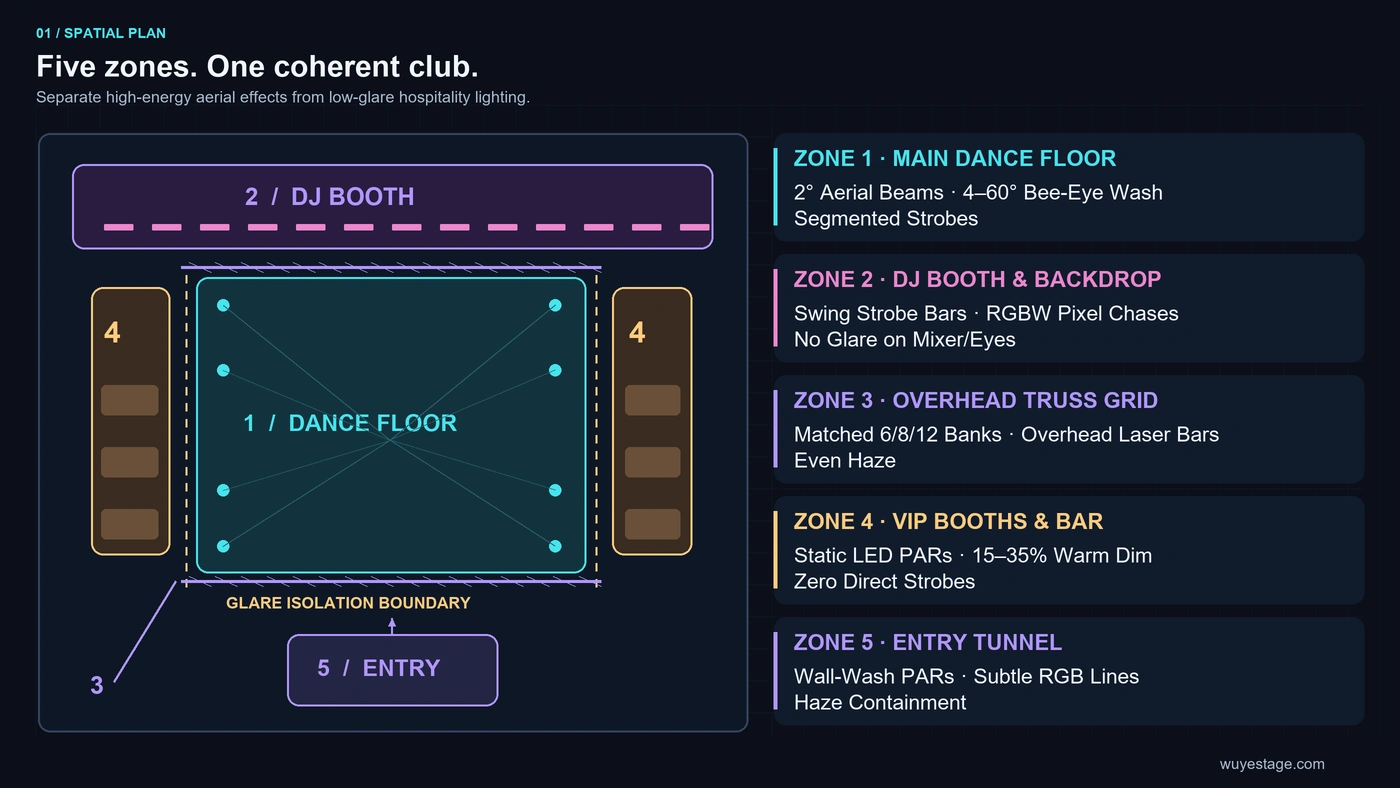
| Venue Zone | Visual Objective | Recommended Fixture Layers | What to Avoid in This Zone |
|---|---|---|---|
| Zone 1: Main Dance Floor | High-energy aerial geometry, drop impact, rhythmic strobe contrast | Narrow 2° beam moving heads, rotating bee-eye washes, segmented RGBW strobes, overhead laser bars | Flat unmodulated white light that kills atmosphere and exposes room clutter |
| Zone 2: DJ Booth & Focal Backdrop | Camera-ready centerpiece, silhouette separation, visual depth behind the DJ | Linear beam-swing strobe bars, RGBW pixel strobes, compact bee-eye accents, controlled front key wash | High-power beams aimed backward into the DJ’s mixer, screens, or eyes |
| Zone 3: Overhead Truss / Kinetic Grid | Architectural ceiling movement, symmetry, mid-air beam layering in light haze | Matched banks of 6, 8, or 12 identical moving heads + symmetrical linear effect bars | Mixing mismatched beam angles and color wheels across the same symmetrical truss |
| Zone 4: VIP Booths & Bar Counter | Comfortable conversation, clear drink presentation, flattering skin tones on phones | Low-glare LED PAR lights dimmed to 15–35%, warm architectural wall grazing | Direct strobes, high-speed pan sweeps, or unfiltered UV washing out guests’ faces |
| Zone 5: Entry Tunnel & Transition | Instant sensory shift from street light to club energy | Compact wall-wash PARs, subtle linear RGB chases, controlled haze containment | Placing haze machines right next to exit doors where airflow pulls fog outside |
2. Ceiling-Height Rules: Match Fixture Optics to Your Real Room Geometry
Rule of thumb: Ceiling height dictates your optical angle more than floor area does. Before shortlisting nightclub lighting ideas from showroom clips, check your real truss trim height: hanging a long-throw 2° aerial beam in a 2.8-meter low-ceiling bar creates harsh hot spots instead of dramatic shafts.
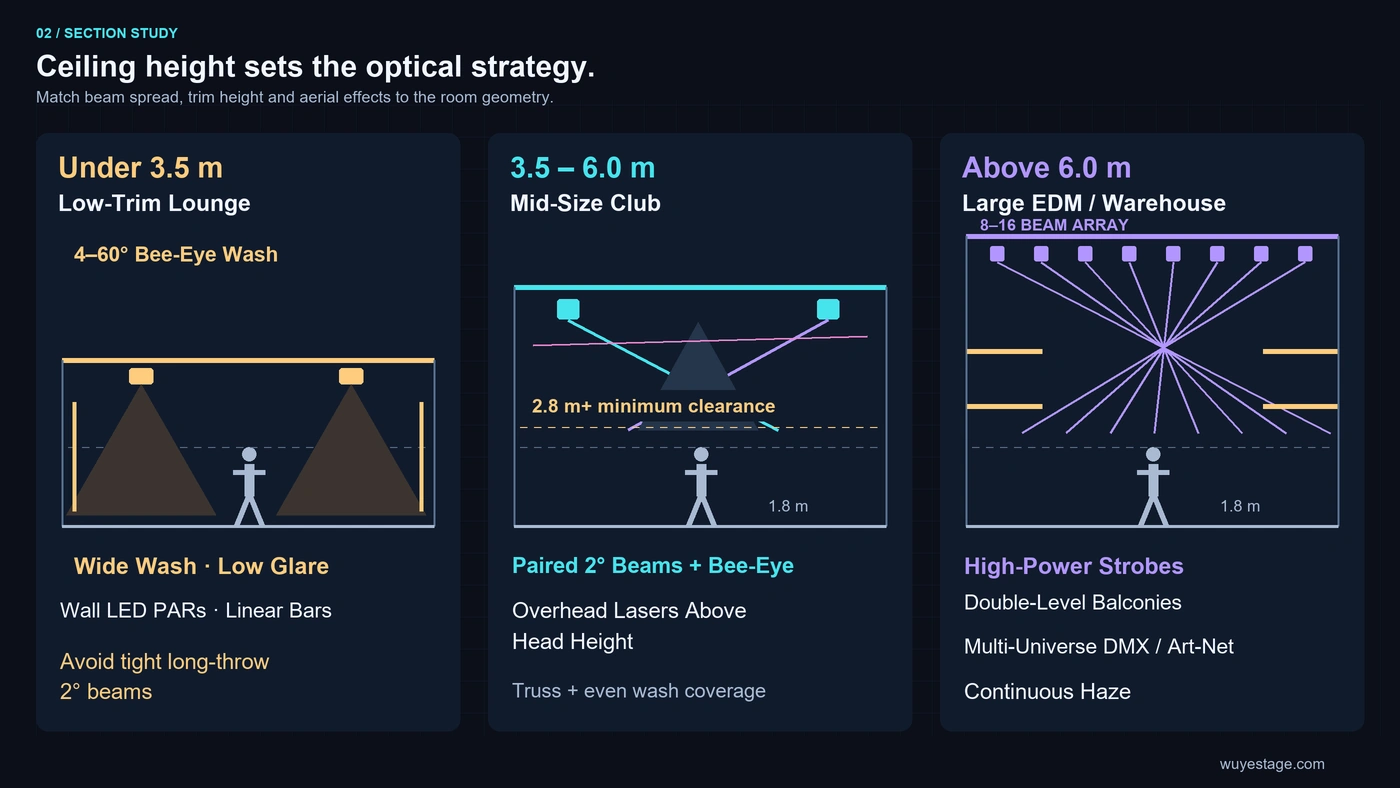
| Club Ceiling Height | Space Profile | Best-Fit Optical Strategy | Practical Rigging & Hardware Notes |
|---|---|---|---|
| Under 3.5 m (Low-Ceiling Lounge / Boutique Club) | Tight vertical clearance; guests stand close to fixtures | Focus on wide 4–60° rotating bee-eye washes, compact LED PAR lights, linear RGB pixel bars, and soft low-level dimming | Prioritize compact fixture height, wide beam spread, and quiet thermal management; skip heavy long-throw stadium beams |
| 3.5 m – 6.0 m (Standard Mid-Size Nightclub) | Classic 150–400 m² dance-floor club with overhead box truss | Combine 2° compact discharge beams (e.g., 9 kg class) with 19×15W or 19×40W rotating bee-eye washes, double-row swing strobes, and overhead laser bars | Maintain clean 2.8 m+ minimum head clearance below moving yokes; separate beam power circuits from audio feeds |
| Above 6.0 m (Large EDM Club / Festival Warehouse) | High trim height, long throw distances, multi-level balconies | Scale into matched 8–16 unit beam arrays, high-output 19×40W rotating bee-eye banks, 600W-class segmented white/RGBW strobes, and multi-bar laser lines | Plan multi-universe DMX or Art-Net distribution and dedicated high-output hazers for even upper-room beam visibility |
For clubs selecting beam fixtures specifically for ceiling trim and throw distance, pair this layout blueprint with our dedicated guide on how to choose moving head beam lights for nightclubs.
3. Seven Proven Nightclub Lighting Ideas Mapped to Real Club Fixtures
Great club lighting ideas rely on layer contrast—pairing sharp narrow lines against wide color washes and dark pauses—rather than running every fixture at 100% simultaneously.
Idea 1: Build Symmetrical Aerial Beam Banks Above the Dance Floor
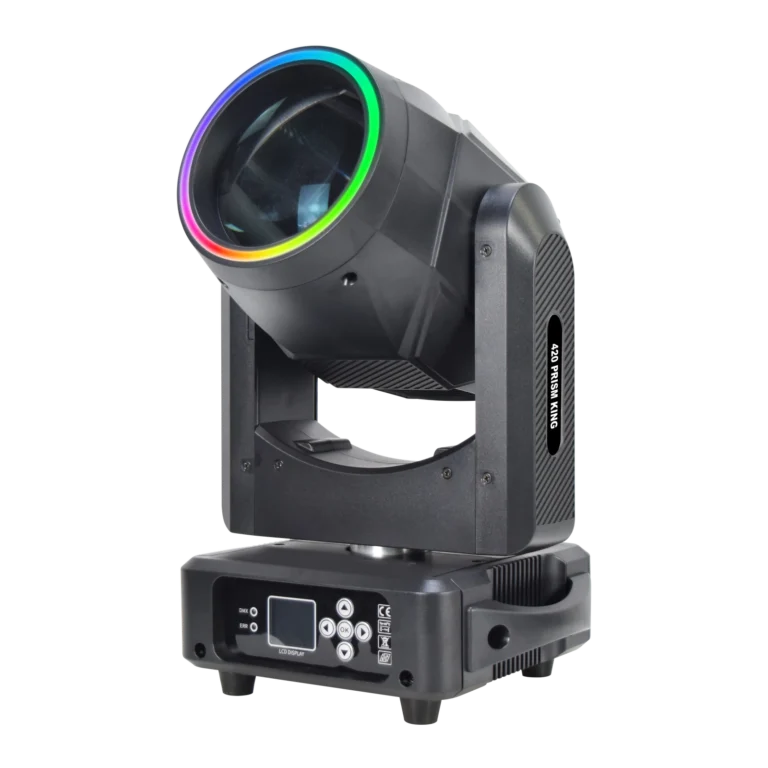
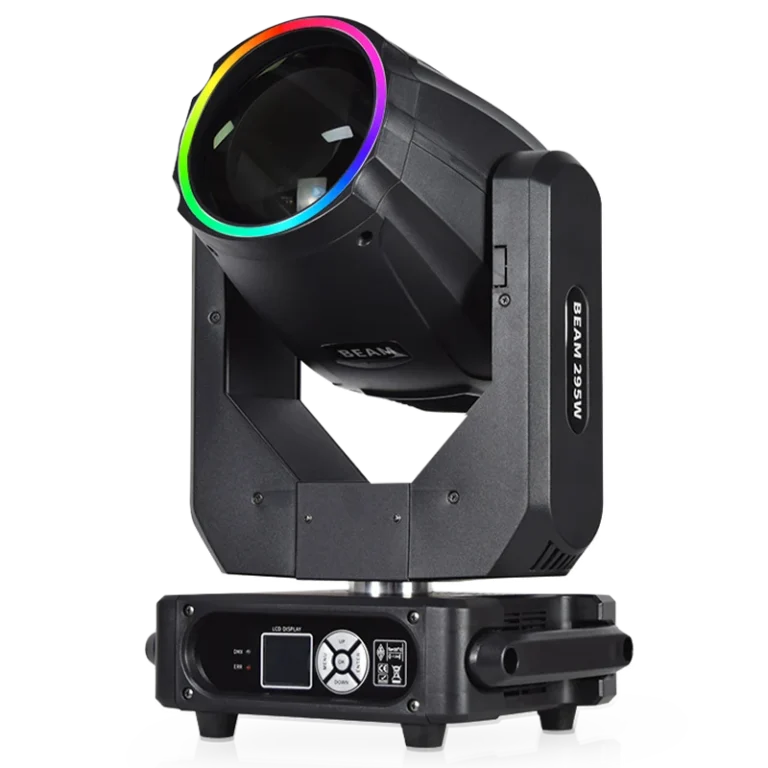
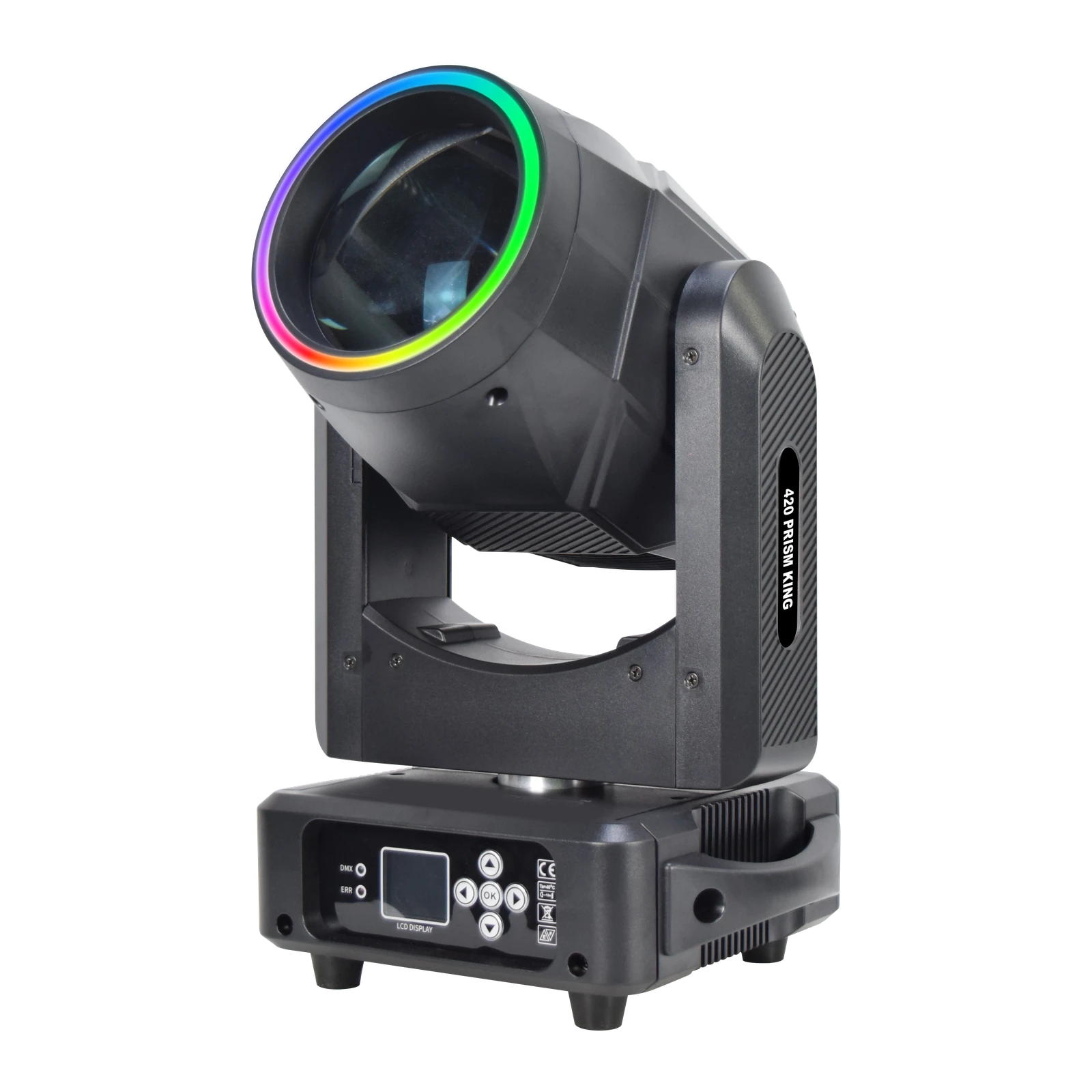
Install narrow-beam moving heads in even, mirrored pairs (4+4 or 6+6 along parallel ceiling trusses) so sweeping fans intersect cleanly above the crowd. On the 420 Prism King Beam Moving Head Light, a 2° beam angle paired with four bidirectional prism combinations (8-facet, 8+16, 8+16+24, and 6-linear) and a 24-LED RGB front ring lets a mid-size club build layered aerial canopies from compact 9 kg fixtures. Larger long-throw dance floors can also deploy the Beam 295 Moving Head Light for crisp lamp-driven beam geometry.
Idea 2: Layer Rotating Bee-Eye Optics for Mid-Air Texture and Wide Wash
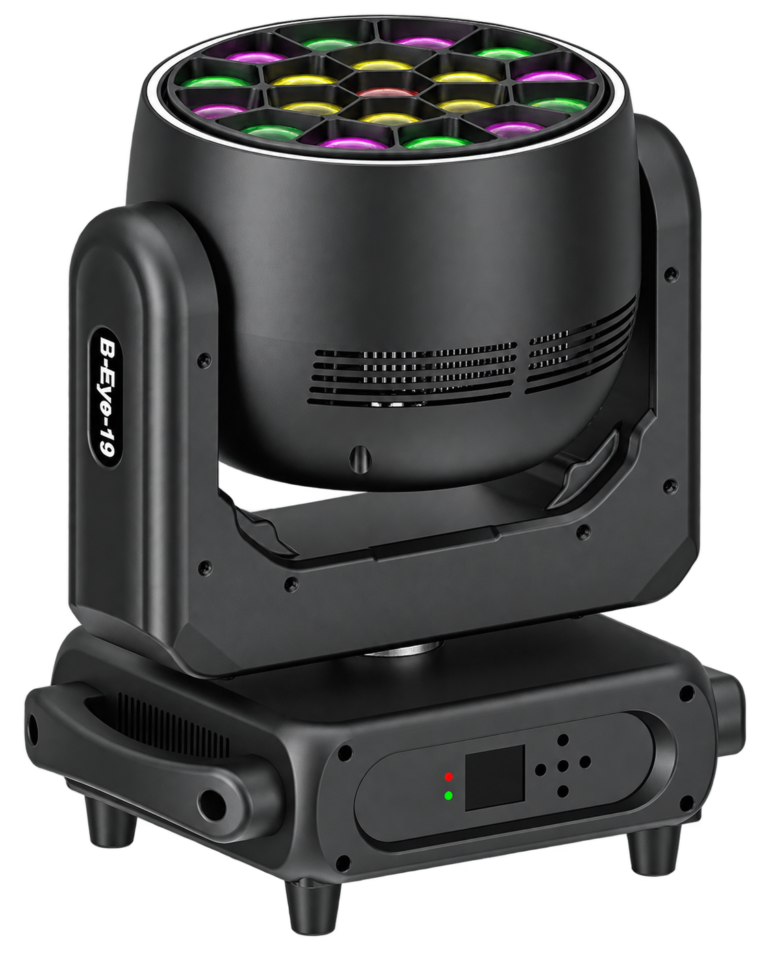
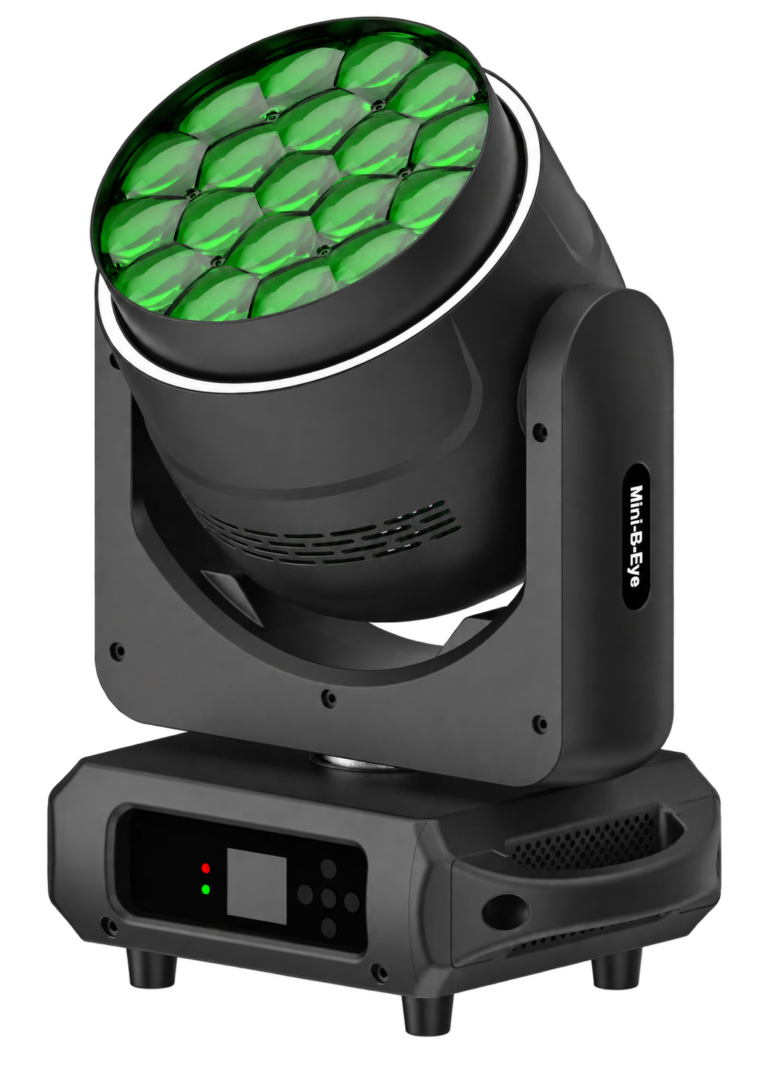
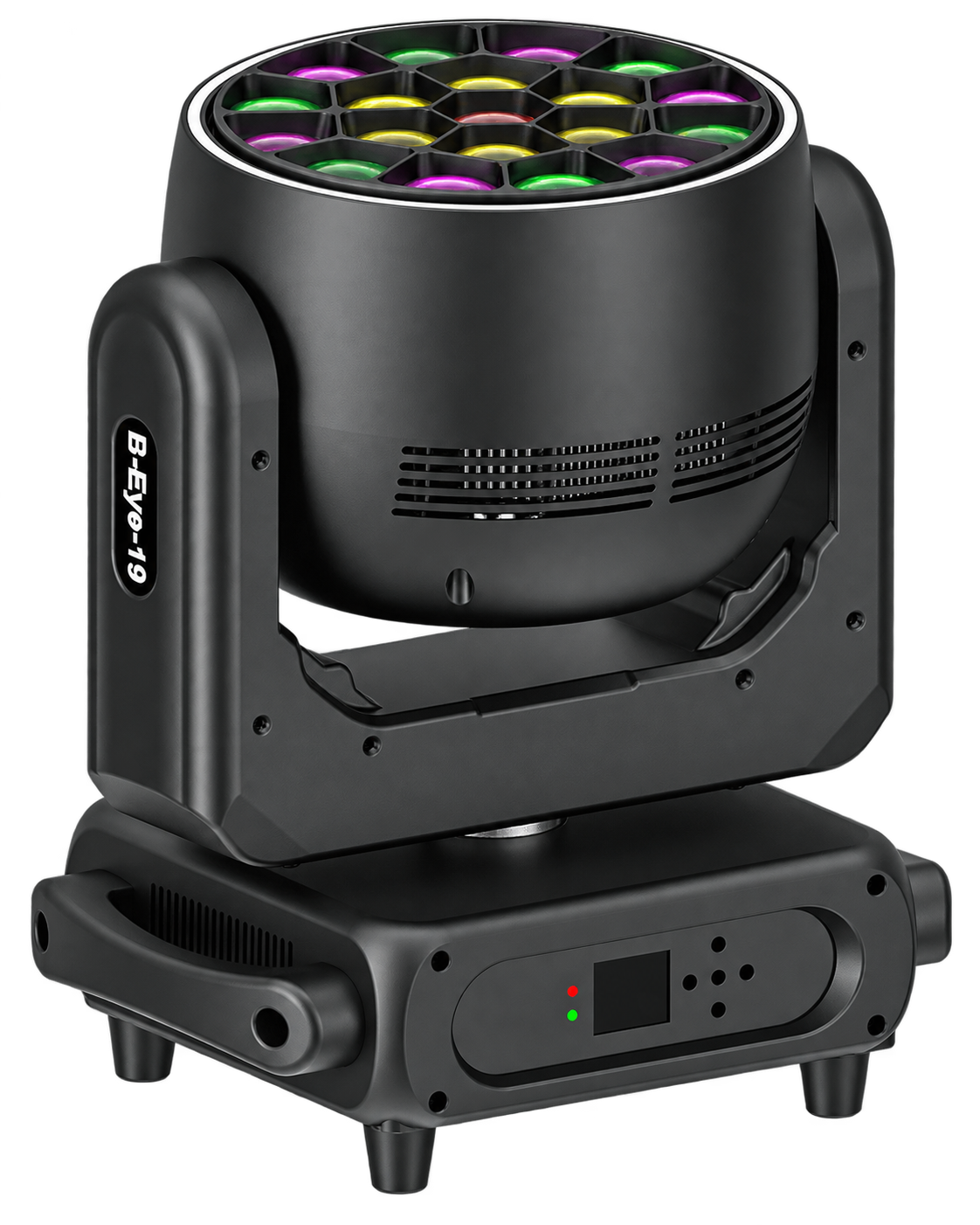
Dedicated beams look thin on their own if the dance floor has no surrounding color base. Adding rotating multi-lens washes solves both roles: open the 4–60° spot angle wide during vocal breakdowns, then tighten the angle and engage continuous front-disc rotation for kaleidoscope and vortex patterns during drops.
- For high-output main dance floors: 19×40W Rotating Bee Eye Moving Head with RGB Strip (nineteen 40W 4-in-1 OSRAM LEDs, 4–60° spot angle, 74-LED RGB front strip, 24–102CH DMX).
- For smaller rooms or lower ceiling trims: 19×15W Focusing Bee Eye Moving Head with RGB Strip (19×15W focusing array, 4–60° spot angle, 74-LED RGB front strip).
Still weighing rotating bee-eye fixtures against standard wash heads? Review our bee eye vs wash moving head optical and DMX comparison.
Idea 3: Frame the DJ Booth with Moving Linear Beam-Swing Strobes
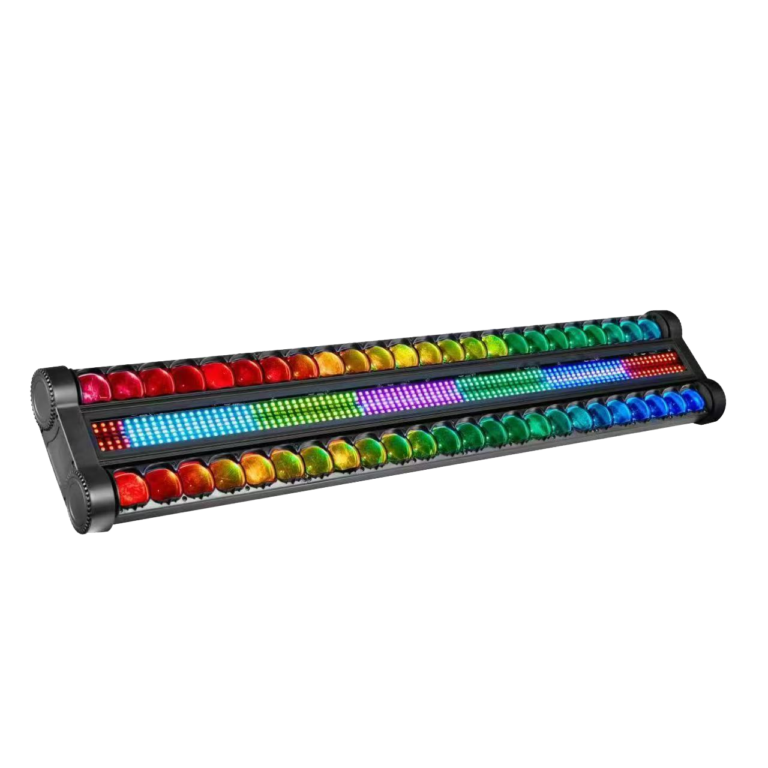
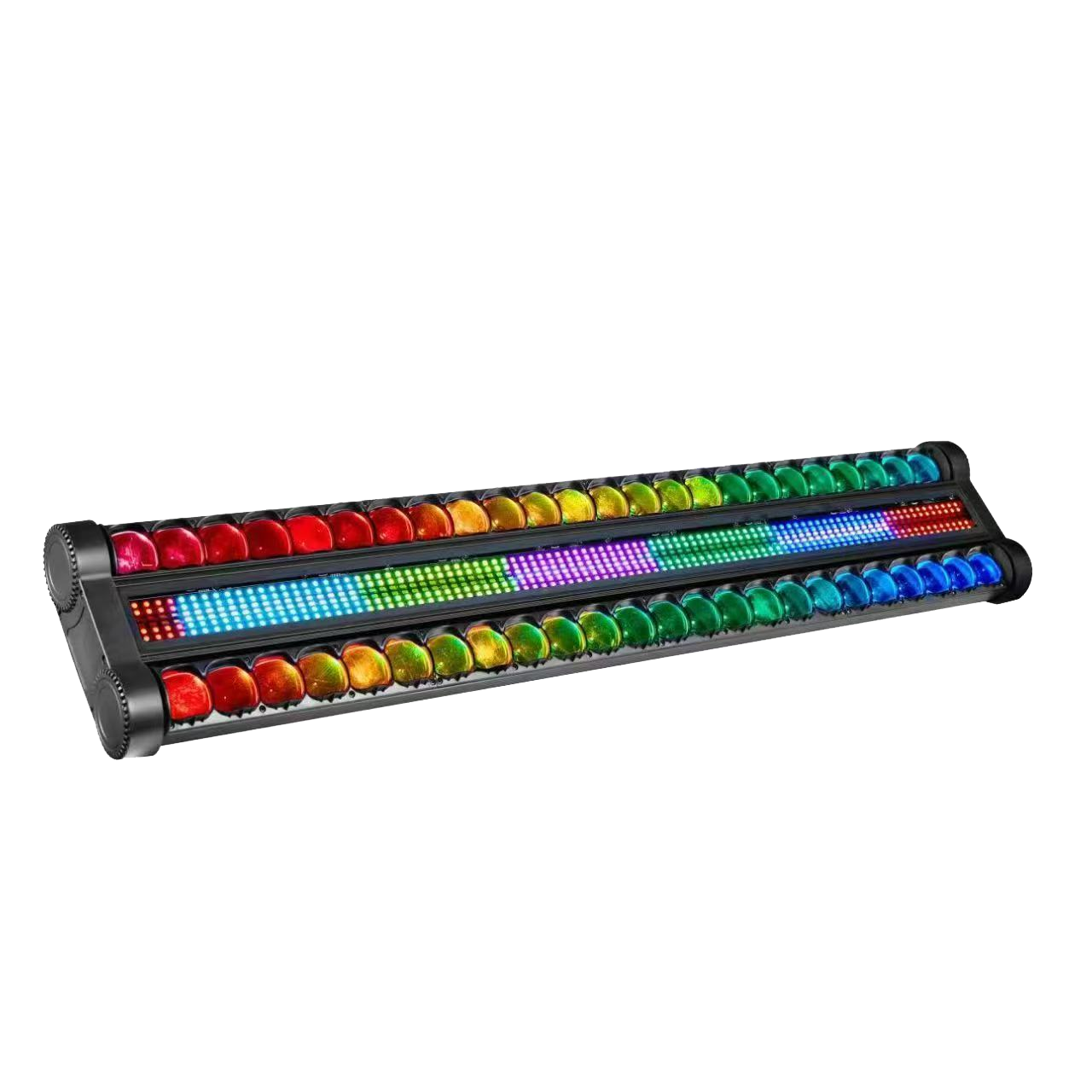
Instead of cluttering the DJ backdrop with mismatched point fixtures, mount linear moving strobe bars horizontally or vertically behind the booth to create clean architectural lines that tilt in sync with the bassline. The 253W Double-Row Beam Swing Strobe Light combines two segmented RGBW beam rows, a center color layer, and a white strobe layer in one moving linear housing—giving clubs sweeping light curtains and crisp drop hits from one rig position.
Idea 4: Add Segmented RGBW Pixel Strobes for Crowd-Facing Chases
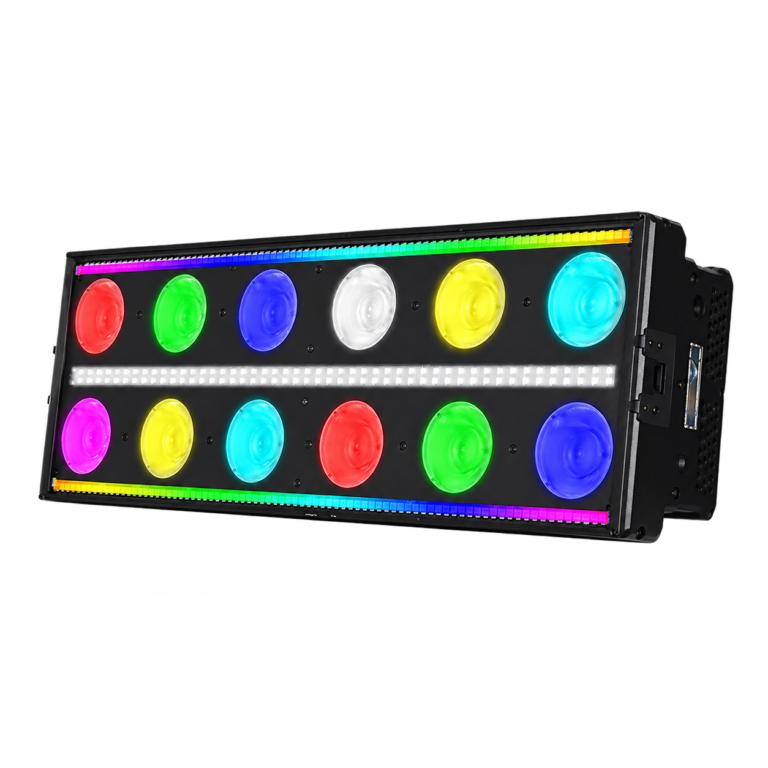
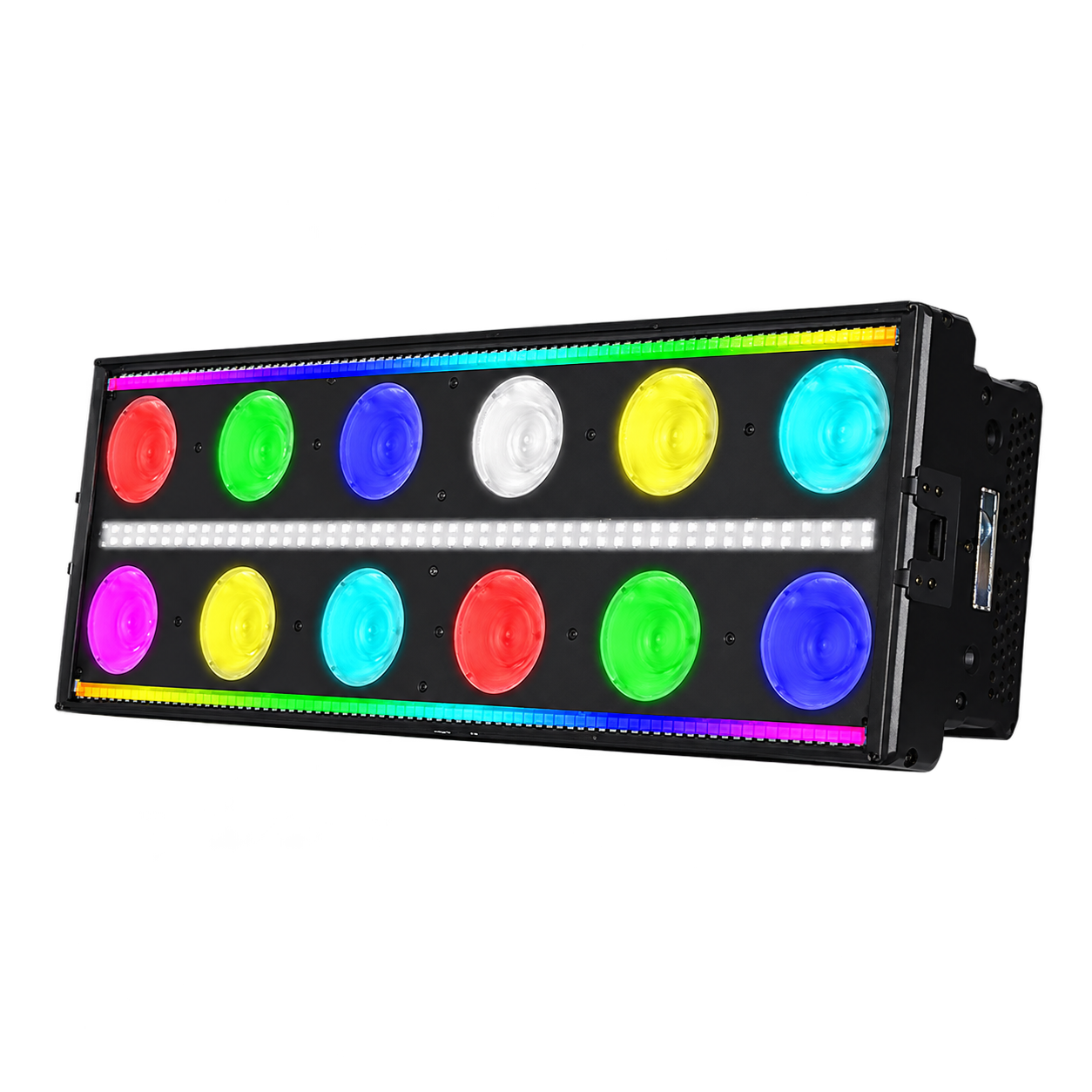
Modern club lighting design treats the face of the fixture itself as a visual element for social-media clips and guest videos. Placing rectangular multi-zone fixtures like the RGBW Stage Effect Light (twelve main RGBW lenses, an 8-segment 600W white strobe, and segmented RGBW pixel bars across 10/46/119CH DMX) along the back wall or balcony fascia creates synchronized pixel chases during builds and clean white blinder punches on peak drops.
Idea 5: Use Overhead Red Laser + Beam Moving Bars for Architectural Lines
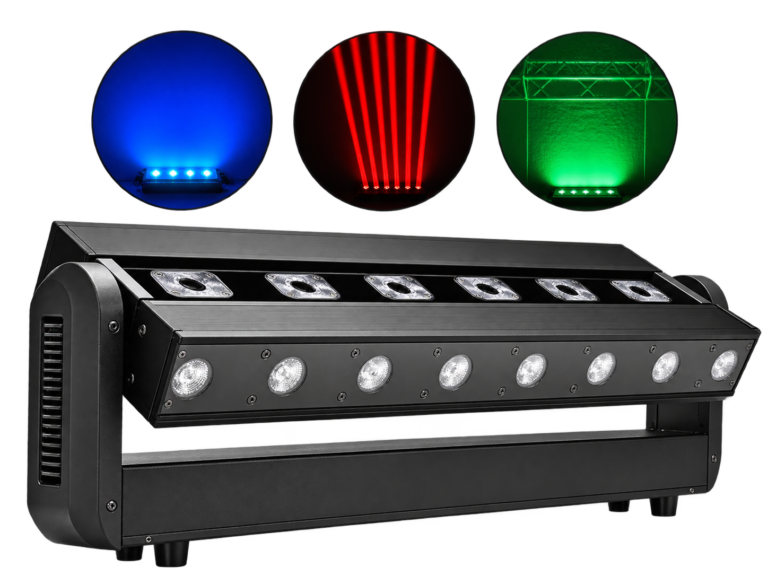
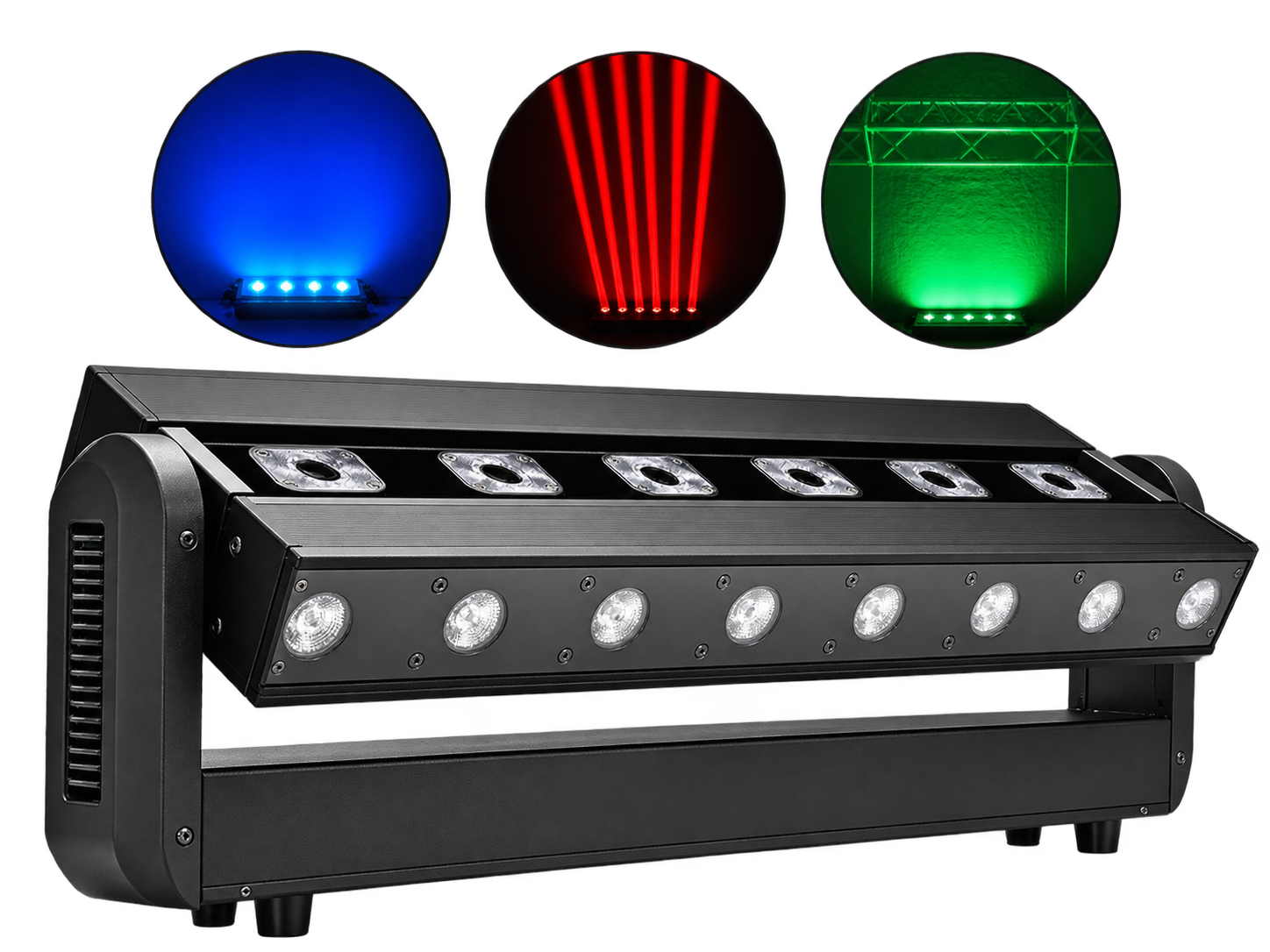
Laser lines cut through club haze with a razor-sharp geometric look that LEDs cannot imitate—especially when framed cleanly across the upper ceiling plane above the dance floor. A hybrid bar such as the 6-Head Red Laser, Beam & RGB Moving Bar integrates six 500mW red lasers, eight 5W LED beams, and a 480-pixel-style RGB chase surface inside an 85 cm moving bar (infinite X rotation, 0–120° Y movement, 22/28/61CH DMX). Always mount and mask laser beams safely above audience head height and follow local laser-safety compliance rules—never sweep Class 3B/4 beams into eyes or camera sensors. Compare when lasers beat beams in our beam light vs laser light buying check.
Idea 6: Anchor Walls, Columns, and VIP Alcoves with Low-Glare Wash
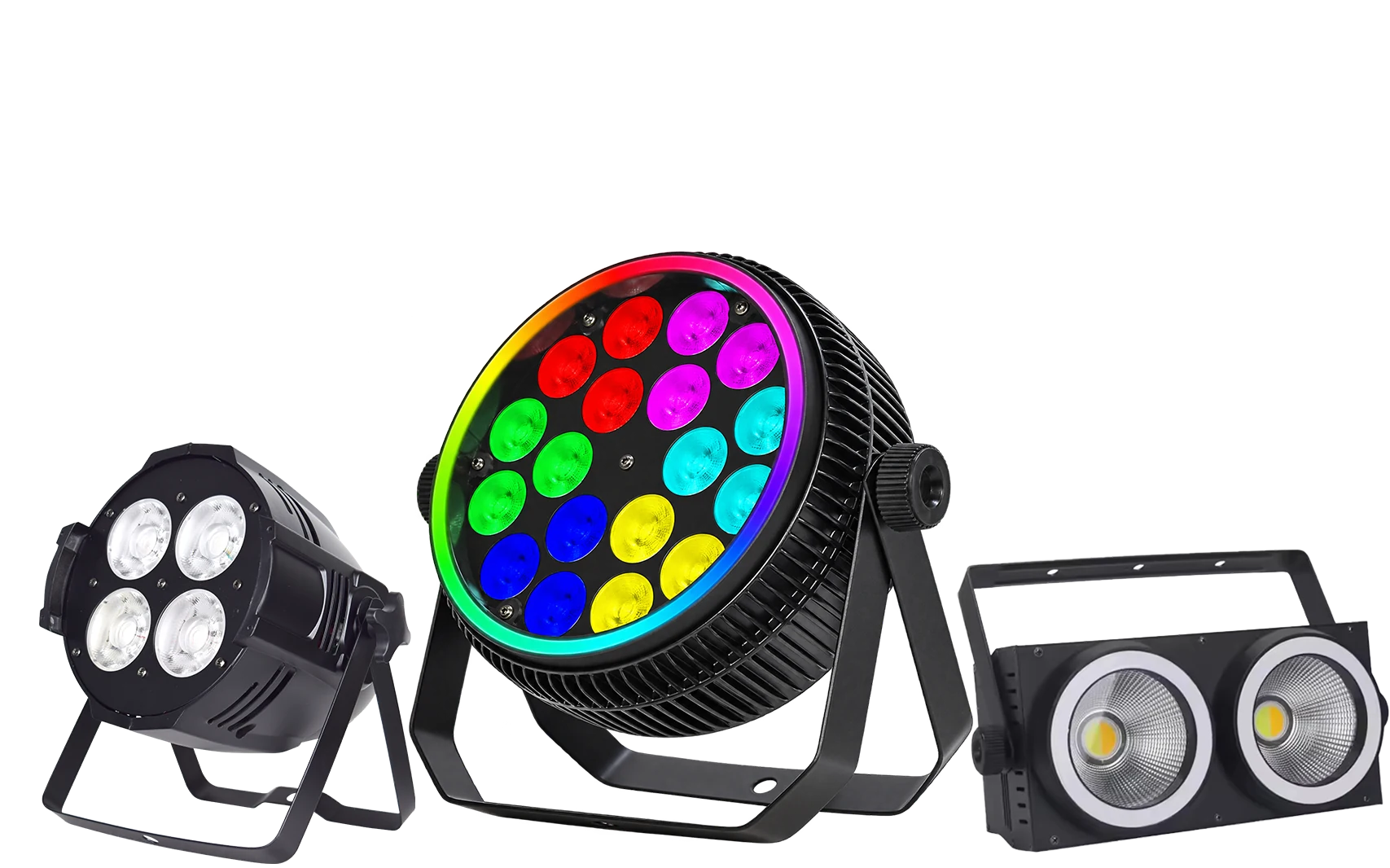
Use static LED PAR lights tucked along columns, ceiling coves, and bar backsplashes to keep the room’s base palette cohesive without blinding seated guests. Lock VIP and bar PARs on a separate DMX group or dimmer master so staff can adjust visibility independently from dance-floor peaks.
Idea 7: Design Around Thin, Continuous Haze—Not Thick Fog Bursts
Aerial beams and lasers are invisible in clean air. However, blasting thick fog obscures the DJ booth, triggers HVAC sensors, and creates uneven white clouds. Use a continuous water- or oil-based hazer matched to your room’s exhaust rate so the air holds an even, barely visible sheen all night. See the full breakdown in our haze machine vs fog machine guide.
4. The 4-Phase Nightly Cue Progression (Program Once, Repeat Every Weekend)
Even the strongest nightclub lighting ideas look chaotic if every song triggers random rainbow chases. Program four distinct cue banks on your DMX console so the room builds energy naturally across the night:
| Nightly Phase | Typical Window | Active Fixture Layers | Palette & Movement Rules |
|---|---|---|---|
| Phase 1: Doors Open | 21:00 – 22:30 | Static wall/column PARs + subtle RGB front rings at 20–30% | Warm amber, deep blue, or brand accent; zero strobes; fixtures parked cleanly |
| Phase 2: Warm-Up | 22:30 – 00:00 | Bee-eye washes at 40–60% + slow pan/tilt waves + gentle pixel bar chases | 2-color complementary palettes (e.g., teal + magenta); slow linear dimming fades |
| Phase 3: Peak-Hour Drops | 00:00 – 02:30 | Full beam banks + multi-prism rotations + swing strobes + overhead laser cues | High-contrast dark pauses before drops; sharp white strobe bursts; tight 2° beam fans |
| Phase 4: Late / Closing | 02:30 – Close | Slow bee-eye wide washes + static bar/exit lighting brought up gradually | Cool down saturation, retire strobes and lasers, maintain safe exit visibility |
5. Worked Mid-Size Nightclub DMX Universe & Power Planning Example
Before buying fixtures or pulling truss cables, verify both DMX channel slots (512 channels per universe) and real electrical loads. Here is a concrete reference rig for a typical 200–300 m² nightclub with a 4.5 m ceiling trim, built strictly from verified WUYESTAGE channel modes and specifications:
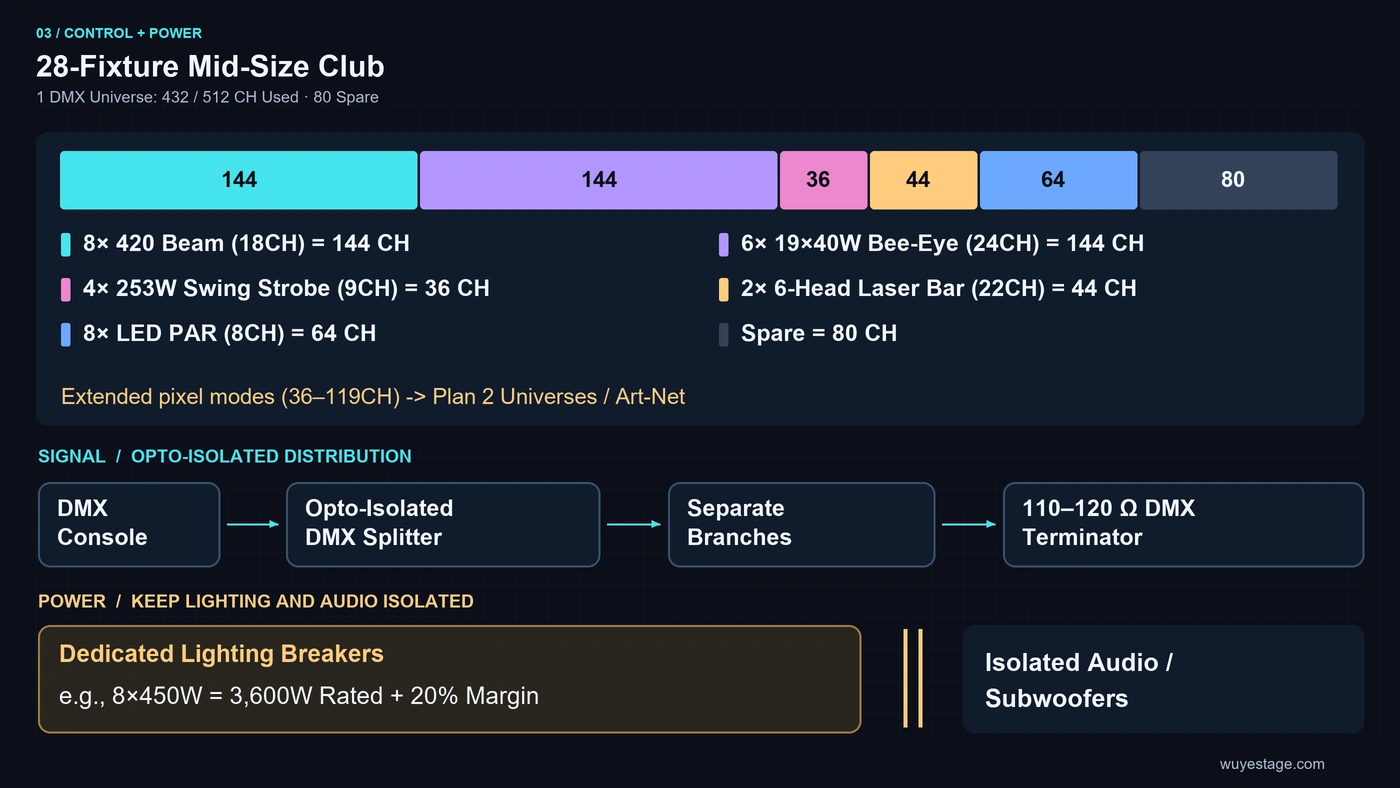
| Rig Layer | Sample Quantity & Model | Selected DMX Mode | Total DMX Channels | Electrical Planning Note |
|---|---|---|---|---|
| Dance Floor Beams | 8 × 420 Prism King Beam | 18 CH | 144 CH | 450W rated power each = 3,600W total rated (do not size from 300W lamp figure) |
| Wash & Vortex Layer | 6 × 19×40W Rotating Bee Eye | 24 CH (compact) | 144 CH | Confirm complete fixture input power on formal quotation (19×40W is LED source only) |
| DJ Backdrop Kinetic Bars | 4 × 253W Double-Row Beam Swing Strobe | 9 CH or 36 CH | 36–144 CH | Confirm exact DMX mode & rated input current on quote before power-linking |
| Overhead Laser Accent | 2 × 6-Head Red Laser, Beam & RGB Bar | 22 CH | 44 CH | Confirm rated input wattage & dedicated safety key/interlock wiring per local code |
| VIP / Wall Wash | 8 × LED PAR Lights (4–9CH class) | 8 CH (example) | 64 CH | Keep VIP/bar PARs on a separate power/DMX branch for independent dimming |
| Total Rig Snapshot | 28 Fixtures | Compact vs. Extended | 432 CH (1 Universe) or 540 CH (2 Universes) | Split lighting onto dedicated circuits isolated from DJ sound/subwoofers |
Key engineering insight: Running the 6 bee-eye heads in 24CH mode and the 4 swing strobes in 9CH mode fits the entire 28-fixture club cleanly inside 1 single DMX universe (432 / 512 slots) with 80 spare channels for hazers or expansion. If your lighting designer wants extended pixel control (e.g., 102CH bee-eye mode or 119CH pixel strobes), plan a 2-universe DMX / Art-Net backbone with optical DMX splitters from day one. For complete addressing fundamentals, review our DMX channels guide and DJ lighting setup guide.
6. Five Costly Nightclub Lighting Mistakes to Avoid
- Buying 10 different single fixtures instead of matched banks: Two random beams, one random laser, and two random strobes look amateur on camera. Symmetry creates perceived budget—six identical moving heads running coordinated phase offsets outperform twelve mismatched units.
- Sizing breakers from LED or lamp wattage instead of rated fixture power: As shown above, eight 300W-lamp 420 Prism King fixtures draw 3,600W rated, not 2,400W. Always add a 20% breaker safety margin and keep audio amplifiers off lighting circuits.
- Ignoring laser audience-scanning safety: High-powered multi-head laser bars are built for overhead geometric projection above head height. Confirm local regulatory requirements, physical beam masking, and emergency shutoff before opening night.
- Skipping a 110–120 Ω DMX terminator and opto-splitter: Long ceiling runs near high-current bass amplifiers pick up signal reflections that cause fixtures to twitch randomly during quiet breakdowns. Always use real DMX cable (not microphone XLR) and split branches cleanly.
- Forgetting maintenance access and spare parts: Nightclubs run in continuous haze and dust. Plan safe ladder or lift access to trusses and keep a small stock of spare clamps, safety cables, DMX leads, and fuses—see our stage lighting maintenance checklist.
Frequently Asked Questions
How many moving heads does a small or mid-size nightclub need?
For a 150–300 m² dance floor with a 3.5–5 m ceiling, most balanced designs use 6 to 8 matched beam moving heads paired with 4 to 6 rotating bee-eye or zoom wash heads, supported by 2–4 linear strobe or effect bars and static wall PARs. Buying matched pairs in symmetrical banks matters more than raw unit count.
What is the best ceiling height for nightclub beam moving heads?
Tight 2° aerial beam fixtures look cleanest at 3.5 meters and above, where the beam has room to travel through light haze above guests’ heads without causing direct eye glare. Below 3.5 meters, lean more heavily on wide 4–60° bee-eye washes, compact LED PARs, and linear RGB or strobe bars.
Do nightclubs need both beam lights and wash or bee-eye lights?
Yes. Narrow beams build mid-air geometric energy and prism patterns, while wide wash or rotating bee-eye fixtures fill the room with color and cover the DJ booth and dance floor evenly. Combining both layers lets you shift smoothly from relaxed warm-up cues to high-impact peak drops.
Can all nightclub fixtures run on one DMX universe?
A compact 25–30 fixture mid-size club can fit inside one 512-channel DMX universe if bee-eye washes and linear strobes run in compact channel modes (such as 18–24CH). If you want multi-segment pixel mapping (36–119CH modes) or larger fixture counts, plan two DMX universes or an Art-Net/sACN network before pulling ceiling cables.
What information should I send to get a factory nightclub lighting configuration and quote?
Send five details: (1) total floor area and dance-floor dimensions, (2) ceiling or truss trim height, (3) venue style such as EDM club, hip-hop lounge, or live DJ bar, (4) local voltage and plug standard, and (5) target destination and opening schedule.
Plan Your Nightclub Lighting Package with WUYESTAGE
Ready to turn these nightclub lighting ideas into a matched fixture list, DMX channel map, and factory quotation? Send your room dimensions, ceiling height, zone layout, voltage/plug standard, and target schedule through the inquiry form below (or via our contact page). Our technical team will prepare a tailored multi-zone recommendation across our moving head lights, LED PAR lights, strobe bars, and laser effect bars.