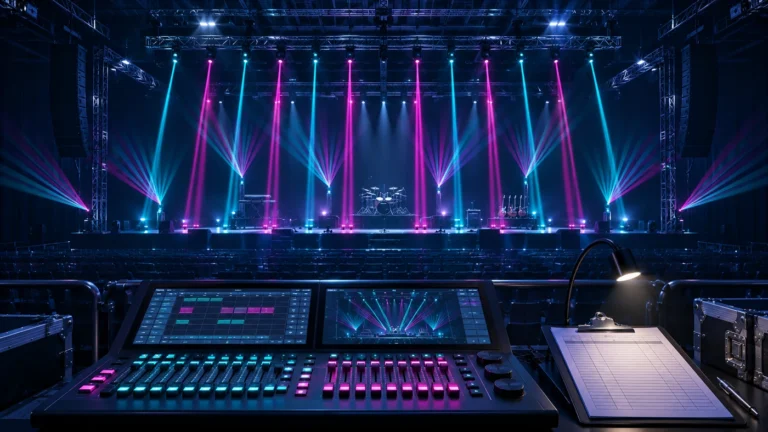
The best wash lights for festivals provide wide, even color coverage while remaining practical for outdoor weather, long operating hours, camera use, fast programming, repeated transport, and safe rigging. A powerful fixture is not automatically the best choice. Buyers must match the IP rating, zoom range, color system, movement, control modes, weight, and quantity to the actual stage.
For open-air festivals, an IP65 moving wash is usually the safer starting point. On covered stages, a non-weather-rated wash or beam-and-wash hybrid can still be useful, but it needs reliable protection from rain and moisture. This guide explains how rental companies, event contractors, and distributors can compare festival wash lights without relying on wattage alone.
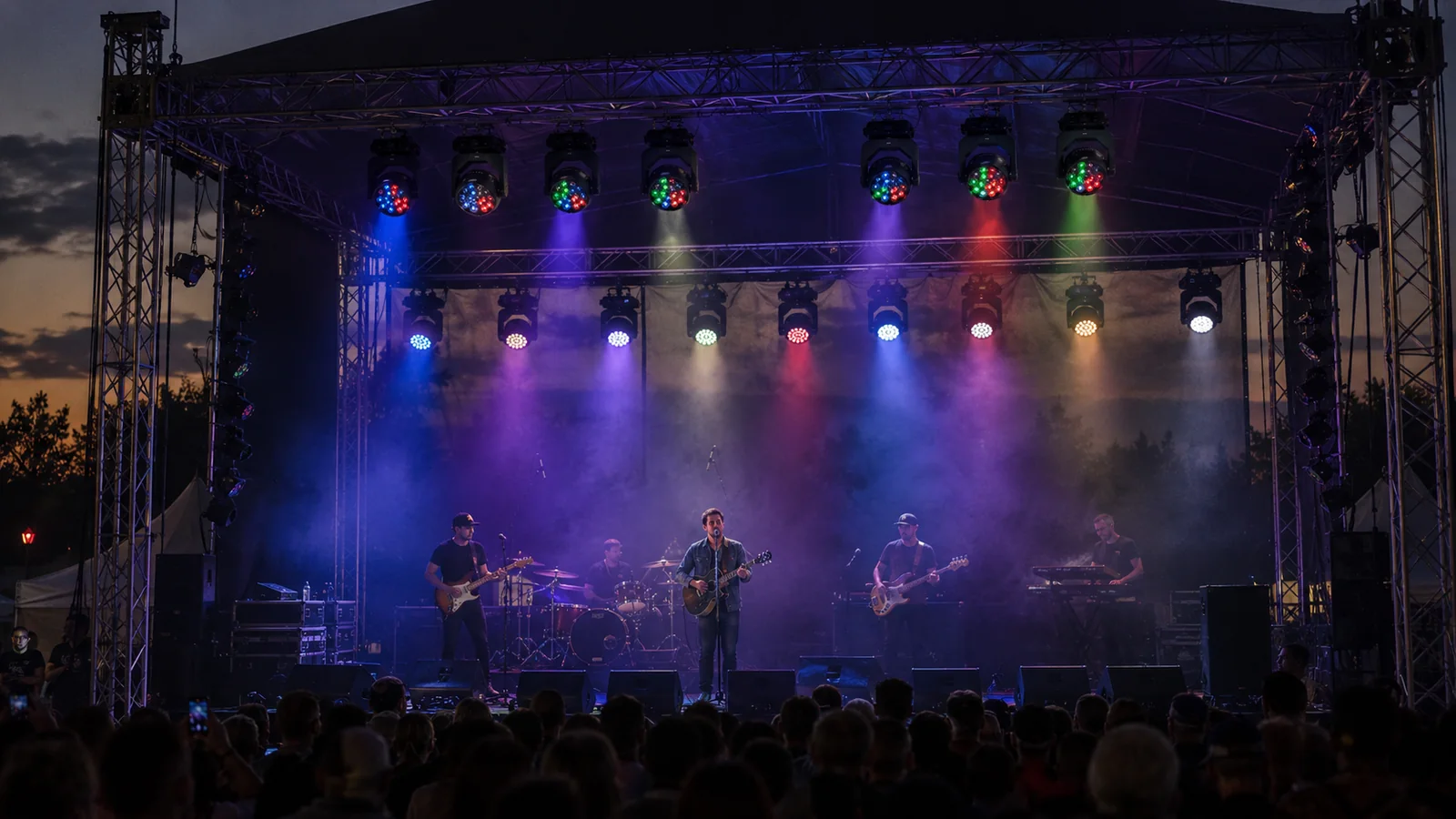
What Does a Festival Wash Light Need to Do?
A festival wash light must cover performers, scenery, truss, or audience areas without obvious dark gaps or hot spots. It also needs strong saturated color for early evening, smooth dimming after dark, and stable camera performance for televised or streamed events.
Before selecting a model, define these project inputs:
- Stage width, depth, and trim height
- Fixture positions and throw distances
- Areas that need performer light, scenic color, or audience wash
- Outdoor exposure and roof coverage
- Required zoom range and movement
- Camera and livestream requirements
- Available power, DMX, network, and rigging capacity
- Typical rental transport and maintenance workflow
These inputs are more useful than asking for a universal “best festival light.”
Is IP65 Necessary for Festival Wash Lights?
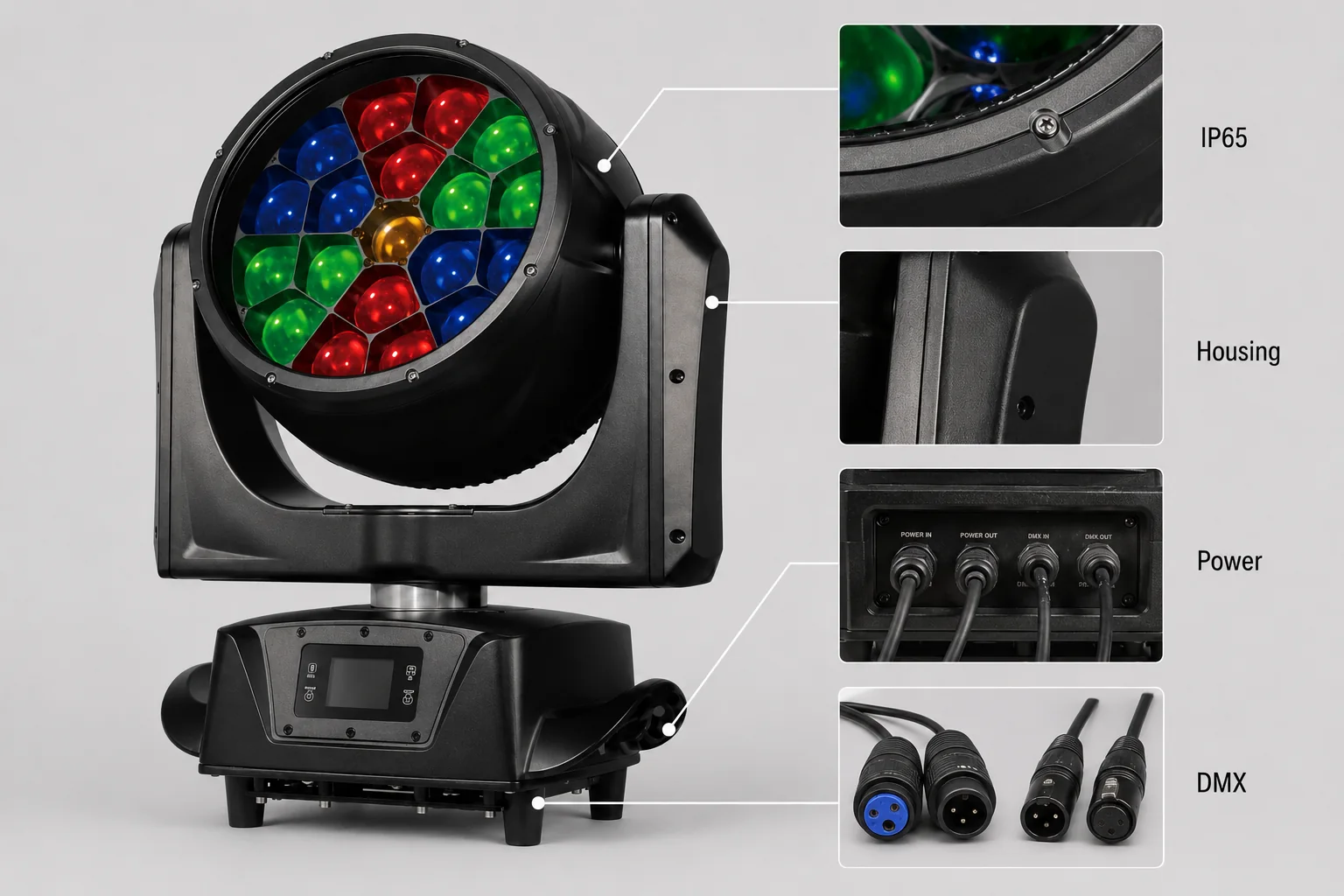
For fixtures directly exposed to outdoor weather, IP65 is a strong purchasing requirement. It indicates protection against dust and water jets under the applicable test conditions. However, buyers should confirm that the rating applies to the complete fixture, including the housing, display, seals, power input, signal connectors, and cable interfaces.
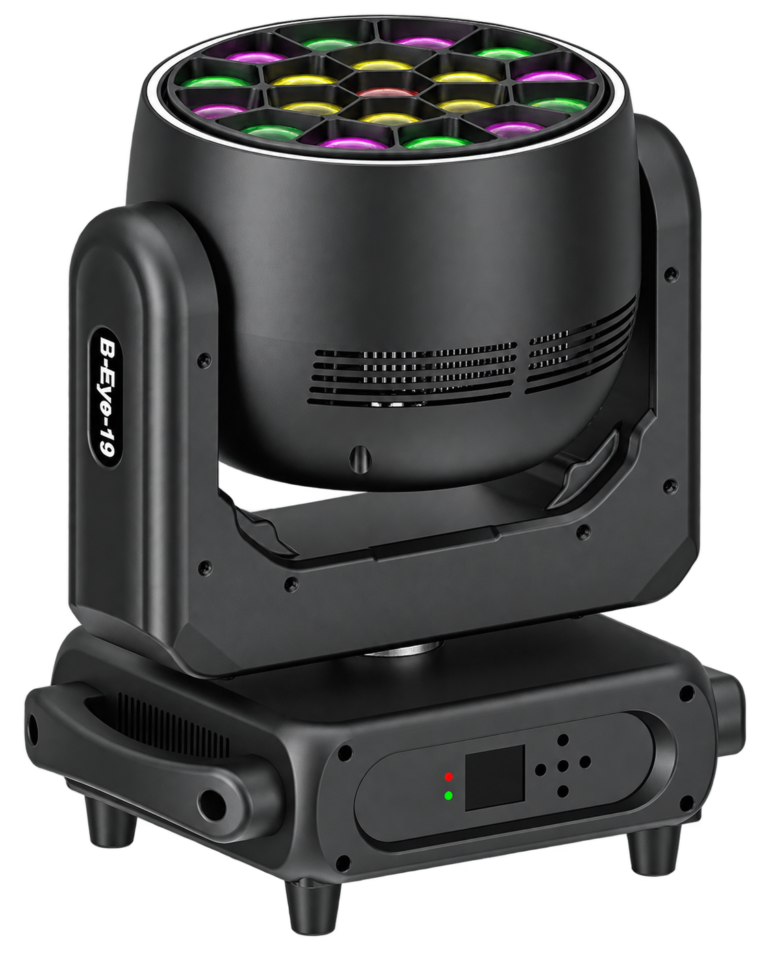
The is a relevant outdoor reference because its catalog specifies IP65 protection. It uses 19 four-in-one 40W LED sources, has a maximum fixture power of 730W, and provides an 8.5°-45° spot angle. As a result, one model can create tighter looks or wider festival washes while remaining designed for exposed outdoor use.
An outdoor festival brief needs a confirmed protection rating for each exposed fixture. No IP rating is confirmed for the or configurations discussed here. Consider them only for suitably protected positions, with the site plan addressing wind-driven rain, condensation, drainage, cable routing and shutdown procedures.
Choose Zoom Range for Coverage, Not Only Effects
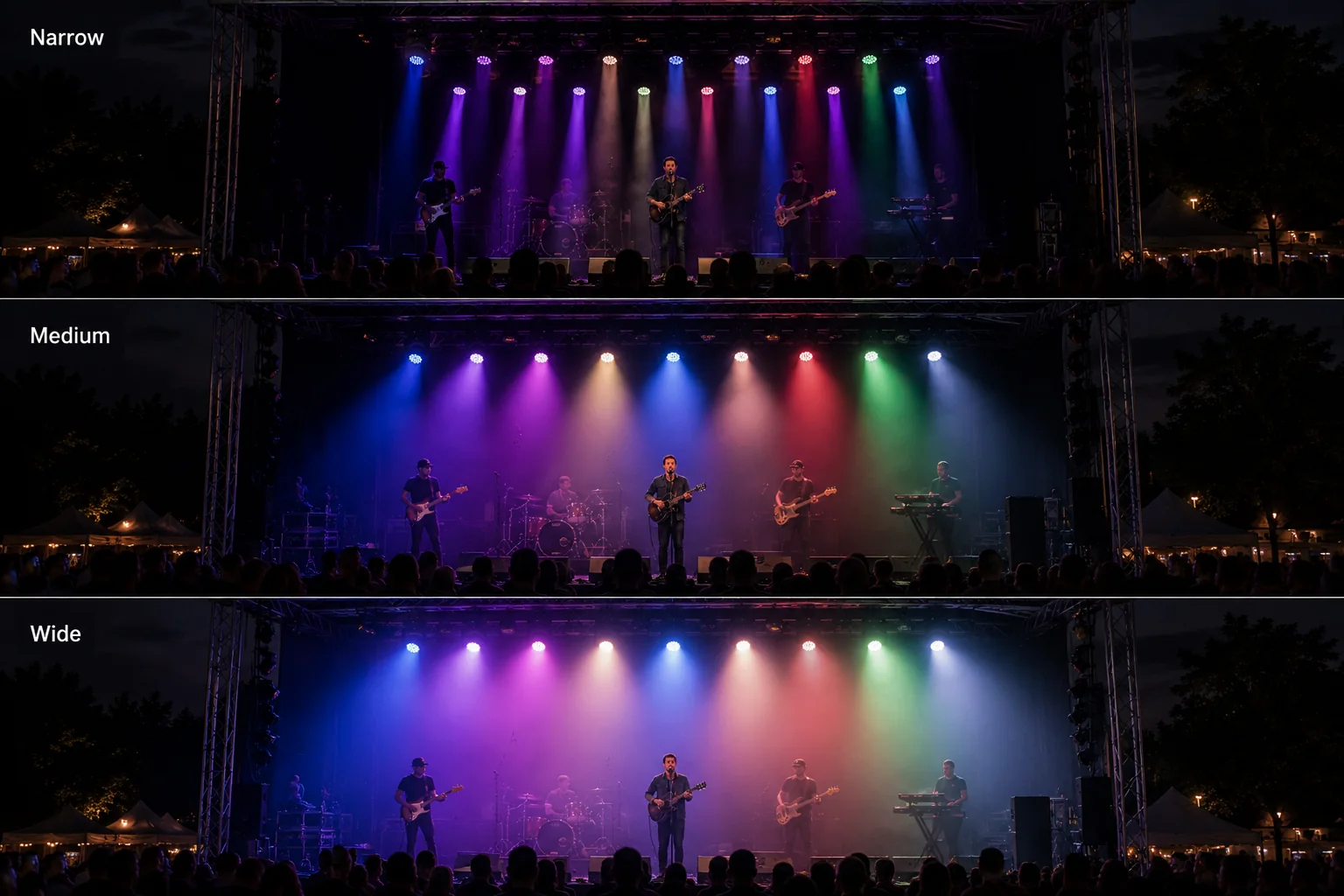
Zoom controls coverage from a given distance. Therefore, select it according to throw distance, trim height, fixture spacing, and the illuminated surface.
The provides an 8.5°-45° spot angle. This range gives designers useful flexibility when the same rental stock must cover medium stages, larger festival structures, and different rigging positions.
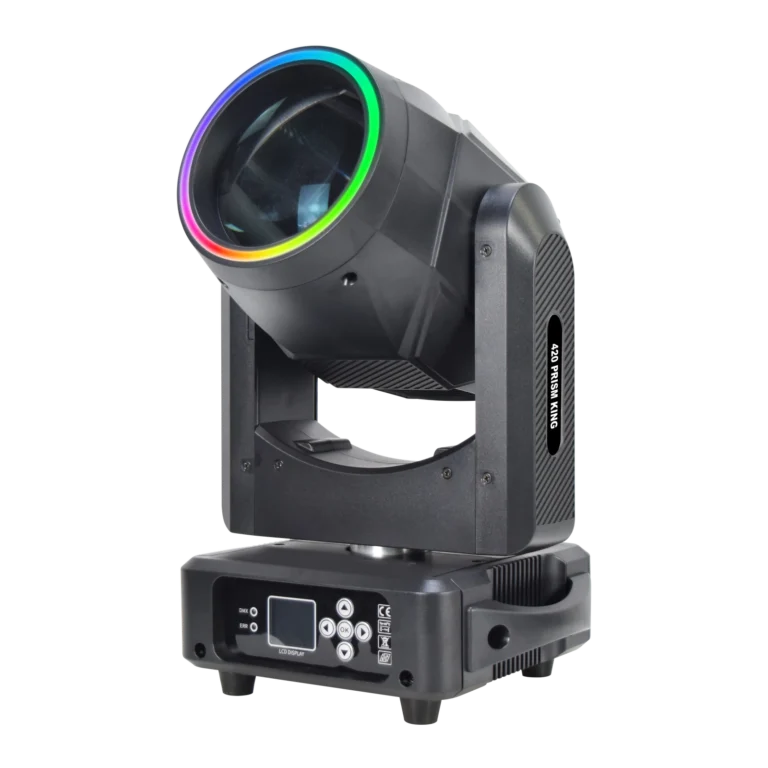
The lists a 2.8°-31° beam angle and a 5°-60° field angle. Its five 60W RGBW sources are combined with cool-white and warm-white auxiliary LEDs. Nevertheless, because no IP rating is confirmed, it belongs in protected or indoor applications unless the supplier provides a verified outdoor version.
Ask for photometric data or test a sample at the intended throw. Inspect center brightness, edge softness, color consistency, and overlap between adjacent fixtures.
Evaluate RGBW Color Mixing and CTO
Festivals need saturated effects as well as clean whites and pastels. RGBW adds a dedicated white component, while CTO adjusts white balance for cameras, performers, and scenery.
The combines RGBW LEDs with a listed 2800K-8500K color-temperature range and supports wash, beam, CTO, vortex, and kaleidoscope effects. It also provides single-LED pixel control and dedicated pixel channel modes. Therefore, it can serve both as a broad wash source and as a visual effect fixture.
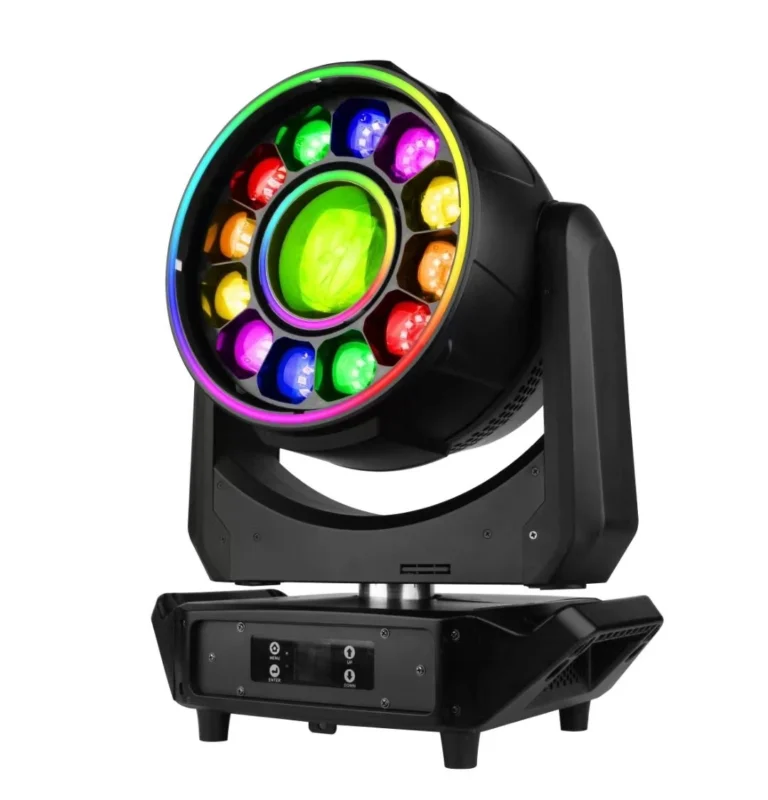
The uses 12x40W RGBW wash LEDs around a separate 200W LED beam source. Its CTO range is listed as 2500K-8000K. This hybrid structure is useful when a covered festival stage needs color wash and a central beam from the same fixture position.
Still, buyers should compare actual mixed colors rather than relying only on source labels. Test red, green, blue, white, pastel colors, low-saturation skin tones, and matched colors across several units from the same batch.
Compare Movement, Pixel Control, and Programming Load
Moving washes can reposition color during a show. Bee-eye and pixel-controlled fixtures add lens or pattern effects, but also increase DMX channels and programming time.
The offers standard channel modes from 21 to 37 channels and pixel modes at 57 or 76 channels. In practice, a rental company may use a compact mode for simple shows and a pixel mode for headline productions. The console, network, operator, and programming schedule must support the selected mode.
The uses 34 DMX channels and combines beam, wash, fixed colors, gobos, and prisms. By contrast, the offers several channel modes from 24 to 57 channels for its wash, strobe, rotation, movement, and auxiliary-light functions.
Before buying a large quantity, request the DMX chart and test fixture response, position accuracy, reset behavior, dimming, strobe, zoom, pixel control, and signal-loss behavior.
Moving Wash, Bee Eye, or Beam-and-Wash Hybrid?
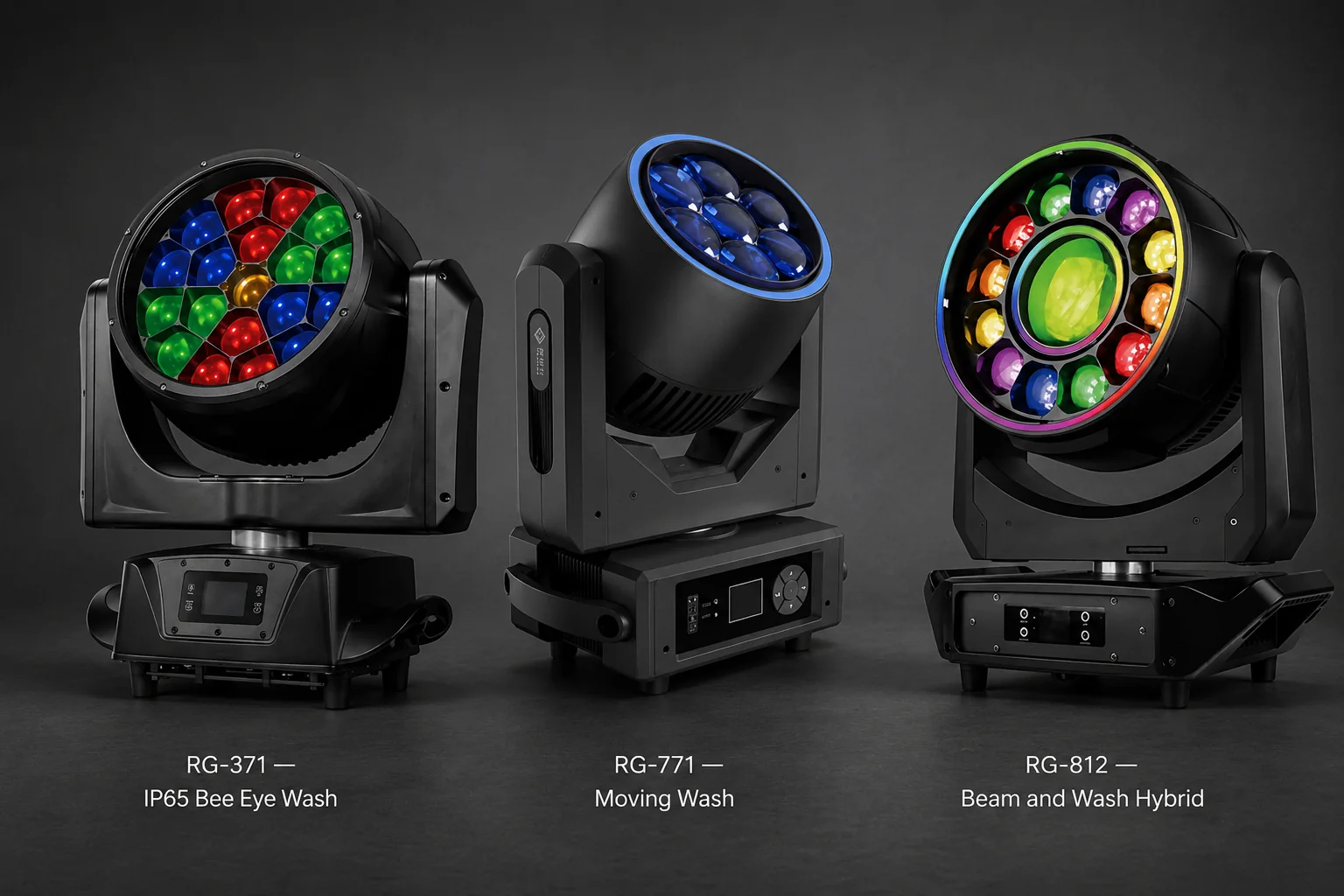
Each fixture type serves a different festival role. For a detailed optical and 12–148CH DMX universe breakdown, read our bee eye vs wash moving head guide, and pair washes with a dedicated 300W beam moving head light when long-throw aerial beams are required.
| Fixture Type | Best Use | Main Trade-Off |
|---|---|---|
| RGBW moving wash | Broad performer and scenic color | Fewer special effects than a bee-eye fixture |
| IP65 bee eye wash | Outdoor wash plus pixel and lens effects | More channels and programming complexity |
| Beam-and-wash hybrid | Combined aerial beam and color wash | Heavier fixture and more functions to manage |
| Static LED PAR wash | Simple fixed coverage and backup positions | No moving repositioning |
For exposed outdoor festivals, start by confirming weather protection. Then choose the optical and effect type. A feature-rich hybrid is valuable only when the show will use those features and the rig can support its weight and power.
How Many Wash Lights Does a Festival Stage Need?
There is no reliable universal fixture count. Quantity depends on stage width, depth, throw distance, trim height, zoom setting, output, target brightness, scenic design, camera exposure, and the number of lighting zones.
Instead, divide the stage into front, side, overhead, scenic, and audience-wash zones. Next, calculate whether adjacent beams overlap at the chosen zoom setting. Finally, add redundancy for critical positions and confirm the total power, data, rigging, transport, and spare-unit requirements.
For example, a wide main stage with high trim and long throws may require more powerful moving washes than a compact covered side stage. Likewise, a camera-focused event may use more positions to achieve uniform performer coverage and avoid deep shadows.
Check Festival Rigging, Power, and Rental Handling
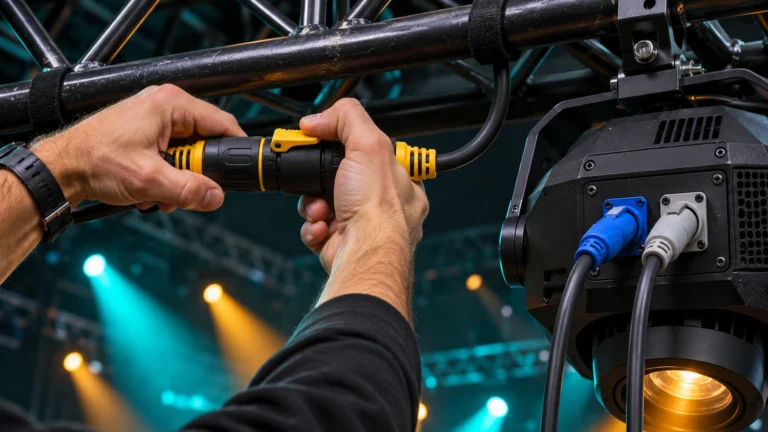
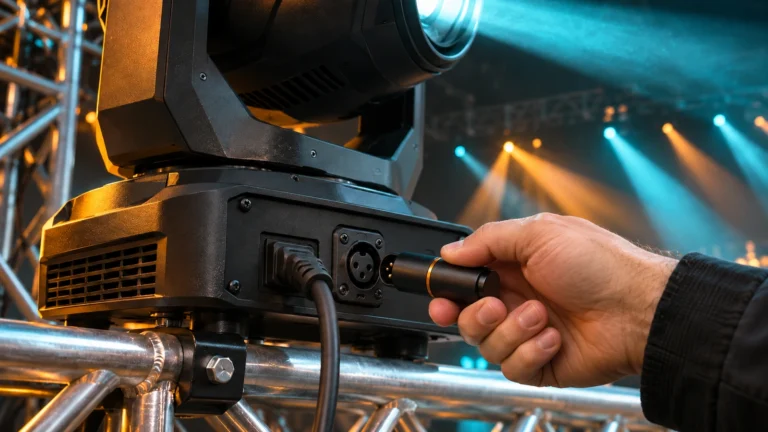
Because festival fixtures are handled repeatedly, inspect handles, clamps, safety points, connector placement, housing strength, and service access. Weight also affects truss loading and crew handling.
The has a listed net weight of 26kg, so its mounting and transport plan needs to account for a heavier hybrid fixture. Obtain the supplied weight for the selected configuration before finalizing loads, and include clamps, accessories and cables in the mounting calculation.
Plan power from maximum fixture input, including distribution, circuit loading, grounding, weather-resistant connections, and backup control paths.
How to Test Festival Wash Lights Before a Bulk Order
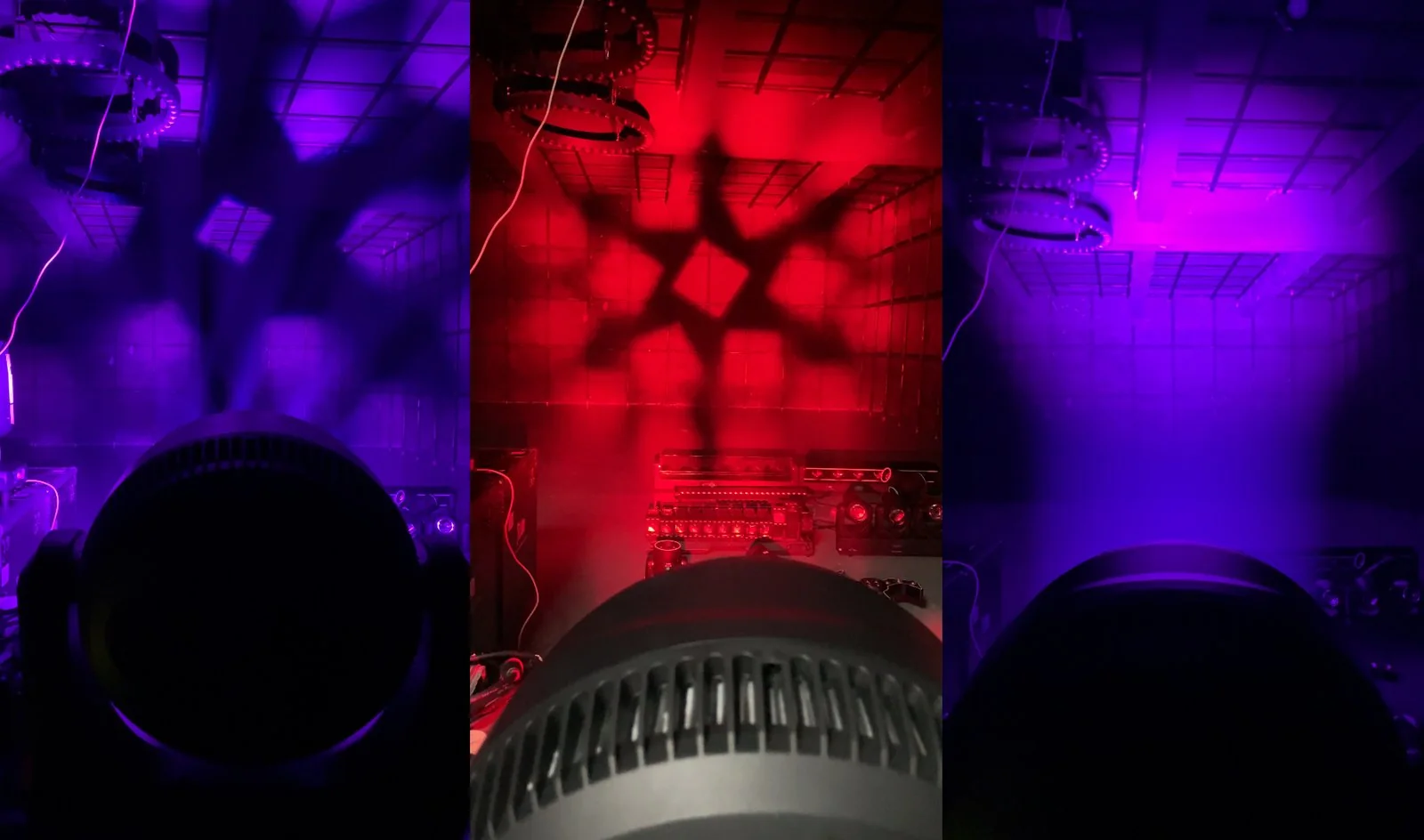
Sample testing should reproduce real festival conditions as closely as possible. A useful inspection includes:
- Extended full-output operation
- Zoom range and beam overlap at the planned distance
- RGBW color consistency across multiple units
- CTO, white balance, and low-level dimming
- Pan, tilt, reset, and position accuracy
- DMX and pixel-channel response
- Camera testing at the actual frame rate and shutter settings
- Noise, temperature, fan, and housing checks
- IP testing records for outdoor models
- Clamps, safety points, connectors, cases, cables, and spare parts
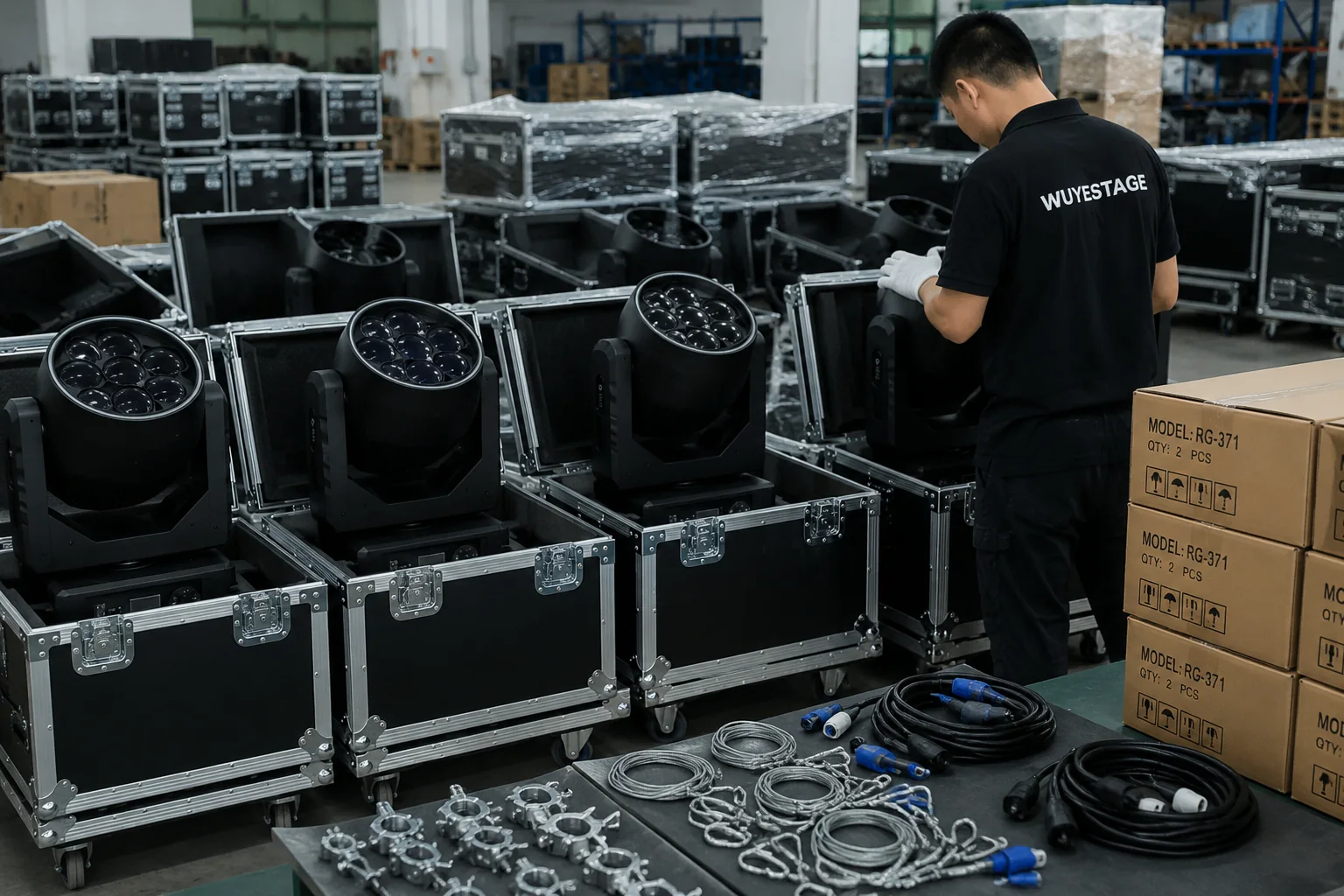
Record the approved firmware, channel chart, connectors, packing, and test standard to reduce differences in repeat orders.
Product Recommendations for Festival Projects
for Exposed Outdoor Festival Wash
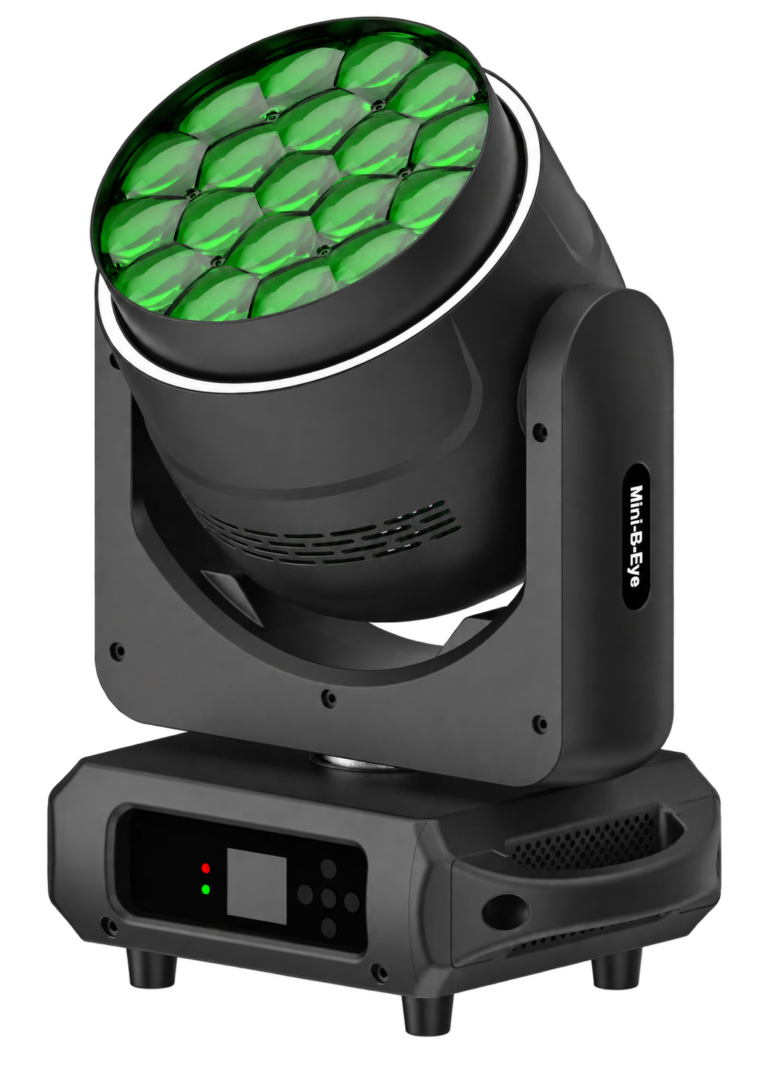
The 19×40W IP65 bee-eye moving head is one option for exposed festival positions. Its listed 8.5–45° range, adjustable color temperature and pixel-control profiles support a mix of coverage and lens effects. Compare the required field, control footprint and complete installation plan before choosing the quantity; these features do not establish that it is the best option for every festival. For indoor or covered concert stages needing 4–60° zoom and rotating front-lens patterns, compare our 19×40W rotating bee-eye moving head and the compact 19×15W focusing bee-eye moving head.
for Covered Beam-and-Wash Positions
The beam-and-wash moving head combines a 200W beam source with 12×40W RGBW wash LEDs, CTO, colors, gobos and prisms. Consider it where a protected position needs both color coverage and aerial effects. No outdoor IP rating is confirmed for this configuration, so it should not be selected as an exposed outdoor alternative to the IP65 model.
for Protected Creative Wash Effects
The combines five 60W RGBW sources with cool-white and warm-white auxiliary LEDs, zoom, strobe, movement, and rotating effects. It can support protected festival stages and indoor event projects. Again, outdoor use should not be claimed without a verified IP-rated version.
For a broader project mix, review WUYESTAGE professional stage lighting, compare the current LED wash light range, and check the real stage layout before selecting quantities.
Frequently Asked Questions
What are the best wash lights for outdoor festivals?
Start with an IP65 fixture that provides suitable output, zoom coverage, RGBW mixing, reliable DMX control, safe rigging, and documented testing. The final model still depends on throw distance, stage size, camera use, and desired effects.
Do festival wash lights need zoom?
Zoom is highly useful when the same fixtures must work at different distances and stage sizes. However, a fixed-angle fixture can still be suitable when its coverage matches a consistent installation position.
Is a bee eye light the same as a wash light?
A bee-eye fixture can create wash light, but it may also include pixel control, rotating lens effects, or tighter beam looks. Therefore, it often requires more programming than a basic wash fixture.
Can non-IP-rated wash lights be used at outdoor festivals?
Only with an appropriate weather-protection plan and risk assessment. A roof does not always prevent wind-driven rain, condensation, or wet cable connections. Never describe a fixture as weatherproof unless its complete IP rating is verified.
What information should buyers send for a festival wash-light quotation?
Send stage dimensions, trim height, fixture positions, throw distances, outdoor exposure, desired coverage, control system, camera requirements, quantity, power standard, destination, schedule, and packing needs.
Request a Festival Wash-Light Recommendation
Send WUYESTAGE your festival stage drawing, rigging height, outdoor exposure, wash zones, camera requirements, preferred zoom range, target quantity, power standard, and destination. We can help compare IP65 bee-eye wash, moving wash, beam-and-wash hybrid, and protected-stage options, then prepare a sample or bulk-order quotation based on the real project.