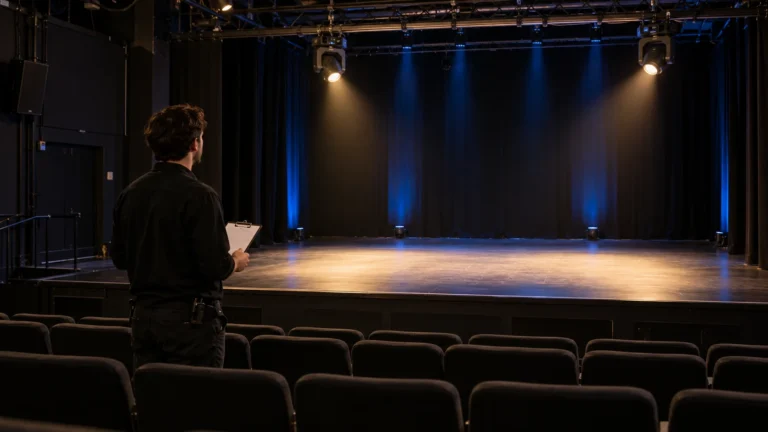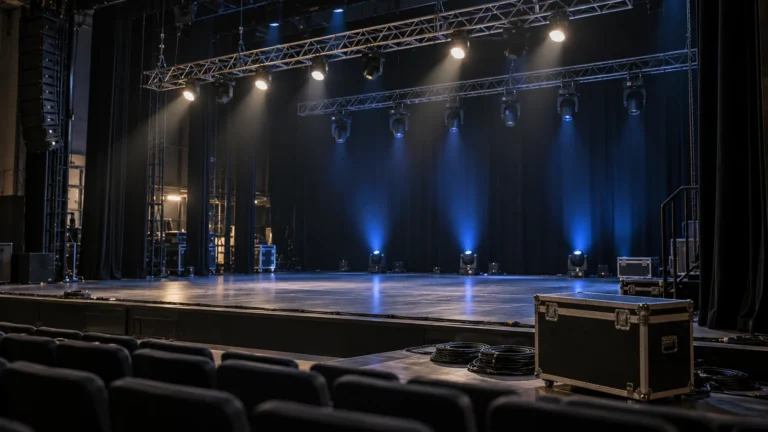
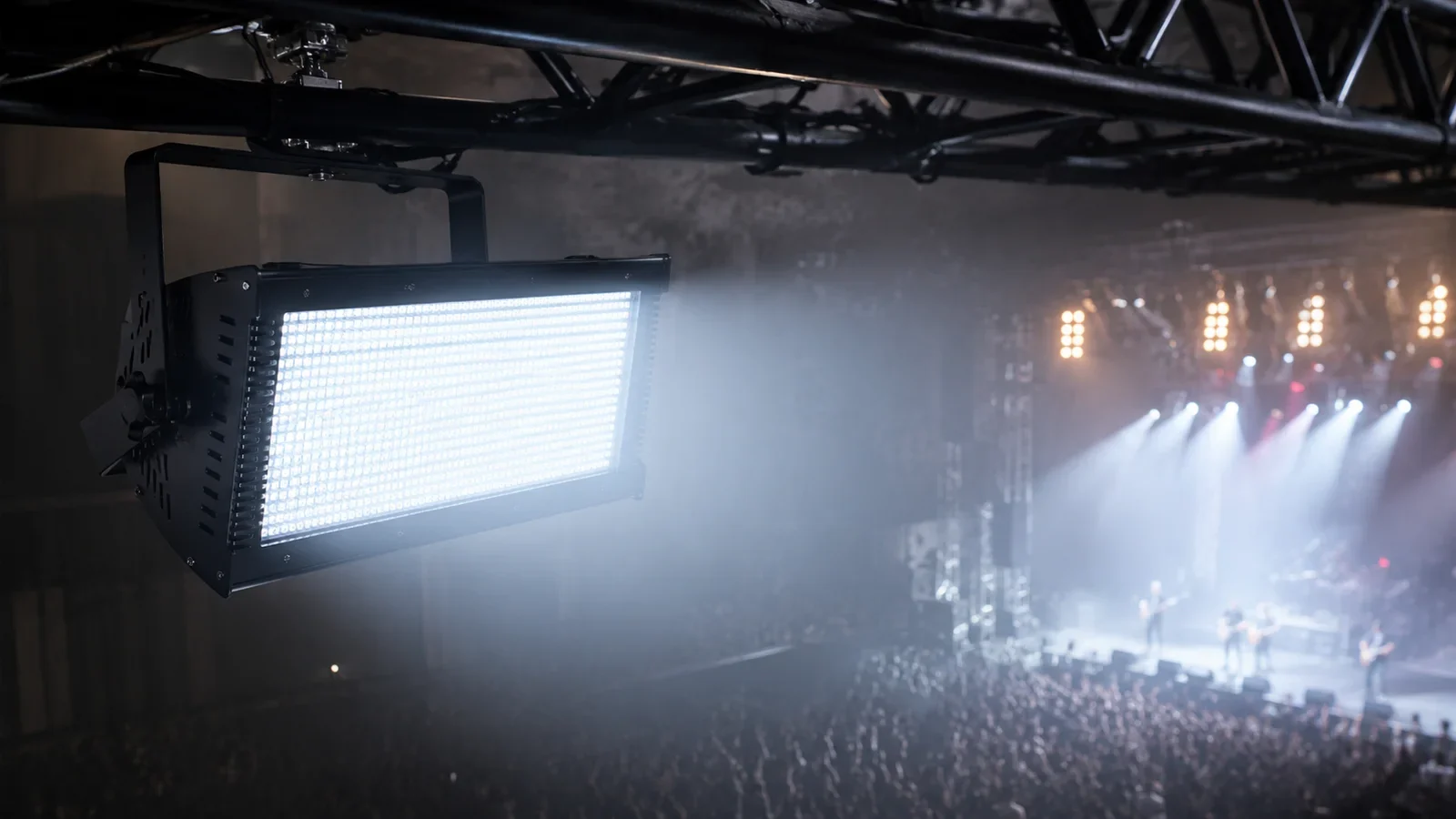
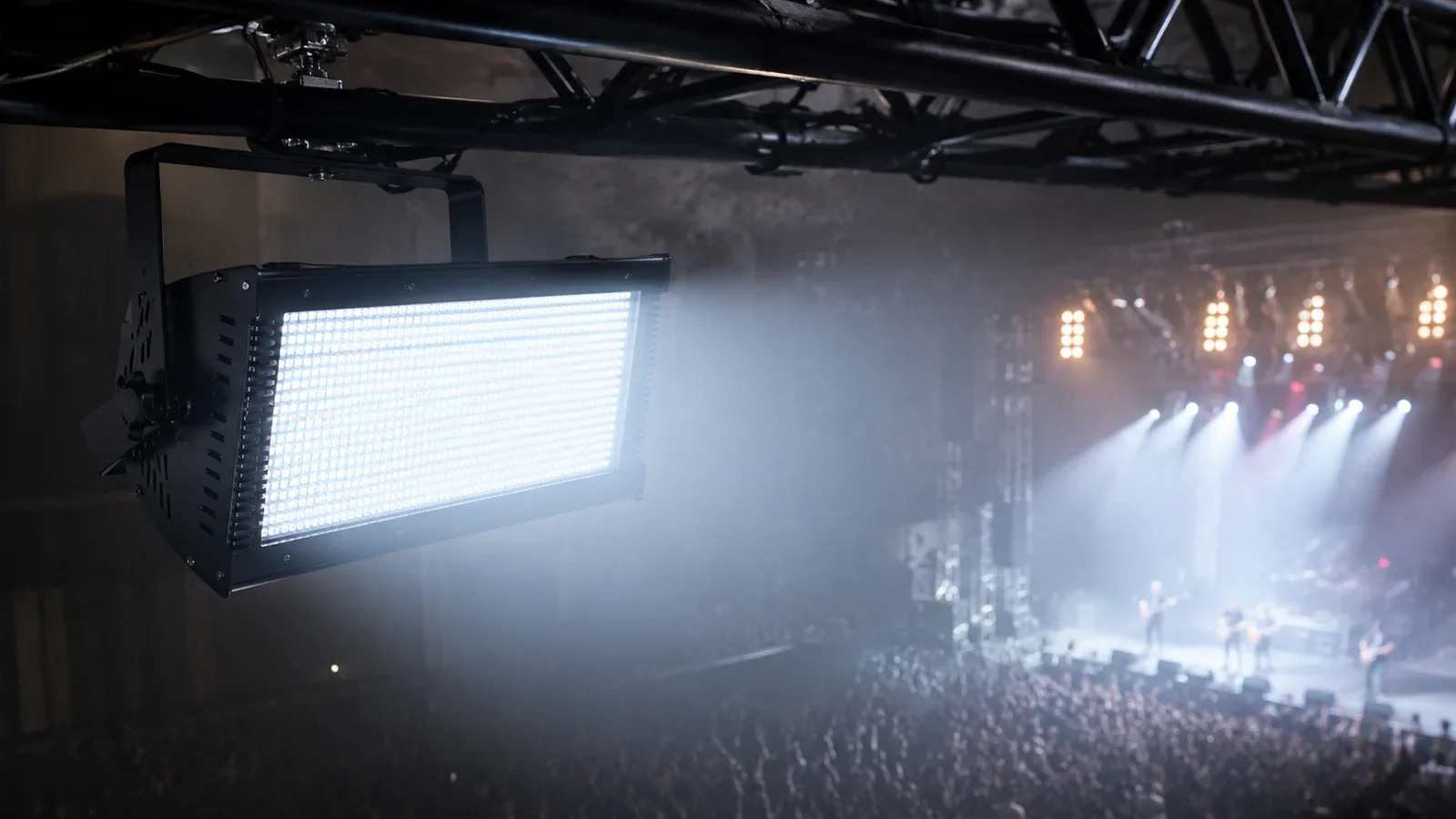
What is a strobe light? In stage production, a strobe light is a fixture that produces short, repeated flashes to make movement appear segmented, intensify a musical hit, create a burst of visual energy, or briefly illuminate an audience or scenic area. Modern stage strobes usually use LEDs because they support electronic control, fast response, color effects, and repeatable programming.
However, not every flashing fixture performs the same job. A dedicated high-output strobe, an LED effect bar, and a COB audience blinder can all create flashes, but their beam shape, brightness, color, duty cycle, control, and intended viewing direction differ. Buyers should select the fixture by effect and operating conditions rather than by wattage alone.
What Is a Strobe Light and How Does It Work?
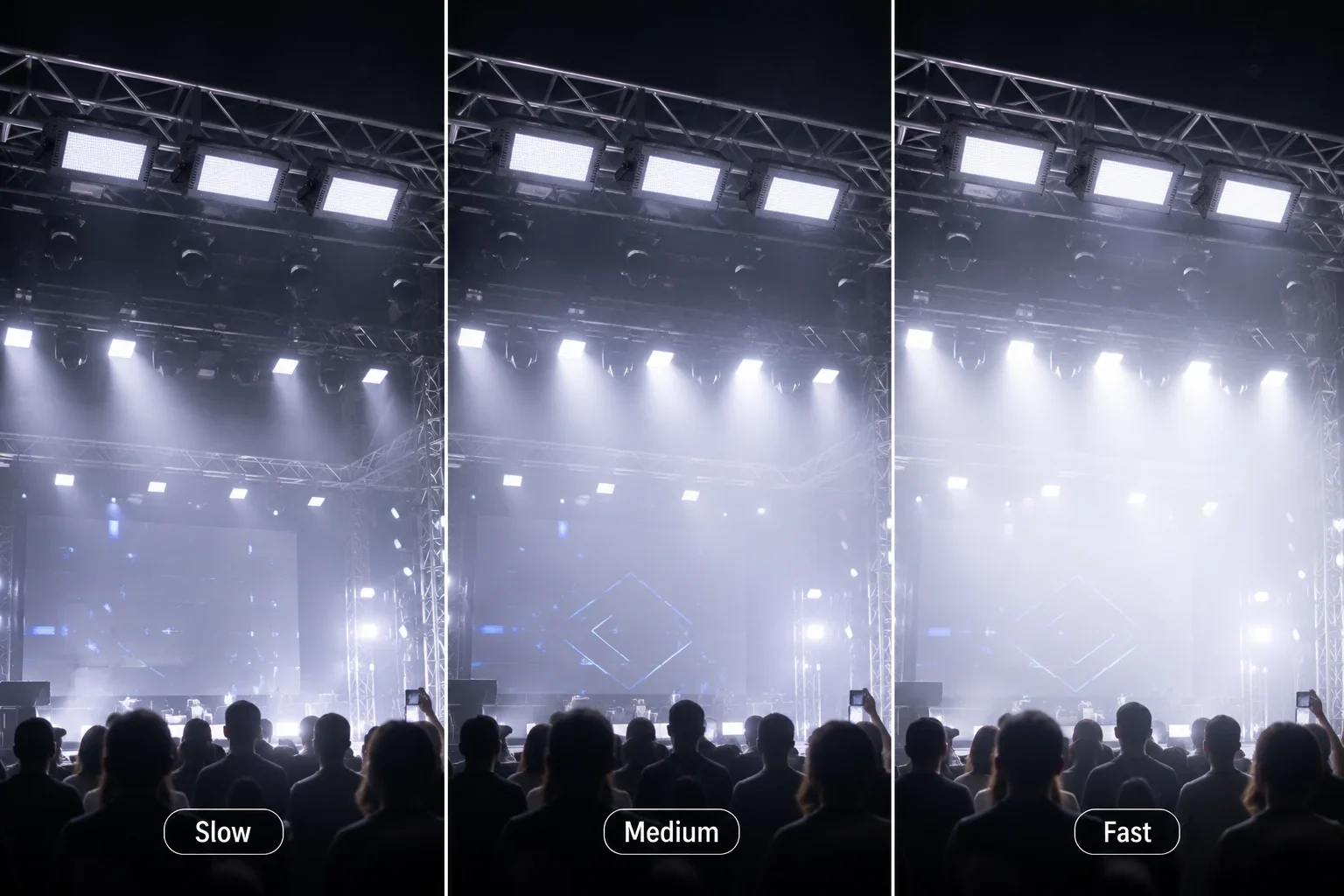
A controller switches the light source on and off in rapid pulses. The flash rate is commonly expressed as flashes per second or hertz. A slow rate creates clearly separated bursts, while a faster rate makes motion appear more continuous or visually frozen in a sequence of positions.
The result also depends on flash duration, output, beam spread, color, background brightness, haze, distance, and the size of the illuminated area. Therefore, two fixtures set to the same flash rate can look very different.
LED stage strobes may divide their sources into independently controlled segments. This allows chases, alternating zones, white flashes over color, and pixel-style patterns. Other models provide a single powerful white or warm-white field for a simpler impact.
In technical terms, the answer to “what is a strobe light” includes both the flashing source and the control system that determines intensity, rate, duration, and pattern.
What Is the Difference Between a Strobe and a Blinder?
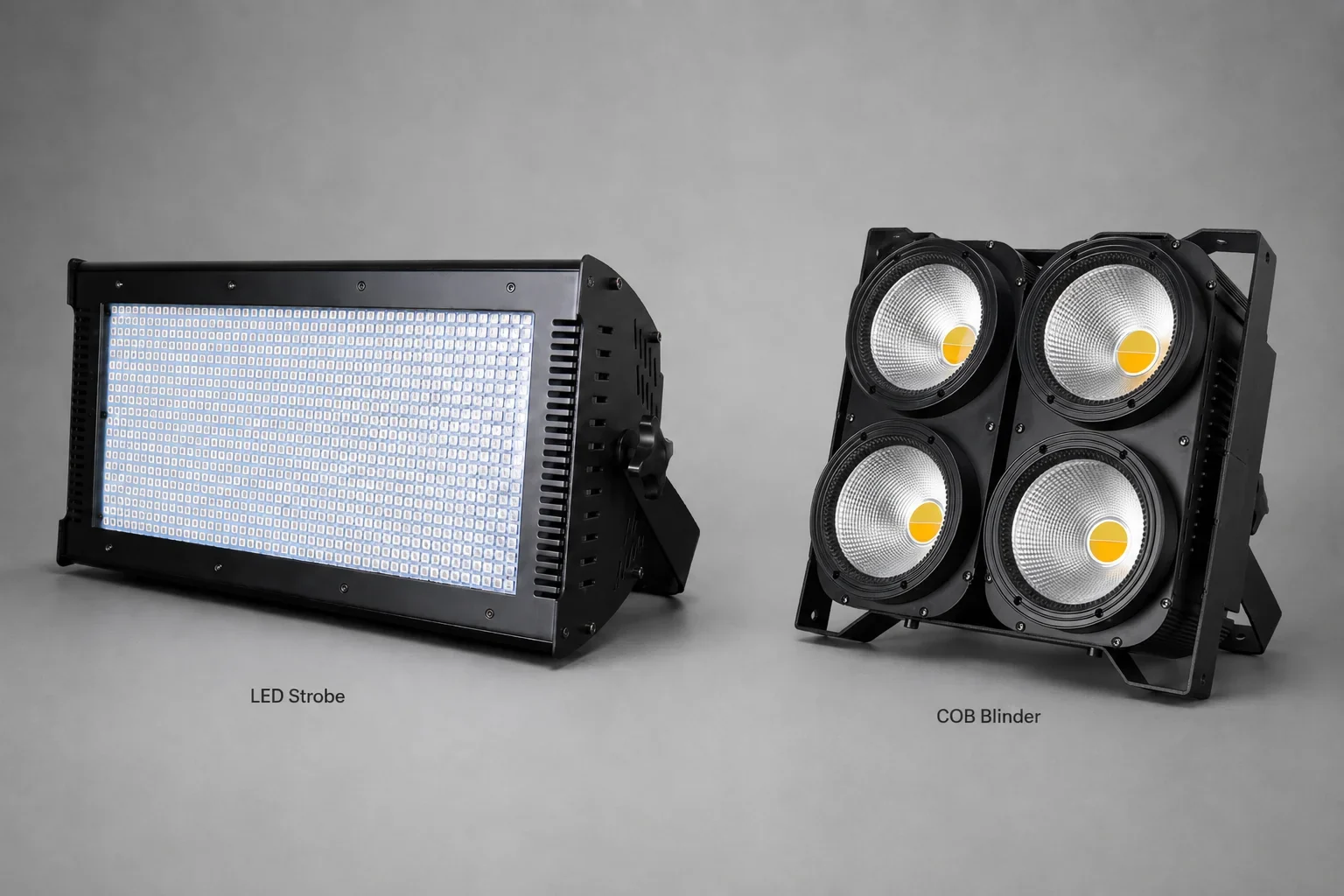
A stage strobe is designed primarily around repeated flashes. A blinder is normally aimed toward the audience to create a bright shared moment, often on a chorus, drop, applause cue, or finale. Many modern fixtures can perform both roles, but the terms still describe different design priorities.
When buyers ask what is a strobe light compared with a blinder, the simplest distinction is repeated flash effects versus broad audience illumination.
| Fixture Type | Primary Use | Typical Visual Character | Key Buying Check |
|---|---|---|---|
| Dedicated LED strobe | Repeated flashes and chase effects | Fast, sharp, high-impact pulses | Flash control, segmentation, duty cycle |
| COB blinder | Audience illumination and warm hits | Broad, bright field | Color temperature, beam angle, dimming |
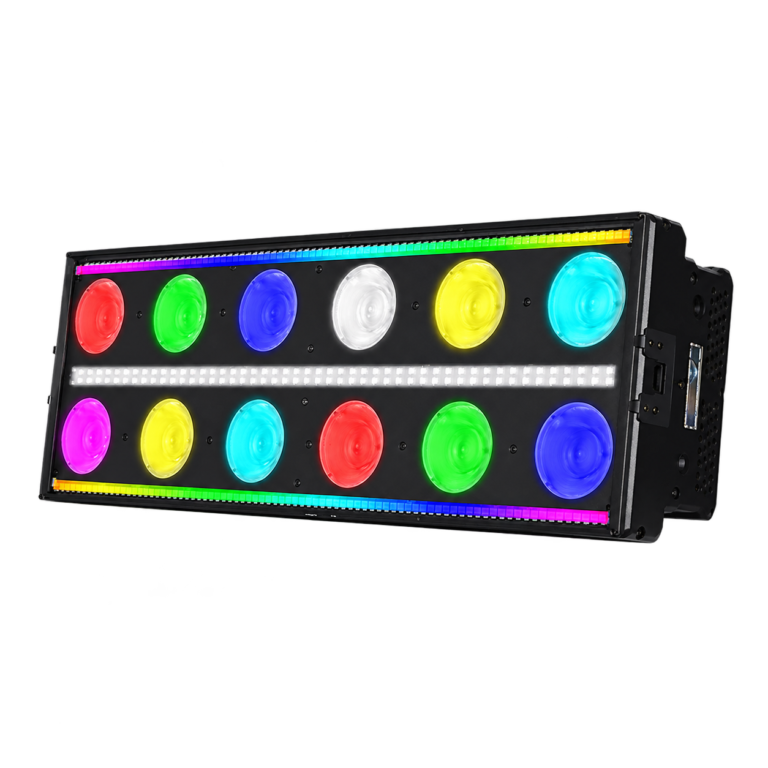
| Pixel strobe bar | Strobe plus graphic movement | Segmented lines and patterns | Pixel modes, channel count, mapping |
| Hybrid effect fixture | Strobe combined with wash or beam | Multi-function show effects | Whether each function is strong enough |
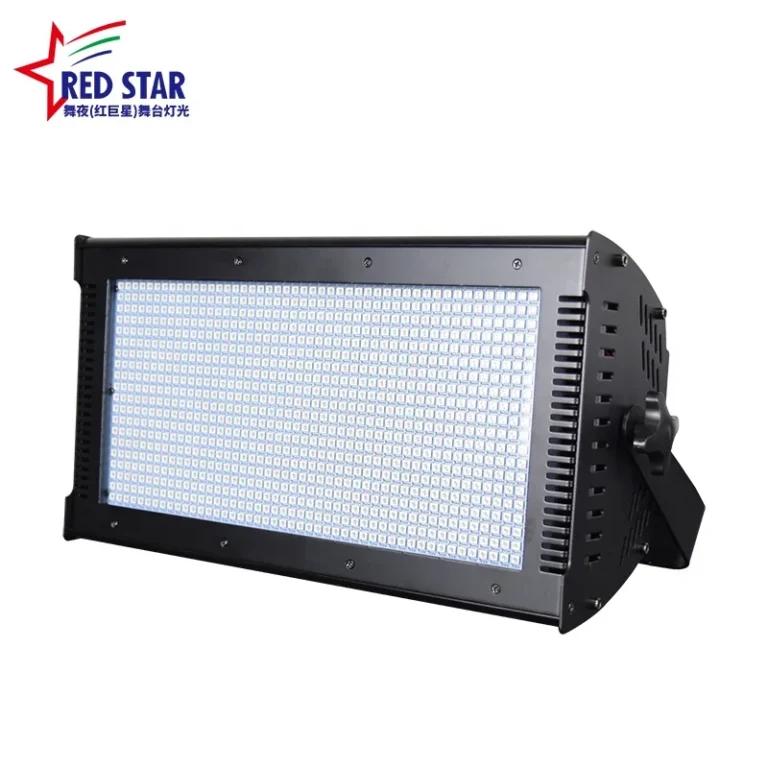
The RG-908 1000W LED strobe uses 960 LEDs with a listed 7500–8500K cool-white source and 1–12 flashes per second. Its listed synchronization and master-slave functions concern the flash program; they are not RGB color mixing. Select this type for white pulse effects and confirm the current control chart for the supplied unit.
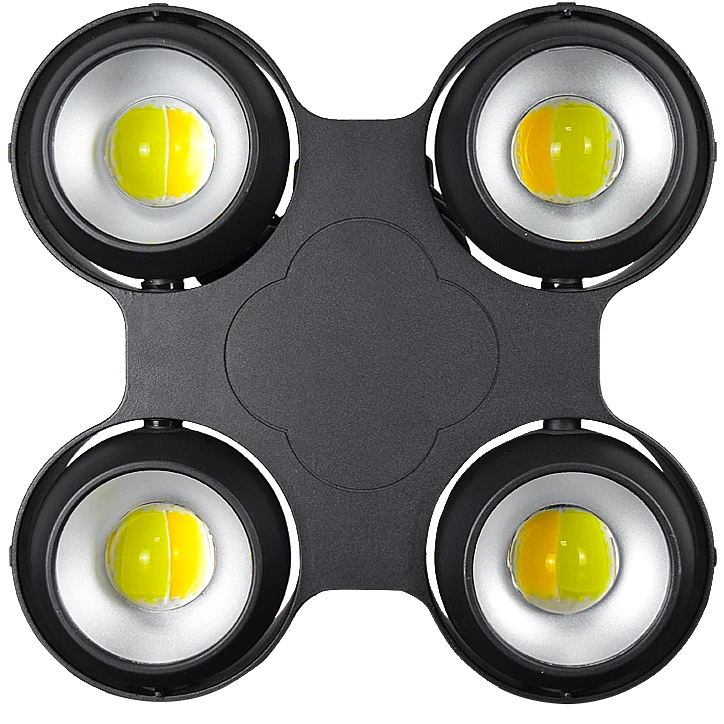
The RG-244A four-head COB blinder uses four 100W COB sources and 35° reflectors. Its ordered versions include adjustable 3200–5600K white light or RGBW, both listed with 8CH control. Compare the source version and audience-lighting cue, rather than treating every four-head blinder as a white-only or segmented strobe fixture.
LED Strobe Light Types for Stage Projects
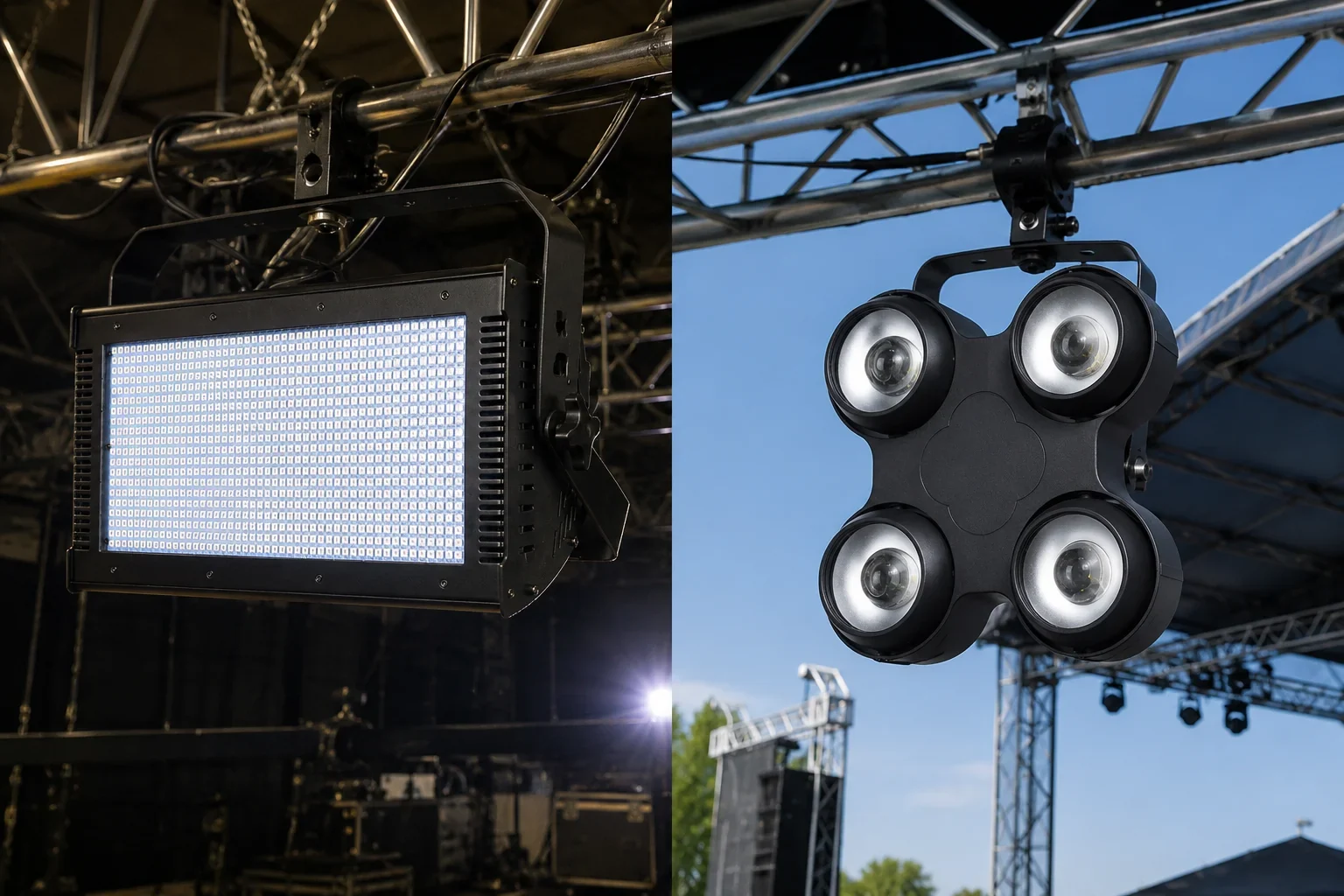
The question “what is a strobe light” has several practical answers because stage fixtures use different source layouts and control systems.
White LED Strobe
White strobes deliver the classic high-contrast flash. They are suitable for concerts, clubs, festivals, and television productions when the effect is planned and tested carefully.
RGB or RGBW Strobe
Color sources allow the programmer to combine a base color with white flashes or create color chases. Check whether white comes from dedicated emitters or mixed RGB channels because the visual result can differ.
Segmented and Pixel Strobe
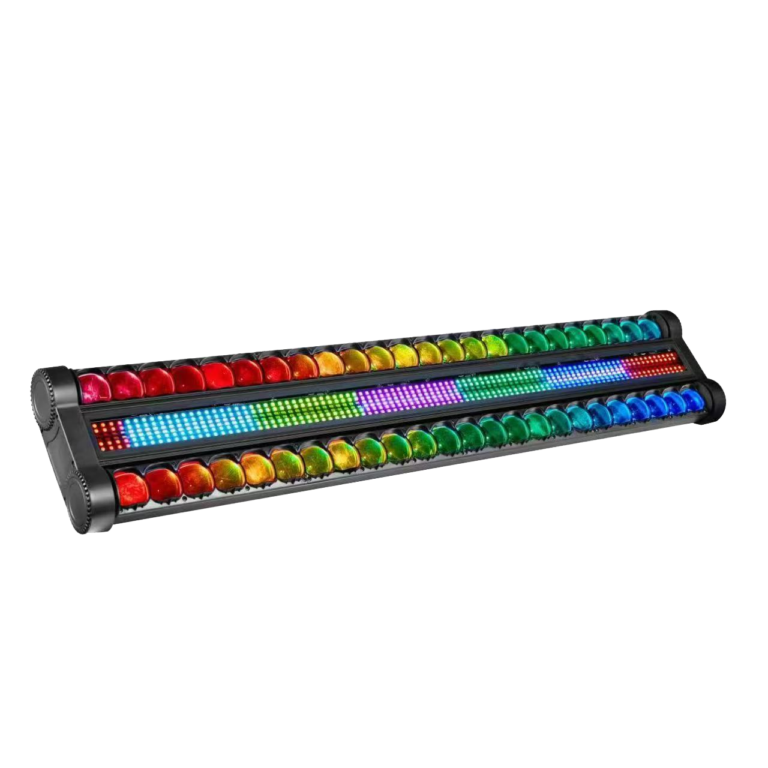
Segment control divides the face of the fixture into independently addressable zones. It provides more creative options, but also increases channel count and programming time. For a static segmented face, compare the RGBW stage effect light with 600W white strobe. For physical beam-row movement, compare the 253W double-row beam swing strobe light. These are different visual jobs: test segment cues and swing movement separately, then select a DMX mode the console and operator can manage.
COB Audience Blinder
COB sources can create a broad, concentrated field that resembles traditional audience blinders. Warm-white output often suits retro, concert, and camera-facing looks, while tunable-white or RGBW versions offer more flexibility.
Outdoor Strobe or Blinder
For an exposed audience-lighting position, the RG-244B IP65 four-head blinder is a separate product direction. It lists 420W fixture power, four 100W COB sources and 4/8CH modes, with adjustable 3200–6500K dual white or separate single-color versions. Confirm the ordered source, connectors and site plan; do not transfer its IP65 rating to the indoor RG-244A.
Compare Flash Rate, Duration, and Dimming
Maximum flash speed is only one specification. Buyers should also test the slowest usable rate, transition smoothness, single-flash response, flash duration, dimmer behavior, and output during sustained effects.
A high power strobe light may reduce output or change behavior during long continuous sequences to manage temperature and electrical load. Ask the supplier to demonstrate the intended cue length, not only a short showroom burst. Extended operation should remain within the fixture documentation and the event’s power plan.
Low-level dimming matters when the same fixture is used as a blinder, wash, or scenic source. Look for visible steps, color shifts, delays, and inconsistent response across several units.
Check DMX Modes and Synchronization
DMX control should provide predictable intensity, flash rate, effects, and segment behavior. Before a bulk order, request the channel chart and confirm:
- Basic and extended channel modes
- Dimmer and flash-rate ranges
- Segment or pixel mapping
- Built-in effects and speed control
- Master-slave or standalone behavior
- Signal-loss behavior
- Reset and power-cycle response
- Multi-fixture synchronization
Simple modes are useful for small venues and rental packages. Expanded modes suit programmed productions with sufficient console capacity. The best option is not always the mode with the most channels; it is the mode the operator can program reliably.
Plan Power and Data for High-Output Strobes
Strobe fixtures can create sharp load changes. Use the complete fixture input specification when planning circuits, distribution, connectors, and cable lengths. Do not calculate only from the nominal LED-source total.
For multiple high-output units, confirm circuit allocation, power-factor behavior if documented, grounding, data isolation, and startup sequence with a qualified electrical professional. Outdoor systems also need weather-rated distribution, protected connections, drainage, and cable routes.
Data planning is equally important. When many segmented fixtures run in extended modes, the channel count can grow quickly. Record addresses, universes, termination, network nodes, and show-file versions before installation.
Test Strobe Lighting with Cameras
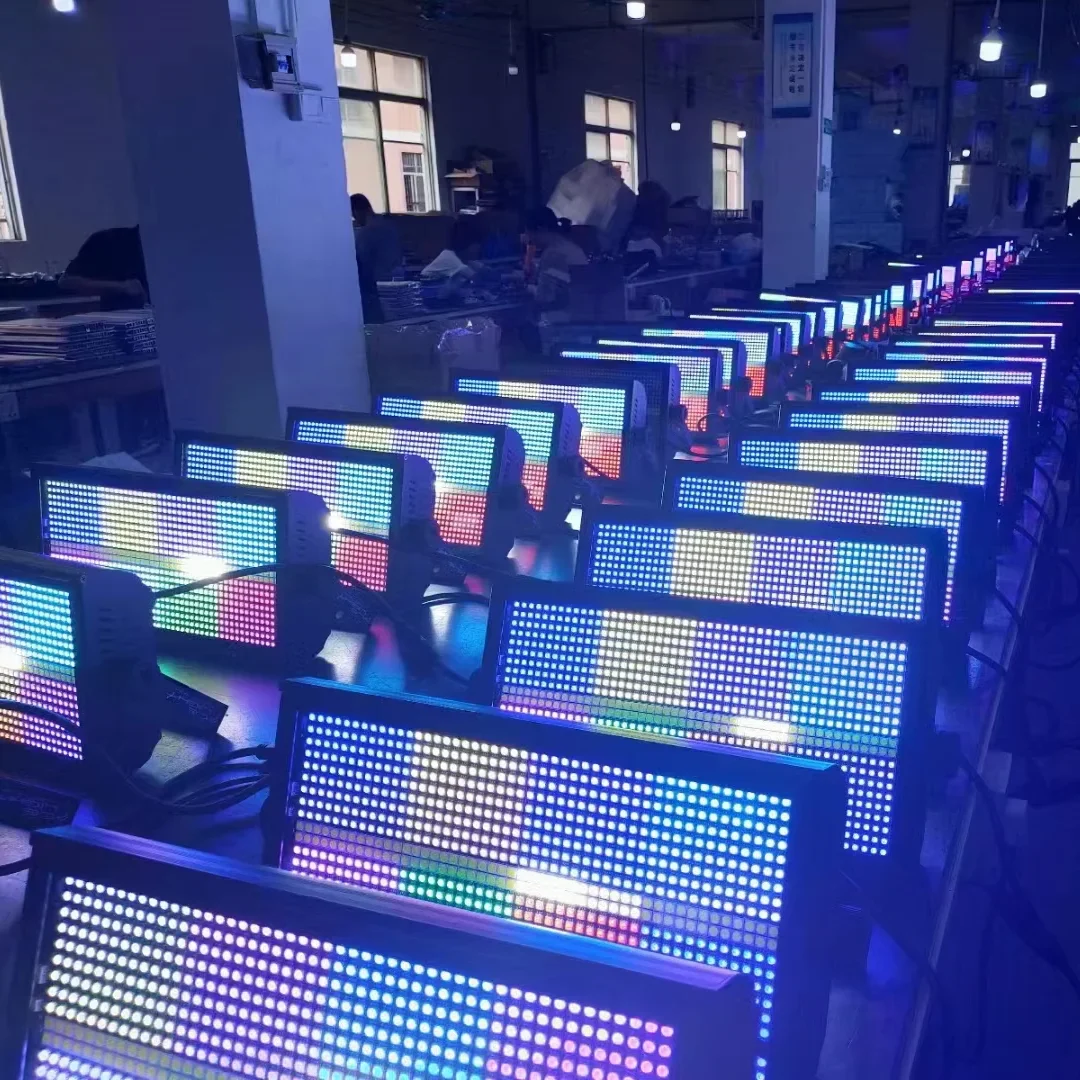
Strobe lighting can produce banding, partial frames, exposure changes, or inconsistent results on video. Test with the actual production cameras, frame rate, shutter setting, exposure, and playback workflow.
Do not assume that a visually acceptable effect will look the same on every camera. A short flash may fall between frames, illuminate only part of a rolling-shutter image, or create a result that differs across camera positions. Coordinate the cue with the lighting director, camera team, and video director.
For livestreams and recorded events, prepare a lower-intensity or non-strobe alternative. This gives the operator a usable cue when camera settings, venue policy, or audience requirements change.
Use Stage Strobe Lights Responsibly
Flashing light can affect people with photosensitive epilepsy and can also cause discomfort, distraction, or temporary visual effects for other guests. The Epilepsy Foundation’s photosensitivity guidance notes that risk depends on factors including flash frequency, brightness, contrast, distance, and the viewer.
Event teams should follow applicable venue rules, local requirements, risk assessments, and professional guidance. Provide clear warnings where required, avoid directing intense flashes into nearby eyes, keep escape routes and critical work areas usable, and prepare a non-flashing show option. Operators should never treat a maximum-rate specification as a recommendation for continuous use.
How to Choose a Stage Strobe Light
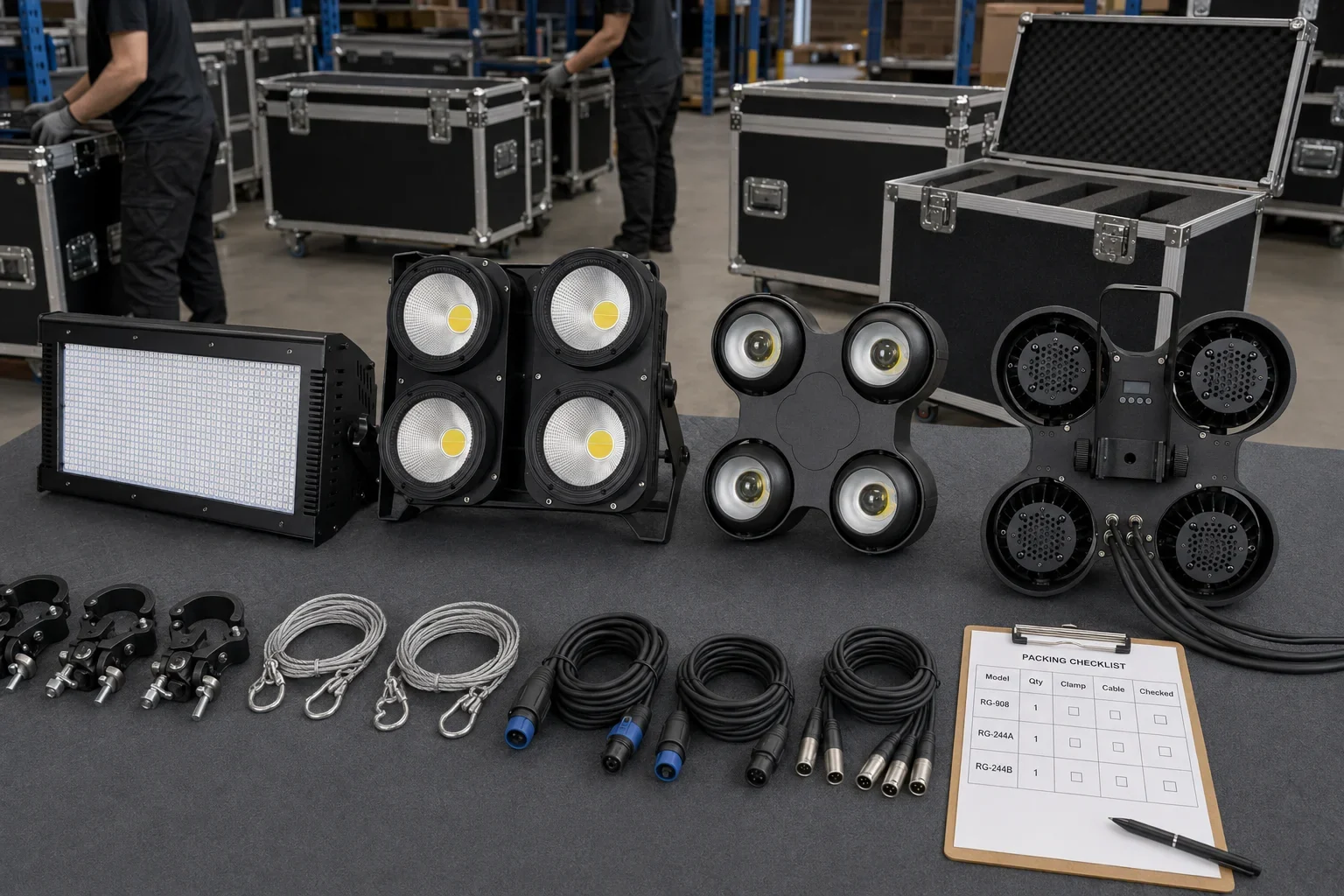
Match the fixture to the actual application:
- Define whether the main job is strobe, audience blinder, pixel effect, or a hybrid.
- Record venue size, throw distance, mounting height, and target area.
- Choose white, tunable white, RGB, or RGBW output.
- Compare flash control, segmentation, dimming, and synchronization.
- Confirm power, voltage, connectors, channels, weight, and rigging.
- Verify the IP rating for exposed outdoor positions.
- Test camera behavior and audience sightlines.
- Run the intended cue length under representative conditions.
- Check cases, cables, clamps, safety points, and spare parts.
- Record the approved firmware, channel chart, configuration, and packing.
For procurement teams, answering what is a strobe light is only the first step; the purchase decision must also match the venue, camera plan, operator, power system, and safety process.
For a broad project range, review WUYESTAGE professional stage lighting and compare professional LED strobe lights with COB blinders and multi-function effect fixtures.
Frequently Asked Questions
What is a strobe light used for on stage?
It creates repeated flashes for musical accents, segmented-motion effects, audience moments, transitions, and visual intensity. The exact use depends on its output, beam spread, color, and control.
What are strobe lights compared with regular lights?
Regular stage lights are usually designed for sustained illumination, while strobes prioritize short pulses. Some LED fixtures combine both behaviors through dimming, blinder, wash, and strobe modes.
Is a strobe light the same as a blinder?
No. A strobe prioritizes repeated flashing, while a blinder primarily creates a broad audience-facing burst. Hybrid fixtures can perform both functions.
Is a higher flash rate always better?
No. A useful fixture needs controllable slow and fast effects, stable synchronization, suitable duration, smooth dimming, and safe operation. Maximum speed alone does not determine quality.
Can an indoor strobe light be used outdoors?
Only when it is protected by an appropriate installation plan. Do not describe a fixture as weatherproof unless its complete IP rating is verified.
Request a Strobe or Blinder Recommendation
Send WUYESTAGE your venue type, stage dimensions, throw distance, indoor or outdoor conditions, required effect, color preference, camera settings, control system, quantity, power standard, destination, and schedule. We can compare dedicated LED strobes, COB blinders, pixel strobes, and hybrid fixtures, then prepare a sample or bulk-order recommendation for the real project.