The best LED PAR lights are not always the brightest or most feature-rich. For B2B buyers, the right fixture matches the application, produces consistent color, integrates with the control system, and remains practical to maintain.
For example, an indoor wedding supplier may prioritize quiet operation and smooth color mixing. By contrast, an outdoor production company needs weather protection and reliable connectors. A theater or conference venue may need warm and cool white light with linear dimming, while a DJ stage may value saturated RGBW colors and fast response.
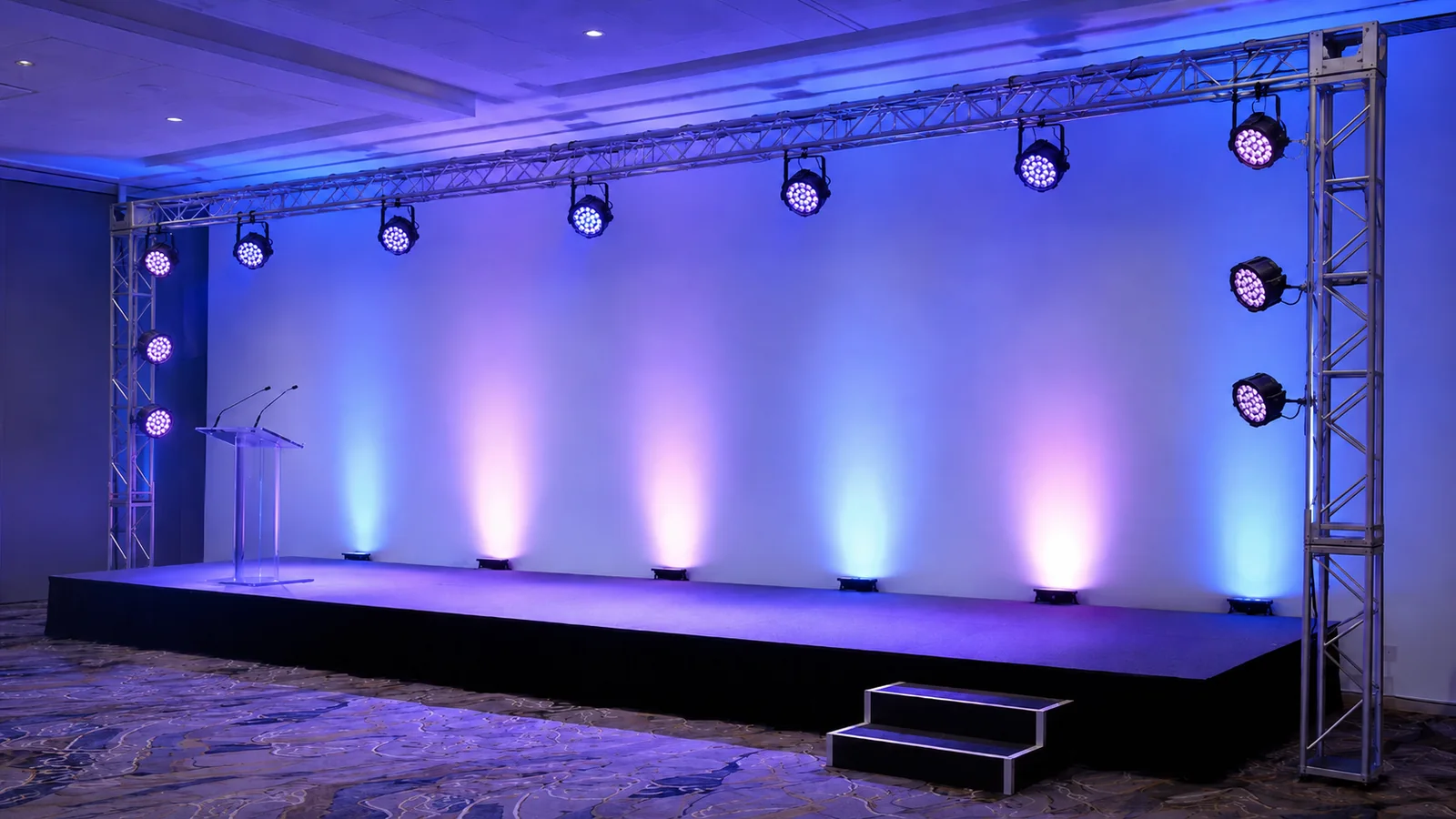
What Makes an LED PAR Light Good for Professional Use?
A professional PAR light should do more than turn on and change color. Buyers should evaluate the complete working system:
- Color quality and LED configuration
- Output at the required distance
- Beam angle and coverage
- Dimming and low-level behavior
- DMX channel modes
- Fan and operating noise
- Indoor or outdoor construction
- Housing, bracket, and installation design
- Packing, batch consistency, and spare-parts support
These factors affect the visual result and operating cost. Therefore, ask “Which PAR light fits this application and purchasing plan?”
Choose the LED Color Configuration First
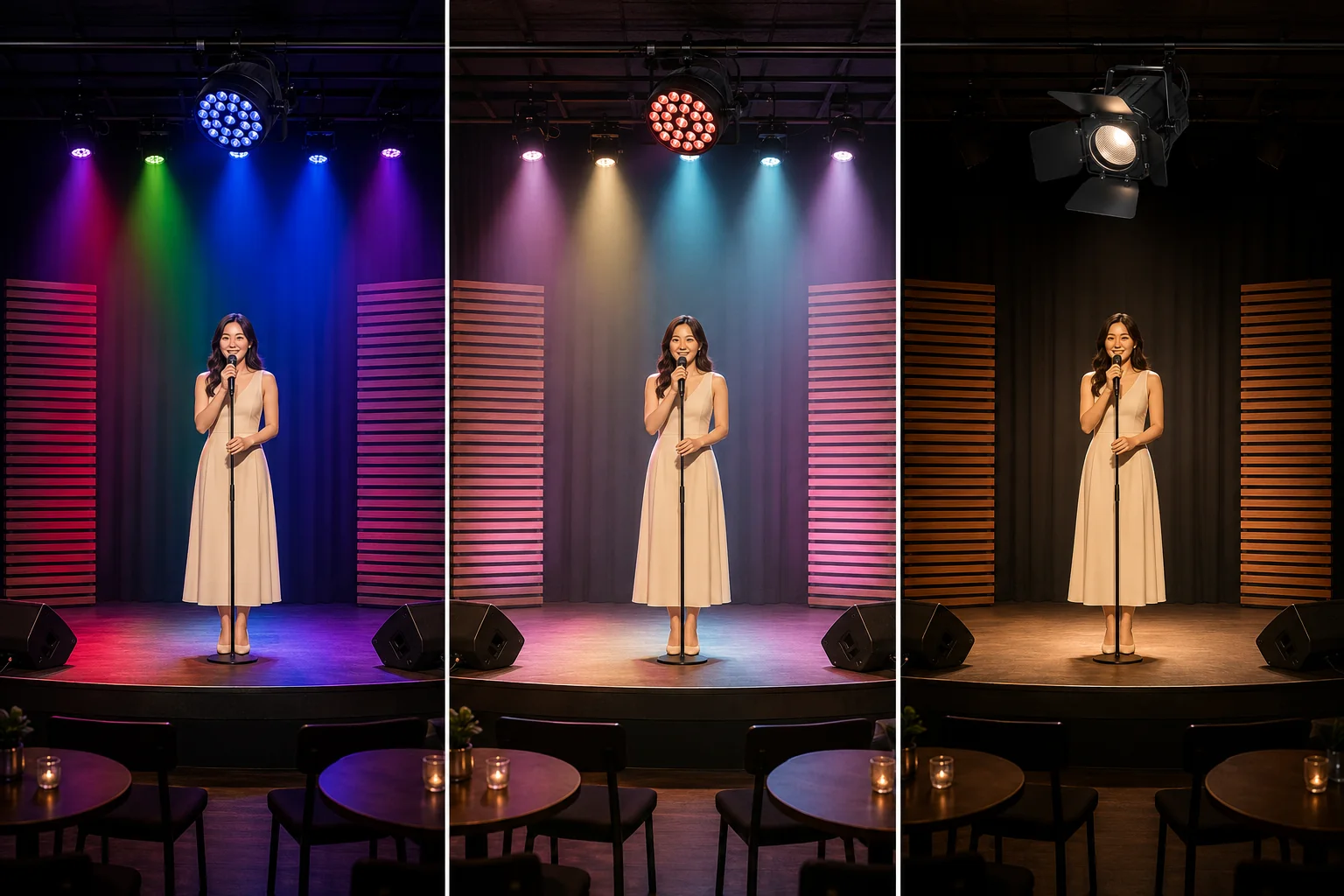
First, LED PAR fixtures are available with different color combinations. The correct configuration depends on what the light needs to illuminate.
RGB and RGBW for Saturated Stage Color
RGB fixtures mix red, green, and blue to create a wide range of stage colors. RGBW adds a dedicated white component, which can improve white output and make pastel colors easier to produce. This is a practical option for concerts, DJ stages, clubs, wedding events, and general rental inventory.
For example, the RG-410A uses 24 x 10W RGBW 4-in-1 LEDs in its listed configuration. It provides DMX512, sound, auto, and master control, an 8/9-channel mode, and a 25-degree beam angle. As a result, buyers can use this type of fixture when they need flexible color washes and straightforward DMX programming.
Multi-in-One LEDs for More Color Options
In addition, some PAR families offer 4-in-1, 5-in-1, or 6-in-1 LED configurations. Additional color components may help with warmer whites, amber tones, UV effects, or more nuanced mixing, depending on the exact chip configuration.
Do not assume that every 5-in-1 or 6-in-1 fixture uses the same colors. Confirm the LED chip combination and channel chart, then test a sample when accurate skin tones or repeatable brand colors matter.
White and Bi-Color COB for Face Light
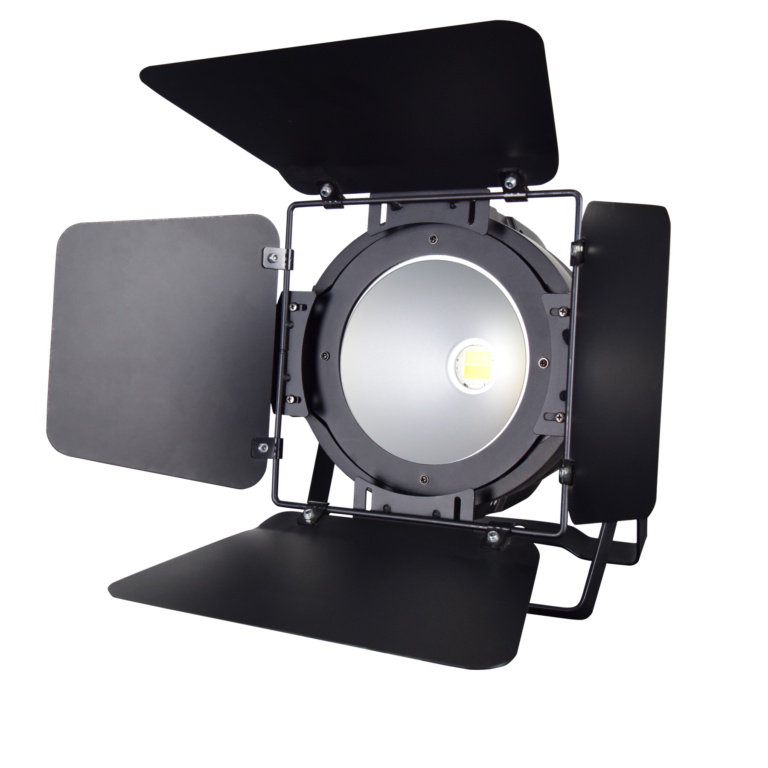
When the main goal is to illuminate people, products, speakers, or performers, a COB PAR can be more suitable than an RGB stage-effect fixture. The RG-320 is offered with 100W or 200W COB options, including single warm white, single white, or warm-plus-white configurations. It supports 0-100% linear dimming, a 0-13Hz strobe, DMX512, master, auto, and sound modes.
This fixture type is relevant for conference stages, churches, small theaters, studios, and front-light positions where useful white light is more important than saturated color effects.
Match Beam Angle to Stage Size and Throw Distance
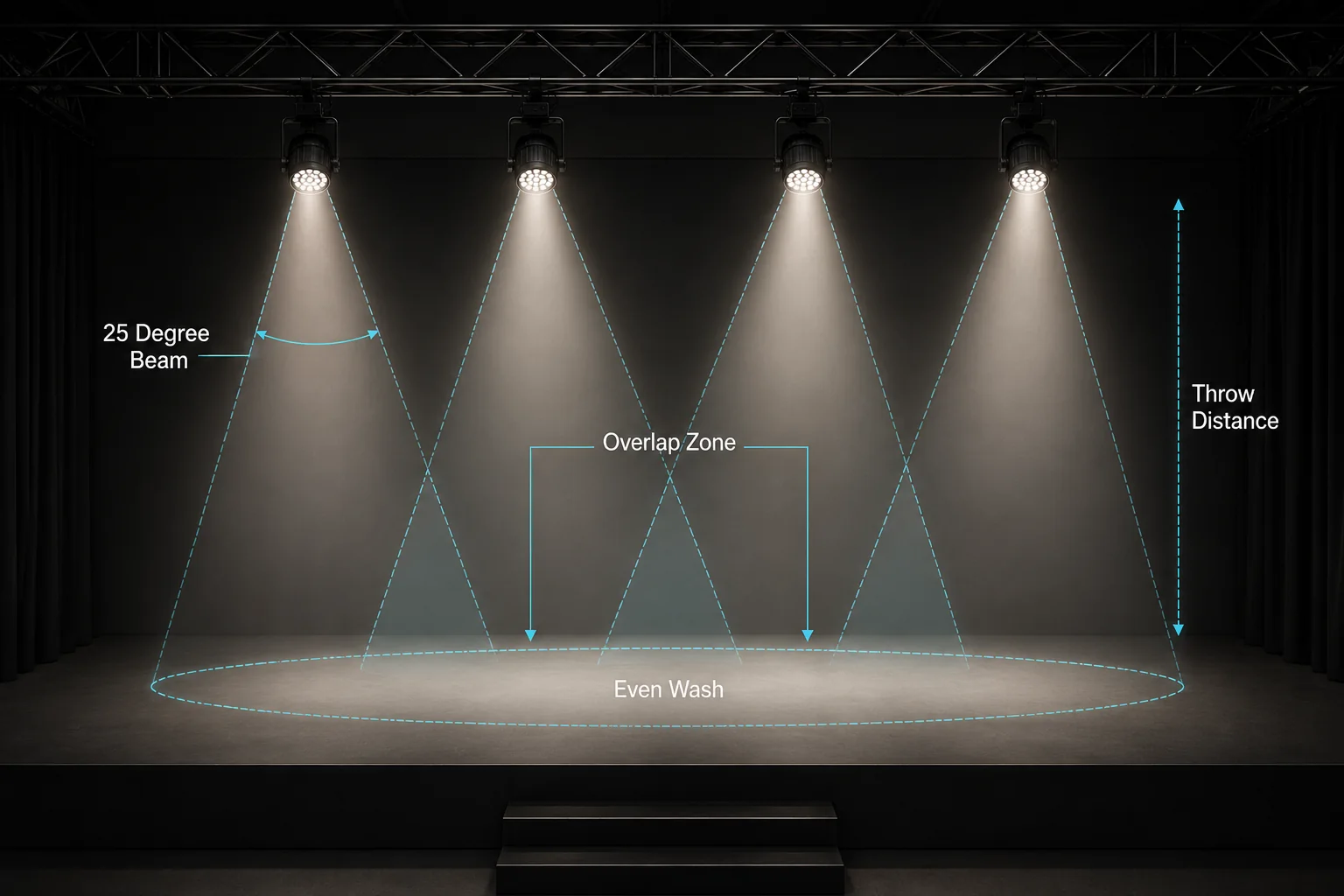
Beam angle determines how quickly the light spreads. A narrower angle concentrates output into a smaller area, while a wider angle covers more of the stage at the same distance.
For example, the RG-410A and RG-401A are both listed with a 25-degree angle. That angle can provide controlled wash coverage, but the actual illuminated area still depends on the mounting distance. Before ordering, estimate the beam diameter at the intended throw and decide whether fixtures will overlap enough to create an even wash.
In practice, overlapping fixtures usually produce a more even result across a wide stage than isolated pools of light. Therefore, ask for photometric data when available, or test a sample at the real working distance for center brightness, edge softness, color consistency, and coverage.
Select the Right PAR Type for the Venue
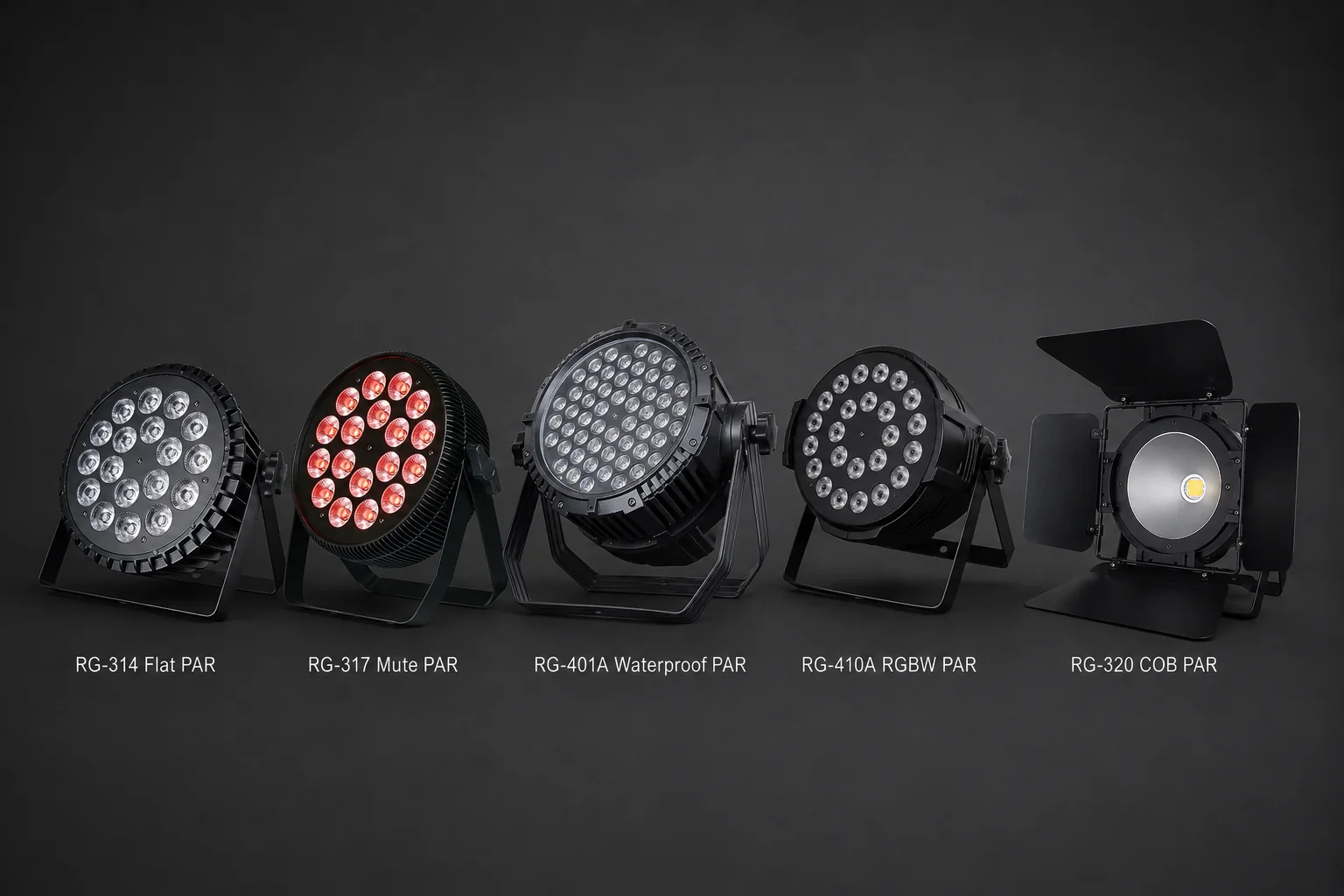
Flat PAR Lights for General Stage and Rental Work
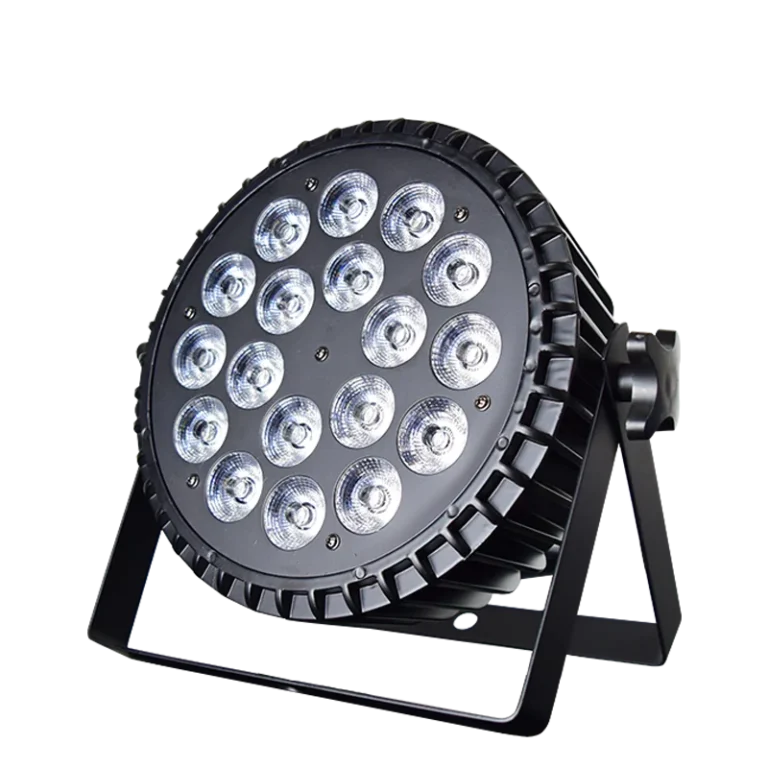
Flat PAR lights suit mobile events, small stages and rental inventory. RG-314 offers 14-, 18- and 54-position versions. The specified 14-position option uses 10W or 12W 4-in-1/5-in-1 LEDs; confirm the source and channel map for 18/54 versions. Supplied photos show the 18-position fixture. Control includes DMX512, master-slave, sound and auto.
For buyers, the main advantage of this type is flexibility. However, the exact LED count, chip power, color combination, and DMX channel mode must be written into the quotation because one product family can include several versions.
Silent PAR Lights for Noise-Sensitive Venues
Fan noise can be distracting in theaters, churches, studios, conference rooms, wedding ceremonies, and acoustic performances. The RG-317 Mute PAR Light is designed for these quieter applications. Its listed configuration uses 18 x 10W or 12W 4-in-1 or 5-in-1 LEDs, with 4/8 channels and sound, auto, DMX512, and master control.
When evaluating a silent fixture, first confirm whether it is fanless or uses another low-noise thermal design. Then, run the sample at full output for an extended period and check housing temperature, brightness stability, and whether any automatic power reduction occurs.
For worship venues, our church stage lighting guide explains how silent PAR lights can be combined with front light, background wash, moving effects, and camera-ready presets.
Waterproof PAR Lights for Outdoor Events
Outdoor fixtures need more than a covered position. Rain, humidity, dust, cable entry points, and frequent setup all increase risk. The RG-401A is listed as an IP65 waterproof PAR light with a 180W fixture rating, 54 x 3W RGB 3-in-1 LEDs, 6/8 DMX channels, and a 25-degree angle.
For outdoor orders, confirm the IP rating of the complete fixture and the supplied power and signal connectors. In addition, inspect seals, cable interfaces, housing construction, and pressure or water-test procedures. After all, weather resistance should never be inferred only from the shape of the housing.
COB PAR Lights for White Wash and Front Light
COB fixtures use a concentrated light source and are often chosen for white wash, face light, and stage-front applications. The RG-320 supports 100W and 200W configurations, linear dimming, DMX control, and optional use with a light barrier or barn-door-style accessory.
By contrast, choose this category when color effects are secondary and the project needs controlled white illumination. Also confirm color temperature, color rendering requirements, beam control, and flicker performance when the fixture will be used on camera.
Compare DMX Control and Dimming Performance
DMX compatibility is essential for most professional stage systems. Before purchasing, request the DMX chart and confirm:
- Number of channel modes
- Dimmer resolution and curve behavior
- Color channel order
- Strobe range
- Built-in programs
- Master-slave operation
- Display and addressing method
- Power-on and signal-loss behavior
Moreover, low-level dimming should be tested. Some fixtures look smooth from 100% to 20% but step or jump near blackout. This matters in theaters, churches, broadcast work, and formal events where slow fades are visible. Therefore, test several units together because synchronized dimming is more important than the behavior of one sample.
Check Housing, Brackets, and Rental Practicality
In addition, rental companies need a rigid housing, secure bracket, accessible controls, and connectors that do not interfere with mounting. Check floor-standing and truss positions, adjustment knobs, safety-cable points, cable clearance, unit weight, and transport packing. Finally, confirm whether replacement brackets, knobs, and control boards can be supplied.
Best LED PAR Lights by Application
Choose by the lighting job before the venue name. A theater may need separate fixtures for background color and faces:
| Application | Recommended PAR Type | WUYESTAGE Reference |
|---|---|---|
| General event rental and color wash | Flat RGBW or multi-color PAR | RG-314 |
| Background color in quiet theaters, churches or conferences | Mute-design color PAR; verify operating noise | RG-317 |
| Outdoor stage and temporary event | IP65 waterproof PAR | RG-401A |
| Concert, DJ, wedding, and saturated color wash | 24-LED RGBW PAR | RG-410A |
| Faces and white wash for theater, studio or conference | COB PAR with the required white-light configuration | RG-320 |
For faces, verify white-light color, coverage and dimming; for background wash, compare the required colors and overlap. Check noise in both roles before confirming the configuration.
How B2B Buyers Should Test a Sample
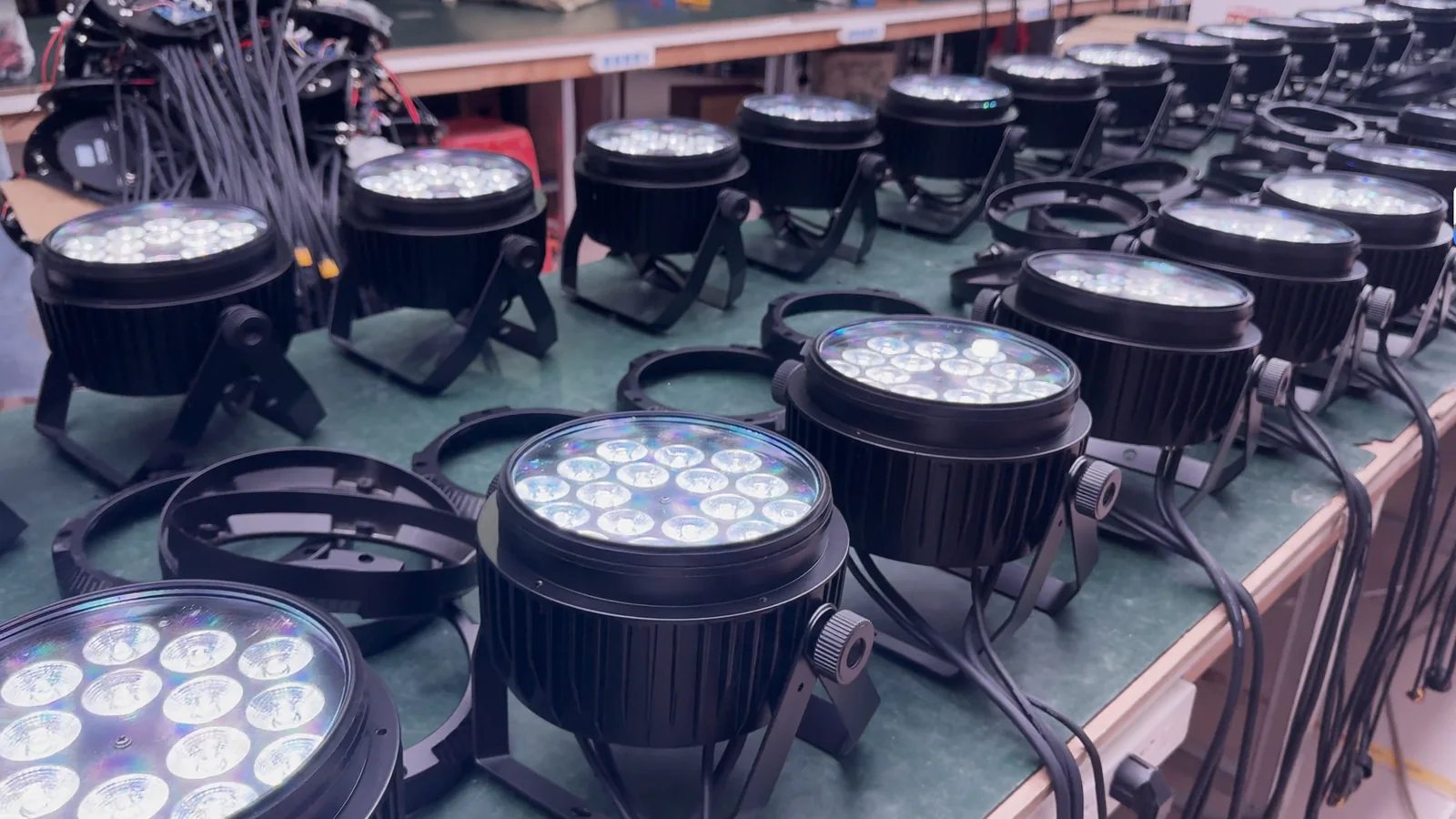
Before a bulk order, test the exact configuration that will be manufactured. A useful sample inspection should cover:
- Run the fixture at full output for several hours.
- Compare the required colors and whites at the same distance and settings; use fixed camera exposure and white balance when filming.
- Run the same slow fade on each sample; note visible steps, mismatched fade timing or a jump at blackout.
- Verify all DMX channels and standalone modes.
- At the intended throw, compare the center, edges and overlap between fixtures using the same color and dimmer settings.
- After warm-up, listen from the planned microphone or audience position during a quiet cue; record the operating conditions.
- Test brackets, knobs, connectors, and display buttons.
- Compare multiple units for color and brightness consistency.
- For outdoor models, review the waterproof test process.
- Confirm labels, manuals, packing, accessories, and spare parts.
Finally, for repeat orders, record the approved LED configuration, firmware, DMX chart, housing, connectors, and packaging.
Product Recommendation
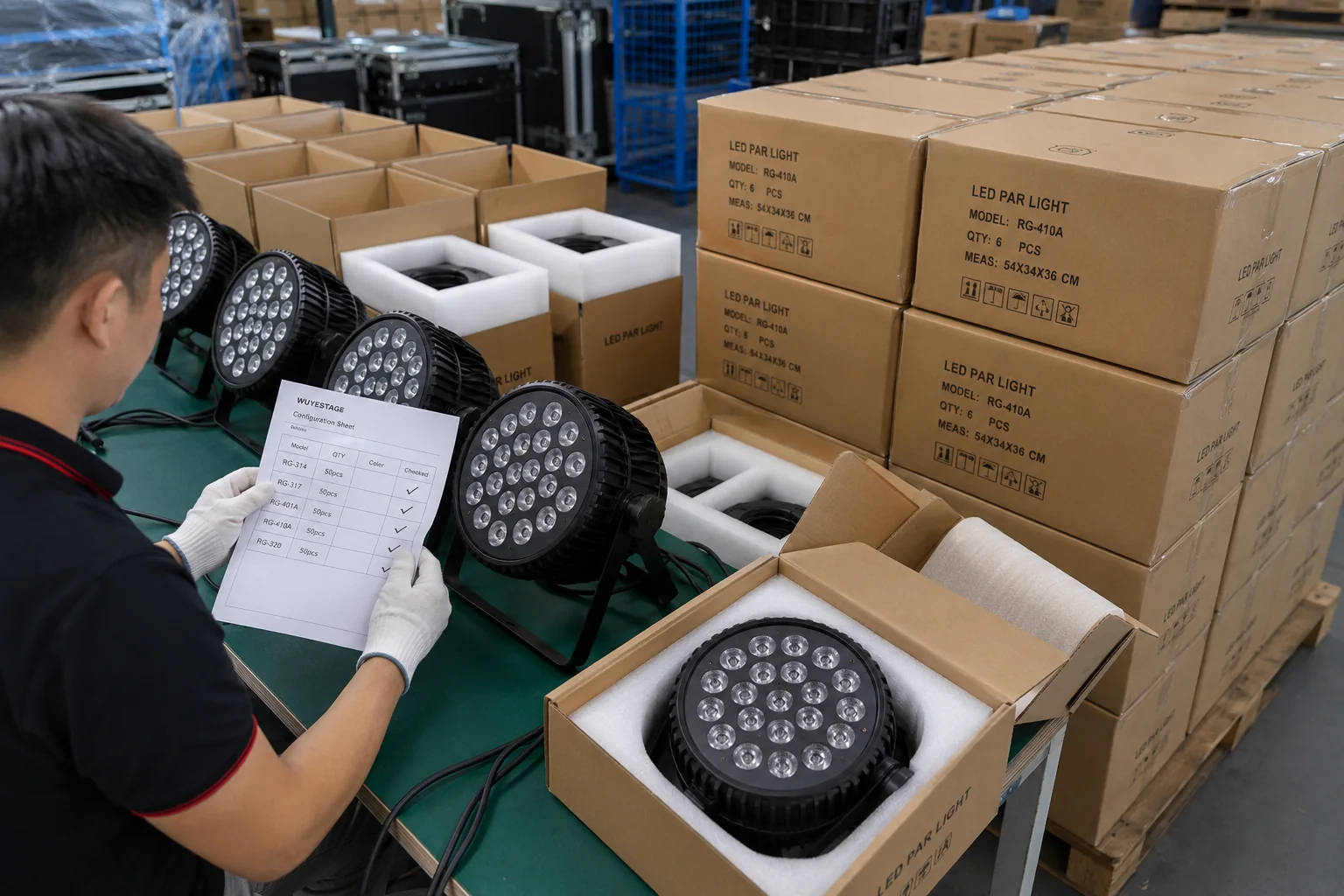
For distributors and rental companies building a flexible indoor range, the RG-314 flat PAR and RG-410A RGBW PAR are practical models to compare. The RG-314 family offers several LED-count and color configurations, while the RG-410A provides a defined 24 x 10W RGBW setup with a 25-degree beam angle.
For quiet fixed installations, compare the RG-317 Mute PAR. Meanwhile, outdoor projects can use the IP65 RG-401A after the complete connector and waterproof configuration is confirmed. Where white front light and face light are required, the RG-320 COB PAR provides 100W/200W and warm, white, or bi-color choices.
Browse the WUYESTAGE LED PAR light range or explore more professional stage lighting options for a complete project.
Frequently Asked Questions
What are the best LED PAR lights for event rental?
For general rental use, choose a durable RGBW or multi-color PAR with DMX control, useful standalone modes, practical packing, and consistent repeat-order specifications. A flat PAR such as RG-314 or a 24-LED RGBW model such as RG-410A can be a useful starting point.
Are RGBW PAR lights better than RGB PAR lights?
RGBW fixtures add a dedicated white component, which can improve white output and pastel mixing. RGB may still be suitable for saturated color effects. The better choice depends on the required colors, output, cost, and application.
Do I need waterproof PAR lights for outdoor events?
Use an appropriately rated outdoor fixture whenever the light may be exposed to rain, moisture, or dust. Confirm the complete fixture rating, connectors, seals, and test procedure. A roof alone does not always protect equipment from wind-driven rain or condensation.
How many LED PAR lights do I need for a stage?
Quantity depends on stage width, throw distance, beam angle, mounting position, required brightness, and desired overlap. Create a layout and test coverage before ordering. Even wash usually requires overlapping beams rather than isolated pools of light.
What should wholesalers confirm before ordering LED PAR lights?
Confirm the exact LED count and chip configuration, color combination, beam angle, DMX channels, control modes, voltage, housing, connectors, packing, labels, spare parts, and sample approval standard.
Request an LED PAR Light Recommendation
Send WUYESTAGE your stage dimensions, indoor or outdoor application, mounting distance, required color or white-light configuration, control system, target quantity, and market requirements. We can help compare flat, silent, waterproof, RGBW, multi-color, and COB PAR options, then prepare a sample or bulk-order quotation with the exact configuration confirmed.