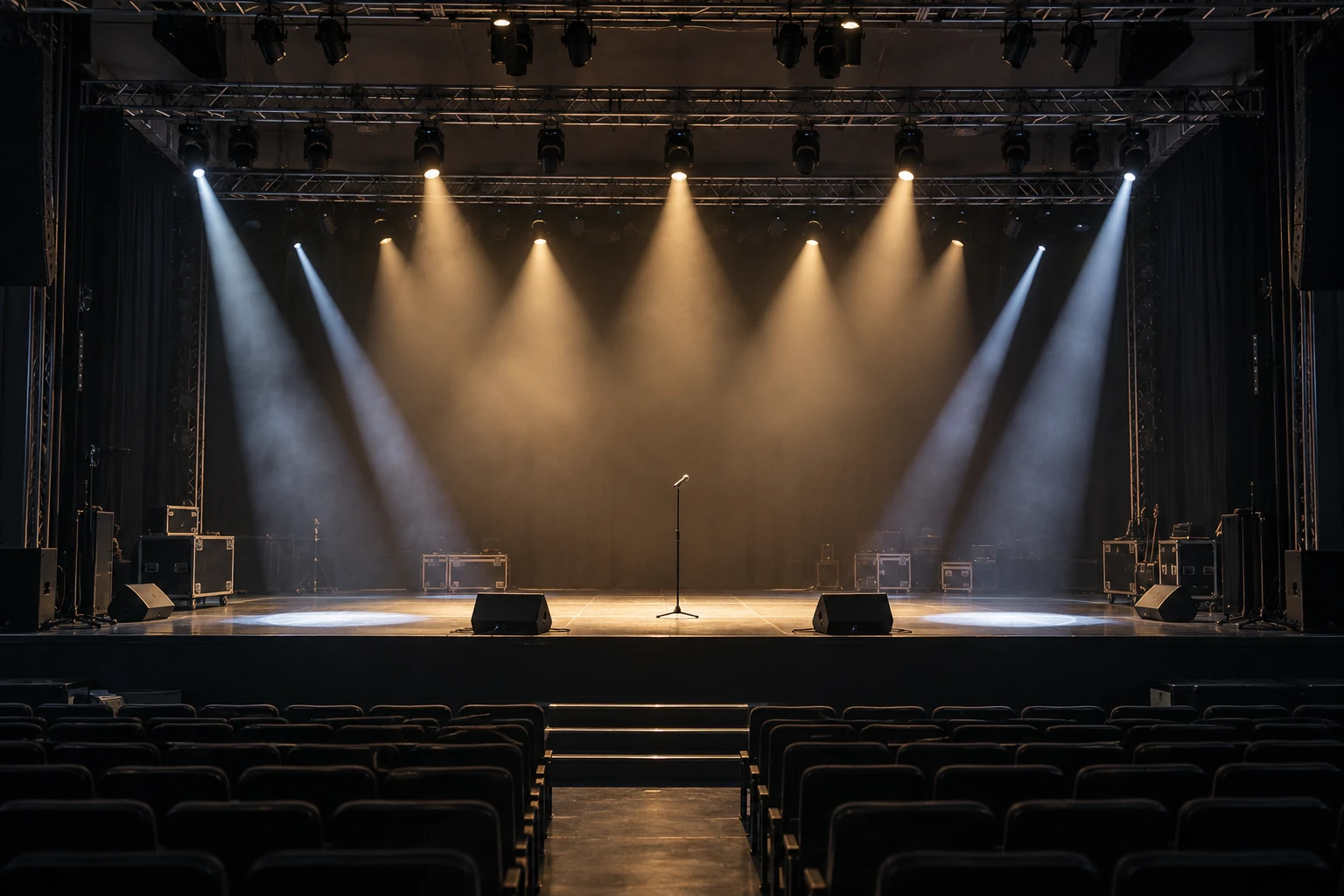
Lumens describe an amount of light, while lux describes how much light arrives per unit area on a surface. A fixture’s lumen rating helps describe its total output. A lux reading describes illumination at a particular location and under particular conditions.
For a useful comparison, first identify the quantity being reported. Then check where, how and in which operating mode it was measured. A large number without that information can leave you comparing different things.
What is the difference between lux and lumens?
| Quantity | Unit | What it tells you |
|---|---|---|
| Luminous flux | Lumen, lm | How much light is emitted, transferred or received across the stated boundary |
| Illuminance | Lux, lx | How densely light arrives on a receiving surface; 1 lx = 1 lm/m² |
| Luminous intensity | Candela, cd | How light is distributed in a specified direction, per unit solid angle |
These distinctions follow the CIE definitions of luminous flux, illuminance and luminous intensity.
On a product sheet, “total lumens” should identify the light output of the stated source or complete fixture. Check which one the number describes. A bare LED or lamp rating and the output delivered by the assembled fixture are different measurement boundaries.
Lux belongs to a surface and a measurement position. “8,000 lux at 5 m” is more informative than “8,000 lux,” but it still needs context: the optical setting, colour state, detector orientation and position within the field.
Candela supplies directional information between total output and illumination on a target. Its value depends on the direction being considered. A total lumen number and a nominal beam angle alone do not establish the complete intensity distribution of a real fixture.
Can you convert lumens to lux?
You can calculate area-average illuminance when you know how much luminous flux actually arrives on a defined area:
Average illuminance (lx) = incident luminous flux (lm) ÷ receiving area (m²)
Consider two hypothetical cases:
| Light arriving on the target | Receiving area | Area-average illuminance |
|---|---|---|
| 2,000 lm | 2 m² | 2,000 ÷ 2 = 1,000 lx |
| 2,000 lm | 8 m² | 2,000 ÷ 8 = 250 lx |
The arriving light is the same in both cases, but it is distributed over different areas. If illumination is uniform, a reading anywhere within each area equals that average. In a real non-uniform field, individual readings can be higher or lower.
The important input is light arriving on the target. A fixture rated at 2,000 lm does not necessarily send all 2,000 lm onto the area you want to illuminate. Some light may land outside it, and accessories or a different operating state may alter the output.
The reverse calculation uses the area-average value:
Incident luminous flux (lm) = average illuminance (lx) × area (m²)
Multiplying one centre reading by the whole footprint can overstate the result when the centre is a hotspot. Even a valid calculation of incident lumens describes the light reaching that area; it does not establish the fixture’s total emitted output.
Why can fixtures with the same lumens produce different results?
Two fixtures can distribute their output differently. One may concentrate more light into a small region, while another illuminates a wider area. The first can give a higher centre lux reading without delivering more light to every part of the target.
For coverage, examine the field as well as its brightest point. A strong centre can coexist with weak edges or uneven overlap between fixtures. For a tightly focused effect, the useful task may instead be illumination within a much smaller region.
Distance and aiming also matter. Record the actual source-to-target geometry. A measurement on a horizontal floor and one made with the meter facing the fixture describe different receiving planes.
Changing zoom, colour mixing, frost or an accessory can change distribution and transmitted output. Do not assume a fixture maintains identical total lumens throughout those settings. Compare the state you intend to use.
If you need to estimate the geometric footprint from an angle and distance, use the beam-angle calculation guide. That calculation describes geometry; it does not supply the missing photometric distribution.
Can these two lighting specifications be compared?
Suppose two quotations contain the following hypothetical data:
| Quotation | Reported specification |
|---|---|
| Fixture A | 12,000 lm total fixture output, full white |
| Fixture B | 8,000 lx on axis at 5 m, narrow zoom, full white |
The two numbers cannot rank which fixture will illuminate your required area better. A reports total luminous flux. B reports illuminance at one position. Neither statement describes the complete field needed for that decision.
For a coverage comparison, request illuminance information for both fixtures at the intended distance and operating settings. Define the receiving plane and examine the useful area, including its edges. For a total-output comparison, obtain fixture-level lumen values on a comparable basis.
Even two lux figures may be unsuitable for direct comparison. One could be an on-axis peak and the other an average across a larger area. A different zoom position or colour setting can also change what the result means.
A useful response to an incomplete quotation is therefore specific: identify the measurement or condition needed to compare it with the other option.
What should you record before comparing fixtures?
Use the same record for each proposed model. If a value is unavailable, mark it as missing rather than estimating it from electrical wattage or LED count.
| Record field | Information to retain | Purpose |
|---|---|---|
| Exact configuration | Model, version, source and relevant optics or accessories | Connect the data to the fixture being quoted |
| Reported quantity | Total fixture lumens, directional candela, point lux or area-average lux | Establish what the number measures |
| Working geometry | Distance reference, aiming and target position | Make the installation conditions comparable |
| Operating state | Zoom or lens setting, dimmer level, colour or white-light setting | Match the cue being evaluated |
| Receiving plane | Floor, vertical surface or another defined plane; detector orientation | Identify the surface being assessed |
| Coverage record | Sample positions, centre, edges and the area represented | Distinguish a hotspot from useful coverage |
| Data source | Manufacturer rating, identified test report or your sample measurement; date and conditions | Keep reported and measured results separate |
| Decision | Comparable, unsuitable for this task, or awaiting named information | Turn the record into a purchasing action |
A suitable illuminance meter can help check the intended area. Keep the measurement positions and operating conditions consistent, and avoid shading the detector. Record other contributing light so that a comparison is repeatable.
Lux measurements do not by themselves establish colour quality, dimming behaviour or camera performance. Assess those against the actual production requirements as separate checks.
How does this affect stage-light selection?
Begin with the visual task. An aerial beam effect, a projected pattern and broad performer or scenic coverage require different distributions. Comparing their headline “brightness” numbers before defining the task can produce the wrong shortlist.
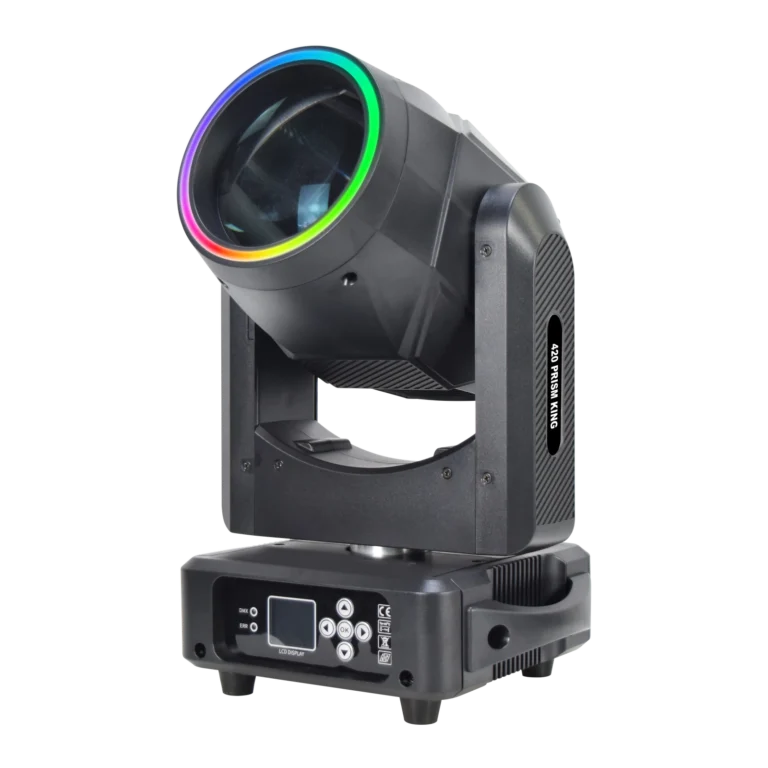
For example, the 420 Prism King beam moving head lists a 300W lamp, 450W rated fixture power and a nominal 2° beam. Those figures identify its source, electrical rating and optical role. They do not establish a lux value or prove that it can replace a broad wash fixture.
For an area that must be covered, compare the LED wash-light range by the required field, distance, colour and operating conditions. A narrower, brighter centre is useful only if it serves the intended cue.
When requesting a quotation, send the target area, fixture positions, working distance, required effect or coverage, colour and camera needs, quantity and destination. Include any existing photometric data and identify the conditions that still need to be matched.
Send WUYESTAGE your lighting requirement and comparison record so the discussion can start with the intended task and the exact configuration.