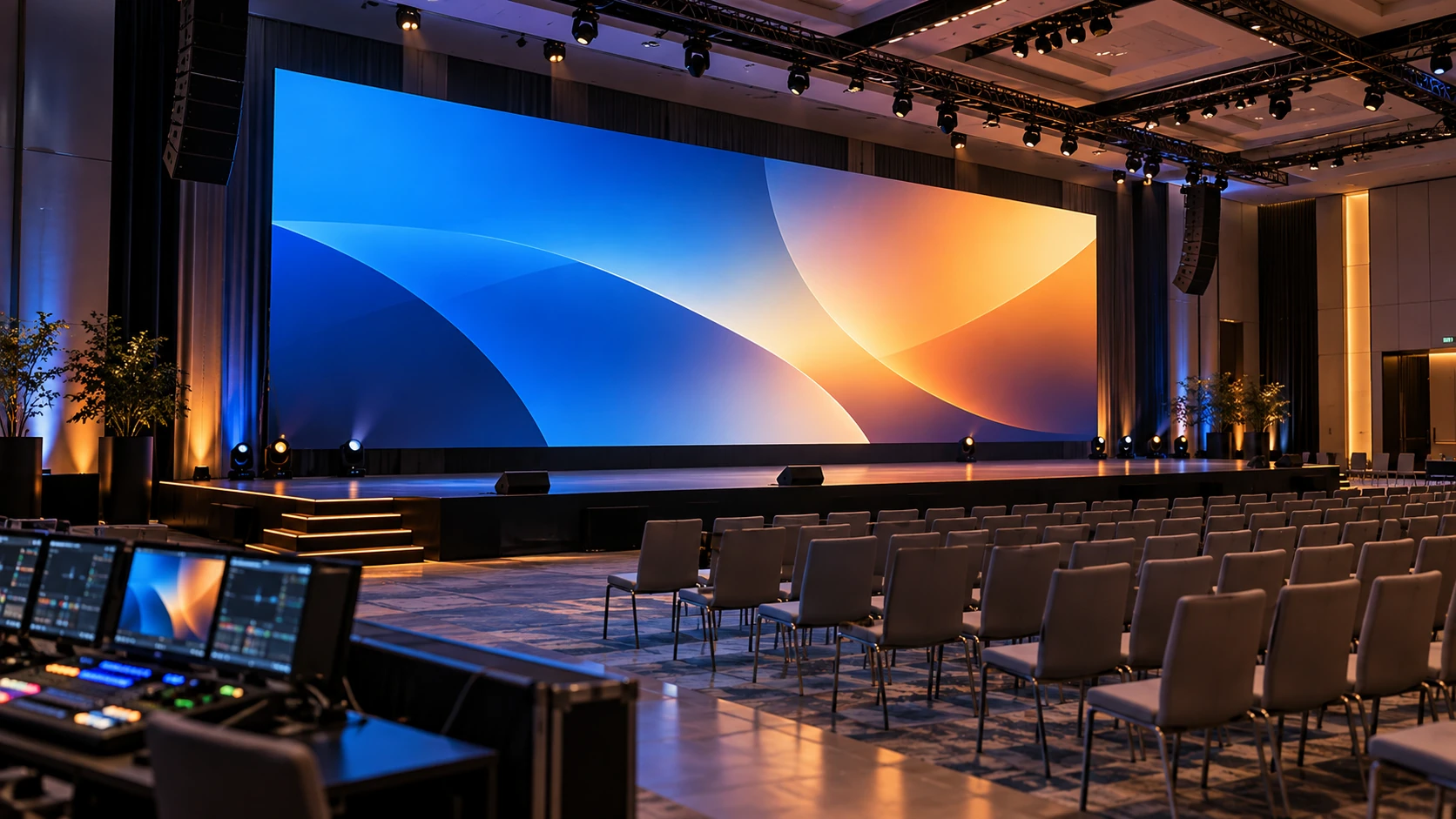
Pixel pitch is the distance from the centre of one pixel to the centre of the next, measured in millimetres. On an LED video wall, a smaller pitch puts more pixels into the same physical area. It can show finer detail at close range, but the useful choice also depends on screen size, content and viewing conditions.
A P2.5 label therefore describes approximately 2.5 mm between neighbouring pixel centres. It does not tell you the complete wall’s resolution, brightness, weather protection or camera performance. Here is how to read that number and use it when comparing LED screens.
What does the P number actually measure?
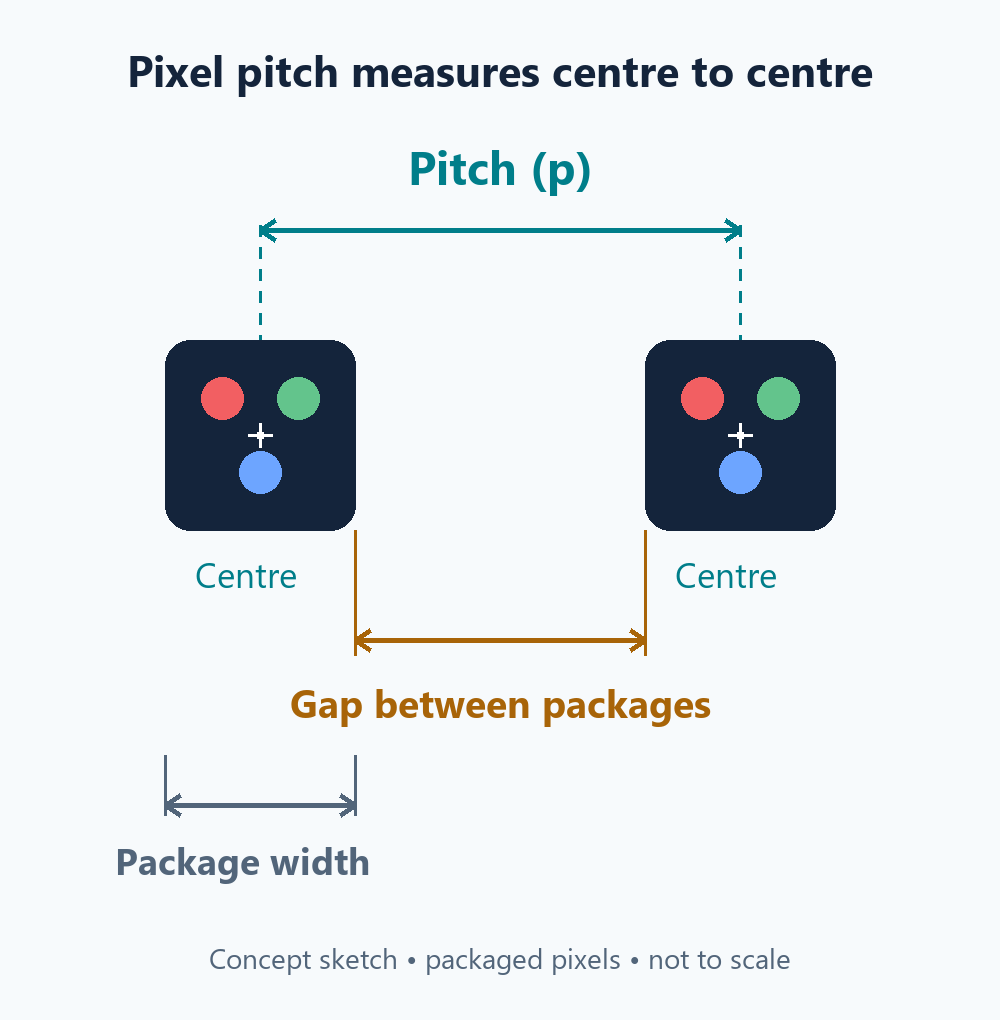
The P number describes the repeating spacing of the pixel grid. Measure between corresponding centres, rather than between the outside edges of two light-emitting packages.
These are different dimensions:
- Pixel pitch: the distance between neighbouring pixel centres.
- Package or emitting-area size: the physical size of the device or luminous area at each position.
- Gap: the space between the edges of neighbouring packages or emitting areas.
Changing the package size can change the visible gap without changing the centre spacing. The arrangement of the red, green and blue emitters also depends on the display technology; count complete image pixels when reading the screen’s resolution.
How does pixel pitch change resolution?
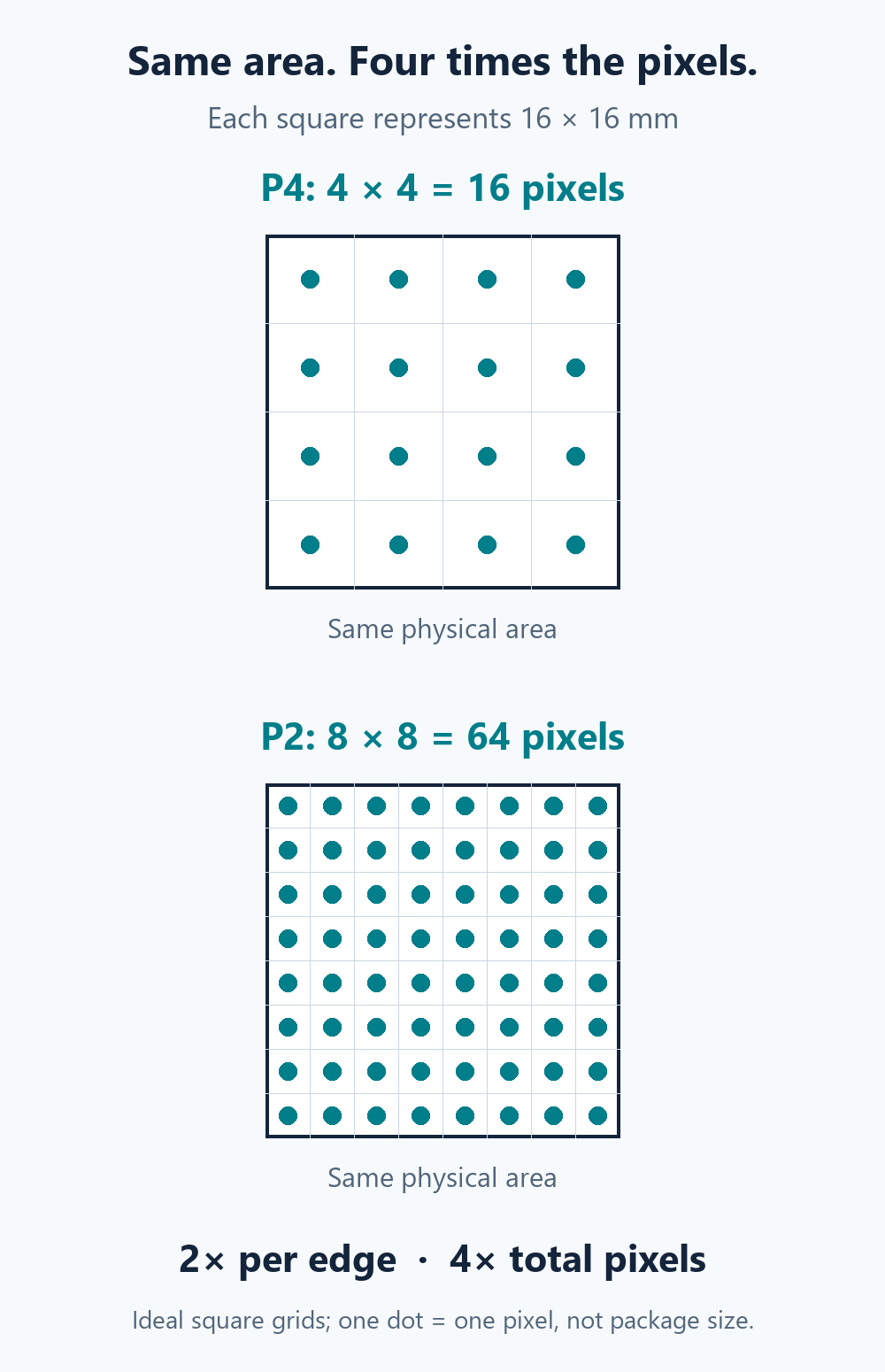
For a fixed screen width and height, a finer pitch increases the number of pixels across both dimensions.
Consider an idealised 2 m × 1 m display with a uniform square pixel grid:
| Hypothetical pitch | Pixels across | Pixels high | Total pixels |
|---|---|---|---|
| P4: 4 mm | 2,000 ÷ 4 = 500 | 1,000 ÷ 4 = 250 | 125,000 |
| P2: 2 mm | 2,000 ÷ 2 = 1,000 | 1,000 ÷ 2 = 500 | 500,000 |
Halving the pitch doubles the pixel count along each edge and gives four times the total pixels over the same area. These are geometric examples, not available cabinet configurations or price estimates. A real modular screen must use the selected product’s actual cabinet grid and native resolution.
Is pixel pitch the same as pixel density?
Pitch measures spacing; density counts pixels within an area. For a uniform square grid, a useful geometric relationship is:
Pixels per square metre = (1,000 ÷ pitch in mm)²
Use this for understanding or an approximate comparison. For an order, use the manufacturer’s confirmed module and cabinet pixel counts, particularly when the P number is rounded.
Is pixel pitch the same as resolution?
Resolution describes the complete pixel canvas, such as 1,536 × 1,024 pixels. Pixel pitch describes spacing in millimetres. Two walls with the same pitch can have different resolutions because one contains more cabinets.
Similarly, a processor accepting a 4K input does not make the physical LED wall a native 4K display. The input has to be mapped or scaled to the pixels that the assembled screen actually contains.
Why can a P3.91 module have a more precise pitch value?
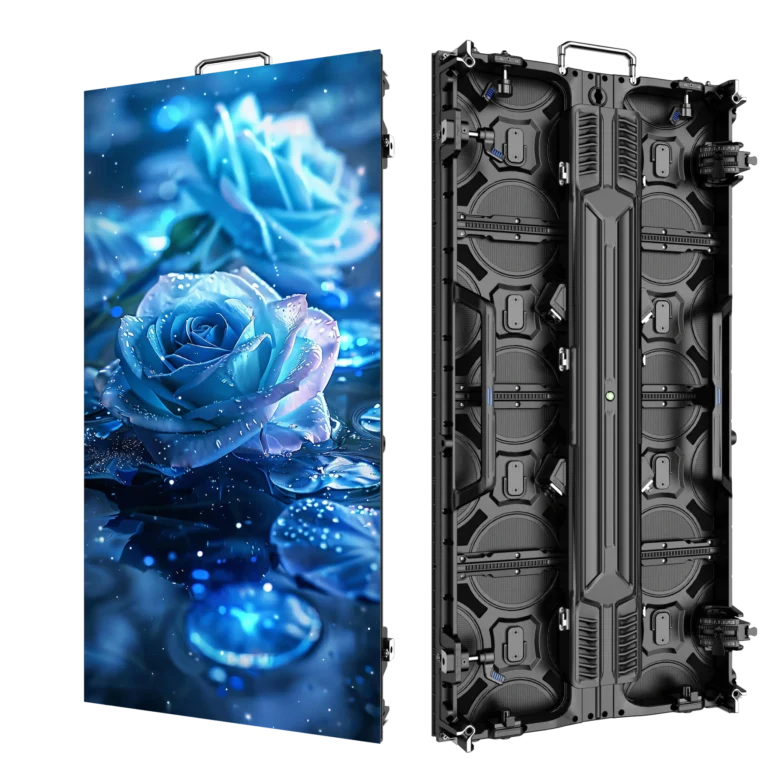
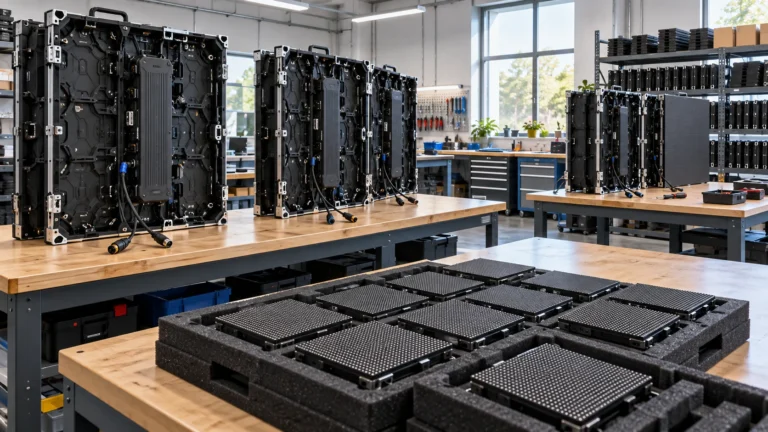
WUYESTAGE’s outdoor P3.91 rental LED display uses a supplied 250 × 250 mm module format with 64 × 64 pixels. The repeating grid implied by those dimensions is:
250 mm ÷ 64 pixels = 3.90625 mm per pixel period
That is consistent with the rounded P3.91 name. The supplied module count also gives 256 pixels per metre and 65,536 pixels per square metre.
Use the native cabinet values when planning the wall:
| Cabinet format | Supplied native resolution |
|---|---|
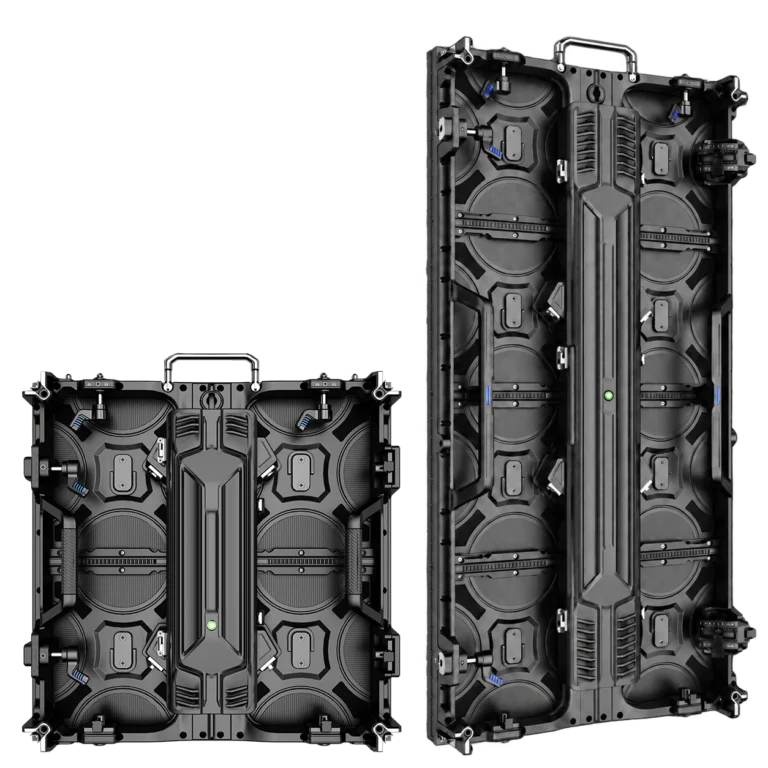
| 500 × 500 mm | 128 × 128 pixels |
| 500 × 1,000 mm | 128 × 256 pixels |
This example applies to the stated outdoor rental configuration. Matching a P label alone does not establish that modules, cabinets, locks, receiving cards or calibration data can be mixed.
For complete cabinet layouts and resulting screen resolution, use the LED wall calculator. It keeps the physical cabinet grid and native pixel canvas together.
How should viewing distance influence the choice?
Start with the nearest important viewing position and the smallest detail that must remain useful there. A person briefly walking past a screen and an audience reading presentation text may need different results, even at the same distance.
Check three things together:
- Real content: use the smallest text, graphics and video detail that the screen will normally show.
- Buildable dimensions: confirm how many native pixels the proposed cabinet layout provides for that content.
- Viewing conditions: compare candidate screens from the required positions at the intended brightness and ambient light.
Distance rules are starting points. A threshold for resolving individual pixels and a comfortable distance for reading the intended content are different criteria. Ask what a supplier’s distance figure is intended to predict before comparing it with another chart, then check the actual content from the required viewing positions.
For the outdoor P3.91 configuration above, WUYESTAGE’s supplied planning reference is viewing from more than 4 m. That is a product-selection reference, not a guarantee that every text size or camera shot will work at that distance.
A camera introduces a separate acceptance task. Test the production camera, lens and required shots; an audience-viewing guideline cannot approve the recorded picture. The LED wall moiré guide explains that distinction in more detail.
When is a finer pitch worth considering?
A finer pitch deserves comparison when the proposed wall cannot reproduce the required detail from the intended viewing positions. It may add little value if viewers are far enough away that they cannot use the extra detail.
The decision should include the complete system. More native pixels change the processing and mapping requirements; they do not create a universal price multiplier. Brightness, environmental protection, service access and handling still need their own checks.
For outdoor event projects, compare the outdoor rental LED display configurations after establishing the viewing task. A familiar pitch number is useful only within the right product and installation type.
Frequently asked questions
Does P3.91 mean the LED package is 3.91 mm wide?
No. P3.91 refers to nominal centre-to-centre pixel spacing. Package dimensions and the visible gap are separate measurements.
Will a finer pitch make the complete screen 4K?
Not automatically. Native resolution depends on both pitch and assembled screen dimensions. Confirm the cabinet pixel counts and layout rather than relying on an input-format label.
Can pixel pitch alone prevent moiré on camera?
No. The recorded result depends on the camera, lens, framing, screen configuration and other production conditions. Compare the required shots with the actual equipment.
What should you send for a pixel-pitch recommendation?
Send WUYESTAGE the target screen width and height, nearest important viewing position, sample content, indoor or outdoor conditions, camera requirements and installation method.
Include any cabinet or processor constraints. With those inputs, we can compare suitable configurations and check the proposed native resolution before preparing a quotation.