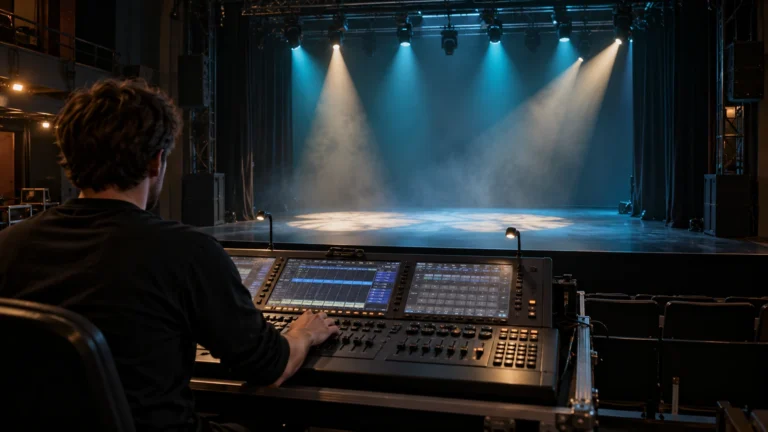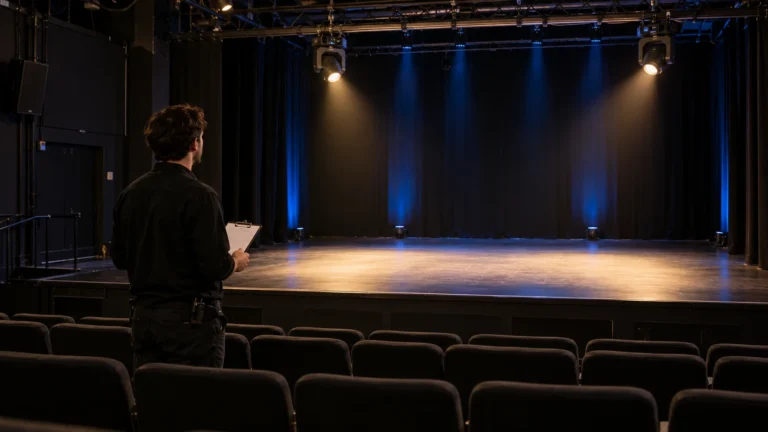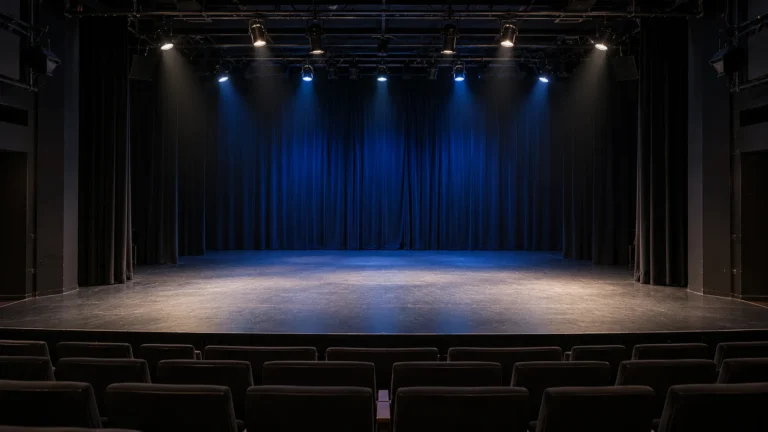
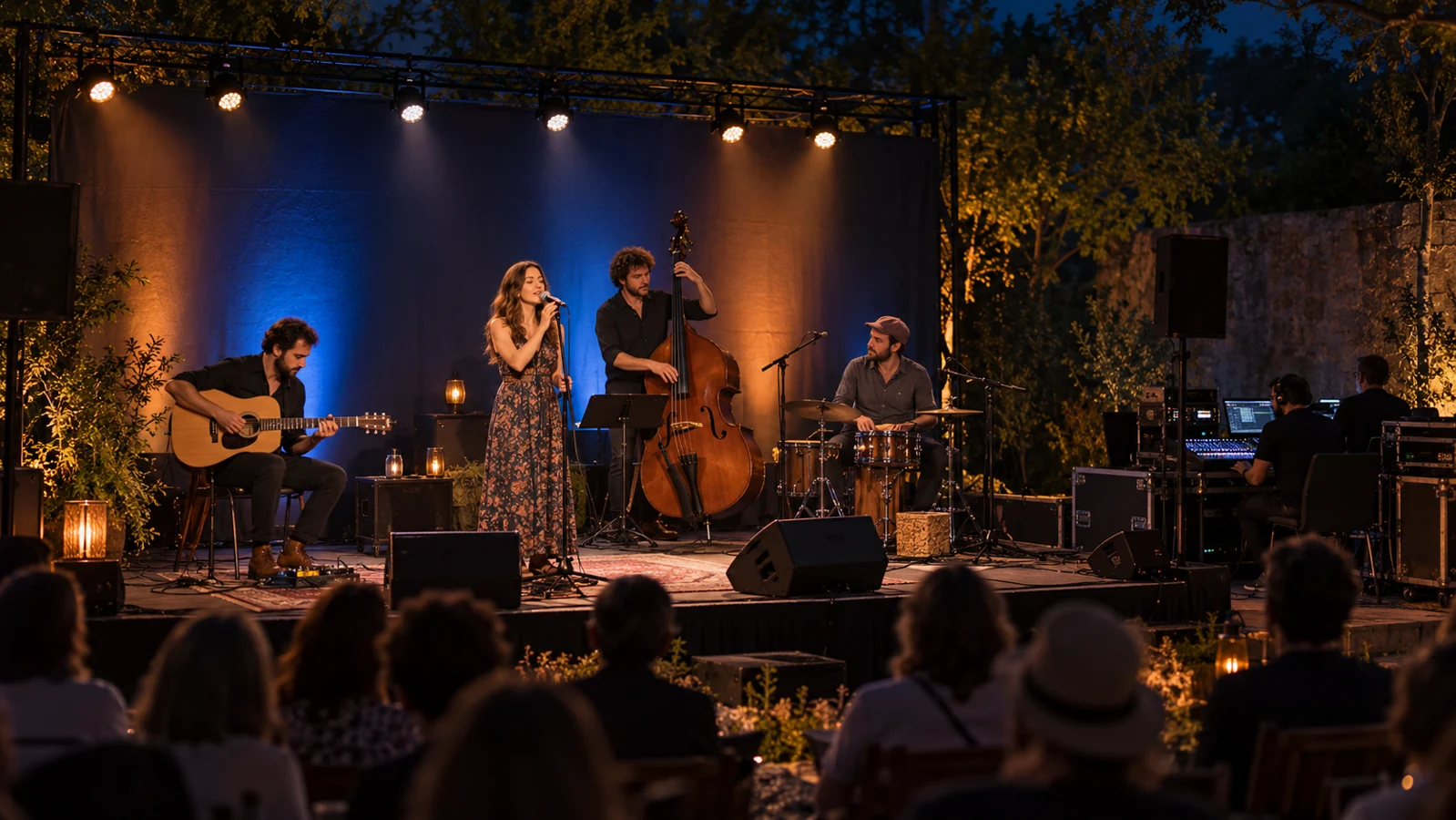
A small stage lighting setup should make performers easy to see, give the show useful colour and remain manageable for the crew. If you already own some lights, the next purchase should solve a specific problem: missing face light, uneven coverage, slow scene changes or equipment that is difficult to transport.
Before buying another effect, ask what the audience cannot see clearly and what the operator cannot run reliably. Those answers give you a purchasing order that a list of fixture wattages cannot.
Identify the missing job before choosing a fixture
Write down what your existing lights actually do at a typical show. A bar behind the band may provide colour and separation while leaving faces poorly lit. A fixture with plenty of output may still miss a musician because the available mounting position or beam spread is wrong.
Use this table to separate an equipment gap from a positioning or operating problem.
| What happens at the show? | Check before buying | What the next purchase may need to provide |
|---|---|---|
| The background is bright, but faces are difficult to see | Available front-light positions, shadows and spill | Suitable performer light, with control of coverage and colour |
| One musician is bright while another stands in a dark patch | Beam spread, aiming, overlap and performer positions | Different optics or additional coverage where repositioning cannot solve it |
| The basic look works, but the show needs a specific visual effect | Whether existing fixtures can create that cue | The required movement, pattern or accent function |
| Every change requires adjusting fixtures individually | Groups, saved scenes, channel modes and controller support | A more usable control workflow, possibly before more lights |
| Setup or packing is becoming difficult | Loaded cases, connections, cable sorting and crew handling | A package that fits the transport and deployment limits |
Do not order from the last column alone. Check the proposed light in the positions and operating conditions you can actually provide.
Already have rear colour? Compare three next steps
Consider a hypothetical small production company that already owns rear RGBW bars. Its regular work is acoustic music and jazz, with occasional pop shows. It wants to expand without making every job harder to operate.
There are three different reasons to spend the next part of the budget.
Improve performer visibility. If faces disappear against the coloured background, first assess where front light can be placed. Compare white-light quality, useful coverage, spill and dimming in that position. Extra rear effects will not remove a shadow across a singer’s face.
Improve operation. If the existing lights produce the required looks but changing between them is awkward, check whether the controller can store and recall the necessary scenes. Confirm support for the exact fixture mode. Additional units will add work unless the control arrangement can manage them.
Add a missing effect. If visibility and operation already work, name the cue the current rig cannot produce. A moving beam, projected pattern and broad colour wash are different jobs. Buy for the required function rather than assuming any moving head is an upgrade.
For this company, the sensible first purchase depends on which problem appears in its recurring bookings. The occasional larger show does not automatically justify equipment that complicates every smaller one.
Select front light by the result on people
When comparing fixtures for performer light, ask to see the proposed version at the intended distance and angle. Look at faces, pale and dark clothing, instruments and the background together. Check whether the useful area remains even when performers move.
RGBW identifies a colour configuration; it does not, by itself, establish the quality of white light on skin or on camera. Likewise, a COB source describes construction rather than guaranteeing the coverage, noise or dimming required by your show.
The LED PAR buying guide explains the colour, beam and housing choices to compare. Keep those specifications tied to the exact version being quoted.
If the proposed light spills onto a screen or into the audience, investigate the optics, mounting position and compatible light-control accessories. Check accessory availability and fit rather than assuming every PAR can take the same barn doors or diffusion.
Make the rig repeatable before expanding it
A show file becomes useful when another operator can connect the fixtures, select the correct modes and recall the intended looks. Keep a short patch record beside the saved show.
| Record | What to include |
|---|---|
| Fixture identity | Exact model, version and quantity |
| Control | Fixture profile, channel mode, universe and start address |
| Position | Fixture label, stage position and the area it lights |
| Connection | Power and data route, with matching cable labels |
| Saved files | Show-file name, date and software version |
| Changes | Which fixture, mode or position changed, and which scenes were retested |
The DMX channel guide explains why channel mode matters when planning a rig. A profile that supports one mode should not be assumed to behave correctly in another.
For a rehearsal, try a neutral performer look, a warmer acoustic look and a coloured music look. These are example scene purposes, not prescribed fixture settings. Recall each one, check transitions and make sure a temporary effect does not leave a required performer area dark.
When substituting another model, verify its profile, channel footprint and actual behaviour. Matching an address does not make different fixtures interchangeable.
Include transport in the comparison
The lightest individual fixture is not necessarily the easiest complete package to move. Compare packed dimensions and gross weights, how many people must handle each case, and the space taken by stands, mounting hardware and cables.
Time a representative load-in, patch, focus and pack-down with the crew that will use the system. Record where work accumulates: identifying cables, reaching controls, correcting addresses or repacking awkward cases. That gives you a specific requirement for the next quotation.
Keep net fixture weight separate from packed shipping weight. A shorter equipment list is useful only if it still performs the required jobs.
For outdoor jobs, check the whole arrangement
An outdoor booking changes more than the fixture specification. Confirm the suitability of the exact light, its connections, power distribution, mounting and operating conditions together. A canopy alone does not establish that an indoor fixture and its connections are suitable for the exposure.
Use the outdoor stage lighting range to discuss models for the actual application. Provide the expected exposure, installation arrangement and operating duration alongside the optical task.
Keep electrical and structural design with the responsible qualified project team. A fixture quotation does not establish circuit design, support capacity or a weather operating plan.
Give each purchase a condition
Before approving the next order, complete these statements:
- Buy now because: a recurring show needs this job, and the existing rig cannot perform it adequately after positioning and control checks.
- Keep using: the equipment that already performs its assigned job reliably.
- Add later when: a named booking or repeated requirement justifies the extra function, transport and programming.
This turns a wish list into a staged purchase plan. It also makes quotations easier to compare: each supplier is responding to the same working requirement.
For a WUYESTAGE equipment enquiry, send the stage dimensions, available lighting positions and distances, existing fixture list, controller and modes, indoor or outdoor conditions, transport limits and intended quantity. State what the current setup cannot do. Those inputs give the configuration and quotation discussion a useful starting point.