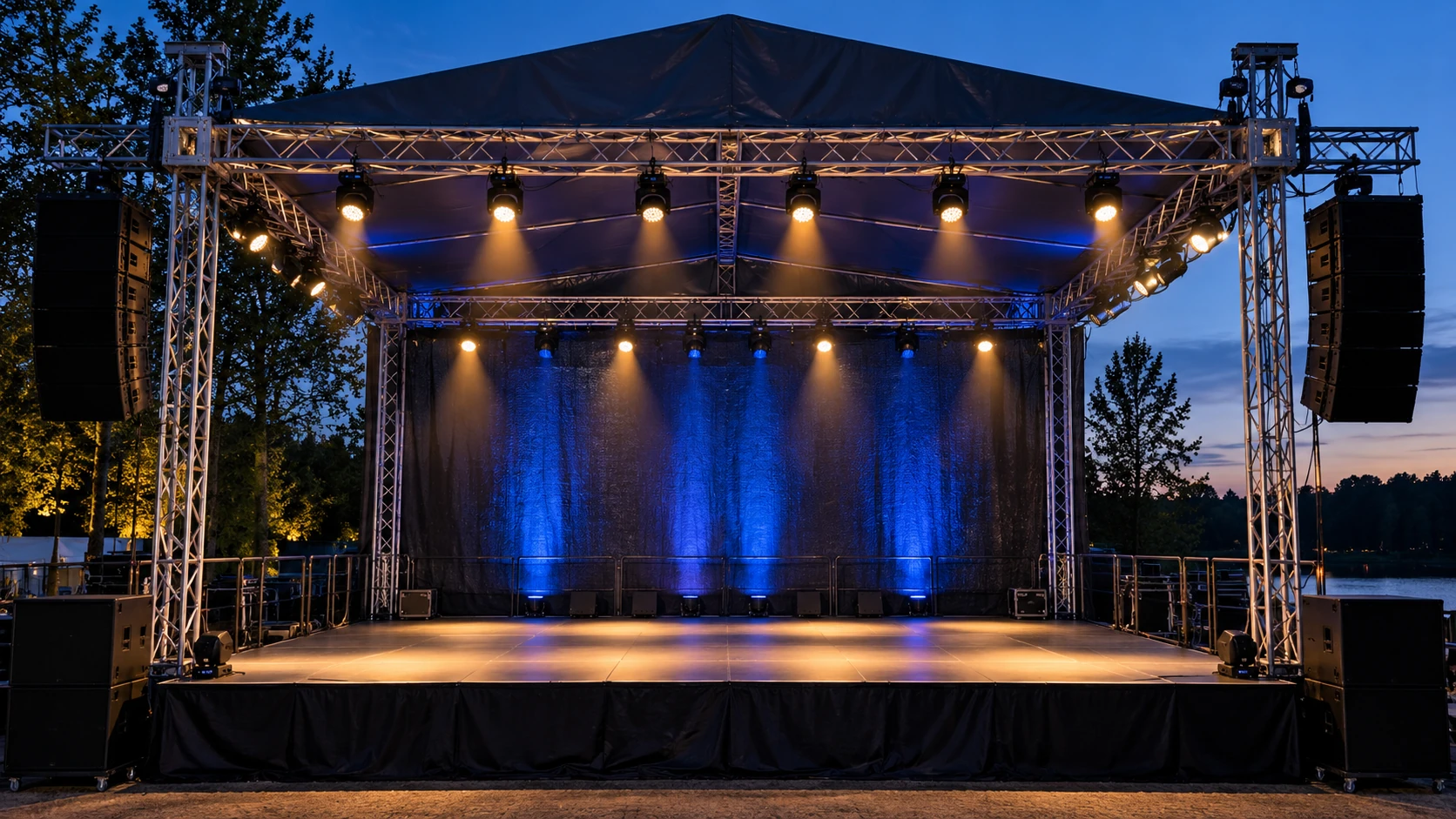
IP65 and IP67 share the dust-tight “6” classification, but their water classifications describe different tests: water jets and temporary immersion. For stage-lighting procurement, choose from the declared tests and the fixture’s operating instructions, then check power/data connections and the complete installation. A larger second digit is not a universal approval for every kind of water exposure.
The useful IP65 vs IP67 question is therefore specific: what exposure must this lighting position handle, and what evidence supports the quoted configuration? An outdoor rental crew, a venue purchaser and a distributor may need different answers even when they are looking at the same housing.
Use the following three checks to compare IP ratings, review the supplied configuration and prepare a clear inquiry for your outdoor stage project.
IP65 vs IP67: read both digits separately
The IP code identifies ingress protection. Its first digit addresses solid-object protection; its second addresses water protection. In these two codes, the first digit is the same. The comparison concerns the water-test category, not a change in dust classification.
| What is being compared? | IP65 | IP67 | What a stage buyer still needs |
|---|---|---|---|
| First digit: 6 | Dust-tight classification | Dust-tight classification | The declared rating for the exact supplied version |
| Second digit | Water-jet test category | Temporary-immersion test category | Relevant test declaration, conditions and operating instructions |
| Whole event installation | Not established by the fixture code alone | Not established by the fixture code alone | Connection, power distribution, mounting and site requirements |
| Continuous underwater operation | Not established | Not established | A separate application-specific approval; do not infer it from either code |
Sony’s official ingress-protection explanation explains the general dust and water classifications. For a stage light’s permitted use, cleaning and connection requirements, refer to the documentation for that exact fixture model.
The comparison is not a general durability ranking. Neither code tells you the fixture’s output, color quality, dimming behavior, noise or repairability. Those require their own specifications and sample checks. A buyer can select the relevant protection category and still choose a light that does not deliver the required field or white-light appearance.
Check 1: match the water tests to the installation conditions
Start with the intended position, not the higher number. A raised truss position and a floor position beside a water-collecting area have different exposure paths. A canopy changes the layout but does not, by itself, establish that every fixture, connector and cable remains protected.
For IP65 vs IP67, avoid assuming that the immersion classification automatically proves the water-jet test has also been passed. Schneider Electric’s official explanation of multiple IP ratings explains why products may list several water-protection ratings: the tests have different requirements. Apply that distinction when reviewing a stage light, and check which tests are actually declared for the offered model.
If jet exposure is relevant, request the applicable declaration for that fixture version. If temporary immersion is part of the proposed requirement, request the applicable conditions and confirm whether the intended use is allowed. The rating is not an instruction to operate a stage light underwater or place energized equipment where water collects.
Describe the expected installation conditions, including wind-driven rain, dust, cleaning methods and places where water could collect. This information helps the supplier assess the proposed configuration. Plan suitable placement and drainage alongside the fixture’s declared protection rating.
Also separate water ingress from the wider environment. The two-digit comparison does not establish resistance to salt, chemicals, ultraviolet exposure or every temperature/humidity condition. Check the relevant product documentation when those conditions matter. Do not replace a missing environmental specification with the word “waterproof.”
Check 2: check the fixture, cables and connectors together
A fixture housing is one part of the rig. Power and data connections, extension leads, distribution equipment and unused ports each introduce their own conditions. A product’s fixture rating cannot be copied automatically onto everything connected to it.
Ask which components the declaration covers and in what state: connected, disconnected or capped. Confirm the supplied mating connector, required seals or end caps, cable entry arrangements and assembly instructions where applicable. Do not assume that two connectors with a similar appearance create a rated connection together.
Review the power supply path to the fixture and the data connections between fixtures. At each connection, identify the supplied components and their documented protection requirements. An IP65 vs IP67 comparison is useful only when it also accounts for the accessories needed at the installation.
For example, suppose a rental quotation lists an IP67 fixture but leaves the extension lead and connector arrangement unspecified. The fixture’s label does not establish protection for that connection. Ask for the lead, mating connector and installation requirements before approving the configuration.
Mounting orientation and cable routing must follow the exact instructions, too. The venue or responsible installation team assesses the complete position, including drainage and access. A sealed enclosure does not independently approve the support structure, electrical distribution or weather plan.
Check 3: verify documents for the exact model and version
An IP entry on a quotation identifies a claim to verify. It is not, by itself, a reviewed certificate or a complete test report. Keep the current model, hardware version, supplied accessories and relevant documents together so the rating remains attached to the equipment being ordered.
When supporting documents are provided, check the named product/configuration, issuing source, standard reference, date, tested conditions and any limits. Confirm that they match the offered version. A document for a related enclosure or an older model suffix is not automatic proof for the current fixture.
This matters for repeat orders as well as first samples. If the housing, cable entry or connection arrangement changes, ask whether the earlier statement still covers the supplied configuration. Product-name similarity does not prove that the ingress-protection evidence is interchangeable.
Avoid making an informal hose or immersion demonstration the substitute for applicable documentation. A video can show what happened in that recording; without the relevant conditions and assessment, it cannot establish every requirement of a declared test. Use sample review to confirm the ordered configuration and operation, while keeping the rating evidence distinct.
RG-451: an IP67 dual-white COB PAR example
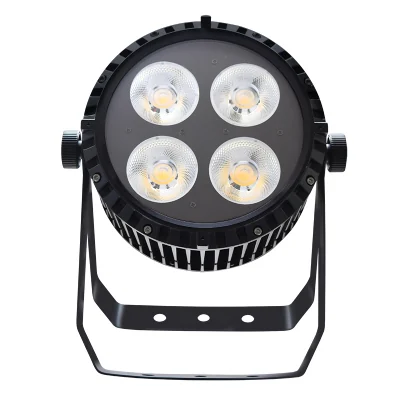
The current WUYESTAGE RG-451 dual-white COB PAR lists IP67, a 200W fixture rating and four 50W COB sources: two white and two warm-white. The current configuration also lists 8 DMX channels and a −20°C to 40°C working range.
Those facts identify the version being discussed. They do not establish that this fixture carries an additional water-jet rating, that every supplied connection is independently protected, or that it is intended for continuous immersion. Request the relevant version documents and complete connection arrangement for the project.
Check the full model designation when comparing four-eye COB fixtures. An IP65 specification for a different RG-451 variant does not establish an additional rating for the current IP67 version. Review the linked product page and request documents that match the configuration being offered.
After the protection requirement is clear, assess the lighting task. Dual-white sources, a multi-color PAR and a moving wash serve different needs. For this RG-451 version, confirm the required white-light appearance, color-temperature specifications and current channel functions with the supplier. The number of white and warm-white sources alone does not define a Kelvin range or how the sources can be controlled.
What to include in an outdoor-lighting inquiry
Include the following information so the supplier can assess the proposed lighting installation:
- Installation position and environmental conditions: covered or exposed placement, mounting height, area to be lit, fixture orientation, expected rain/dust conditions and intended period of use.
- Fixture model and configuration: model/version, required lighting result, control mode, quantity and the declared IP rating being requested.
- Protection documents: applicable technical documents, relevant tests and stated use/maintenance limits for that version.
- Connections: power/data interfaces, mating leads, unused-port treatment and the supplied accessories required by the instructions.
- Order details: voltage/plug requirements, destination, delivery date and packaging information needed for the shipment.
Before approving the quotation, confirm the exact fixture version, supplied connection accessories and relevant documentation. Ask the supplier to resolve any missing test declaration or connection requirement. A higher fixture rating does not fill gaps in the installation specification.
For further product selection, compare the current LED PAR light range by source, coverage, control and operating position. The protection code is one selection input alongside the lighting result the project needs.
IP65 vs IP67 FAQ
Does IP67 automatically prove water-jet protection?
No. Temporary immersion and water jets describe different test requirements. Check the fixture’s actual declared tests and supporting documentation rather than inferring a jet rating from the second digit 7.
Does an IP67 fixture rating include every power and DMX connector?
Not automatically. Identify the parts covered by the declaration and any required mated or capped state. Check the supplied leads, connectors and unused ports separately as part of the complete installation.
Can an IP-rated stage light be cleaned with a pressure washer?
Do not infer pressure-washer suitability from IP65 or IP67. Follow the exact fixture’s cleaning instructions; the equipment, pressure, temperature, chemicals and exposure conditions may differ from its declared tests.
Does IP67 mean a light can remain outdoors permanently?
No. The code alone does not define the complete long-term environment, installation or maintenance requirements. Confirm the permitted use, temperature and other applicable environmental conditions in the current product documentation.
Send WUYESTAGE your outdoor lighting brief with the intended positions and connection requirements when requesting a matching PAR configuration.