PAR stands for parabolic aluminized reflector. In traditional stage lighting, a PAR can is the housing that holds a PAR lamp. An LED PAR is a modern fixture that uses LEDs and built-in electronics to provide static color or white-light coverage. Understanding PAR light meaning helps buyers avoid treating these different designs as interchangeable.
If a buyer asks for “24 PAR cans,” the useful next question is not simply how many are in stock. The supplier needs to know whether the project calls for a traditional lamp fixture, a color-mixing LED PAR, a white-light COB PAR, or another fixed wash fixture. The name alone cannot determine color quality, coverage, control, noise or outdoor suitability.
What a PAR can meant, and what the name means now
A traditional PAR lamp combined its reflector and front lens in a replaceable sealed unit. The can held the lamp, provided a mounting point and could accept accessories. PAR 36, PAR 56 and PAR 64 are familiar historical size terms; they do not specify an LED fixture’s output or feature set. In particular, “PAR 64” does not mean 64 watts or 64 LEDs.
Many current LED PARs keep the compact, aimable form associated with the older fixture. Their LEDs and optics are built into the luminaire, so a replacement lamp, dimmer, gel and accessory workflow cannot be assumed. Some products use several color LEDs; others use a white COB source. A flat PAR, a quiet venue fixture and an outdoor-rated unit can all be called “PAR lights” while requiring different checks.
The practical definition is therefore two-part: PAR identifies a familiar fixture family; the exact modern specification identifies what the buyer will receive.
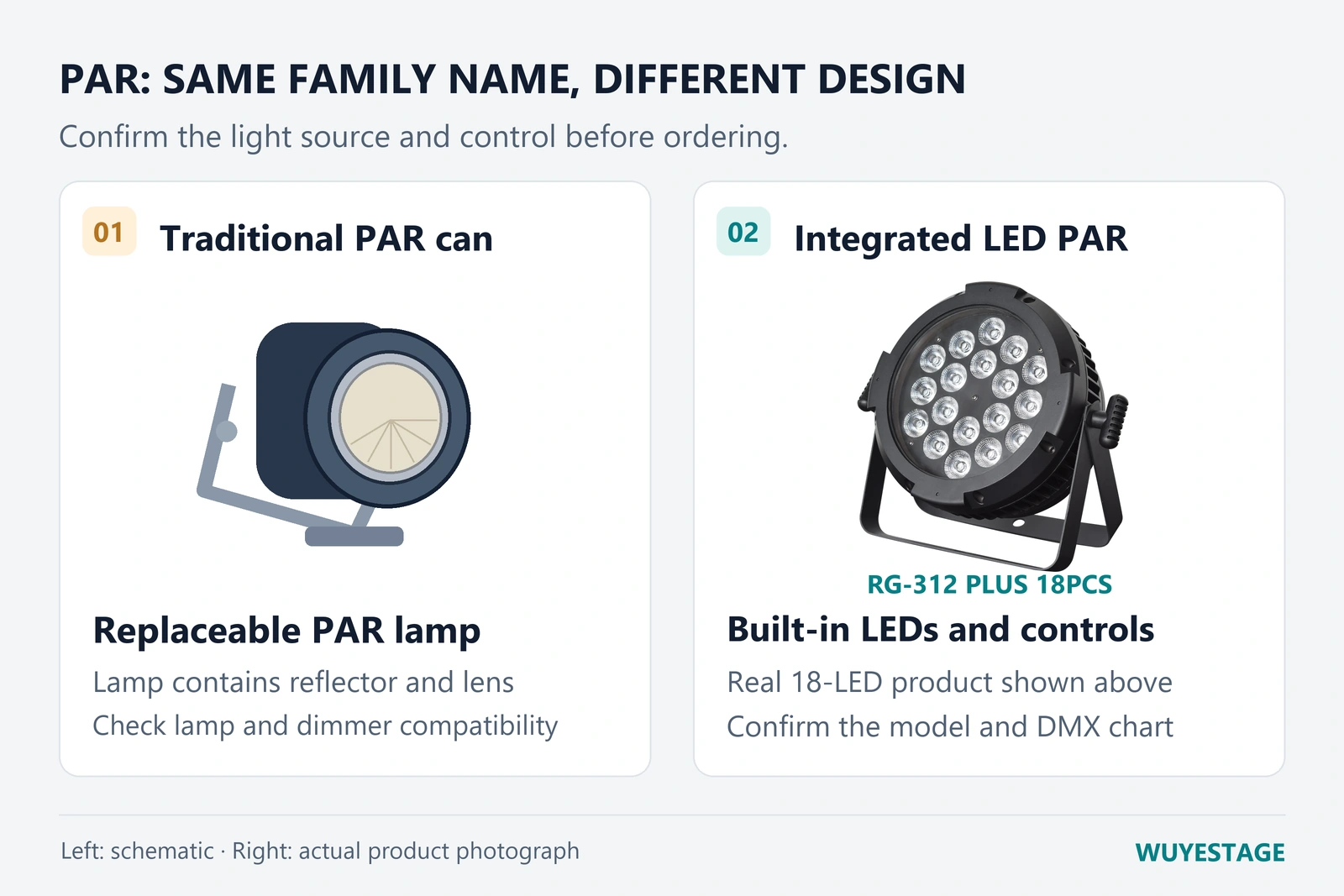
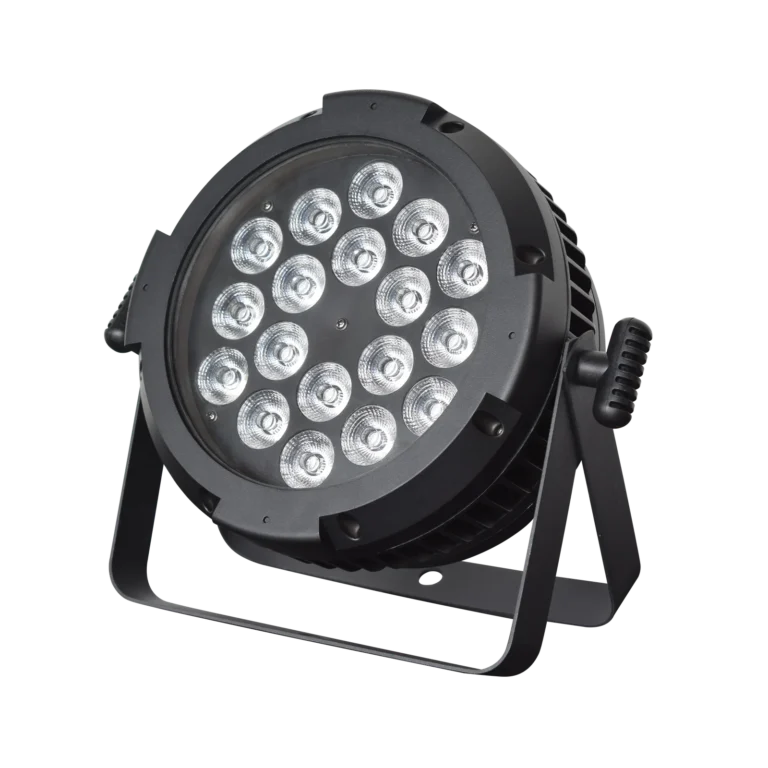
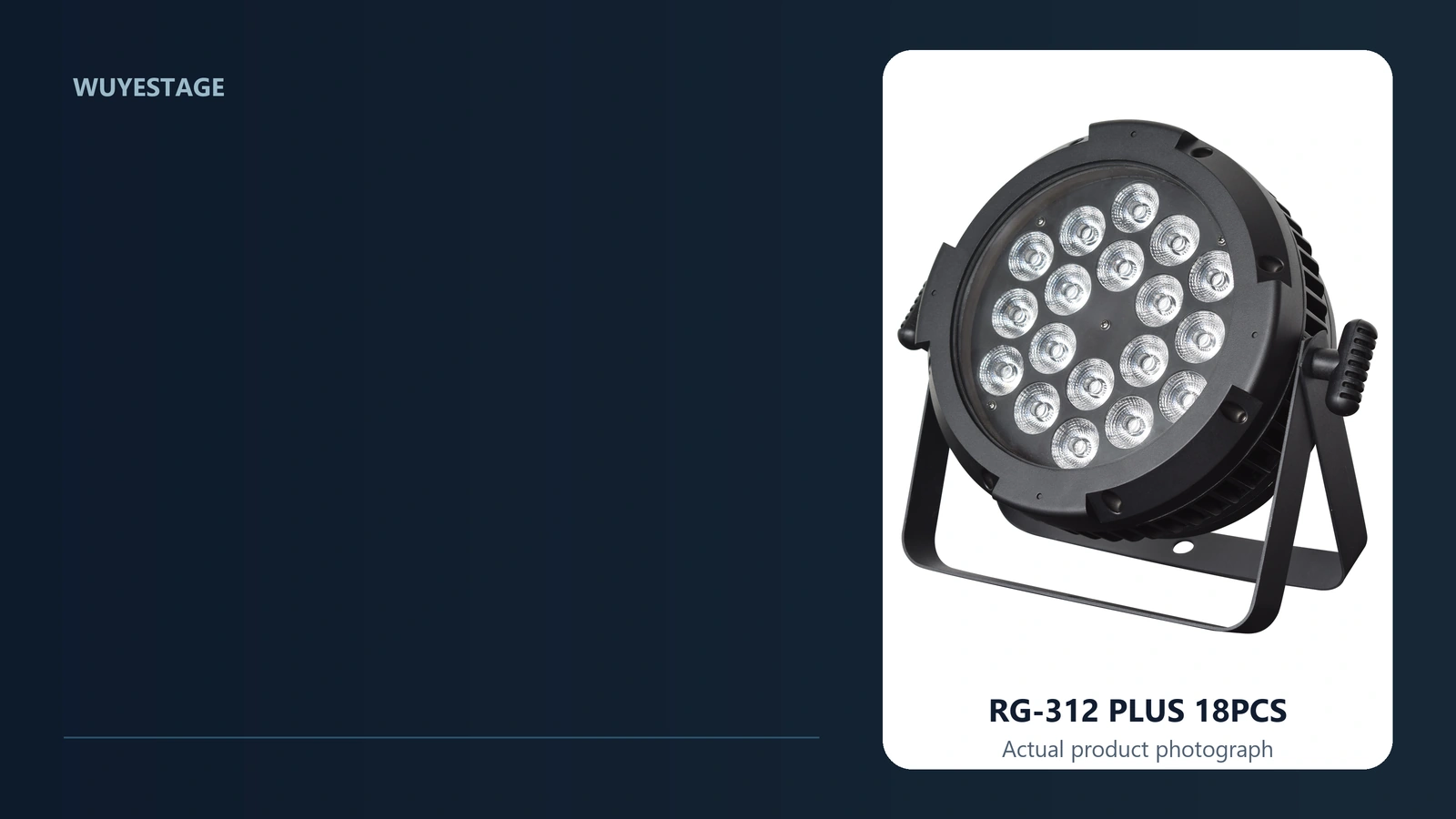
Left: a traditional PAR can schematic. Right: an actual RG-312 PLUS 18PCS product photograph. The comparison explains fixture design, not equivalent light output.
That distinction matters when comparing suppliers, replacing stock in a rental fleet or writing a repeat order.
The RG-312 PLUS 18PCS LED PAR shown here is one modern example: its dedicated 18-position front layout belongs to an integrated LED fixture with DMX512 and standalone control. The photograph identifies the physical version; the selected LED package and channel chart must still be confirmed in the quotation.
PAR light meaning: size, LED count and power are different facts
Three numbers can appear in the same conversation without describing the same thing. A historical PAR size names a lamp format. An LED count describes the number of source positions or emitters in a specified design. Electrical power describes consumption under the stated measurement conditions. None of these values is a complete photometric result.
For example, the RG-312 PLUS 18PCS has 18 LED positions and a listed 200W power specification. These are identification and electrical facts, not proof of a particular lux level, field width or replacement ratio. Color-package options also matter: the verified product record includes 4-in-1, 5-in-1 and 6-in-1 configurations. Confirm which configuration the sample and bulk quotation actually cover instead of assuming that the model name settles it.
For a meaningful output comparison, ask for measurements at the same distance, angle definition and color setting. An all-colors-on reading and a saturated single-color cue answer different questions. If a supplier offers a test report, check that its exact configuration matches the proposed order. A sample evaluated in the intended position remains useful when two catalog descriptions look similar.
This is why PAR light meaning should be clarified before choosing a quantity. A number on the front of a quotation can identify a family or a configuration; it cannot replace the lighting task and its acceptance criteria.
Translate the name into a usable specification
Use this short translation before requesting prices. It prevents two quotations that both say “LED PAR” from describing different products.
| Term in the request | What it does tell you | What must still be confirmed |
|---|---|---|
| PAR can | The buyer may expect a conventional can-style fixture | Traditional replaceable lamp or integrated LED; lamp size if relevant; dimming and accessories |
| RGBW LED PAR | A four-color LED configuration is requested | Actual emitter arrangement, white-light result, beam or field angle, dimming, DMX modes and batch consistency |
| White COB PAR | A white-light source style is requested | Color-temperature option, beam shaping, dimming, cooling and camera test |
| Waterproof PAR | Weather protection is expected | Exact product IP rating, connectors, mounting, exposure conditions and the rated configuration |
| Silent PAR | Noise matters to the venue | Cooling method and noise at the operating temperature and cue levels; “silent” is not a measured value by itself |
These are questions to resolve, not promises about every product bearing the label. A model may combine some features but not others. Browse the LED PAR Lights category to compare fixture roles and request suitable options once the terminology is clear.
Three decisions that change the quotation
1. Is the target a color wash or useful white light?
An RGBW fixture is a possible fit for colorful stage, scenic and room washes. A white COB configuration can be a better starting point when the central task is illuminating people or products in white light. Neither label proves skin-tone quality or camera suitability. Ask to see the proposed fixture at the required color or white setting, with the intended camera and exposure when video matters.
If the order is for a rental fleet, specify whether one model must cover several cue types or whether separate color and white-light stock is acceptable. This affects programming, spare inventory and what a repeat customer will recognize as the same look. The published LED PAR buyer comparison addresses the wider product-choice question after the terminology is clear.
2. What field must the fixture cover from its real position?
LED count and electrical wattage do not define useful coverage. Record the target width, fixture position and throw distance, then request the manufacturer’s angle definition and a sample at that distance. Compare the center with the edge of the field, the transition between adjacent fixtures and the output at the exact color or white setting required.
A PAR can suit a fixed wash position, but the name does not guarantee that one unit will cover a full stage or that all housings have the same beam. If the position, angle or target surface is unknown, a fixed fixture count is only a guess. Do not approve a bulk quantity from “PAR 64 equivalent” or source wattage alone.
3. What will the technicians operate and maintain?
For a controlled show, request the exact DMX channel modes, dimming behavior and address workflow. DMX512-A is the lighting-control transmission standard described in ESTA’s published ANSI E1.11 documents; the standard’s existence does not tell you which functions a particular PAR assigns to each channel. Obtain the model’s own channel chart.
For a quiet room, inspect cooling noise during representative cues. For exposed outdoor placement, verify the exact unit’s declared ingress protection and the complete power and signal connection plan. For recurring rental work, compare brackets, safety attachment, handling, packing and access to spare parts. A label such as “silent” or “waterproof” cannot replace those checks.
A sample request that makes PAR quotes comparable
Send the same brief to every supplier:
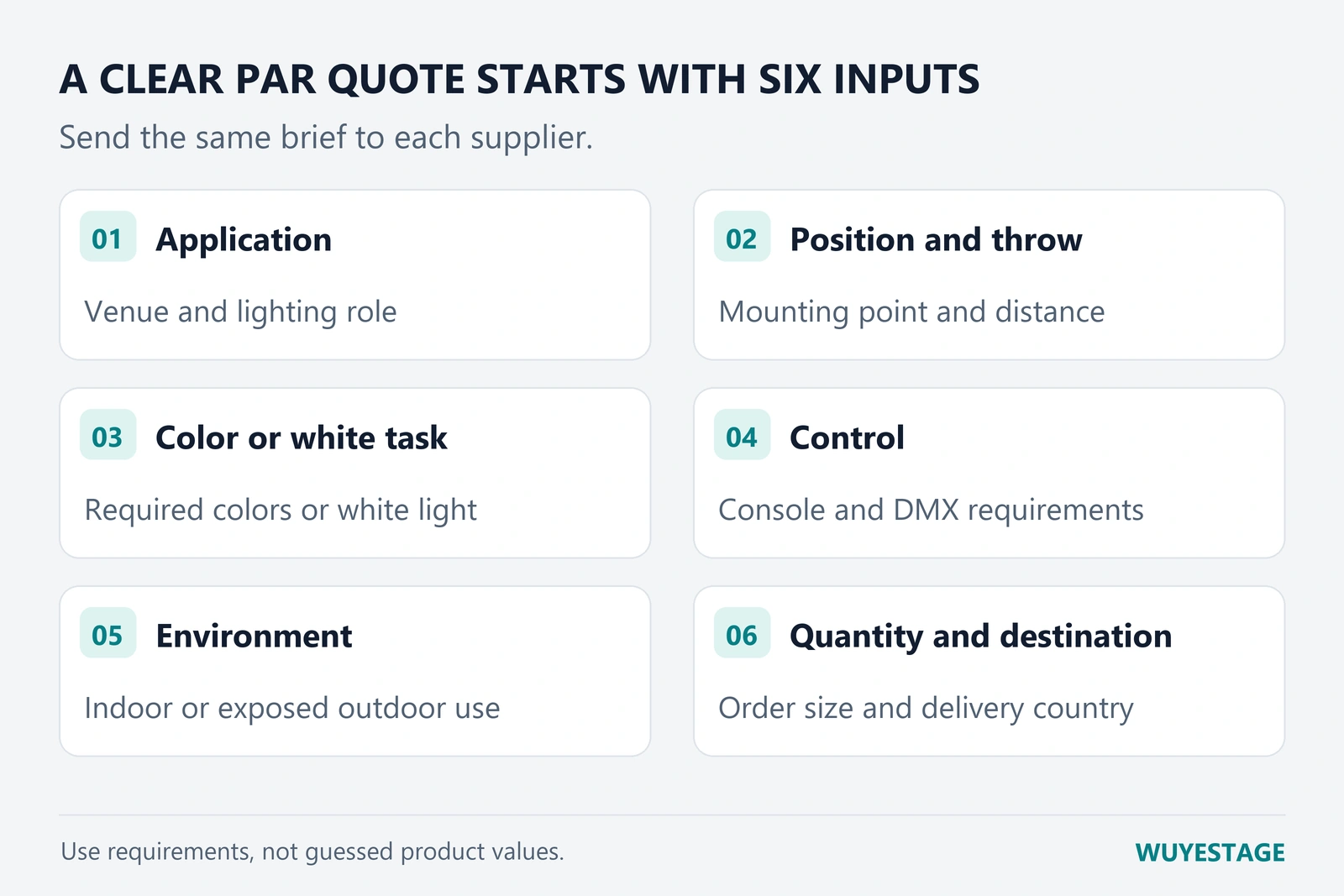
Complete these six inputs before comparing PAR quotations. Use the actual project requirements rather than guessed specifications.
We need fixed PAR-style fixtures for [venue and application], mounted at [positions] about [distance] from a [target size]. The main task is [color wash / white light / both]. Please quote [quantity] units for [indoor / exposed outdoor] use in [destination country]. State the exact light-source and color configuration, angle definition, DMX modes, cooling method, IP rating where relevant, included bracket and cables, packing, and the sample configuration you will supply for testing.
If a seller substitutes a different PAR family, ask them to mark each difference. A buyer can then compare the same operating task rather than two names that only sound equivalent. For a larger project, include a floor plan, camera conditions, noise limits and desired overlap. Send WUYESTAGE your PAR lighting brief with these details to request suitable configurations.
When a PAR is not the right starting point
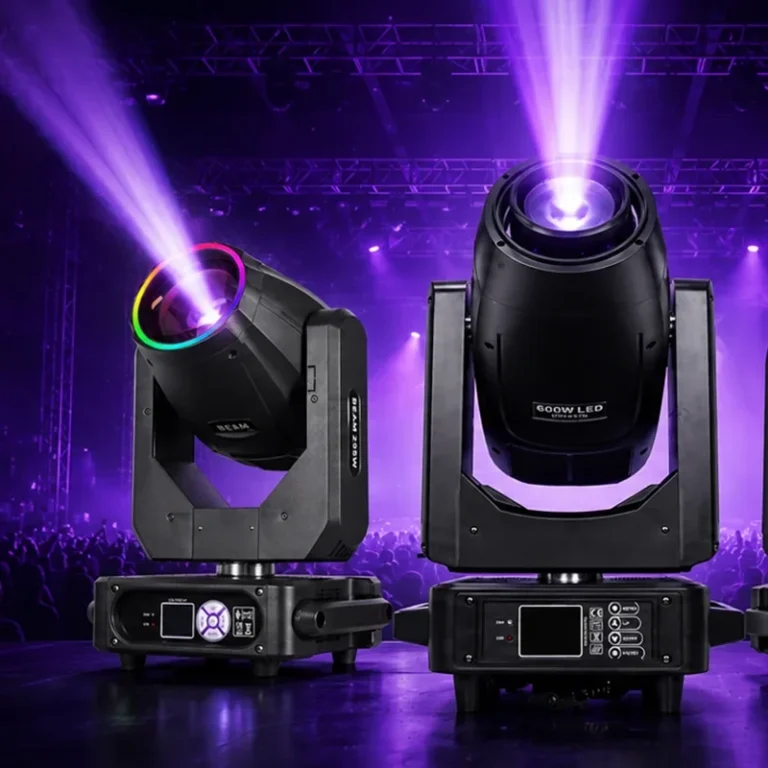
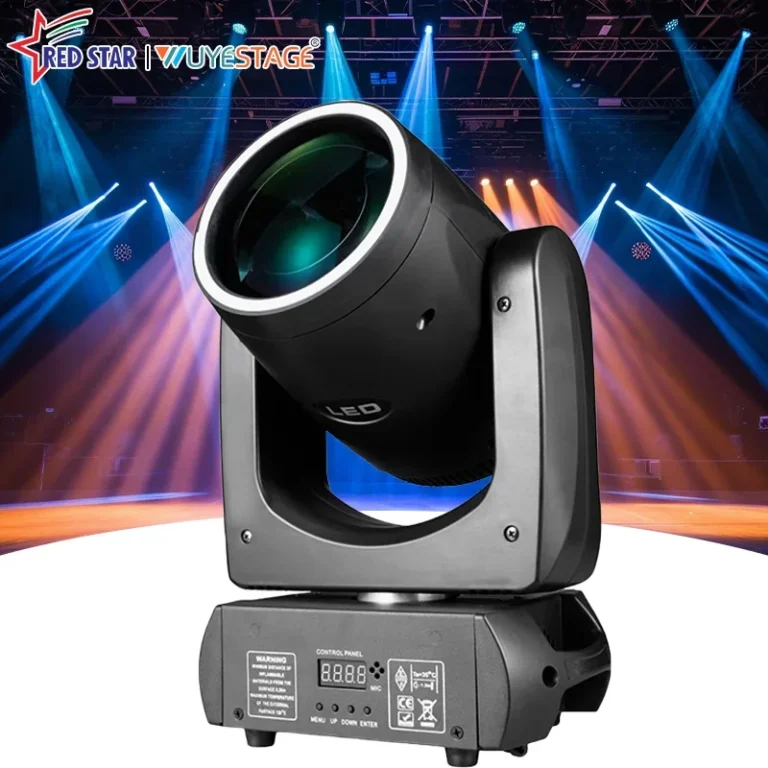
A fixed PAR is a reasonable starting point for repeatable wash positions. It is less suitable when the cue must move rapidly between targets, project defined patterns, or create narrow aerial effects. Those are different optical jobs. Begin with the required look and operating position before choosing a fixture family.
Nor should a term such as “PAR can” stand alone on a purchase order. For a bulk or repeat order, confirm the final model and version, sample result, color system, angles, control chart, accessories, environmental rating and packing in writing. That is the point at which a familiar lighting name becomes a checkable supply specification.
PAR light meaning FAQ
Can an LED PAR directly replace a traditional PAR can?
Sometimes, but confirm the complete operating setup first. Compare coverage, mounting, power distribution, color or white-light performance and control. Do not assume that an LED fixture can use an existing mains dimmer: check the manufacturer’s stated compatibility. Approve a sample in the actual position before treating the two fixtures as substitutes.
Are PAR lights and wash lights the same?
The terms overlap. PAR describes a familiar fixture family, while wash describes the role of spreading light across an area. Many LED PARs provide a fixed wash, but other fixture families also perform that job. PAR light meaning alone does not specify the field angle, evenness or usable coverage of a particular model.
Do PAR lights with more LEDs always produce more light?
No. LED count does not establish useful light output. Source type, drive conditions, optics, color setting and thermal behavior can affect the result. Compare the same measured conditions and the field you need, rather than ranking quotations by LED count or electrical wattage alone.
What should I confirm before ordering RG-312 PLUS 18PCS?
Confirm the selected 4-in-1, 5-in-1 or 6-in-1 LED package, exact DMX channel chart, required power and signal connections, included accessories and packing. The verified model uses fan cooling, so check noise in the intended venue. For exposed use, ask for the stated rating and installation requirements for the exact supplied configuration. Keep the approved sample and written order specification aligned.