
BEAM MOVING HEAD LIGHTS
Beam Moving Head Lights for Rental and Stage Projects
Compare narrow-beam fixtures by optics, prism effects, movement, control, operating environment and rental workflow—not by wattage alone.
UNDERSTAND THE CATEGORY
Choose a beam fixture for aerial impact, then verify the workflow.
A beam moving head has a specific visual role. The useful model is the one whose optics, effects, movement and operating requirements match the project.
01BEAM ROLE
Narrow Aerial Output
Use beam fixtures when the project needs concentrated shafts and aerial movement rather than broad performer coverage.
02EFFECT DENSITY
Prism Multiplication
Compare the actual prism structures and rotation behavior when layered rays are central to the show design.
03VISUAL VARIATION
Color & Gobo Changes
Check the available color and fixed-pattern systems against the programmed looks required by the project.
04PROGRAMMING
Movement & Control
Verify pan, tilt, movement resolution, DMX modes and fixture profiles for the intended console workflow.
05OPERATIONS
Rental Workflow
Consider handling, transport, setup, repeatable addressing, service access, accessories and batch consistency.
06ENVIRONMENT
Indoor or Outdoor
Select a complete fixture designed for the actual environment; an indoor beam is not an outdoor product.
PROJECT-TO-BEAM GUIDE
Start with the intended look, then check the complete configuration.
Use project conditions to narrow the range before comparing individual specifications and samples.
VERIFY BEFORE ORDERING
Beam angle, throw, haze policy, lens condition and usable output at distance
Prism structures, overlay combinations, rotation speed and direction
Channel modes, movement resolution, color/gobo indexing and fixture profile
Case plan, setup time, weight, rigging, spares, packing and batch consistency
Flicker, dimming, color behavior, strobe use, haze and exposure tests
Complete IP rating, connectors, housing, cooling, rigging and operating limits
BEAM PRODUCT RANGE
Compare beam models by throw, optics and effect system.
Open a model page to review its documented light source, beam behavior, prisms, control and operating details.
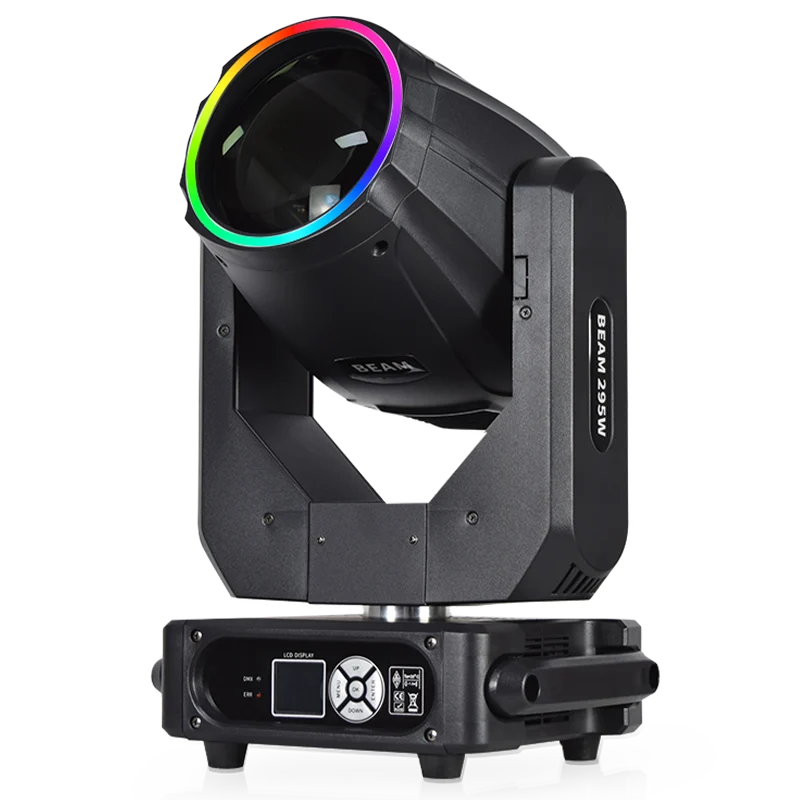
BEAM MOVING HEAD · RG-119
295W Beam Moving Head Light
A 295W beam moving head light with an RGB lens ring, layered prism effects, fixed colors and gobos for rental, live stage and event…
- 275W / 295W high-brightness lamp options
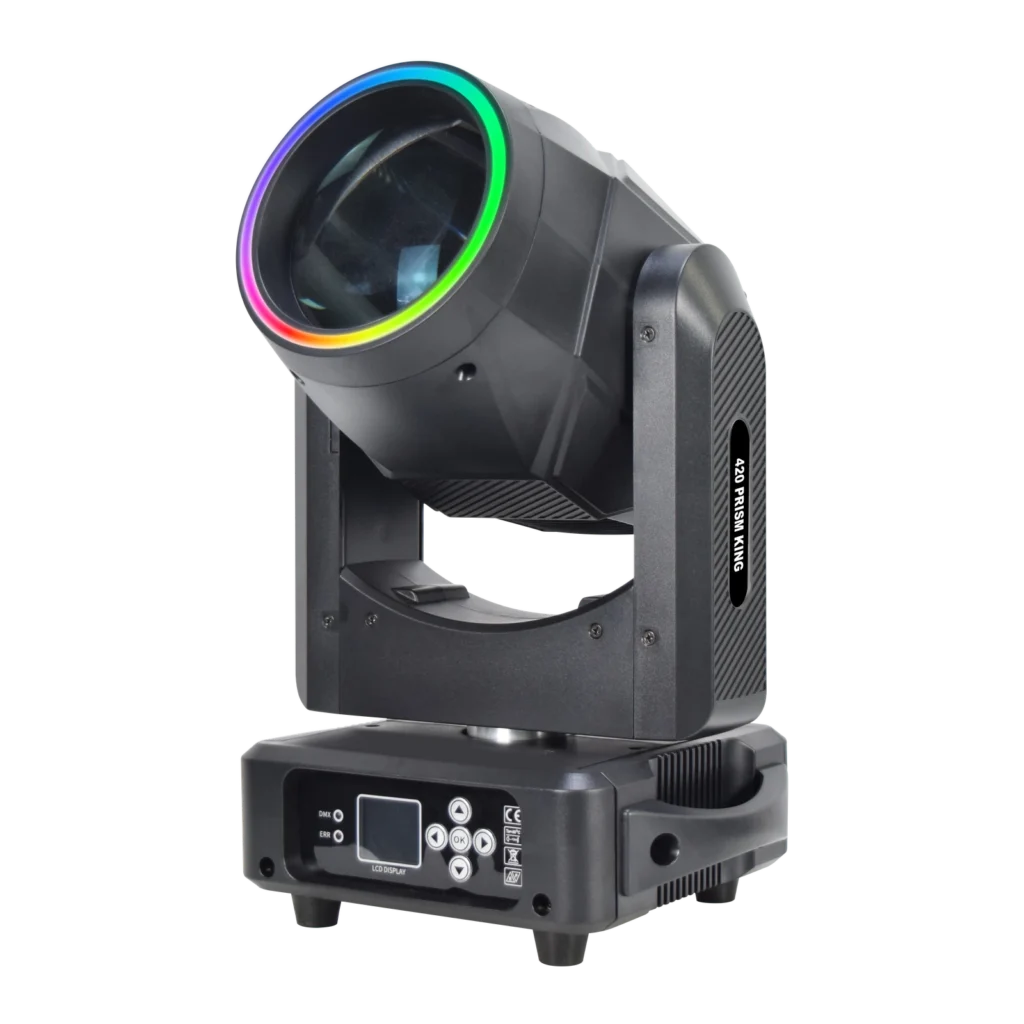
BEAM MOVING HEAD · RG-132
420 Prism King Beam Moving Head Light
A multi-prism beam moving head with a focused 2° output, RGB front ring, fixed gobos and flexible control for professional indoor productions.
- 300W lamp + 24 × 0.5W RGB 3-in-1 LED strip ring
- 2°
- IP20
BUYER COMPARISON
Six checks beyond the source wattage.
Beam & Throw
Confirm beam angle, usable distance, haze conditions and intended positions.
Prism System
Compare structures, overlays, rotation direction and usable density.
Color & Gobos
Verify the exact wheels, indexing and transitions needed for the show.
Movement & DMX
Check resolution, channel modes, profiles and blackout behavior.
Rental Operation
Review setup, handling, noise, service, accessories and case planning.
Environment
Match the complete fixture rating and connectors to actual conditions.
REAL OUTPUT REFERENCE
Judge beam and prism behavior from actual output.
Compare beam definition, usable throw, prism structure and visual density under representative show conditions.
Narrow Beam
A real output image showing the concentrated beam at a documented distance.
Prism Expansion
A real effect image showing one verified prism structure or combination.
Programmed Looks
A real stage image showing color, gobo or movement in an operating context.
APPLICATION FIT
Match the beam fixture to the operating environment.
Throw, haze, rig positions, camera use, transport and service priorities change across projects.
Concerts & Touring
Plan throw, rig positions, haze, movement and repeatable programming for each production scale.
Rental Inventory
Balance effect value with transport, setup, fixture profiles, accessories, service access and spares.
Clubs & Event Venues
Match output and movement to room size, audience distance, sightlines, control skill and haze policy.
SAMPLE-TO-ORDER FLOW
Confirm the actual beam before a batch order.
Define the stage task
Share throw, positions, required effects, environment, quantity and destination.
Compare verified models
Shortlist suitable optics, effects, control and operating configurations.
Test the ordered sample
Run the exact fixture through optics, movement, control and workflow checks.
Finalize the batch
Confirm voltage, plugs, accessories, spares, cases, packing and markings.
BEAM MOVING HEAD FAQ
Questions to answer before comparing quotations.
Direct guidance on optical role, prism selection, environments, testing and wholesale configuration.
What is a beam moving head light?
It is an automated fixture designed to produce a narrow, concentrated shaft of light that can move across the stage or air. It is mainly an aerial-effect tool rather than a broad coverage light.
How is a beam moving head different from a spot or wash?
Beam fixtures prioritize narrow aerial shafts, spot fixtures prioritize defined projection and gobos, and wash fixtures prioritize broad soft-edged color coverage. Hybrid products combine roles with model-specific compromises.
Does higher wattage always mean a better beam light?
No. Buyers should also compare source type, optics, beam angle, usable output, lens condition, prism and pattern systems, thermal design, control and the actual project distance.
Which prism system should buyers choose?
Choose according to the required ray density and programmed looks. Verify the exact prism structures, overlay combinations, rotation behavior and whether the sample produces the intended effect.
Are beam moving heads suitable for performer front light?
Usually not as the main front-light tool. Their narrow output is designed for aerial effects; performer coverage normally needs suitable wash, profile, Fresnel, PAR or other dedicated fixtures.
What should rental companies test before a batch order?
Test movement, optics, colors, gobos, prisms, dimming, strobe, control modes, blackout behavior, fixture profiles, camera response, setup time, accessories, cases and the exact ordered sample.
Can indoor beam lights be used outdoors?
Only when the complete fixture is designed and rated for the required outdoor environment. A temporary cover does not change an indoor product into an outdoor-rated fixture.
What information is needed for a beam-light quotation?
Share the venue or event type, throw distance, indoor or outdoor use, required effects, quantity, voltage, plug, control workflow, destination, accessories, spares, cases or packing needs and any customization request.
START YOUR PROJECT
Let’s Talk About
Your Project.
Tell us who you are, what products you need and your expected order size. Our team will review your requirements and recommend the right next step.