The nits vs lumens distinction is simple: nits describe a surface’s luminance in a viewing direction; lumens describe luminous flux, or an amount of light output. They measure different quantities. A larger number in one unit does not automatically indicate a brighter image than a smaller number in the other.
This matters when an LED screen quotation lists cd/m² while a projector specification lists lumens. Before choosing between them, identify what each figure measures and the conditions under which the audience will see the image.
Lumens vs nits: what does each number measure?
| Term | Quantity | What the value describes |
|---|---|---|
| Lumens, lm | Luminous flux | Light emitted, transferred or received across the stated measurement boundary |
| Nits, commonly used for cd/m² | Luminance | Light from a surface per projected area in a specified direction |
| Lux, lx | Illuminance | Light arriving per unit area on a receiving surface |
A lumen value needs a boundary. The output of a projector’s light source is not the same measurement as the output delivered by the complete projector. Check whether a quoted value describes the source, the assembled device or light actually reaching the image area.
A luminance value needs a surface and direction. It can describe a direct-view LED display, but it can also describe light reflected from a projection screen. It is not restricted to self-emitting displays.
These definitions follow the CIE descriptions of luminous flux and luminance. In display specifications, “nits” is the familiar term for values expressed in cd/m².
Lux is a different quantity again: light falling onto a screen is not the same as the light leaving its surface toward a viewer. The lux and lumens guide explains that receiving-surface distinction in more detail.
Can you convert nits to lumens or lumens to nits?
There is no universal fixed conversion between the two. Knowing the luminance of one point in one direction does not establish the total light output of an entire display. Conversely, knowing total light output does not tell you how it is distributed over a surface and toward the audience.
A statement such as “1 nit equals 3.426 lumens” leaves out essential information and compares different quantities. The number 3.426 belongs to a different relationship: 1 footlambert is approximately 3.426 cd/m², as listed in the CIE entry for the luminance unit. Both sides of that relationship measure luminance.
To relate luminance to total luminous flux, you need information about the emitting area and the distribution of light over directions. For a projected image, you also need to consider the light reaching the image area and how the screen reflects it. Uniformity alone does not supply all those missing conditions.
The practical consequence is straightforward: do not convert an LED wall’s nit rating into a projector’s lumen rating by multiplying by a constant. Compare the resulting image under defined conditions instead.
ANSI lumens vs nits: what should you compare?
For a projector, ask which measurement method produced the lumen figure. An ANSI lumen claim identifies a measurement basis; it does not turn luminous flux into luminance. Retain the stated test method and operating mode when comparing specifications.
The projected image also has a physical size. Consider a hypothetical projector producing the same luminous flux onto two image areas:
- A 3 m × 2 m image covers 6 m².
- A 6 m × 4 m image covers 24 m².
Doubling both dimensions makes the image area four times larger. If the same flux reaches each complete image area and is distributed uniformly, average illuminance falls to one-quarter of its previous value. On a screen with unchanged diffuse reflectance and viewing conditions, the reflected luminance falls correspondingly.
This is a conditional comparison, not a brightness specification for a real projector. Picture mode, optical losses, screen material and gain, image uniformity and viewing position can change the actual result. An ambient-light-rejecting or directional screen also needs evaluation from the audience’s relevant positions.
For direct-view LED, the image is produced at the display surface. Adding more identical cabinets increases the wall’s area; it does not by itself multiply its cd/m² value. A larger wall and a smaller wall can have the same luminance while emitting different total amounts of light.
Can you rank an LED screen and a projector by their specifications?
Suppose one quotation lists a display at 1,000 cd/m² and another lists a projector at 10,000 lm. These are hypothetical figures. They do not establish which option will produce the more suitable image for a particular venue.
In a lumen vs nits comparison, the useful question is what image reaches the audience under the proposed installation conditions. The two headline figures are starting information, not a shared performance scale.
| Comparison point | Information needed for the actual image |
|---|---|
| Image area | Final width and height; for projection, the illuminated image area |
| Luminance conditions | Measurement direction and position, displayed pattern, settings and whether the figure represents a peak or a sustained condition |
| Projection setup | Complete-projector output and mode, image size, screen material and gain, and audience positions |
| Venue light | Relevant daylight or room lighting, exposure direction and operating hours |
| Picture task | Content, important dark detail, viewing positions and any camera requirements |
Compare like with like wherever possible. Two cd/m² specifications still need matching conditions. A small bright test window and a sustained full-screen white image may represent different operating demands; ask what was measured rather than assuming they are interchangeable.
Likewise, the same peak luminance does not establish the same contrast in a lit venue. Reflected ambient light and dark-level performance affect what the audience can distinguish. Camera results require their own system checks rather than a conclusion from brightness alone.
What does a P3.91 outdoor LED brightness range tell you?
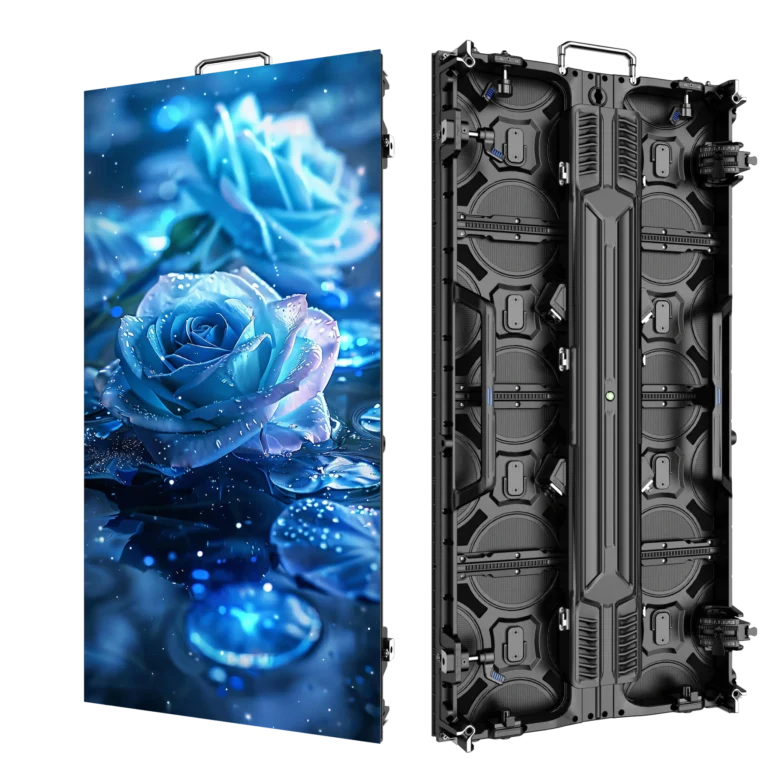
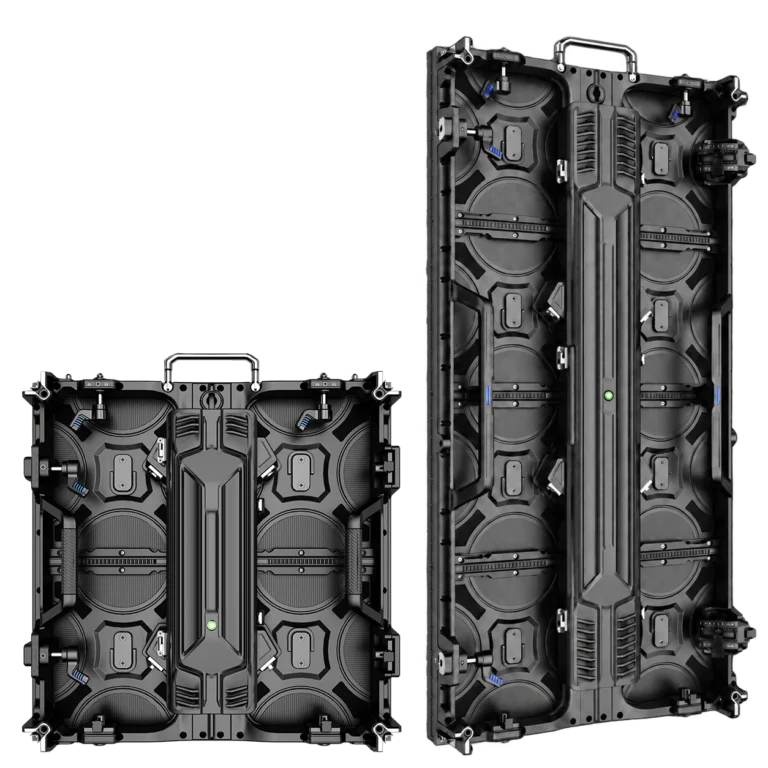
The WUYESTAGE P3.91 500×1000 outdoor rental LED display lists 3500–4200 cd/m² for its outdoor configuration. This is a surface-luminance reference for that configuration, not a lumen rating for the whole assembled wall.
It should therefore stay in its original unit when discussing the quotation. Do not multiply it by 3.426 to claim an equivalent projector output, and do not treat the upper value as a guarantee for every content pattern, operating setting or daylight condition.
Start with the intended screen dimensions, daylight exposure, operating hours and viewing direction. Then establish the relevant configuration and what conditions should be demonstrated or documented. If different cabinet or pitch options are being considered, the outdoor rental LED cabinet series provides the corresponding configuration choices.
When sending a requirement, include the image size, venue lighting and time of use, audience positions, content, camera needs, quantity and destination. Attach any competing specification sheets with their units and test conditions intact.
Send WUYESTAGE your LED screen requirement to discuss the appropriate screen configuration and the information needed for the comparison. A clear description of the intended image is more useful than a number converted without its conditions.