The main types of stage lights include PARs, Fresnels, profile spots, moving heads, linear bars and followspots. Wash, beam, strobe and blinder describe lighting jobs or effects; LED describes the light source. These names overlap, so one fixture can belong to several groups.
If you are trying to identify a light from a photo or make sense of an equipment quote, start with its front lens, body and support. Use the visual clues below to find a likely family, then check the features that determine what it can actually do.
Types of stage lights: a visual key
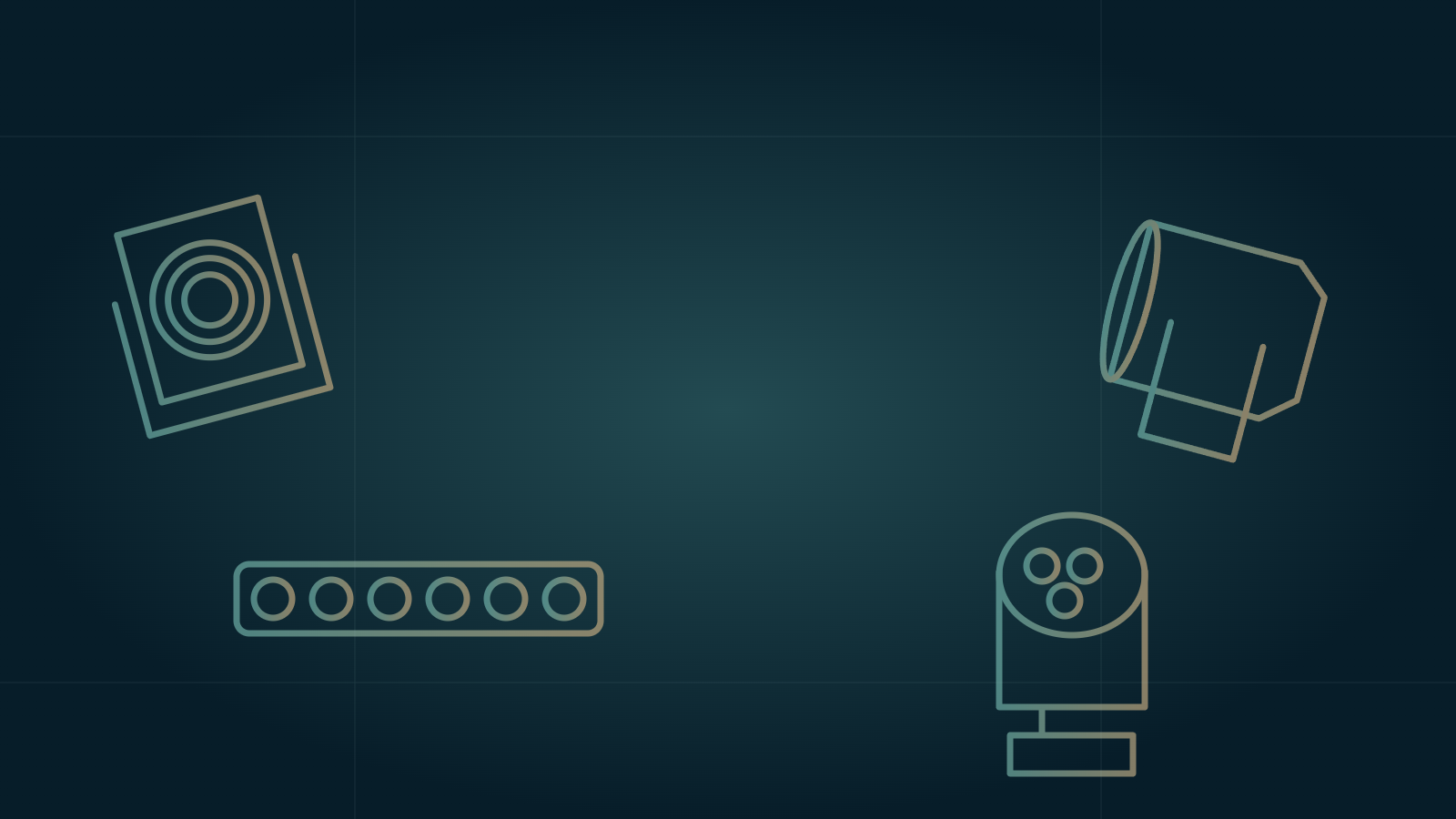
A long lens barrel, a ringed lens and a motorized yoke are useful clues. None identifies every model. These simplified shapes show what to look for; the product pictures further down show the details on actual fixtures.
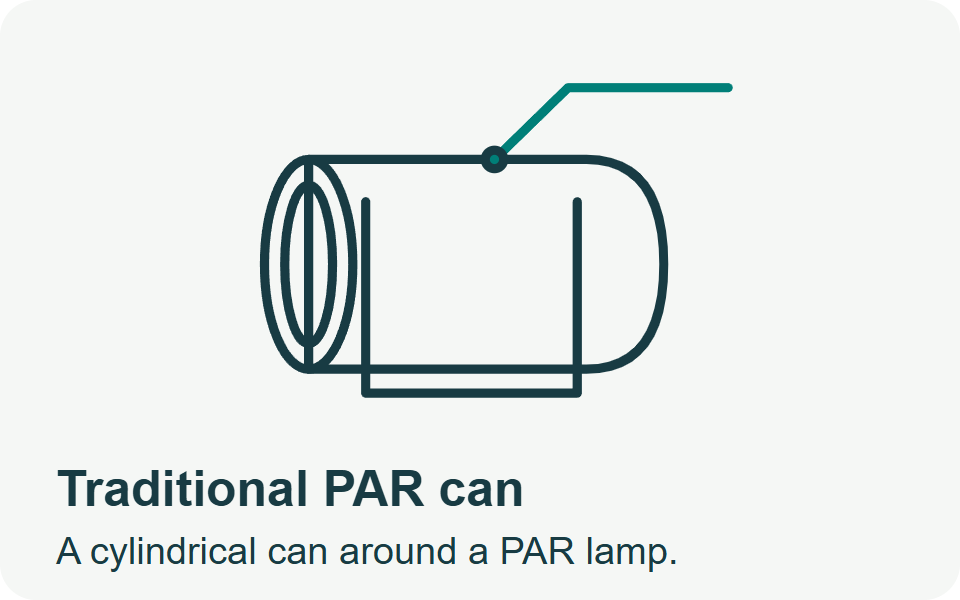
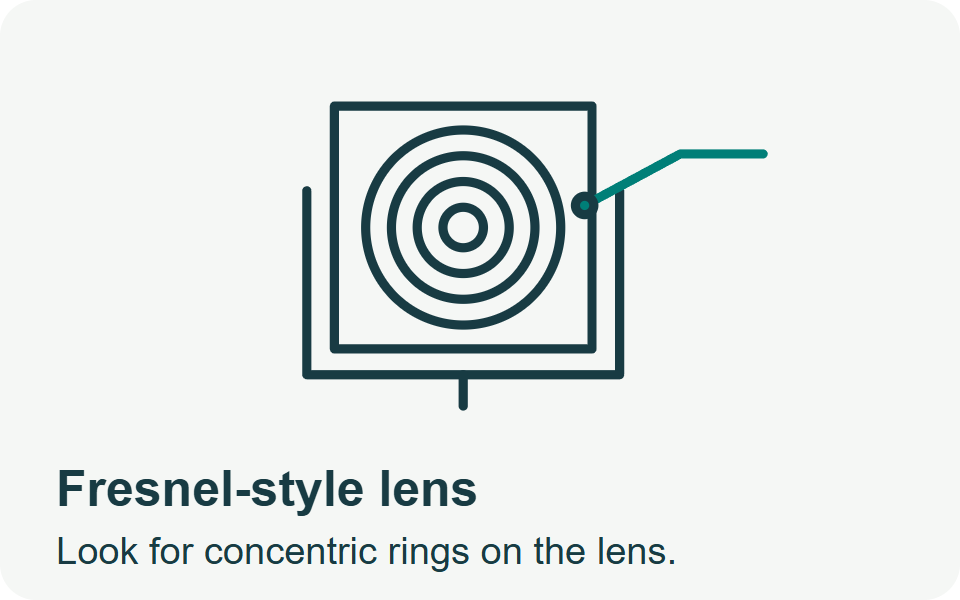
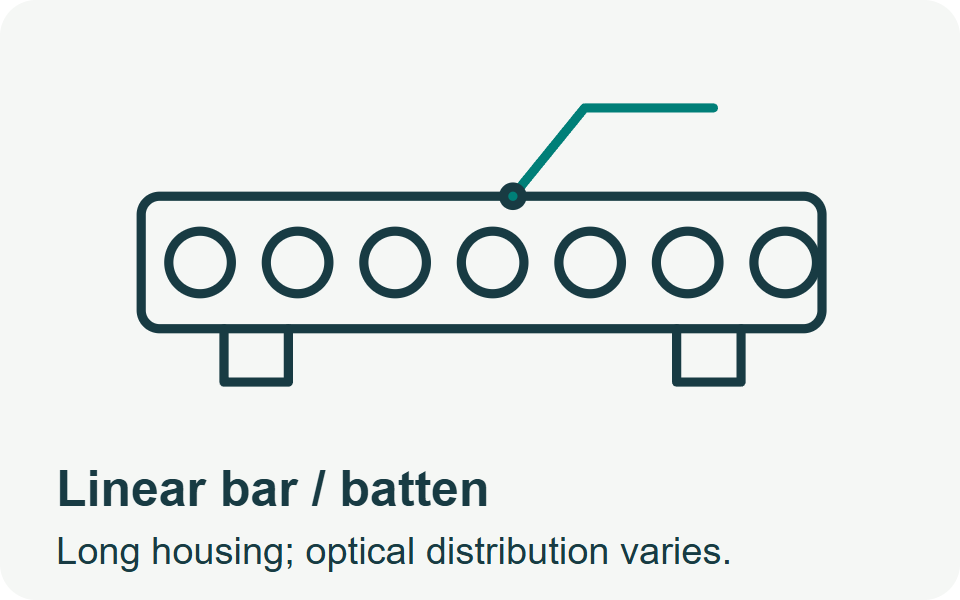
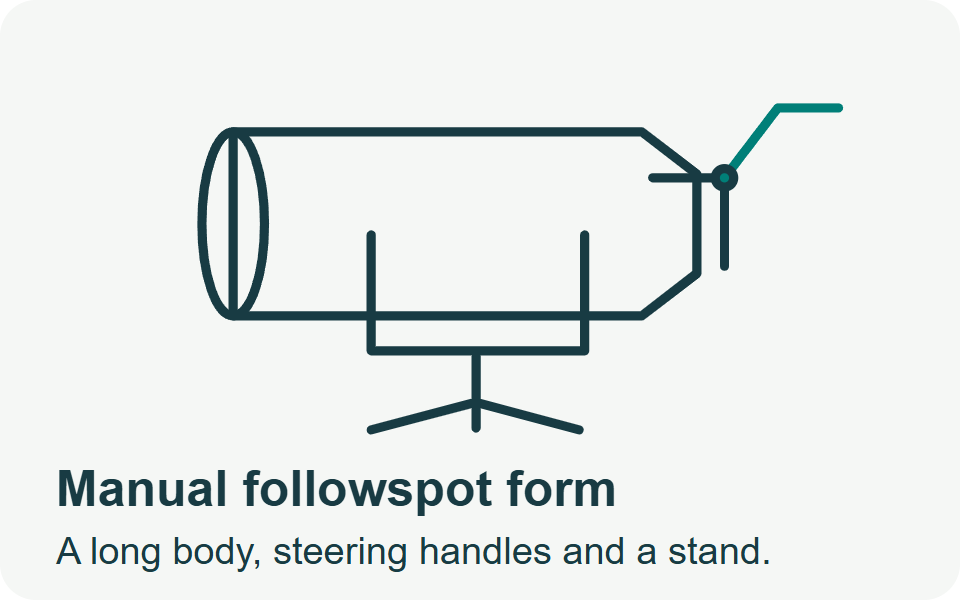
Generic identification cues, not to scale. Modern fixtures can use different housings; a matching shape does not confirm their optics or controls.
| What you can see | Likely name or family | What to check next |
|---|---|---|
| A compact can or flat round housing on an aiming bracket | PAR / LED PAR, commonly used for area or color coverage | Beam spread and available colors |
| A lens with clearly visible concentric rings | Fresnel, commonly used for soft-edged area lighting | Lens type and spot-to-flood adjustment |
| An elongated body and projecting lens barrel | Profile-style spot, used for controlled projection | Lens angle, framing and pattern capability |
| A head held inside a motorized yoke above a base | Moving head; its optical job may be beam, spot, profile, wash or a combination | Output type and the functions actually fitted |
| Emitters arranged along a long housing | Linear bar / batten; some designs are intended for cyc lighting | Optical distribution and control zones |
| A long directional fixture with steering handles and a stand | A common manual followspot form | Suitable throw and how the system is operated |
Why one light can have several names
An LED moving-head wash is one fixture described in three ways. The words answer different questions:
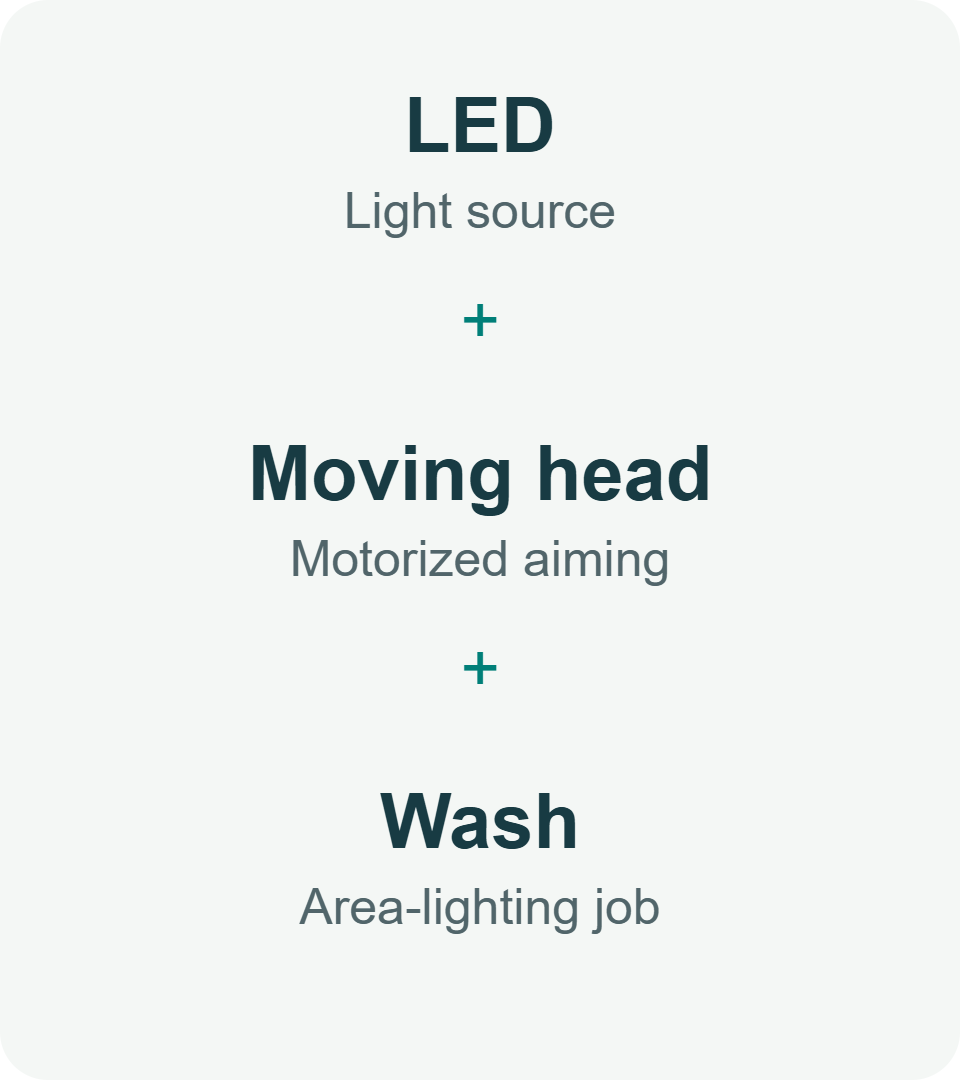
The source could instead be a tungsten or discharge lamp. A wash can be fixed or moving. “Front light,” “side light” and “backlight” describe a position or role in the lighting plan, rather than a separate housing design.
Similarly, bar describes a long shape, while cyc light describes equipment intended to illuminate a cyclorama or background. A bar is not automatically suitable for that job.
Fixed fixtures: look at the lens and body
Fixed fixtures use an aiming bracket rather than a motorized pan-and-tilt mechanism. Classic instrument names remain useful in modern LED rigs, even when the light source and housing have changed.
Profile / ellipsoidal spot
Look for a distinct lens barrel extending from the body. Profile-style fixtures are used when control of the projected light matters. Depending on the design, that can include focusing an edge, shaping an area with framing shutters or projecting a gobo pattern.
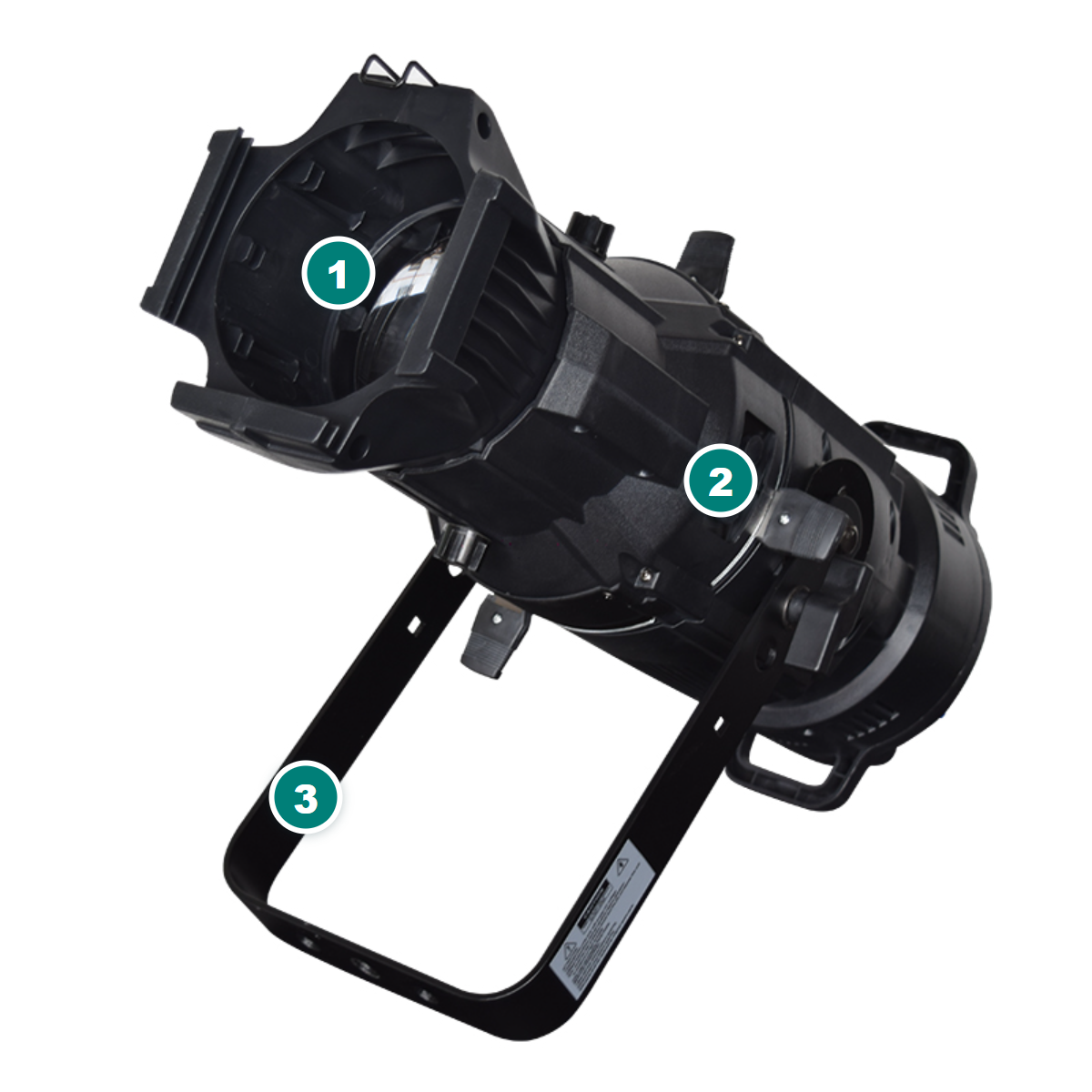
Before choosing: confirm the lens option and the specific shaping tools included. A long barrel alone does not prove that a fixture has framing shutters or a gobo holder.
PAR can / LED PAR
A traditional PAR can surrounds a PAR lamp, which combines the light source, reflector and lens in one sealed assembly. Modern LED PAR lights use different designs, often in compact round or flat housings.
They are common starting points for stage color coverage and accent lighting. The label does not tell you the exact spread, white-light quality or color channels. Check the lens and emitter specification rather than choosing from the housing alone.
Fresnel
The concentric rings on the lens are the characteristic clue. Fresnels commonly create a soft-edged pool of light that can blend with neighboring lights. Check the available spot-to-flood range and adjustment method on the particular fixture; those details are not established by a distant photograph.
Linear bar / batten / cyc light
A linear fixture puts its light sources along an elongated body. It may provide color coverage, a visible line of emitters or individually controlled effects, depending on the design.
For a backdrop, ask about the actual distribution at the intended distance. Uniform cyc coverage depends on the optics, spacing and placement; a row of LEDs does not establish it. Likewise, the number of visible emitters does not tell you how many can be controlled independently.
Moving heads: the yoke identifies movement, not output
A moving head has a head mounted in a motorized yoke above its base. Pan turns its direction horizontally; tilt changes the head’s vertical aim. Once you recognize that structure, look at the front face to narrow the optical family.
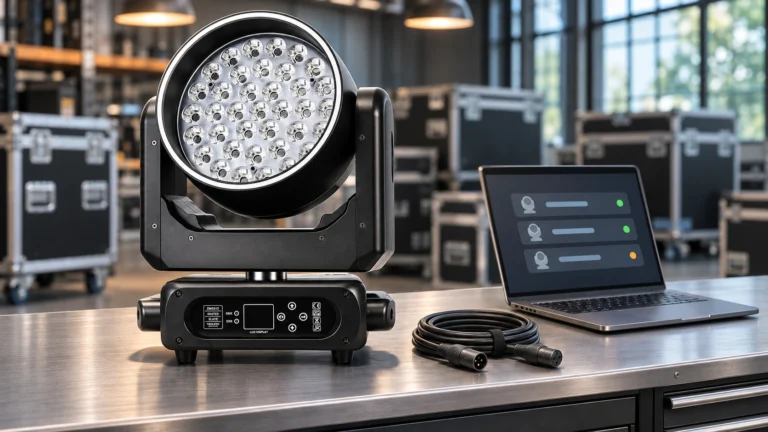
A multi-lens face
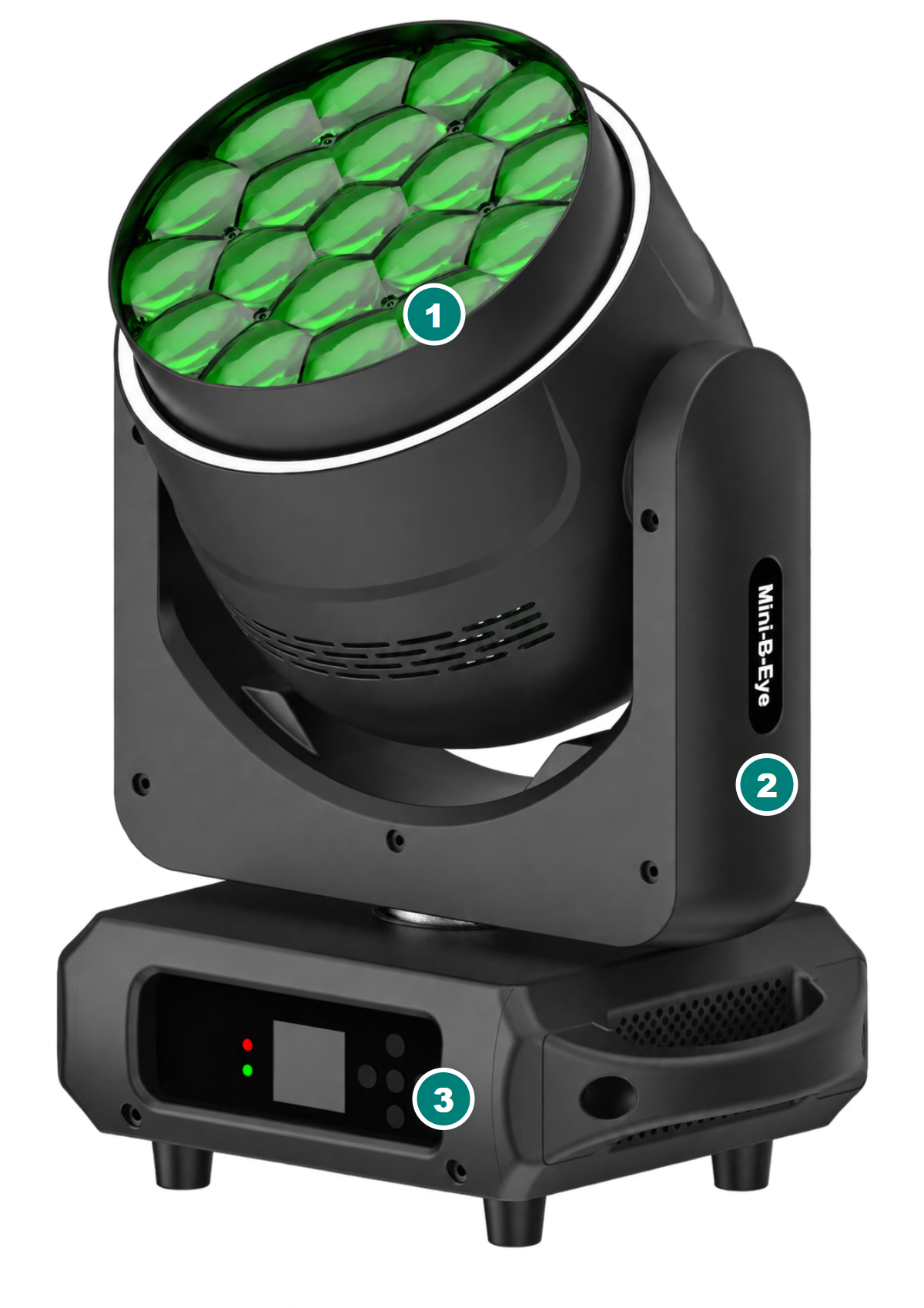
Multiple front lenses often point toward a wash or multi-lens effect family. Some designs vary their spread or create effects through the lens array. Check the exact color system, adjustment range and control zones: the visible array does not prove RGBW emitters, individual pixel control or a particular operating mode.
A prominent single front lens
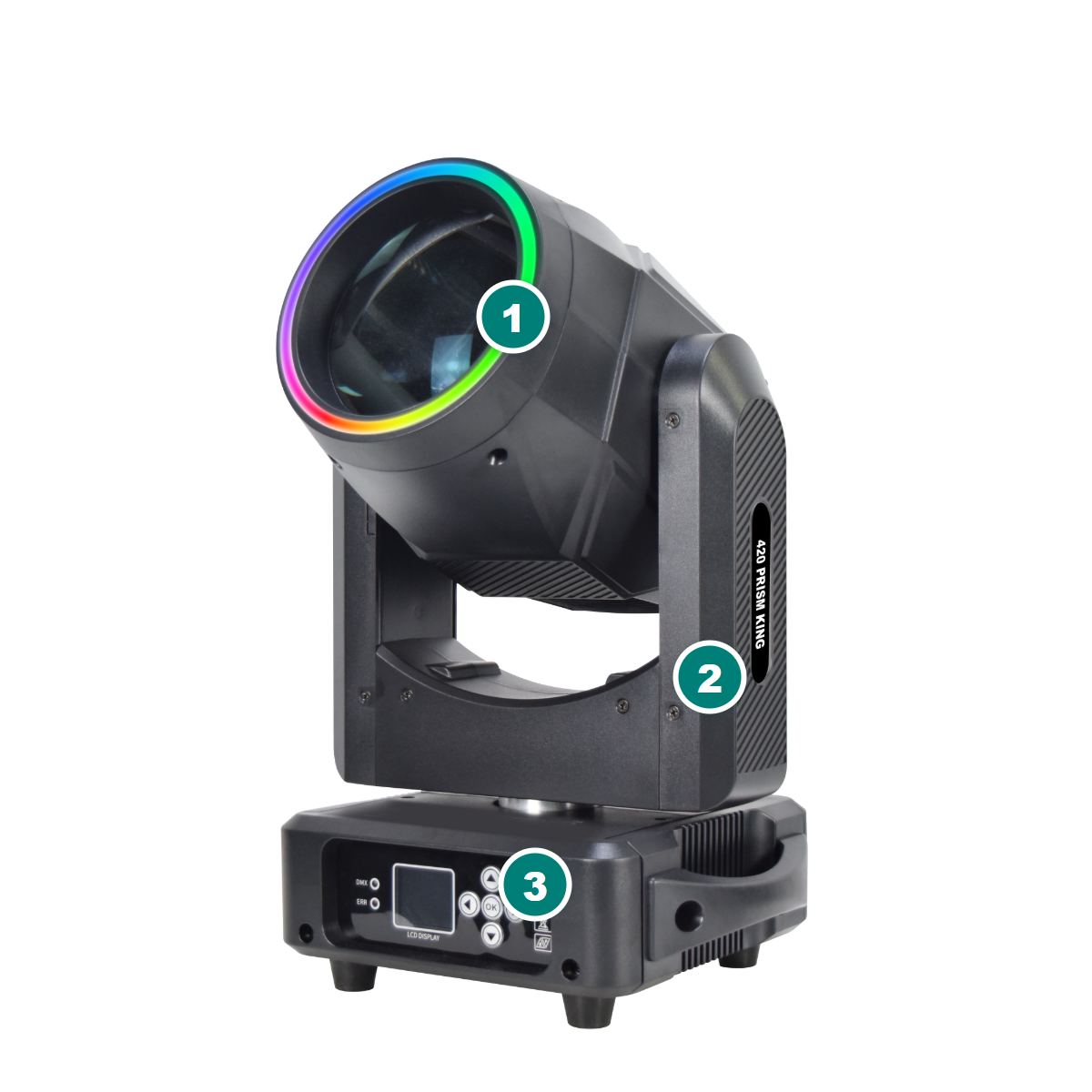
A large single lens is common across beam, spot and profile moving heads, so their exteriors can look very similar. The main distinctions are in the intended output and fitted tools:
- Beam: emphasizes a concentrated shaft of light, often used for aerial looks.
- Spot: supports defined projections and effects; confirm which gobos and optical adjustments are fitted.
- Profile: typically emphasizes framing control; verify the actual shutter system and its range.
- Hybrid: combines specified capabilities. The label alone does not establish how well it performs each task.
For the practical output differences, use our beam vs. spot vs. wash comparison. To browse equipment, see the moving-head light range. Neither a large lens nor an effect ring confirms the internal gobo, prism or color system.
Followspots, strobes and blinders: names based on the job
A followspot keeps a directed highlight on a performer as they move. The long body, steering handles and stand in the shape key represent a familiar manual arrangement. Remote followspot systems also exist, so the operating method must be confirmed rather than inferred from the name.
A strobe produces flashing effects; a blinder is associated with audience-facing impact. Modern fixtures can combine effects in one housing. A round lamp cluster or rectangular LED panel does not reliably separate those functions. Check the fixture’s intended effects and available modes rather than classifying it by shape alone.
Recognized the light? Choose the next step by task
- Need a defined area or pattern? Start with profile/spot optics, then check framing, gobo and lens options for the required projection.
- Need area or color coverage? Look at the appropriate PAR, Fresnel or wash family and compare its distribution at your working distance.
- Need a changing direction or aerial effect? Compare the relevant moving-head functions rather than assuming every moving head produces the same look.
- Need to combine several families? Use our guide to lighting for stage performances. A theatre layout is covered separately in the theatre stage lighting design guide.
You can explore the stage-lighting equipment families once you know which task you need to solve. If you want to discuss suitable WUYESTAGE equipment, send the fixture or effect reference, intended use, venue and throw conditions, and approximate purchasing scope. That gives the team a useful starting point for checking configurations.