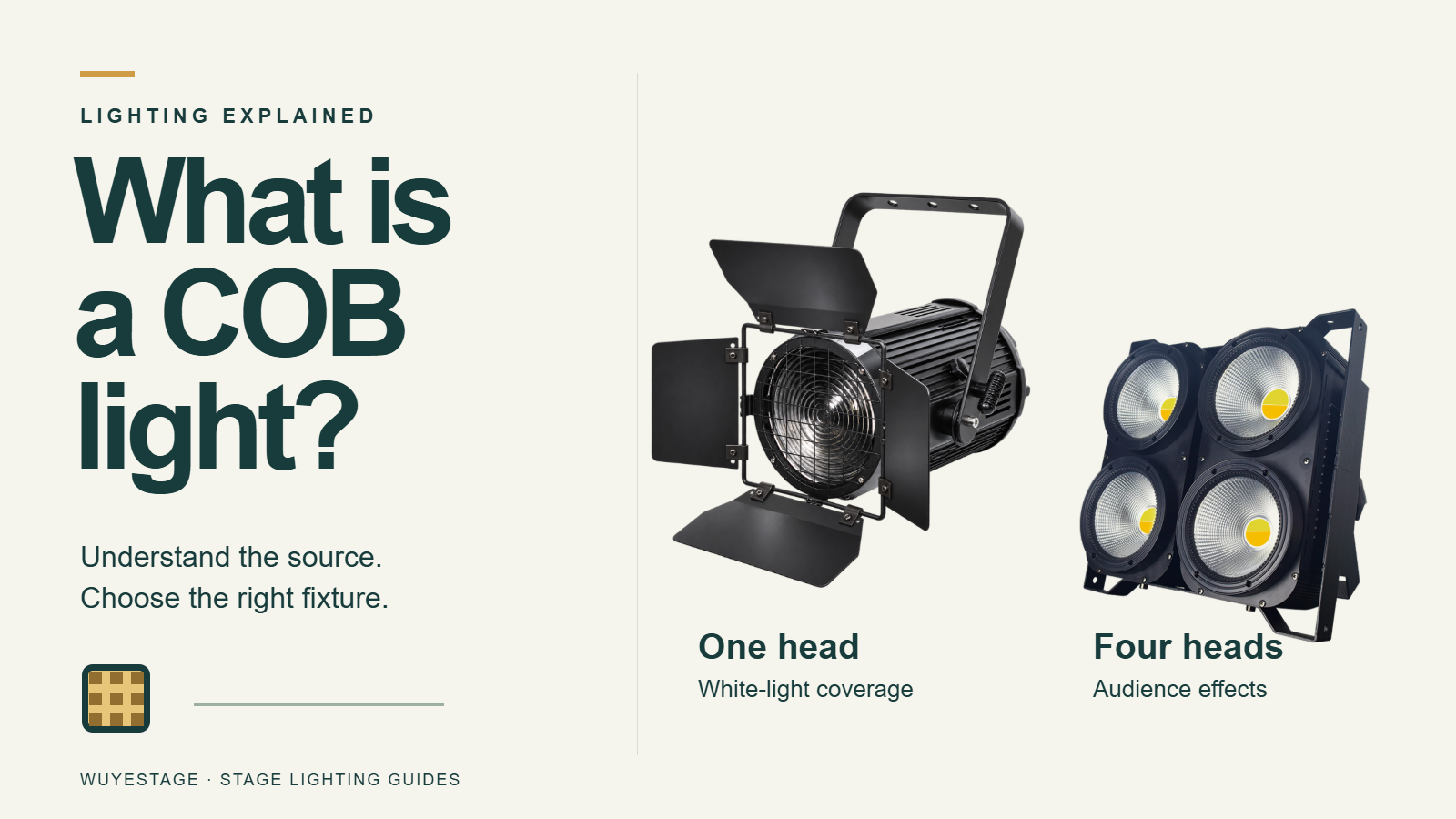
What is a COB light? It’s an LED fixture built around a chip-on-board source. Several small LED chips sit close together on a shared base, forming one compact light source. A complete fixture can use one of these sources or several, each with its own optics.
That distinction matters on a stage. A single-head COB fixture can light a presenter, while a four-head COB blinder can provide an audience effect. The same three letters describe the way the source is built. The fixture’s optics, color options and controls tell you what you can do with it.
What is a COB light made of?
Start with the LED die, the small semiconductor chip that emits light. Several dies mounted close together on a shared substrate form a COB LED source. In a common white-light design, a phosphor layer over the chips helps turn their light into white light. A specification that lists one COB source can therefore describe a unit with many dies.
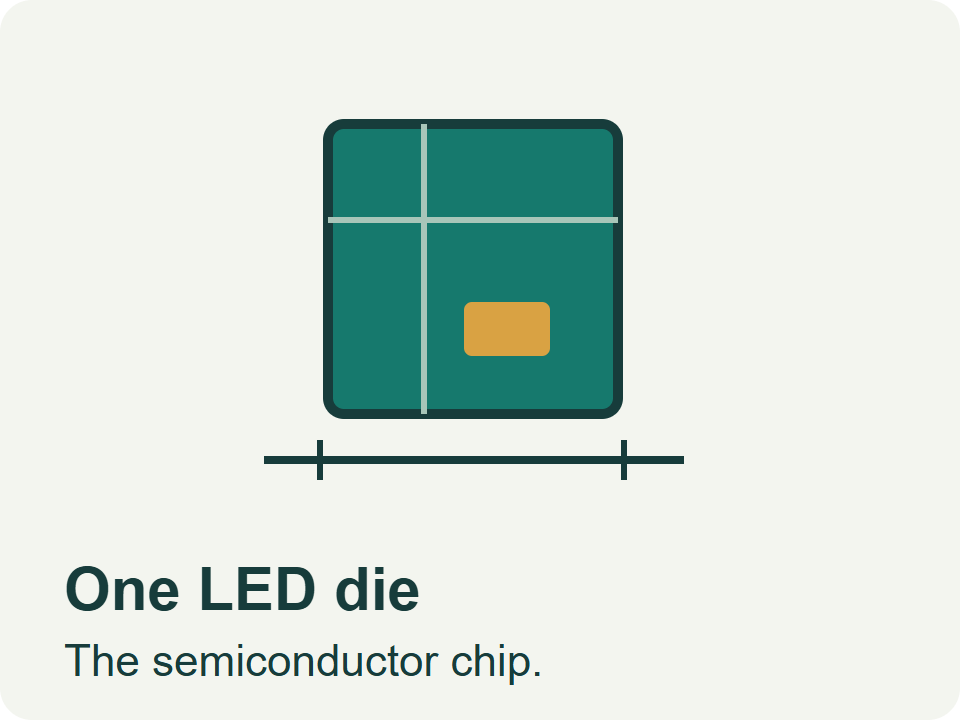
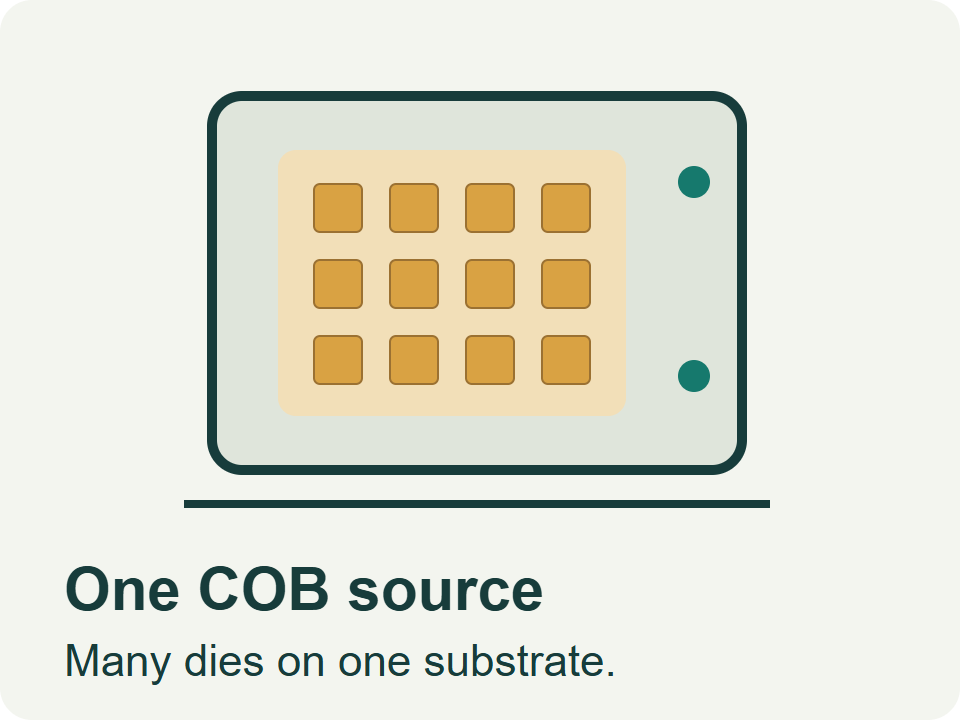
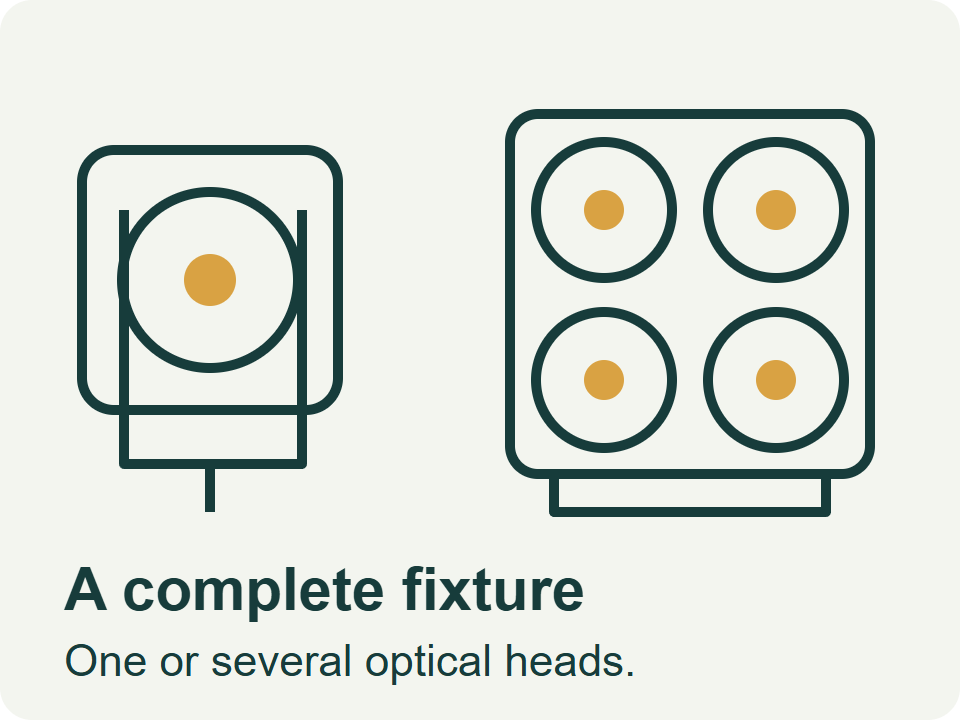
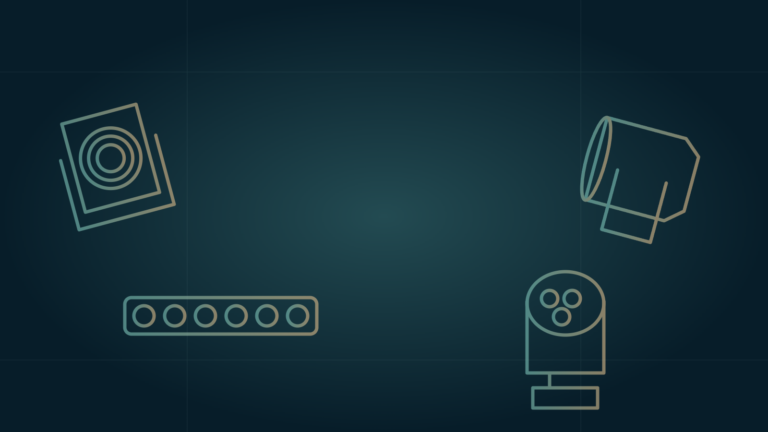
Three levels of construction: an LED die, a COB source and a complete fixture. Conceptual drawings, not to scale.
The complete fixture adds optics, power and control electronics, cooling and a housing. Count the heads separately from the chips. A four-head fixture can contain four COB units, each of which contains several dies. Head count alone tells you little about the controls available for each head.
How does a COB source affect the light?
COB is one way to build an LED source. If a quote says “COB vs. LED,” ask what the second fixture uses. For example, it may use a board with individually packaged surface-mount LEDs, often called SMD LEDs. A compact COB source can be paired with a reflector or focusing lens. The optical design sets the shape and spread of the resulting beam.
For a presenter on stage, check two things separately. Beam coverage describes where the light reaches. Shadow softness describes how gradually the shadow fades at its edge. A compact source can cast a defined shadow even when its beam looks even on a wall. A larger apparent source, such as a broad illuminated diffuser positioned closer to the presenter, can soften that shadow. A University of Maryland physics demonstration shows the transition at a shadow edge when an object blocks only part of an extended source. The setup matters more than the COB label when comparing these results.
Two COB stage lights with different jobs
Consider a conference that needs light on a speaker at the lectern and a separate effect for the opening cue. These two fixtures illustrate how those jobs lead to different specifications.
Set the coverage for white front light
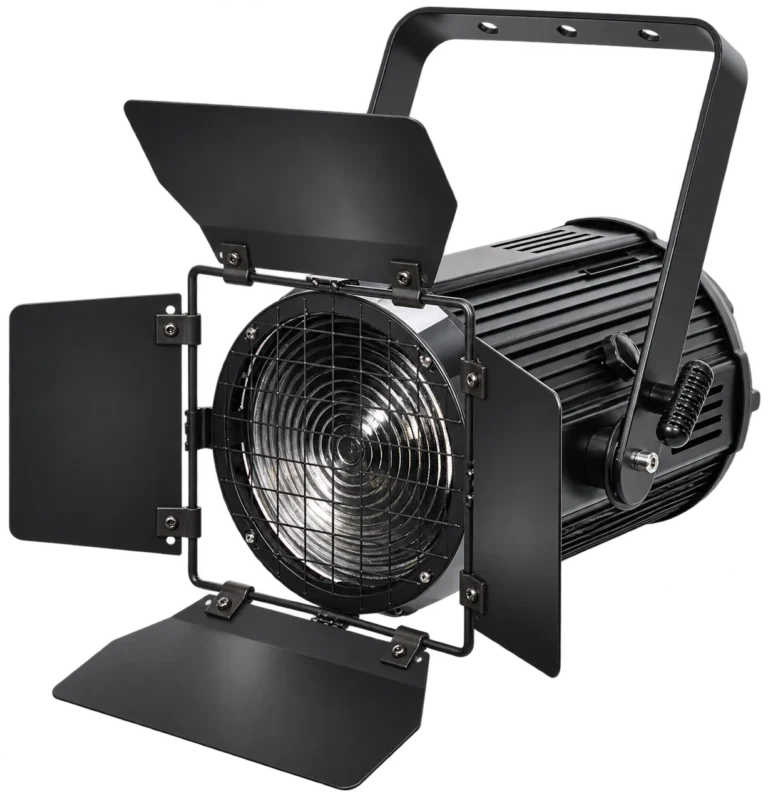
The 200W COB LED Stage Light with Manual Zoom has one 200 W COB source and a rated fixture power of 280 W. Its white light adjusts from 3200 to 6500 K on the same unit, with a specified color rendering index of Ra ≥ 90. A technician sets the 15° to 50° zoom by hand during setup. The fixture lists a six-channel DMX mode.
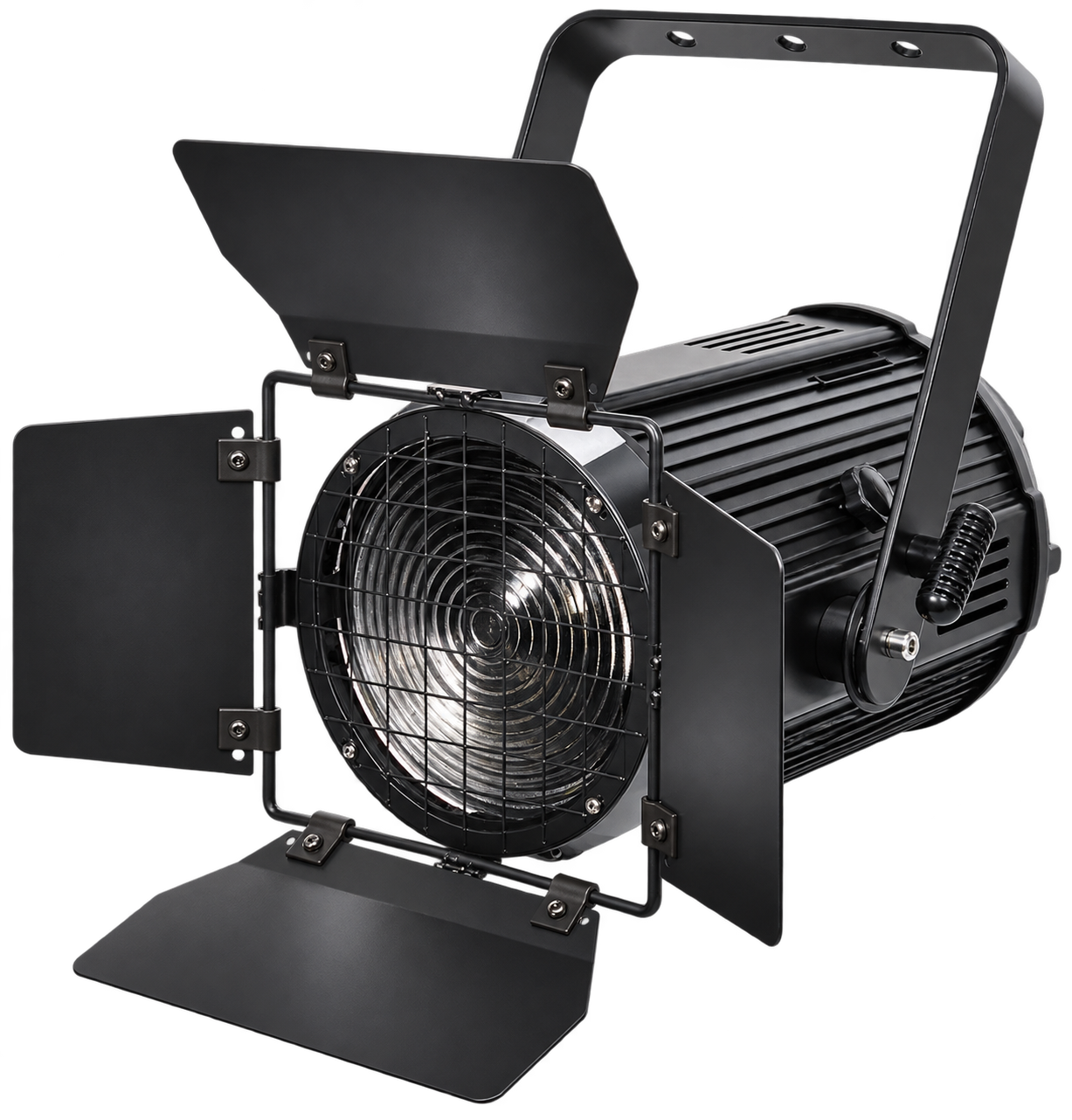
For the lectern, start with the distance from the mounting point and the area the presenter needs to move through. Set the beam width for that area. If the session will be recorded, check the white setting and dimming levels with the production camera.
Choose the source version for an audience effect
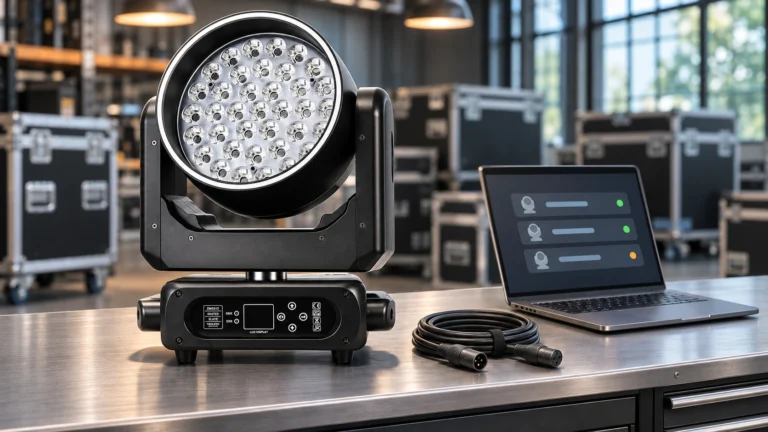
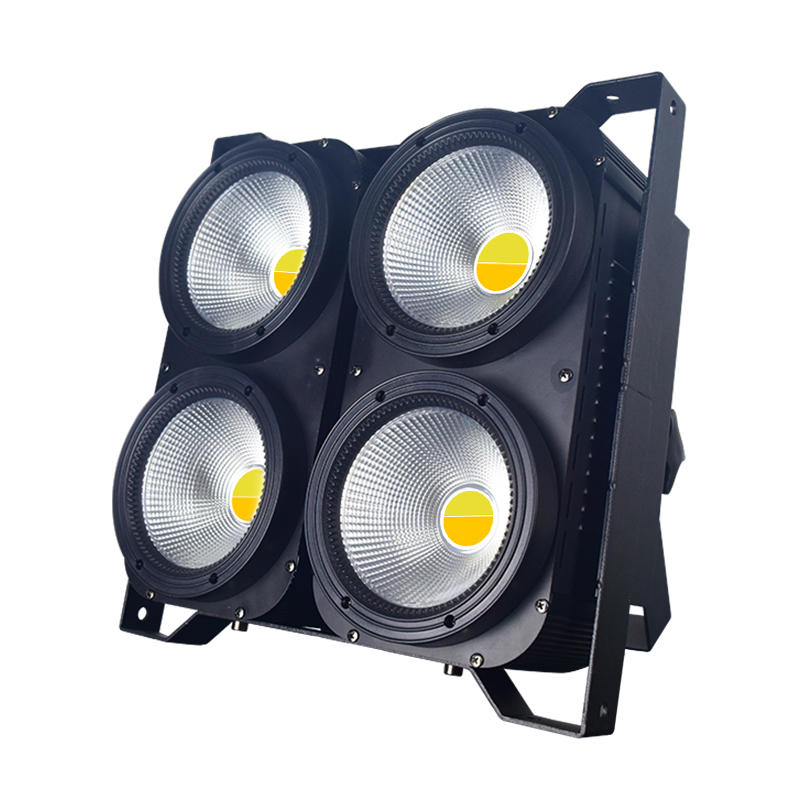
The 400W 4-Head COB LED Blinder Light uses four 100 W COB sources in a two-by-two layout, with 35° reflectors and a rated fixture power of 400 W. The adjustable white version runs from 3200 to 5600 K. RGBW is a separate order configuration. Both versions list an eight-channel DMX mode. Use the matching channel chart to check which cues each version supports.
| Check | Single-head front light | Four-head blinder |
|---|---|---|
| Lighting job | White coverage on people or an area | Audience-facing effect cues |
| Source and fixture power | One 200 W COB source 280 W rated fixture power | Four 100 W COB sources 400 W rated fixture power |
| Optics | 15°–50° manual zoom | 35° reflectors |
| Color configuration | 3200–6500 K adjustable white | 3200–5600 K adjustable white or a separate RGBW version |
| Listed DMX mode | 6 channels | 8 channels for either version |
What to check on a COB light quote
Read a description like “200 W COB” as a starting point. For power planning, look for the rated power of the complete fixture. For light on a performer, ask for the beam angle and output at your working distance, using the intended zoom setting where relevant. Those figures answer different questions.
Next, match the exact color version to the show. If two versions list the same DMX channel count, check the channel chart for the one you intend to order. For a venue or rental project, share the target area, mounting distance, white or colored cues, console, quantity and indoor or outdoor conditions. That gives the supplier enough context to discuss a suitable configuration and identify what to check on a sample.