
LED FLOOR DISPLAY SYSTEMS
LED Floor Displays Planned as a Walkable Visual Surface
A floor display must be treated as a structural, electrical and visual system. Load, slip risk, protection and service access come before content effects.
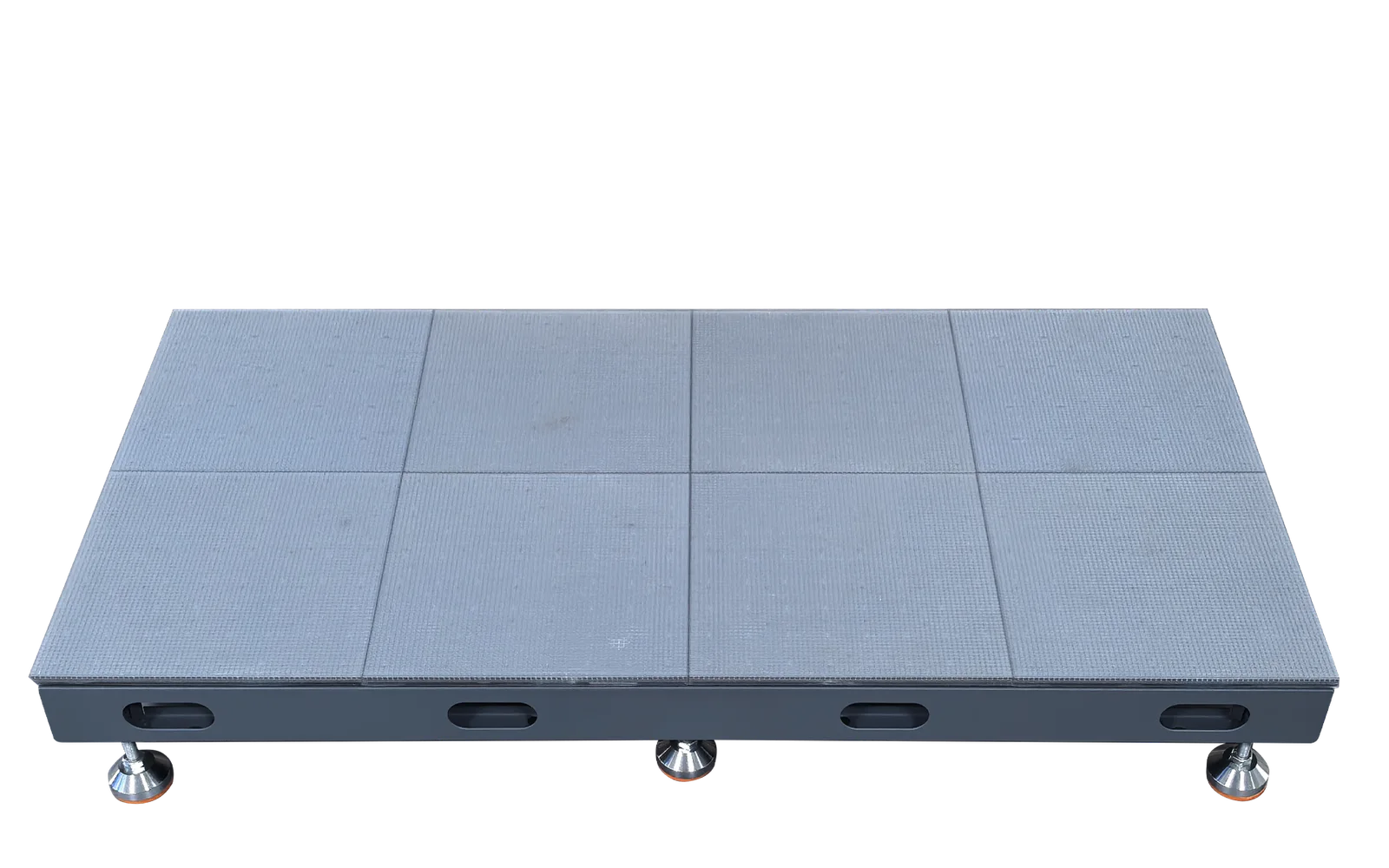
FLOOR SYSTEM LAYERS
Coordinate structural, surface and image requirements.
The visible image is only one layer of a floor installation.
Support and leveling
Review base structure, flatness, load transfer and installation tolerances.
Walkable surface
Review mask, traction, wear, cleaning and audience use conditions.
Module protection
Review impact, liquid exposure, seams, connections and service access.
Image and interaction
Review pitch, viewing angle, content, sensors and latency where applicable.
USE-CASE BOUNDARIES
Walking, vehicles and interactive use require different proof.
Do not assume one load statement covers every support condition or moving load.
Pedestrian events
Plan crowd flow, footwear, cleaning, edges and supervision.
Stage performance
Plan dancers, props, rolling equipment, sightlines and content cues.
Interactive installation
Plan sensor coverage, calibration, latency, content and fault fallback.
FLOOR ACCEPTANCE
Test the built surface, not only a single module.
Representative assembly reveals seams, leveling and interaction behavior.
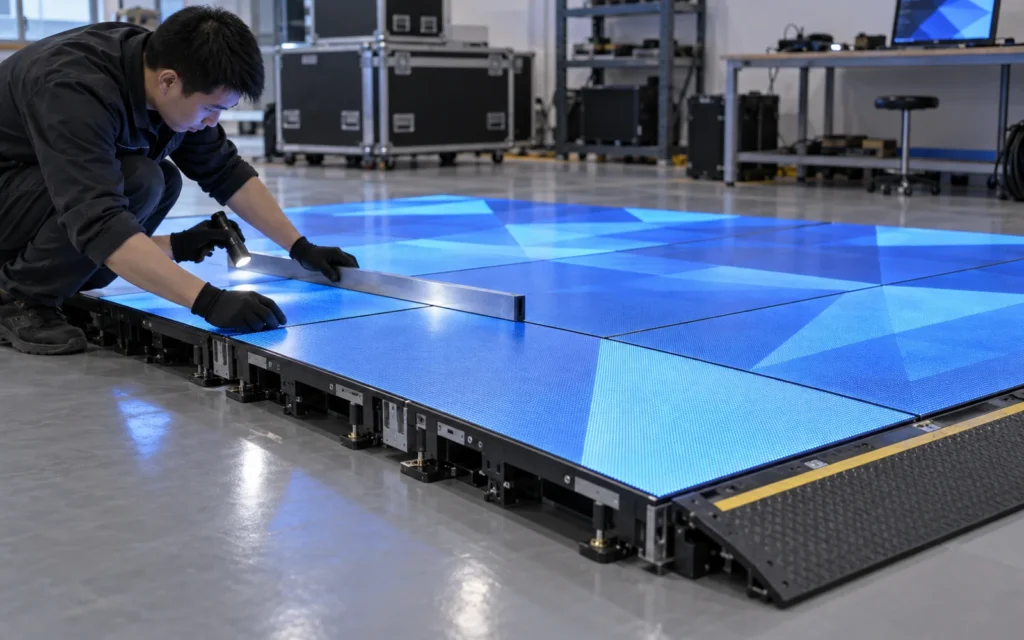
Surface and seam test
Inspect alignment, gaps, edge transitions and walking feel.
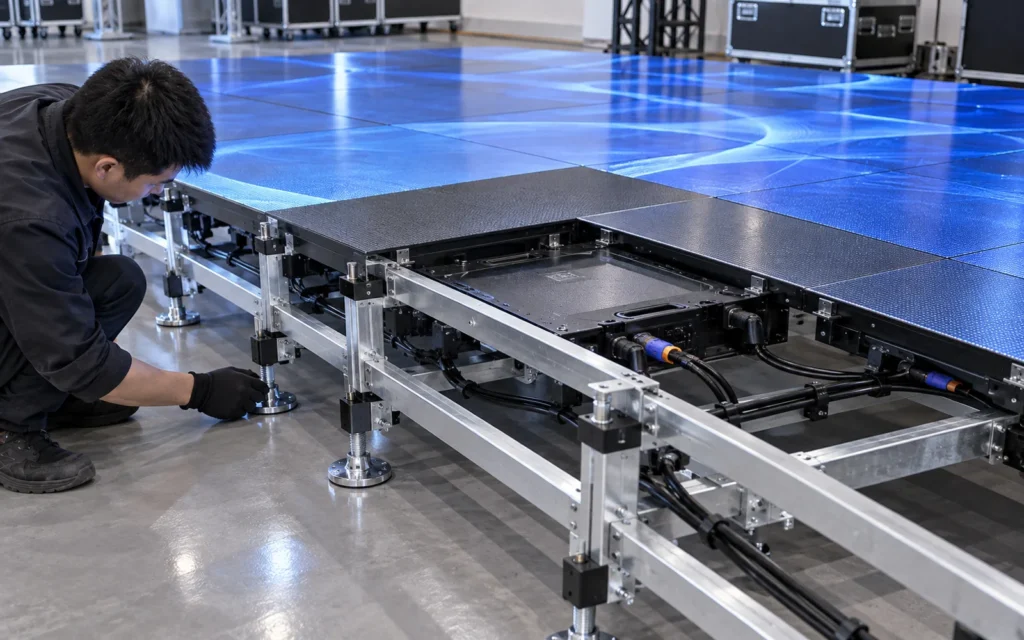
Load and protection evidence
Review documentation and testing applicable to the quoted support system.
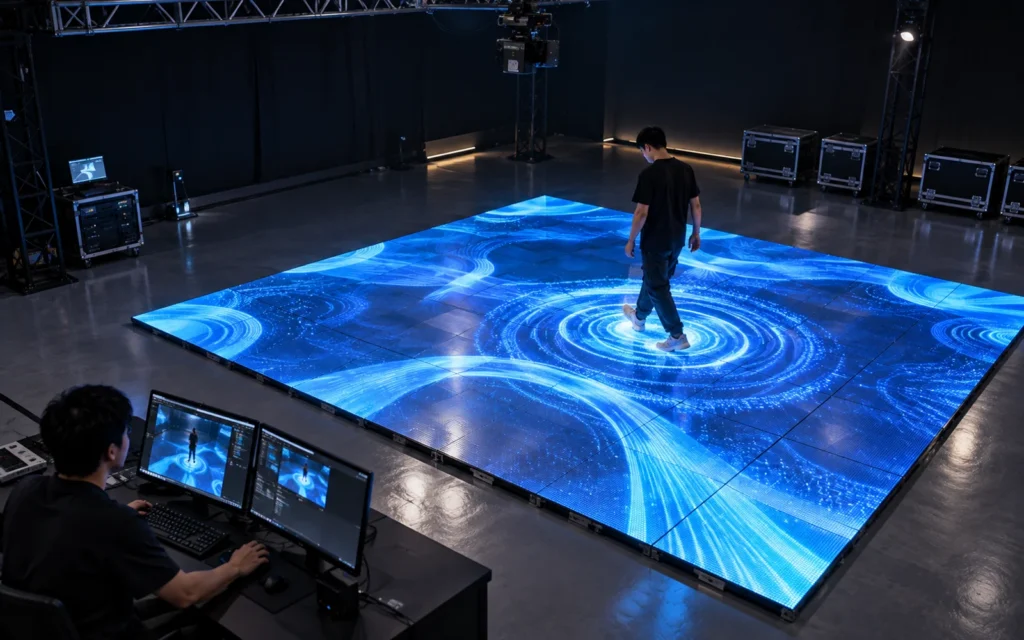
Content and interaction test
Use representative cameras, sensors and show content where required.
FLOOR APPLICATIONS
The audience relationship changes the design.
A stage floor, booth attraction and public installation need different controls.
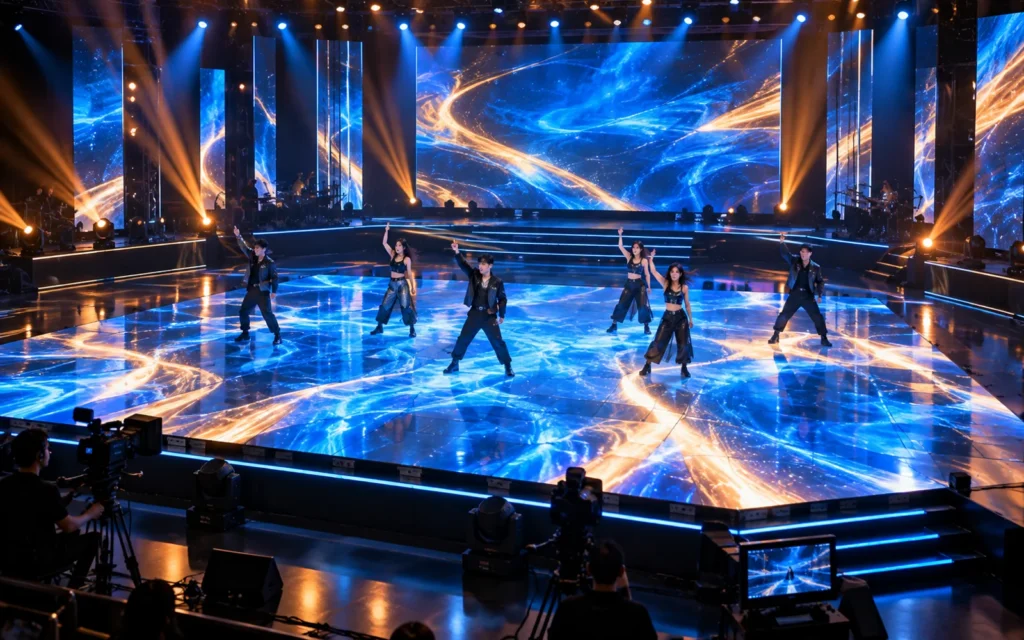
Stage and performance
Coordinate performers, props, cameras, content and technical supervision.
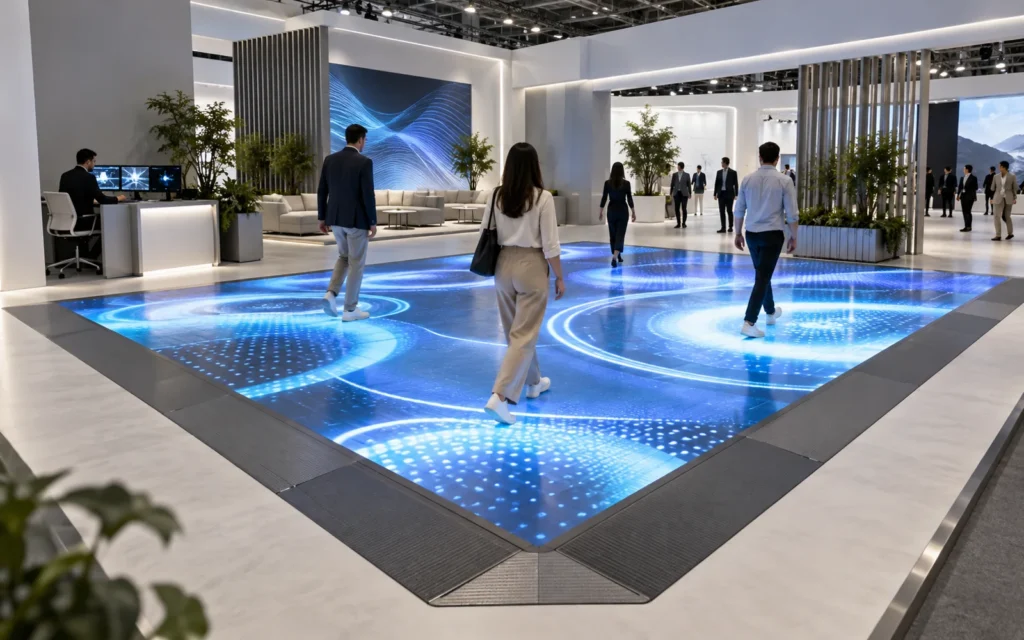
Exhibitions and brand activations
Coordinate crowd flow, interactivity, rapid assembly and transport.
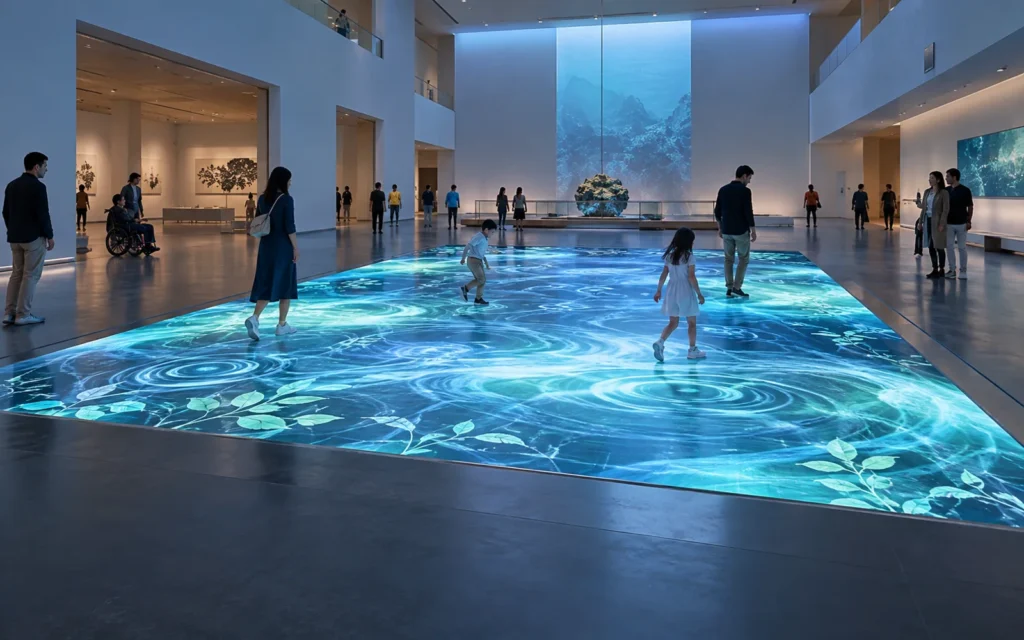
Museums and public installations
Coordinate accessibility, long operation, cleaning, service and fallback.
LED FLOOR DISPLAY RANGE
Compare products in the context of the intended project.
Open the full model page to review documented specifications, configuration and application details.
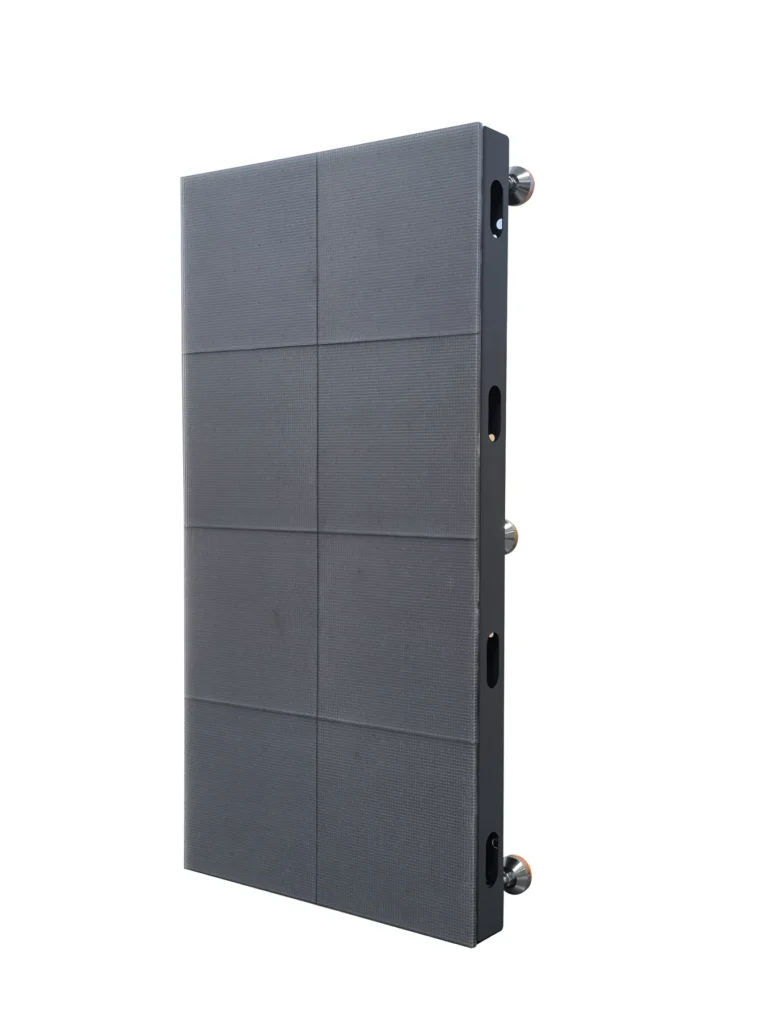
LED FLOOR DISPLAY · Interactive LED Floor Screen
Interactive LED Floor Screen P2.5–P3.91
Interactive LED floor screen with 500×1000mm cabinets, P2.5–P3.91 pixel-pitch options, 7680Hz refresh and standard or high-brightness configurations for immersive floor-based display projects.
- P2.5 / P2.604 / P2.976 / P3.91
FLOOR RFQ
Define loads, users and installation layers.
A screen dimension alone is not a floor-display specification.
Use and loads
People, props, rolling loads, frequency and supervision.
Site and support
Dimensions, base, leveling, edges, access and environment.
Image and interaction
Viewing angles, content, cameras, sensors and latency.
Delivery scope
Structure, ramps, cases, spares, installation and destination.
BUYER FAQ
Resolve category-level decisions before comparing quotations.
Model-specific claims still need to be checked on the exact product and ordered sample.
What is an LED floor display?
It is an LED display system designed to form a viewable floor surface. The complete system includes support, modules, protective masks, power, data and service access.
Can people walk on an LED floor?
Only when the complete installed system is designed and approved for the intended use and support conditions. Confirm load documentation, surface and installation requirements.
Are LED floor displays waterproof?
Protection varies by product and assembly. Confirm the complete system rating, seams, connections, cleaning method and actual exposure.
How do interactive LED floors work?
They use sensors and control software to respond to position or movement. Sensor architecture, latency and content workflow are model-specific.
What information is needed for a floor-display quotation?
Provide dimensions, users and loads, site and support, environment, interaction, content, cameras, structure, ramps, spares and destination.
Need another LED display format?
Compare LED Display CategoriesBUYING DECISIONS
What makes an LED floor order complete?
Specify the floor system, content interaction and operating conditions together. Our current floor series has standard and high-brightness configurations; those labels do not prove a load rating, slip resistance or an outdoor protection level.
01ORDER CHECK
Match the actual floor use
Describe visitors, performers, footwear, props and any concentrated or rolling loads. Request the relevant load, support and surface evidence for the proposed construction. Hanging a wall cabinet horizontally is not an equivalent floor-display specification.
Review the floor-screen series02ORDER CHECK
Confirm the interaction scope
Agree how content is triggered, what hardware/software is included and how it behaves with several users. The existing imagery demonstrates interactive content, not every sensor method or a guaranteed response time. Approve a representative interaction before a batch order.
Check the exact floor configuration03ORDER CHECK
Plan recovery under the floor
Include supports, leveling, cable access, replaceable components, spare modules and who may open a floor zone during operation. Brightness and pixel pitch should match ambient light and content; they do not replace the access and operational plan.
Compare floor and wall architecturesSTART YOUR PROJECT
Let’s Talk About
Your Project.
Tell us who you are, what products you need and your expected order size. Our team will review your requirements and recommend the right next step.