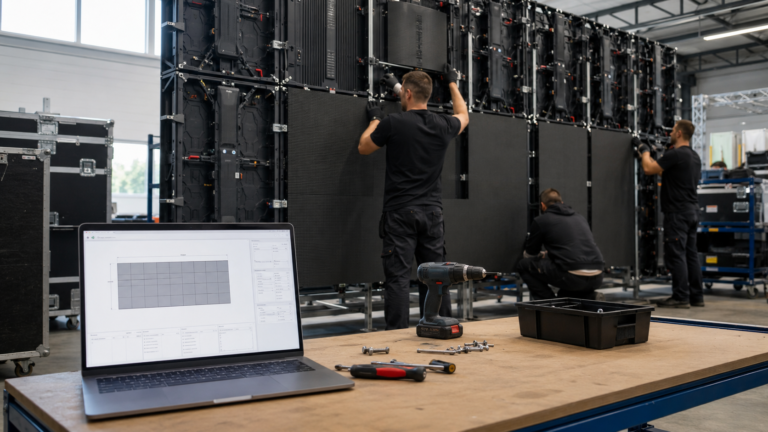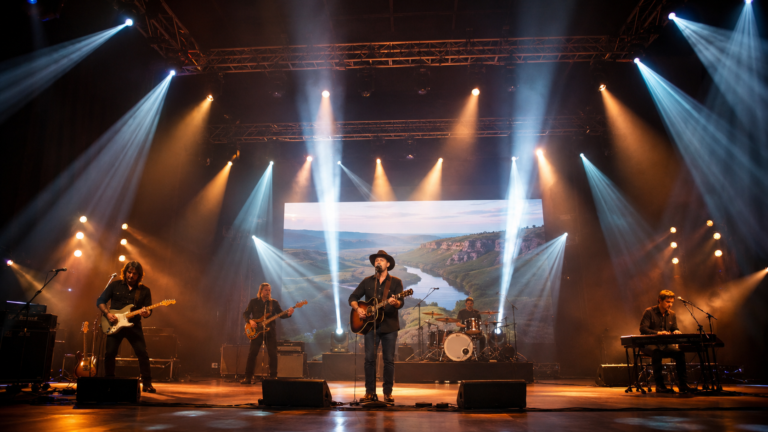




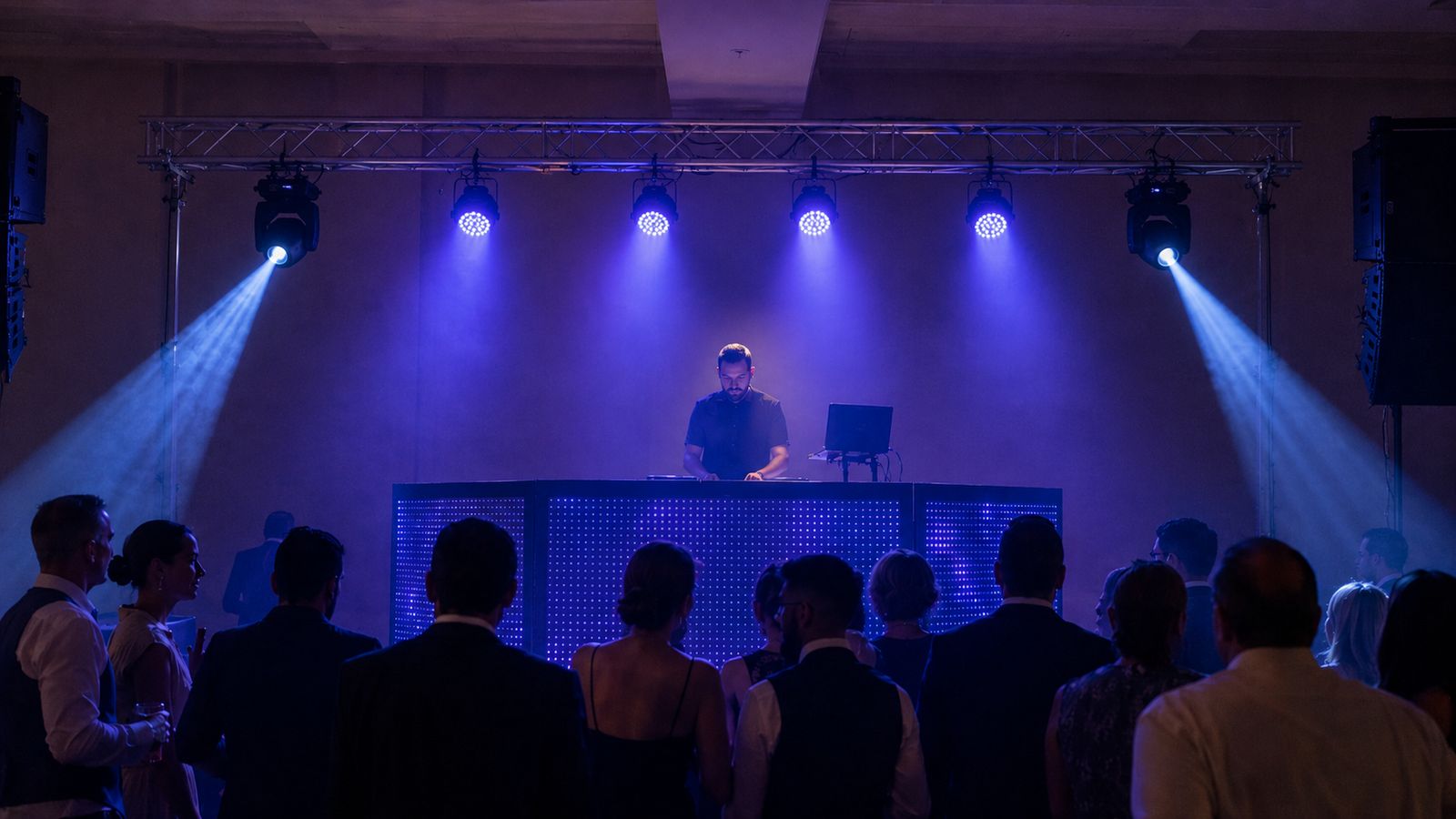
A good DJ lighting setup is not simply a collection of bright fixtures. It is a repeatable event system in which every light has a clear job, every position is practical, and the operator can load, connect, program and pack the rig within the available time.
For mobile DJs and rental companies, the most useful design principle is simple: build the system in layers. Start with reliable color coverage, add controlled movement, then add accent effects only when the core system already works. This prevents a common mistake—buying several visually exciting fixtures that still leave the room dark, the DJ poorly lit and the show difficult to operate.
This guide explains how to plan a DJ lighting setup for small parties, weddings and larger mobile events. It focuses on fixture roles, placement, DMX control, power, transport and purchasing decisions rather than promising one universal package for every venue.
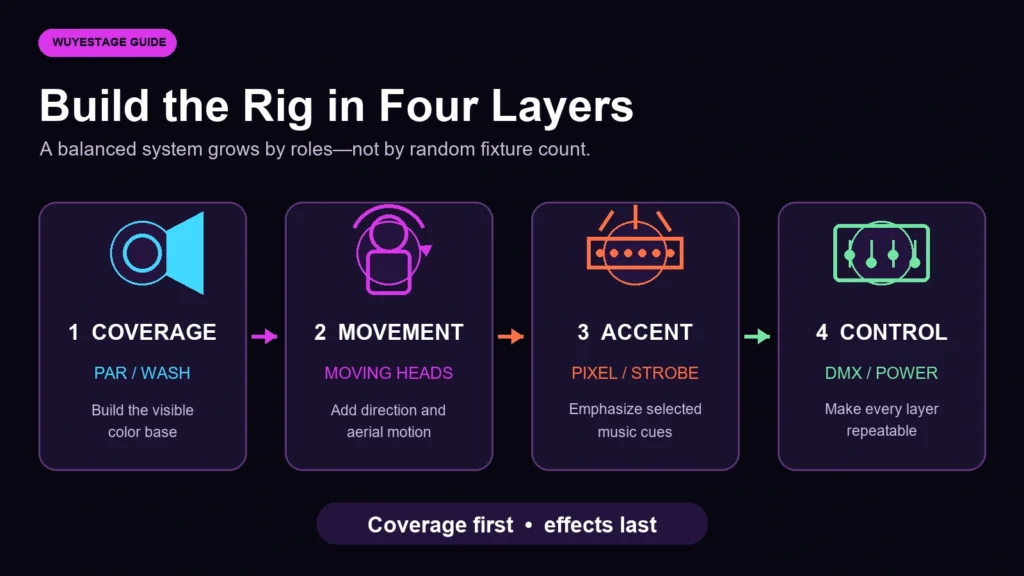
Before choosing models, divide the system into four functional layers:
A basic DJ lighting setup should normally establish coverage and control before adding many accent fixtures. A narrow beam can look powerful in haze, but it cannot replace even wash lighting on people, décor or a backdrop. Likewise, a strobe can add impact for a short cue, but continuous use quickly reduces its value and may be unsuitable for some audiences.
The first professional conclusion is therefore: fixture roles are more important than fixture count. A balanced six-fixture system can be more useful than ten fixtures that all perform the same job.
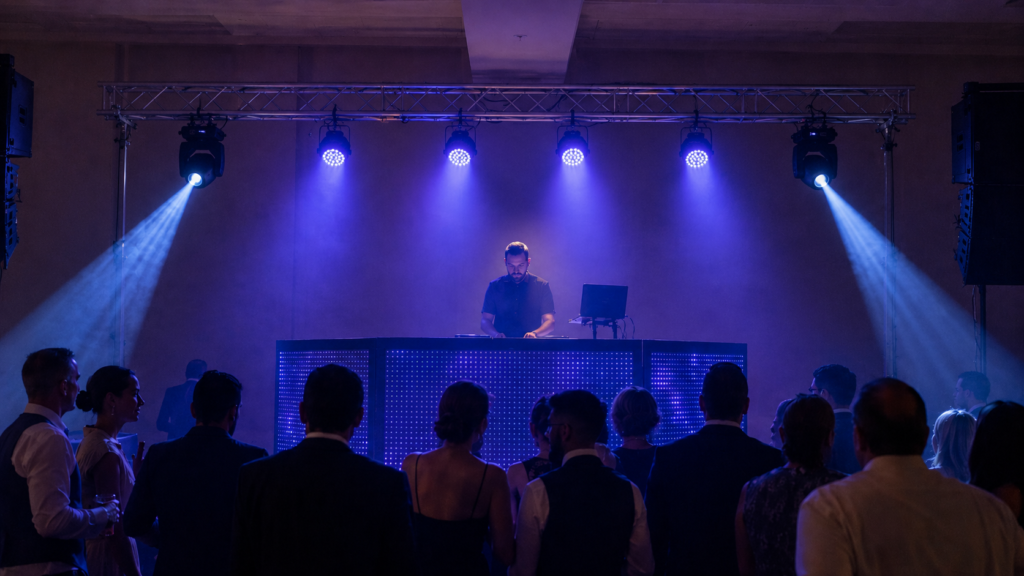
The table below is a planning framework, not a fixed bill of materials. Final quantities depend on venue dimensions, mounting positions, ambient light, required visual density and the output of the selected fixtures.
| Operating scenario | Coverage layer | Movement layer | Accent layer | Control and transport priority |
|---|---|---|---|---|
| Small party or compact mobile DJ rig | 2-4 compact PAR or wash fixtures | 2 compact moving heads for symmetry | Optional single effect fixture | Fast setup, simple scenes, limited cases and cable runs |
| Wedding or corporate mobile event | 4-8 wash fixtures distributed around booth or room | 2-4 moving heads placed behind or beside the DJ | 1-2 controlled accent fixtures | Quiet operation, clean appearance, camera testing and repeatable cues |
| Larger dance event or rental package | Wash coverage divided by zone | 4 or more moving heads when positions and transport allow | Pixel, strobe or effect fixtures used by cue | Defined DMX universe, power plan, spare strategy and labeled cases |
These quantities are starting assumptions rather than purchasing promises. A buyer should confirm the actual throw distance, fixture output, mounting height and venue conditions before ordering a batch.
This creates the second professional conclusion: a scalable DJ lighting system should grow by adding zones and positions, not by randomly adding more effects. For example, a small package may use one wash zone and two moving-head positions. A larger package can add side positions, a backdrop zone and additional fixtures without changing the basic operating logic.
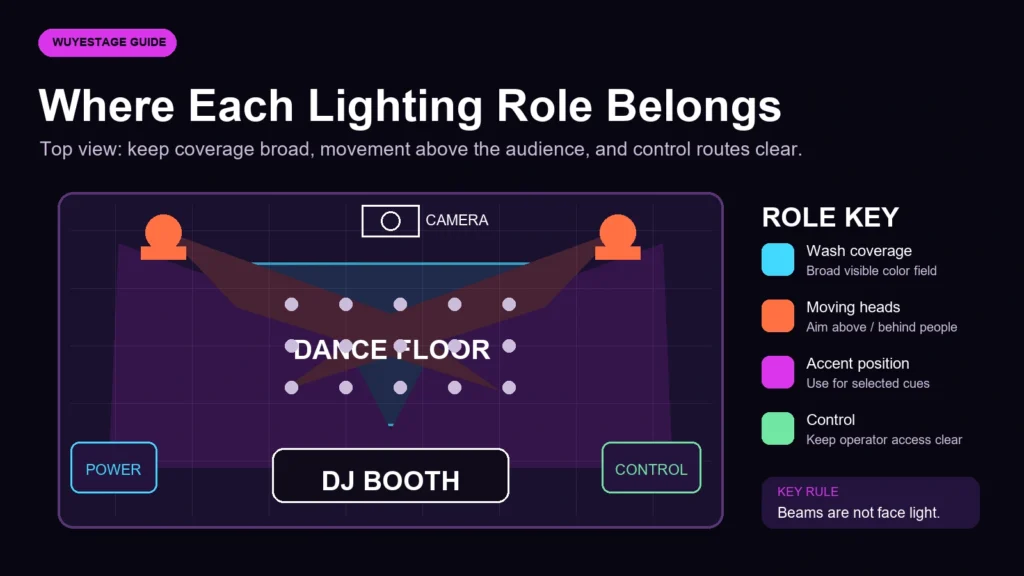
Many DJ lighting setup ideas look attractive in product photos but fail in real rooms because the fixture positions were never planned. Draw a simple top view of the working area before deciding quantities.
Mark the DJ booth, dance floor, audience, camera positions, power access and every available stand, truss or mounting point. Then assign each lighting layer to a position:
For a symmetrical mobile rig, two moving heads can provide a clear visual frame around the DJ booth. Four units can create more crossing shapes and alternate positions, but they also require more mounting space, DMX channels, cases, cables and programming time. For a detailed choice between moving-head roles, use the DJ moving head lights buying guide instead of treating every moving head as interchangeable.
Avoid using beam fixtures as the main face light. Narrow beams are designed primarily for aerial effects, especially when haze is present. Use a suitable wash or front-light layer when faces, presenters, performers or cameras need consistent visibility.
For most buyers learning DJ lighting basics, PAR or wash fixtures are the foundation. They provide the color field that visually connects the booth, backdrop and room. Without this layer, moving beams may appear disconnected from the event environment.
When comparing wash fixtures, check more than the listed source power. Ask about beam spread, dimming behavior, color mixing, fan noise, mounting options, control modes and real working distance. Wedding and corporate events often need smooth dimming, restrained color choices and acceptable camera behavior. A nightclub or dance event may prioritize stronger saturation and faster cue changes.
The WUYESTAGE LED PAR light range can support this coverage role. One product example is the mute LED PAR light with LED strip, which may fit applications where lower operating noise and an additional decorative element are useful. It is not automatically the right choice for every venue; buyers should still confirm output, beam coverage, control requirements and the environmental conditions of use.
The third professional conclusion is: coverage quality should be judged at the intended distance and camera settings, not from close-range fixture photos. A sample test should include the actual wall, backdrop, skin-tone or camera condition that matters to the buyer.
Moving heads add energy and direction, but the system should remain easy to reproduce. For DJ lighting for beginners, two identical moving heads are usually easier to position, address and program than a mixed collection of unrelated units.
A product such as the 300W beam moving head light is better suited to a package that needs a defined narrow beam and multi-prism visual effects. It may be excessive for a very small room, a low ceiling, a noise-sensitive event or a setup without enough throw distance. Confirm the venue, mounting position, haze policy and expected effect before treating a higher-output beam as an upgrade.
The double cannon beam light offers a different visual role for buyers considering a distinctive twin-head effect. It should be selected because the package needs that appearance, not simply because it creates more movement. Its exact model configuration and required control workflow should be confirmed before bulk purchasing.
Use consistent product groups wherever possible. Identical fixtures simplify addressing, scene building, spare parts, flight-case planning and operator training. Mixed systems can be valuable, but only when each additional product family earns its place through a different visual role.
An accent layer should support the music rather than run continuously. Pixel bars can create lines and segmented chases; strobes can emphasize selected hits or transitions; effect lights can add a recognizable look for club and mobile-event packages.
The LED effect light category provides options for buyers who already have dependable wash and movement layers. The RGBW pixel strobe light combines color, white-strobe and segmented effects for more detailed programming. It is a better fit when the controller and operator can use those functions. It is not a good reason to replace the basic wash layer or ignore audience comfort and camera testing.
For wedding DJ lighting, restraint usually creates a more professional result than maximum effect density. Prepare calm entrance, speech and dinner scenes separately from dance cues. Keep a non-flashing alternative available, and confirm any venue or client restrictions before using strobe effects.
An all in one DJ lighting system may sound convenient, but “all in one” should describe an operationally complete package—not a claim that one fixture can perform every lighting job.
Create a simple fixture schedule with these fields:
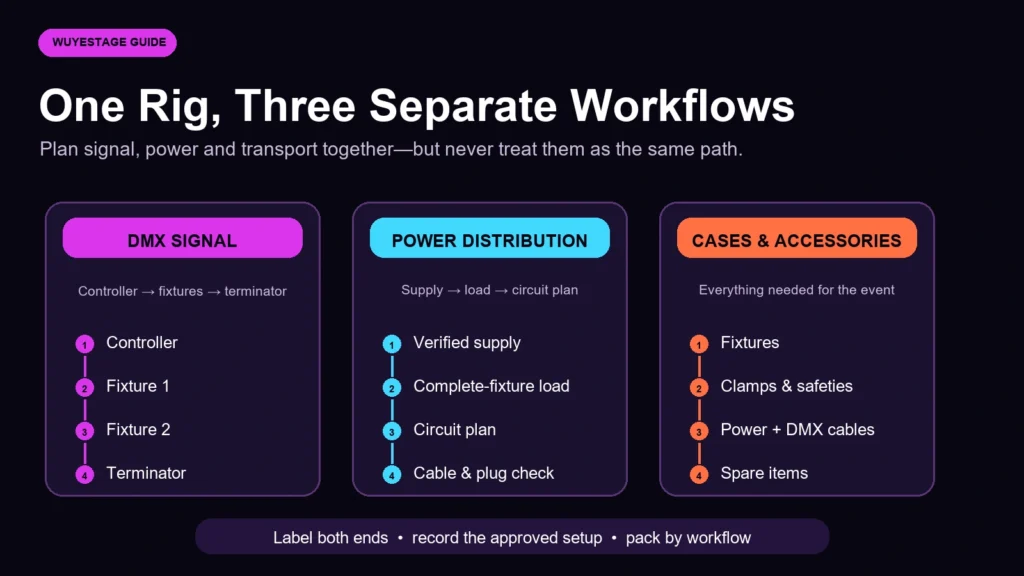
DMX addresses must not overlap unless fixtures are intentionally mirrored. Keep power distribution separate from DMX signal planning, label both ends of recurring cables and define what each fixture should do after signal loss. For protocol and entertainment-technology standards context, buyers can consult the ESTA Technical Standards Program.
Do not calculate power from the light-source wattage alone. Use the verified complete-fixture rated power, include the other equipment on the circuit, and follow the applicable electrical requirements for the destination. Cable type, connector type, voltage and frequency must be confirmed for the order.
This is where many attractive packages become difficult rental products. If the rig needs too many adapters, unique cables, uncontrolled automatic programs or different menu systems, labor and troubleshooting time can erase the saving from a lower fixture price.
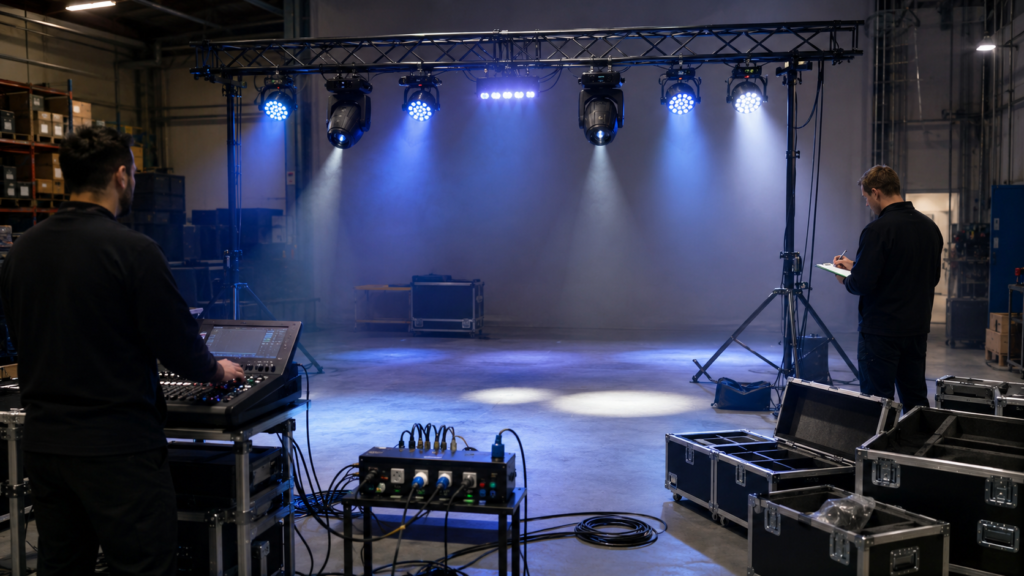
Testing one fixture on a table is useful, but it does not prove that the complete DJ lighting setup works. Build a representative small system and run it through a realistic event sequence.
Use this acceptance flow:
The operational consequence is important: a system that takes one technician too long to assemble may not be profitable for short mobile events, even when the visual result is good. Rental companies should compare cost per completed event, not only unit price.
A useful quotation needs more than a request for a “small,” “medium” or “professional” package. Price changes with fixture quantity, product type, output, control detail, flight cases, clamps, safety accessories, cables, spare parts, plug standard, destination and shipment schedule.
Send the supplier:
This information allows the supplier to compare configurations instead of guessing from a target budget alone.
This guide is intended for mobile and temporary event systems. Additional professional design and local compliance checks are required when the project involves engineered overhead structures, permanent electrical installation, emergency-lighting requirements, outdoor weather exposure, complex broadcast production or unusual audience-safety conditions.
Do not use an indoor fixture outdoors unless the complete product and connection system have the required verified protection. Do not assume that a safety cable, clamp or stand is suitable without checking its rating and the applicable installation requirements. Rigging and electrical work should be handled by qualified personnel.
A practical basic system usually includes broad PAR or wash coverage, two coordinated moving-head positions when movement is needed, a simple control method, correct power and DMX cabling, mounting hardware and suitable transport protection. Accent fixtures can be added after the base system works reliably.
There is no universal number. A compact starting rig may use two to four wash fixtures and two moving heads, while larger events need more zones and positions. Confirm venue size, output, mounting locations, transport capacity and programming time before setting quantities.
Position wash lights to cover the required surfaces or people, and place moving heads behind or beside the DJ when possible so beams travel above the audience. Avoid constant glare into faces, cameras and operator positions.
DMX is not essential for every simple setup, but it is valuable when the operator needs repeatable colors, positions, blackout and coordinated cues. Automatic or master-slave modes may suit basic uses, but their behavior should be tested before a bulk purchase.
Wedding systems usually benefit from even wash coverage, controlled movement, quiet operation, clean-looking hardware and separate scenes for entrances, speeches, dinner and dancing. The best configuration depends on room size, décor, camera use and venue restrictions.
Test the representative complete rig at the intended distance. Check coverage, color, dimming, movement, DMX behavior, signal loss, camera response, noise, mounting, cable access, setup time, case fit and the approved product configuration.
Explore the complete DJ lighting equipment range and use this guide to define the roles, positions and operating workflow your package needs. WUYESTAGE can help distributors, rental companies and event buyers compare suitable product combinations after the venue, application, control, transport and order requirements are confirmed.
Send your typical event size, layout, lighting roles, controller, mounting method, power conditions, camera requirements, quantity, destination and schedule to request a configuration-based quotation or sample plan.