


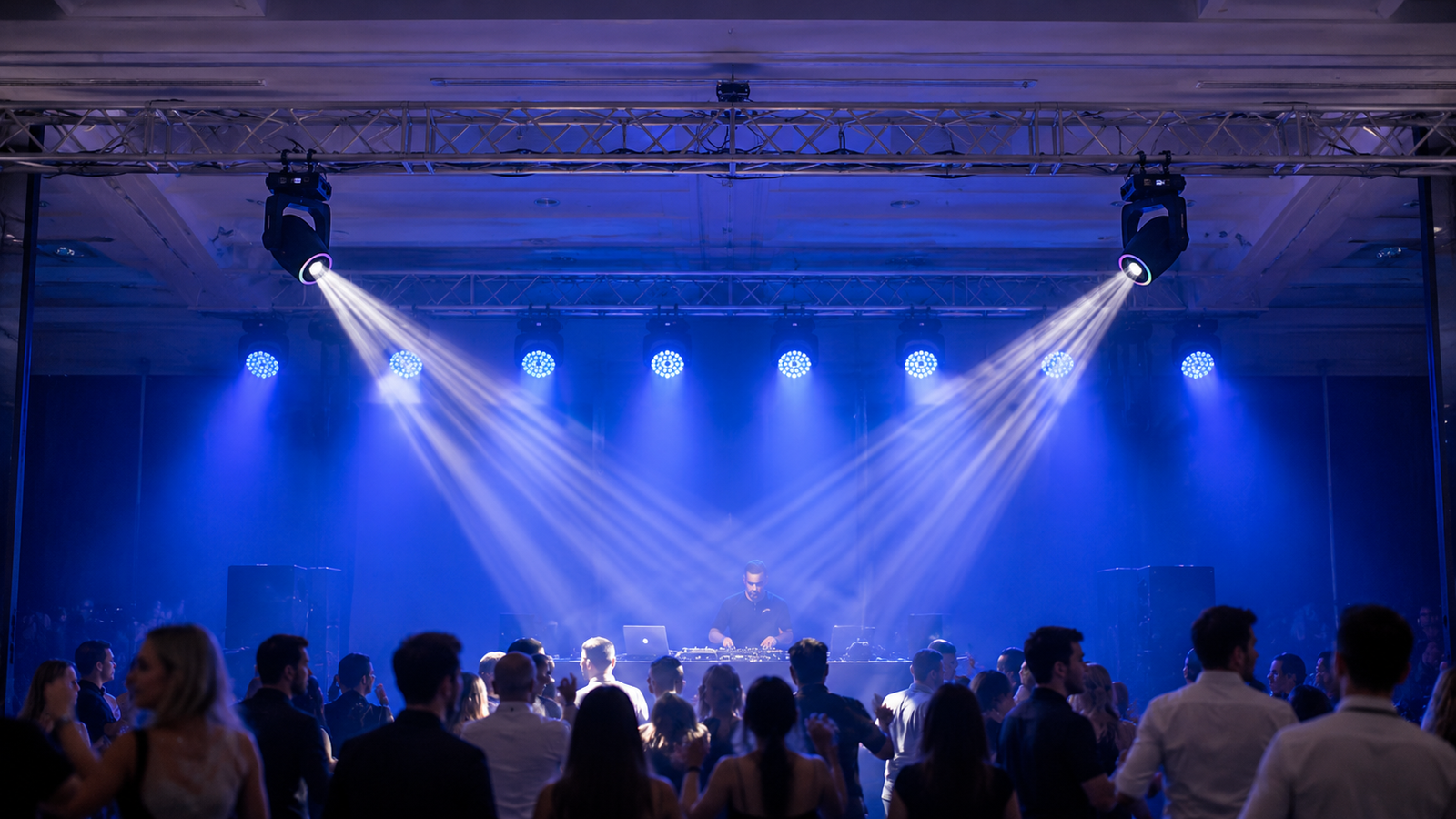
The best DJ moving head lights are not simply the brightest fixtures within budget. They are the units that complete the visual jobs missing from the rest of the rig, fit the vehicle and crew, and can repeat useful looks quickly at every event. For many mobile DJs, two moving heads plus dependable wash lighting create a better first system than four effect fixtures with no reliable room color.
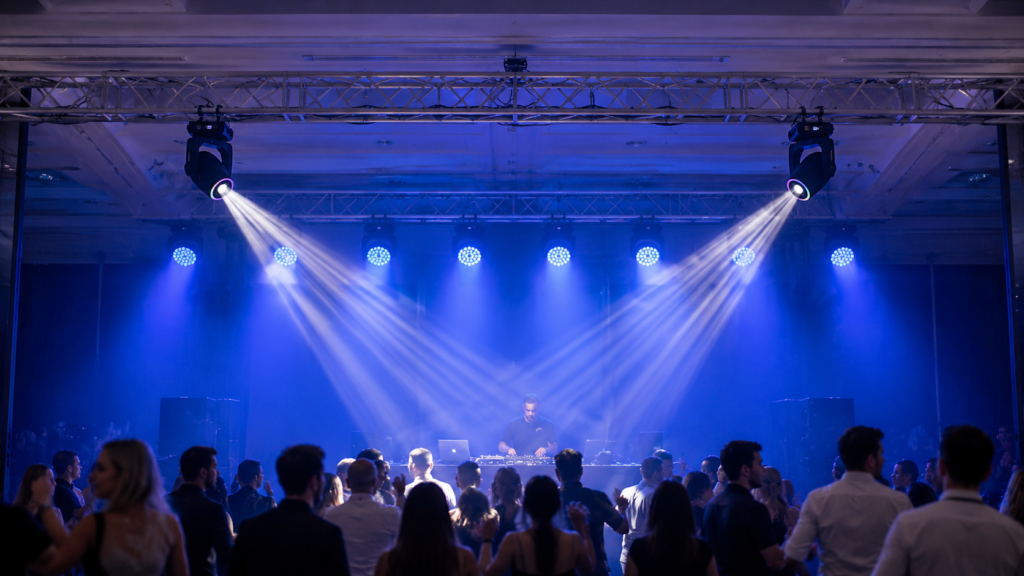
Choose beam fixtures for visible aerial energy, spot fixtures for gobos and defined projection, wash fixtures for broad color, and compact effect heads when transport speed matters more than long throw. Then compare the complete package: fixture and case weight, mounting positions, power, DMX workflow, setup time and sample-test results.
A moving head should earn its place in the rig. Before comparing models, divide the show into four lighting jobs:
| Lighting job | What the audience should see | Suitable fixture role | Common buying mistake |
|---|---|---|---|
| Reliable room color | Dance floor, walls or stage remain visibly colored | PAR or wash | Buying only narrow beams |
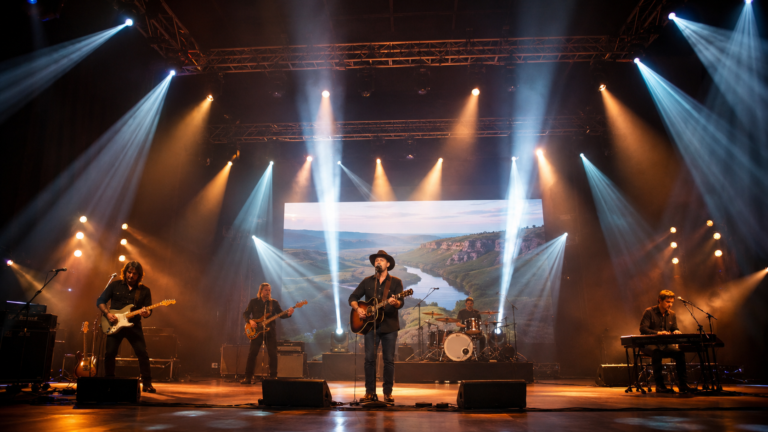
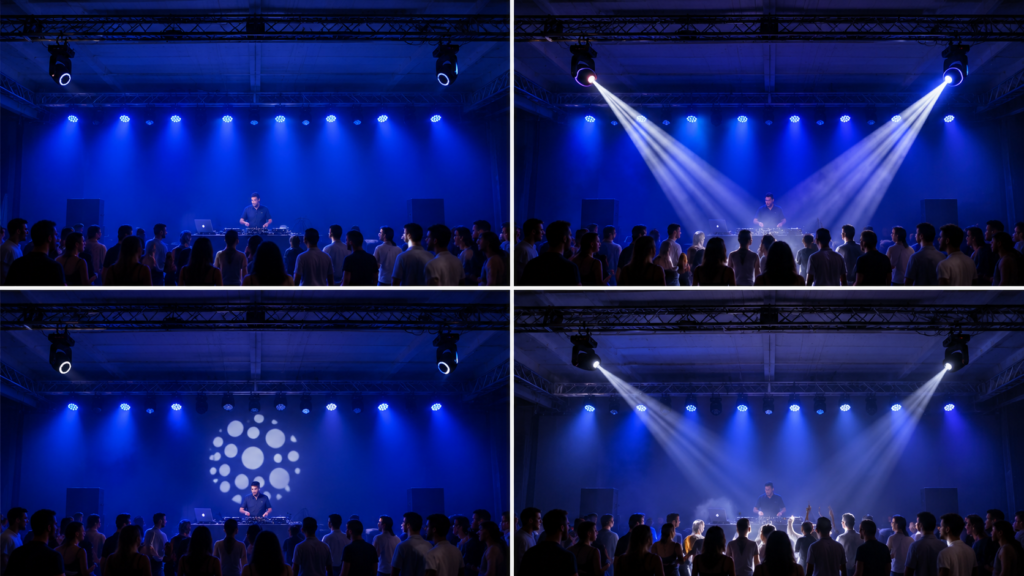
| Aerial movement | Shafts cross above or behind people in haze | Beam moving head | Expecting a beam to light faces |
| Pattern projection | Gobos appear on floors, walls or scenic surfaces | Spot moving head | Ignoring focus and projection distance |
| Musical accents | Fast movement, prism, strobe or effect changes support drops | Beam, hybrid or compact effect head | Counting effects instead of testing usable cues |
This role test prevents a common budget error. If a DJ already owns adequate wash fixtures, moving heads can add movement and pattern. If the existing rig leaves faces, tables and room surfaces dark, buying more aerial effects will not correct the foundation.
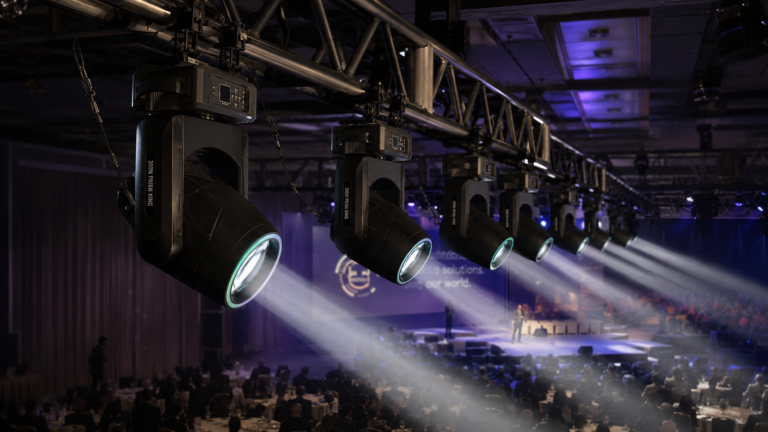
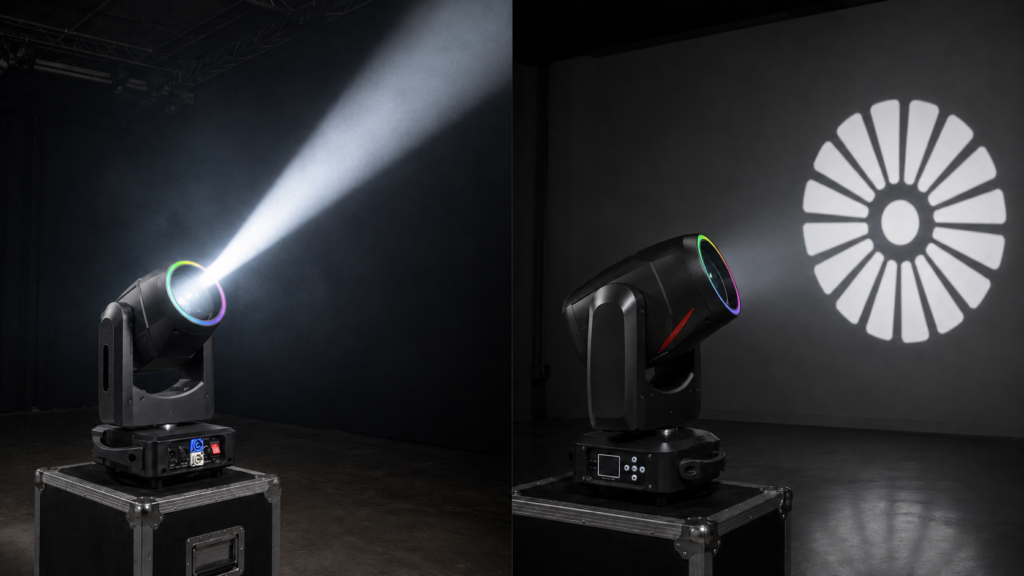
Professional moving heads are motorized fixtures that reposition their optical output through pan and tilt while a controller can recall color, dimming, gobo, focus, prism or other supported functions. That definition is useful, but buyers still need to select the correct optical role for the venue rather than treating every moving head as interchangeable.
Quantity changes the geometry of a show. Two fixtures create a left-right frame and are easier to transport. Four fixtures create crossing movement, separate front and rear positions, and more varied symmetrical looks. However, four weak or poorly positioned fixtures are not automatically better than two suitable units.
Use this decision matrix as a starting point:
| Event profile | Practical starting system | Why it works | Confirm before ordering |
|---|---|---|---|
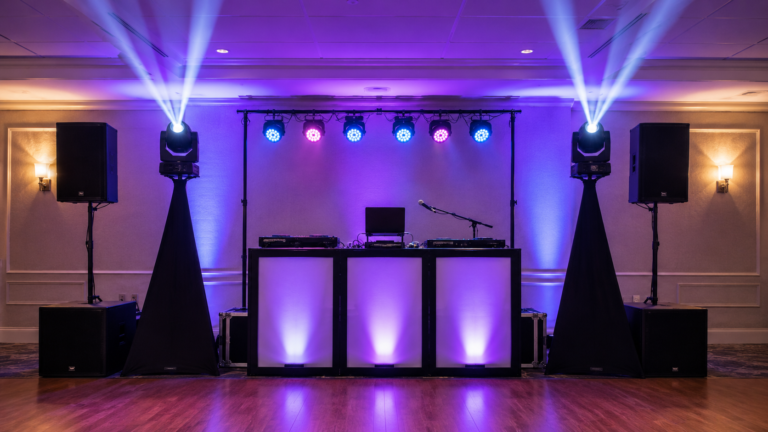
| Small mobile parties, short setup window | 2 compact moving heads plus 2-4 PAR fixtures | Symmetry with manageable handling | Stand height, movement clearance and room brightness |
| Weddings and medium function rooms | 4 compact heads or 2 stronger heads plus wash | More positions without abandoning face and room color | Camera behavior, noise, ceiling height and haze policy |
| Club installation | 4-8 programmed fixtures with separate wash | Repeatable zones and deeper cue programming | Mounting points, service access, continuous operation and power |
| Rental inventory covering varied venues | Mixed beam/spot or hybrid package plus wash | Broader application range | Case dimensions, spare strategy, fixture profiles and batch consistency |
A DJ moving head light pair is therefore a sensible minimum for symmetry, not a universal complete system. Start with four only when the rig has enough mounting positions, control capacity, power, transport space and programming time to use all four properly.
Beam moving heads create narrow shafts that become visible in haze. They suit dance floors, clubs and event stages where energetic aerial movement matters. Their main limitation is equally important: a narrow beam is an effect layer, not general illumination.
The current 300W beam moving head light uses a verified 2-degree beam, four bidirectionally rotating prism options, 13 colors plus white, 10 metal and 4 glass gobos, 18/22CH DMX control and 540-degree pan with 270-degree tilt. Its new-appearance RG-132 configuration weighs 9kg and is rated IP20. It can suit indoor mobile or venue rigs that need concentrated beam and prism effects, but it is not suitable for rain exposure or buyers who primarily need broad room coverage.
Spot moving heads are usually more useful when the visual plan depends on defined gobos, textured movement or projected patterns. Buyers should examine focus, edge quality, fixed and rotating gobo options, prism behavior and the distance needed to form a clear image.
The 200W spot moving head uses a verified 180W LED source within its 200W product class. The RG-332 record lists 11/16 channels, fixed and rotating gobo wheels, 13 colors plus open, a bidirectionally rotating 3-facet prism, mechanical dimming, 0.5-14Hz strobe and 540-degree pan. This type is a stronger fit than a beam when pattern readability matters, but sample testing should confirm projection clarity at the buyer’s working distance.
Wash lighting provides broad color on people and surfaces. It may be less dramatic in a product photograph, yet it often determines whether a DJ rig looks complete when haze is restricted or moving effects are temporarily aimed away from the audience.
The cast aluminum PAR light is a verified supporting example rather than a moving head. RG-314 offers configuration-dependent 18, 24 or 54 LED versions, DMX512, master-slave, sound and automatic control, with 200W rated power and 3.5kg net weight. Buyers must confirm the ordered LED and channel configuration, but the product illustrates why a lighter static wash layer can preserve useful coverage while moving heads perform effects.
Portable does not mean small enough to lift once. It means the complete system can be loaded, transported, installed and packed repeatedly by the available crew without consuming the entire event schedule.
Use this basic transport calculation:
Total handling load = fixtures + flight cases + clamps + safety cables + power cables + DMX cables + stands or truss + controller
For example, four 9kg fixtures already equal 36kg before cases and hardware. If two fixtures share each case, the crew still needs the packed case dimensions and loaded weight, not only the fixture net weight. Add vehicle floor area, lifting height and the distance from parking to the venue.
Then calculate labor exposure:
Rig labor minutes = unload + position + mount + safety + power + data + address + focus + test + pack-down
Record the real time during a sample event. A more powerful unit may be economical if two fixtures replace four positions. A lighter four-head system may be better when one operator works alone and the venue changes every night. The useful comparison is cost per completed event, not fixture price alone.
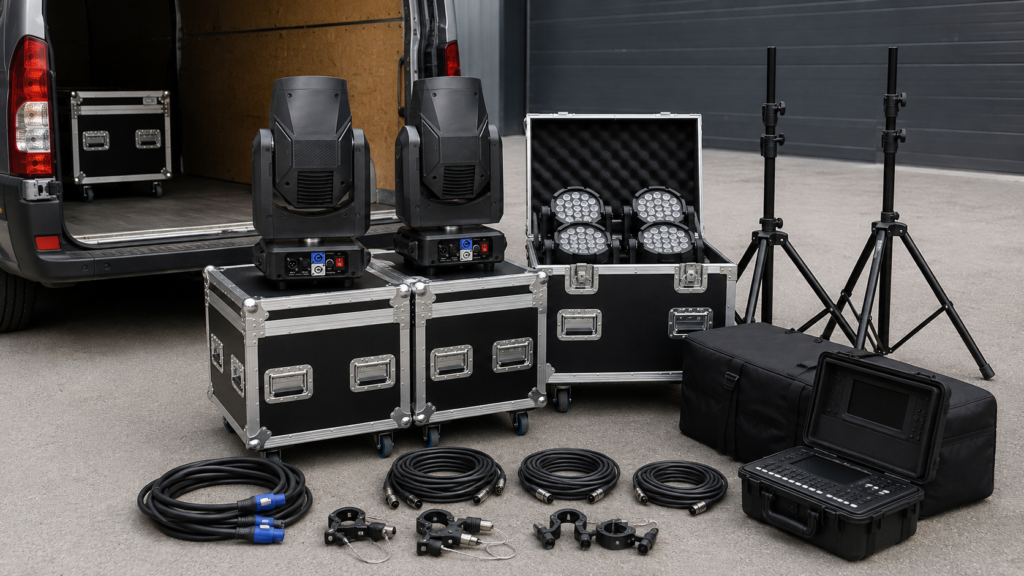
Compact products can reduce part of that burden. The mini twin beam light is recorded at 180W total power with two 60W four-in-one LED sources, colored auxiliary strips, 3/20CH control, 0-100% dimming and 1-30Hz strobe. Its exact movement, dimensions and weight still require confirmation, so it should enter a shortlist only after a real case-fit and movement-clearance check.
DMX is not mandatory for every DJ moving-head setup. Automatic, sound and master-slave modes can support simple events where fast deployment matters more than precise cue design. DMX becomes the better choice when the operator needs repeatable positions, coordinated movement, controlled blackout, consistent colors or integration with other fixtures.
The decision is operational:
Before buying multiple fixtures, request the DMX chart and confirm the control mode, connector type, fixture profile, signal-loss behavior and whether the same firmware and channel map will be supplied across the batch. A long feature list is not useful if the controller cannot address the functions reliably.
A reliable moving-head supplier should make verification easier. Buyers should ask for configuration-specific evidence instead of accepting broad claims such as professional, powerful or high quality.
Use this evidence ladder:
For WUYESTAGE and RED STAR products, the website serves as the product and customer-information platform, while RED STAR identifies the RG stage-lighting product line in the catalogue. Buyers should still confirm the final model, appearance and specification on each order because a shared family name does not guarantee that every version has identical optics, channels or housing.
Do not approve a multi-unit order from a short beauty video. Use one repeatable test sequence and record the settings.
| Time | Test | Pass condition |
|---|---|---|
| 0-5 min | Identity and physical inspection | Model, appearance, connectors and ordered accessories match the document |
| 5-12 min | Homing and movement | Pan and tilt initialize cleanly and repeatedly reach stored positions |
| 12-20 min | Optical functions | Relevant colors, gobos, focus, prism, dimming and strobe work without relying on unsupported features |
| 20-28 min | Control | Required DMX modes, addressing and signal-loss behavior are understood and repeatable |
| 28-38 min | Real venue simulation | Output, beam or pattern, camera behavior and movement are acceptable at the intended distance |
| 38-45 min | Operations | Fan noise, menu access, mounting, cable clearance, cool-down and case fit are acceptable |
Photograph the fixture label, save the DMX chart and record the approved menu or firmware information. For a batch order, compare at least two production units with the approved sample or request documented pre-shipment checks that use the same sequence.
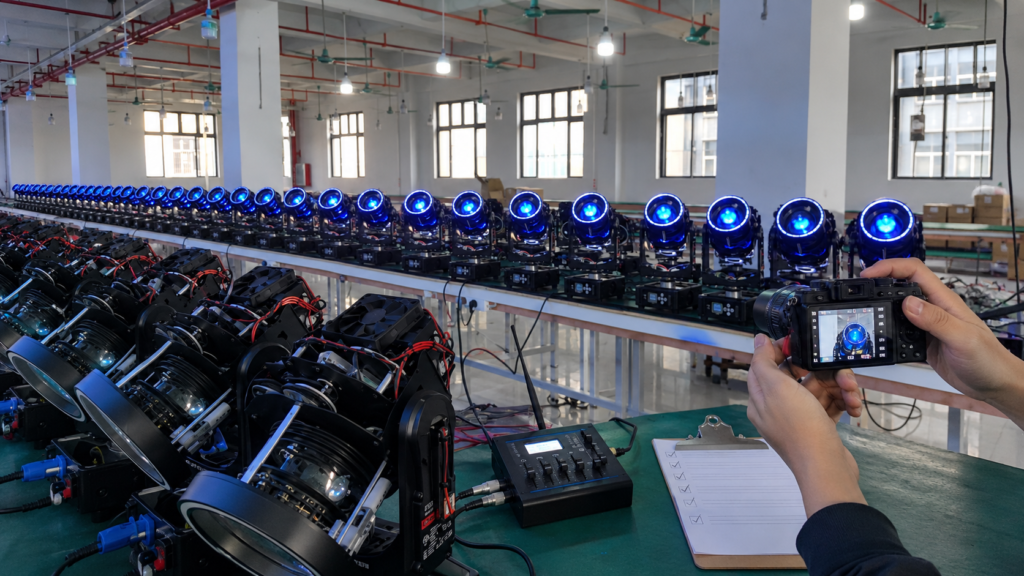
Reject or pause the purchase when the sample cannot reproduce stored positions, the ordered and demonstrated channel maps differ, the case plan is unknown, the fixture rating does not match outdoor use, or key specifications change between the sample and quotation.
For a first mobile DJ rig, prioritize useful coverage and repeatable operation: dependable PAR or wash lighting plus a pair of moving heads is often the strongest starting point. Choose beam heads when aerial energy is the main goal and haze is permitted. Choose spot heads when visible gobos and projection matter. Move to four or more heads only after confirming transport, mounting positions, DMX programming and power.
For rental companies and distributors, compare a mixed shortlist rather than one specification. Test a compact unit for handling, a beam model for aerial impact and a spot model for pattern work. The winning product is the one that produces the required cue consistently while fitting the buyer’s crew, case, controller and venue portfolio.
Publish this section with the Yoast FAQ block.
Beam heads are best for narrow aerial effects, spot heads for gobos and defined projection, and wash heads for broad color. Many DJs need moving effects plus separate PAR or wash fixtures rather than one fixture type for every job.
Two fixtures are a practical starting point for symmetry. Four add crossing movement and more positions, but only when the rig has enough transport space, mounting points, power, control capacity and setup time.
No. Automatic, sound and master-slave modes can serve simple setups. DMX is preferable when the show needs repeatable positions, coordinated cues, controlled blackout or integration with other lighting.
They can be when long throw, brighter ambient conditions or faster setup matter. Four lighter units can create more varied geometry. Compare the complete rig by usable output, positions, packed weight, labor and control rather than quantity alone.
Test product identity, homing, repeated positioning, optical functions, DMX modes, signal-loss behavior, real-distance output, camera behavior, fan noise, mounting, cable clearance and case fit. Record the approved configuration for the bulk order.
Do not expose an indoor fixture to rain. Confirm the complete fixture’s protection rating, connectors, power and data system, structure and local requirements, then use qualified personnel for outdoor planning and installation.
WUYESTAGE can help distributors, rental companies and event buyers compare moving heads with supporting PAR or wash fixtures using venue size, visual role, control method, transport limits and order quantity. Send the stage or room dimensions, mounting plan, typical event type, available controller, power conditions, camera requirements, destination and schedule to request a configuration-based quotation.