



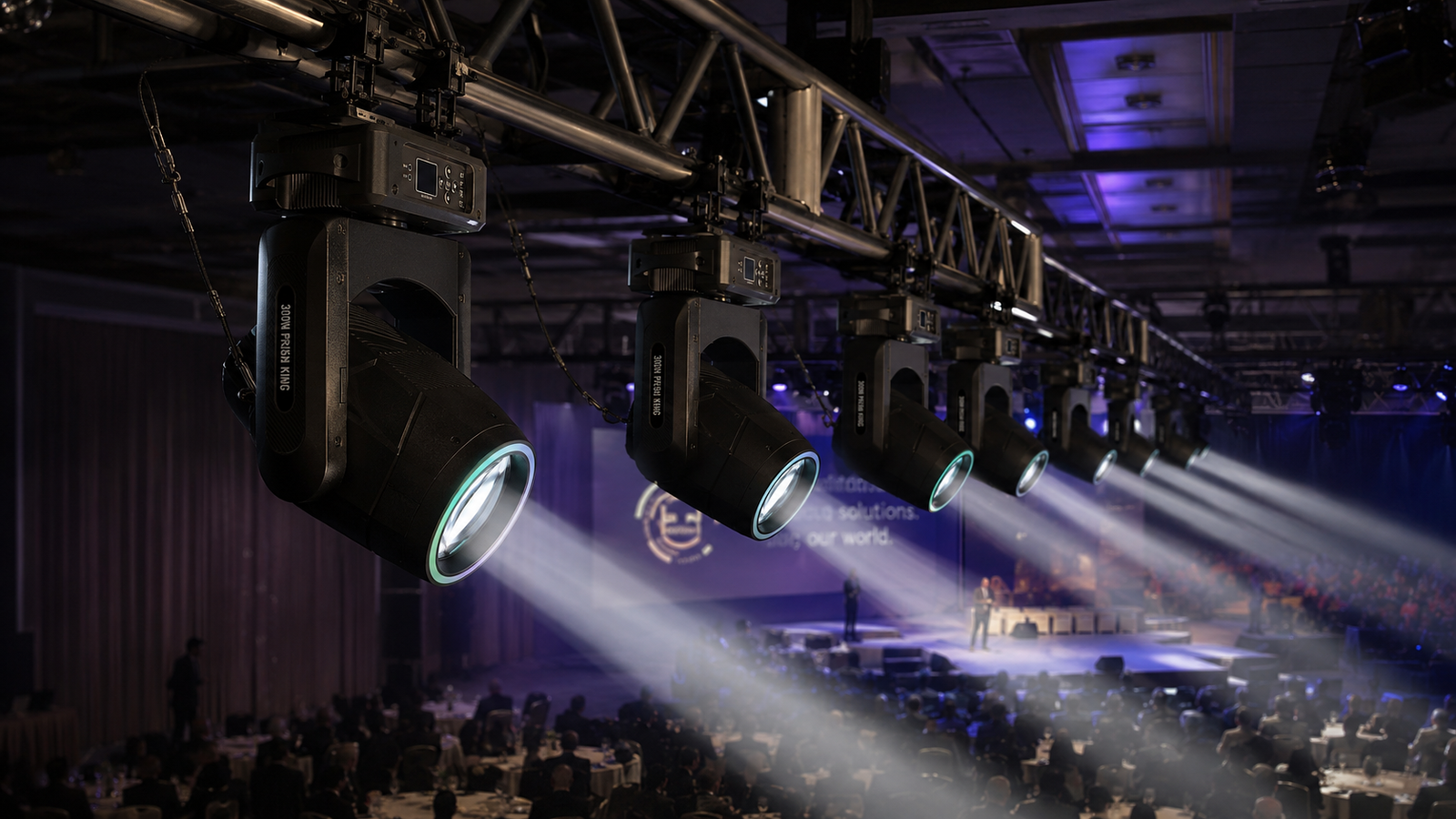
Event suppliers need beam fixtures that create clear aerial effects, fit the venue, respond predictably to programming, and remain practical to transport and maintain. Choosing moving head beam lights for events therefore requires more than comparing lamp wattage. Beam angle, prism options, color and gobo systems, movement, control modes, environmental rating, power, weight, and supplier support all affect whether a fixture belongs in a professional inventory.
The short answer is to begin with the visual job. A narrow beam fixture is designed to produce concentrated shafts and moving aerial patterns, especially when haze makes the light path visible. It does not replace a wash light for covering performers or a profile fixture for controlled front light. Once the role is clear, buyers can compare effect flexibility and operating requirements against their real event workflow.
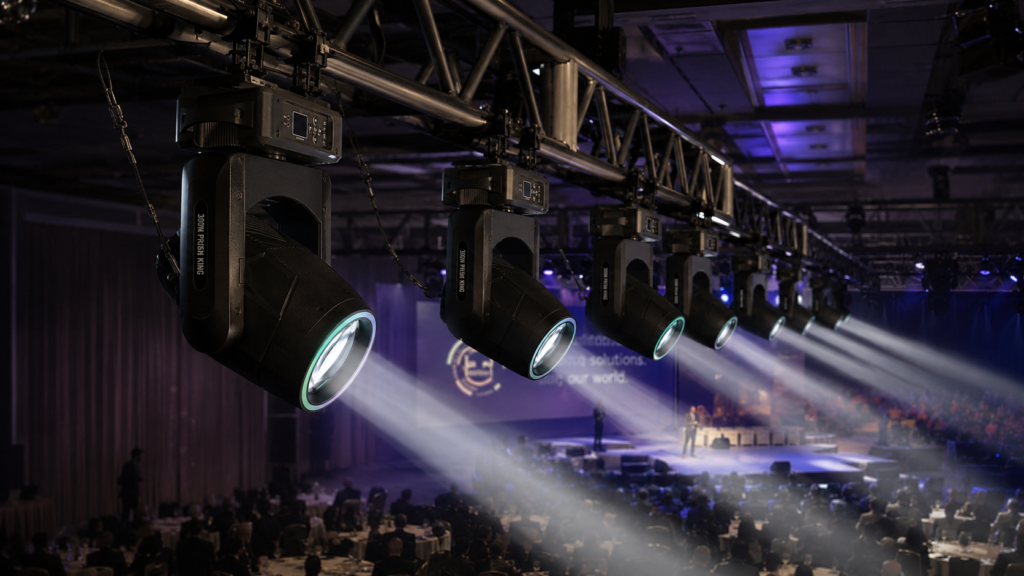
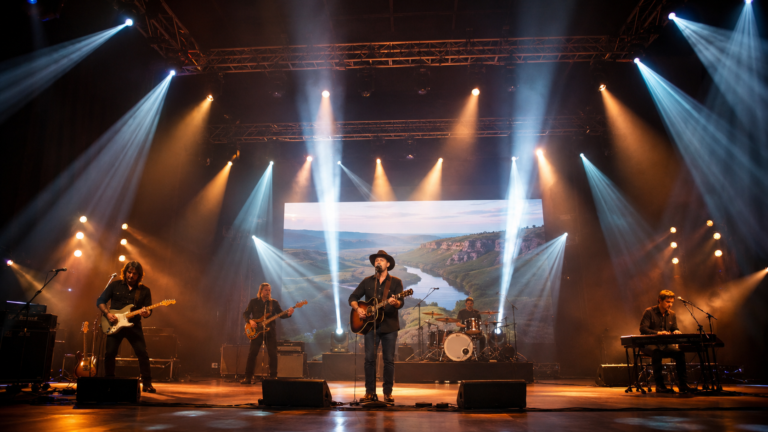
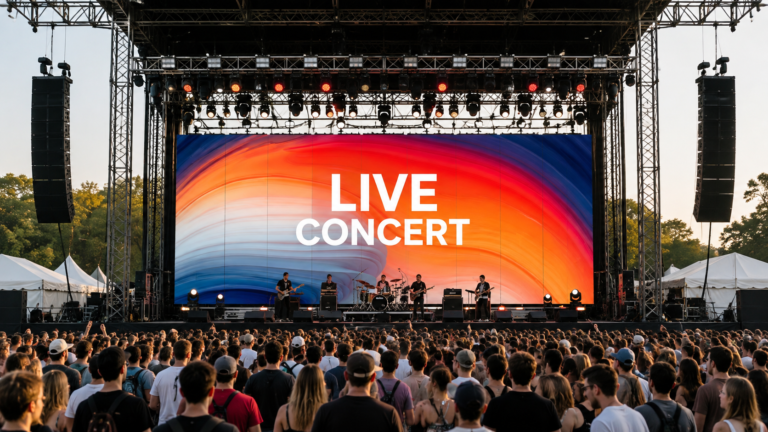
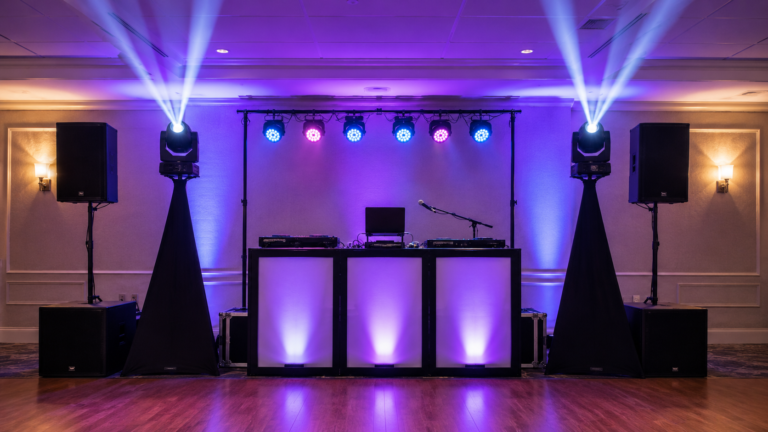
A beam moving head is most useful when the design needs visible movement above an audience, fan effects behind performers, synchronized sweeps, or sharp accents during musical transitions. Concerts, clubs, touring shows, corporate launches, and indoor festival stages may all use beam fixtures, but they do not require the same quantity, placement, or programming.
Start by separating three jobs:
| Fixture role | Main purpose | Typical planning question |
|---|---|---|
| Beam | Narrow aerial shafts and multi-beam effects | Is the throw and beam angle suitable for the room? |
| Wash | Broad color coverage | Can it cover the required stage area evenly? |
| Spot or profile | Pattern projection and controlled illumination | Are focus, edge, framing, and gobo needs supported? |
An event design may combine all three. Buying a beam because it appears bright in a short demonstration can create a poor result if the project actually needs wide coverage or controlled face light.
Beam angle influences how quickly the shaft spreads over distance. A narrow angle can remain visually concentrated across a larger room, while a wider output covers more area but produces a different effect. Placement height, throw distance, haze level, background brightness, and sightlines also change the result.
The RG-132 uses a verified 2-degree beam. This makes it a narrow-effect fixture rather than a general stage wash. Buyers should test the fixture at the shortest and longest expected throw distances instead of assuming that wattage alone predicts the result. Check whether the beam remains visible against LED screens, scenic lighting, and ambient room light. Also verify that sweeps do not aim into cameras or remain in uncomfortable audience positions.
For more venue planning detail, see the beam angle guide for moving head lights.
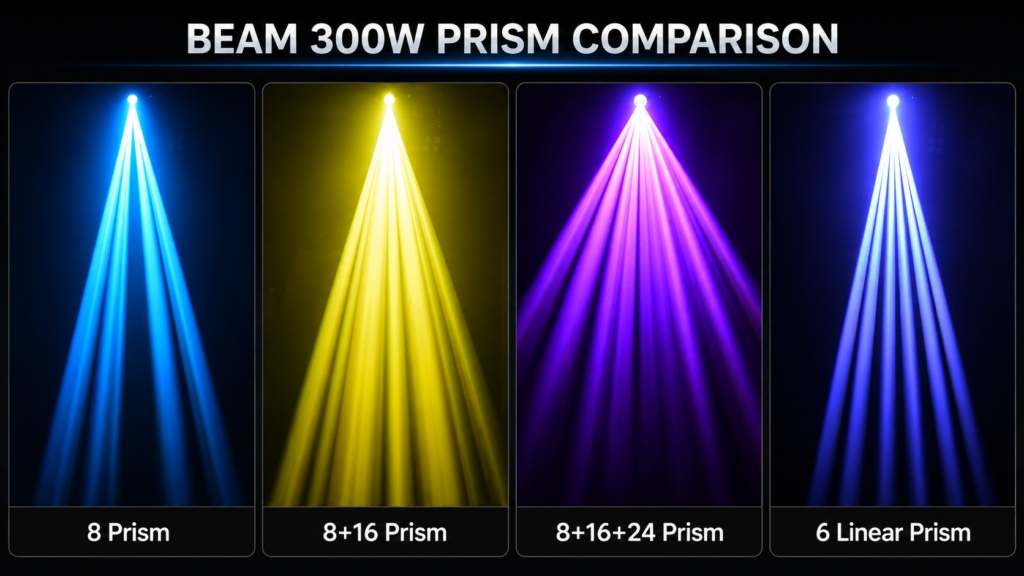
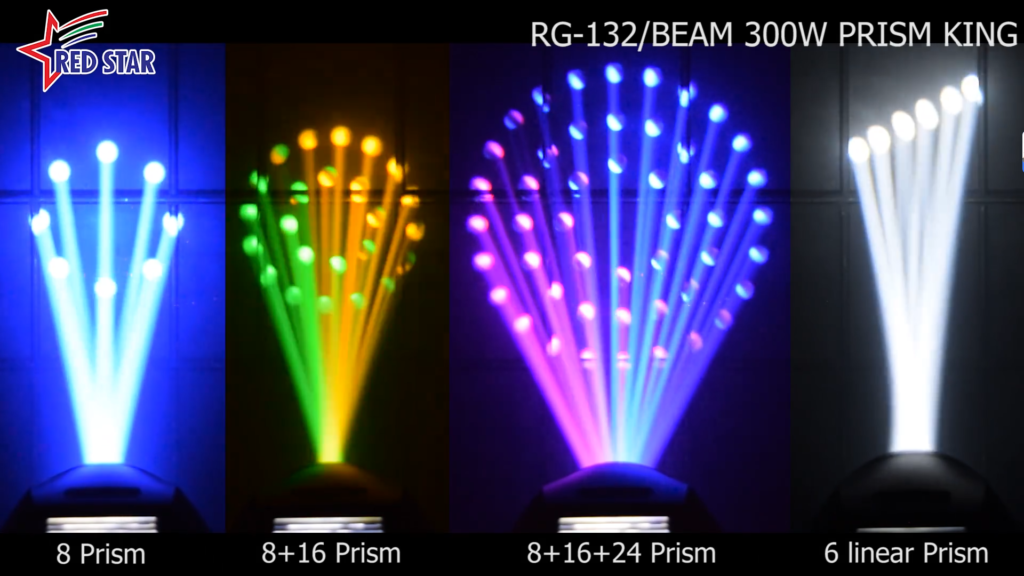
Prisms multiply one beam into several visible rays. However, a larger facet number is not automatically better. The useful question is whether the available prism structures produce enough distinct looks for the buyer’s shows.
The RG-132 provides four verified prism options with bidirectional rotation:
The 8-facet option can create a clean, readable multi-beam look. Layered combinations increase visual density for larger musical moments. A linear prism changes the geometry and can be useful for fan-like or spread effects. Bidirectional rotation gives programmers another way to vary movement without changing the base fixture position.
When testing a multi-prism moving head light, examine each prism separately. Check insertion, removal, bidirectional rotation, focus behavior, and repeatability after several movement cycles. A sample test with the intended console is more reliable than a short effects video.
Color and gobo systems help one beam fixture create multiple looks during a show. The RG-132 specification confirms 13 colors plus white, 10 metal gobos, and 4 glass gobos. These are fixed onboard options; they should not be described as a custom-gobo system unless a separate customization capability is confirmed for an order.
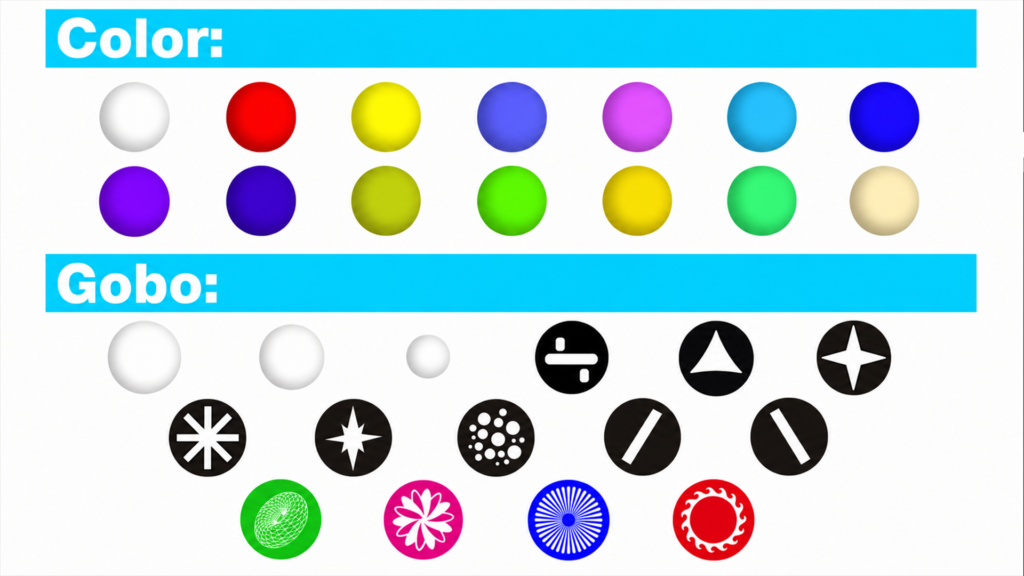
Review the actual wheels rather than only counting positions. Ask whether the palette fits concert, club, corporate, and themed-event programming. Test transitions and pattern clarity at realistic distances; only claim indexing, rotation, or split-color behavior when confirmed.
Programming teams should also document fixture profiles and channel assignments. This reduces setup time when units move between venues or consoles.
The RG-132 includes a verified 24 x 0.5W RGB 3-in-1 front ring around the main output. The ring adds a colored lens-face effect that remains visible when an audience can see the fixture itself. It can support color coordination, fixture-line animation, and close-range scenic detail while the main beam performs aerial effects.
The RGB front ring is not the 300W primary beam source, and independent pixel control has not been verified. Buyers should therefore judge it by the confirmed fixture modes and real demonstrations, not by assuming pixel-mapped behavior. Ask the supplier to show the ring under the exact DMX mode proposed for the order.
This distinction matters when comparing moving head beam lights for events. Two products can produce similar central beams but create different visual impressions when the fixture bodies are visible on truss, stage decks, or club installations.
Reliable movement affects both creative programming and fleet consistency. The RG-132 specification lists 540-degree pan and 270-degree tilt, with 18- and 22-channel DMX modes. The two modes allow buyers to compare a simpler channel footprint with access to additional functions, subject to the confirmed channel chart.
Before approving a batch, test:
For professional events, DMX operation and a verified console profile should be the main planning reference. Standalone modes may help with demonstrations or simple uses, but they do not replace coordinated show control.
RG-132 is rated IP20. It is not waterproof and should be used indoors or inside a properly engineered protected environment. A temporary cover does not convert an IP20 fixture into an outdoor-rated product. Projects exposed to rain, condensation, dust, wind, or temperature extremes require a separately verified solution and professional site planning.
The fixture has a verified rated power of 450W, net weight of 9kg, and dimensions of 280 x 230 x 465mm. These figures affect circuit planning, cases, transport, handling, and support structures. Calculate the full system load rather than using only the headline lamp wattage.
Rigging must follow the supplied documentation, approved hardware, secondary safety requirements, venue rules, and qualified professional practice. Confirm the hanging accessories included with the order, because fixture weight alone does not define a complete rigging plan.
For buyers comparing moving head beam lights for events, the RG-132 300W beam moving head light is a relevant option for indoor event companies, rental fleets, clubs, and distributors that need a narrow 2-degree beam with several prism structures and an RGB front-ring effect. Its verified feature set combines a 300W lamp, four prism options, 13 colors plus white, 14 fixed gobos in total, 18/22-channel DMX control, and professional pan and tilt movement.
It should be evaluated as an effect fixture, not as a universal lighting solution. Buyers needing broader coverage, waterproof construction, different light-source technology, or another output class should compare alternatives in the beam moving head light range.
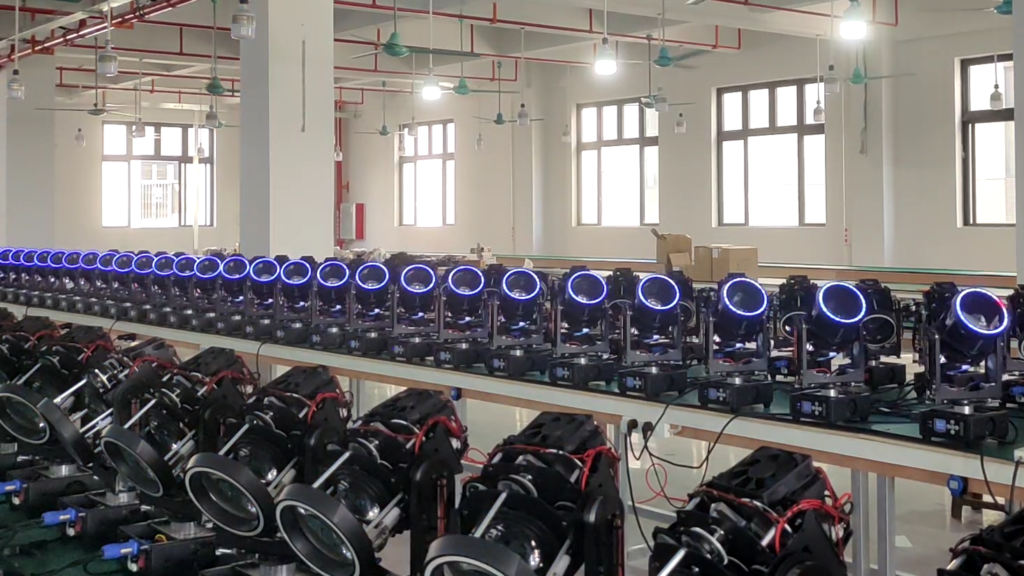
A sample test should use the voltage, console, haze, throw distances, mounting orientation, and content expected in normal use. Record the accepted fixture version, software, DMX mode, channel chart, accessories, and packing.
Run the sample long enough to check movement, cooling behavior, control stability, and repeated effect changes. Photograph or film each prism, color, gobo, and front-ring state. If a production batch differs from the approved sample, identify the change and repeat affected checks before shipment.
For rental and distribution orders, also confirm spare parts, service documentation, flight-case options, plug type, destination voltage, packaging, and labeling requirements. These details influence long-term inventory value as much as a single showroom effect.
Send suppliers a complete brief that includes:
This information allows a supplier to prepare a configuration-based quotation instead of comparing fixtures only by wattage and unit price.
Publishing instruction: Publish this section with the Yoast FAQ block.
They create narrow moving shafts, aerial fans, prism patterns, and sharp accents. They are commonly combined with wash and front-light fixtures rather than used as the only stage-lighting type.
A prism splits one beam into multiple rays. Different facet and linear structures create different densities and geometries, while rotation changes how the pattern moves through the venue.
A 2-degree beam can suit indoor concerts, clubs, stages, and event venues that need concentrated aerial effects. Test the real throw distance, haze, ambient light, LED background, audience sightlines, and camera positions.
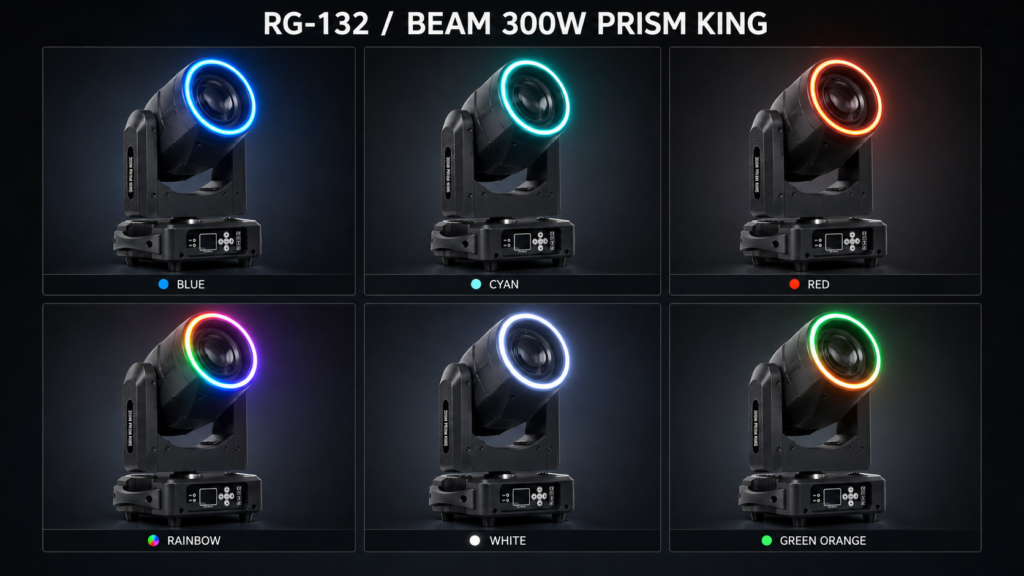
Its 24 x 0.5W RGB 3-in-1 front ring adds a colored lens-face effect around the main output. Independent pixel control is not confirmed, so evaluate the ring using the verified DMX modes and real demonstrations.
RG-132 is IP20 and is not waterproof. Use it indoors or in a properly engineered protected environment. For exposed outdoor projects, select a fixture with a verified environmental rating for the site conditions.
Provide venue, event type, quantity, throw distance, effects, DMX requirements, voltage, plug, rigging, cases, accessories, spare parts, destination, packing, and schedule. Include sample-test requirements for larger or repeat orders.
Planning moving head beam lights for events, rental inventory, distribution, or an indoor venue project? Send WUYESTAGE your event type, venue scale, fixture quantity, throw distance, required effects, DMX system, voltage, plug, rigging and case requirements, destination, and schedule. We can confirm the RG-132 configuration, arrange a sample discussion, and prepare a quotation based on your project and order requirements.