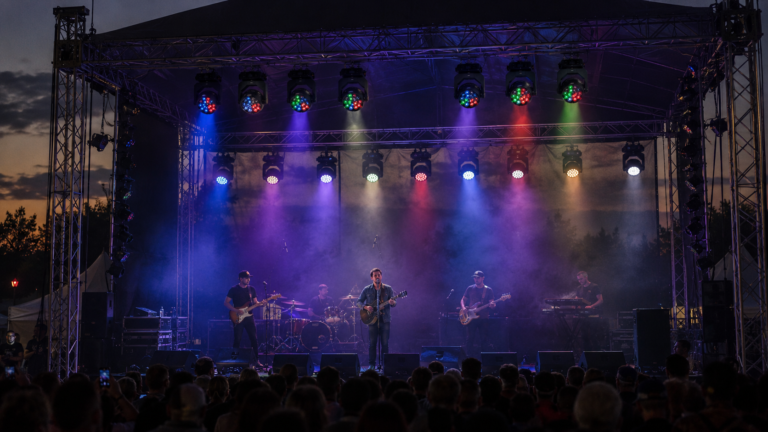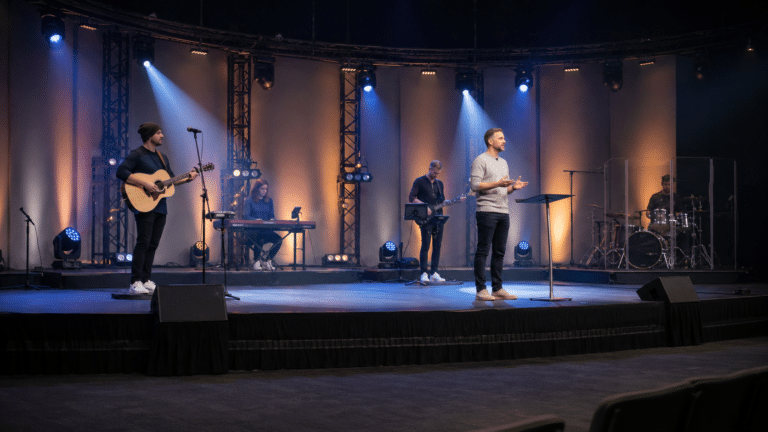




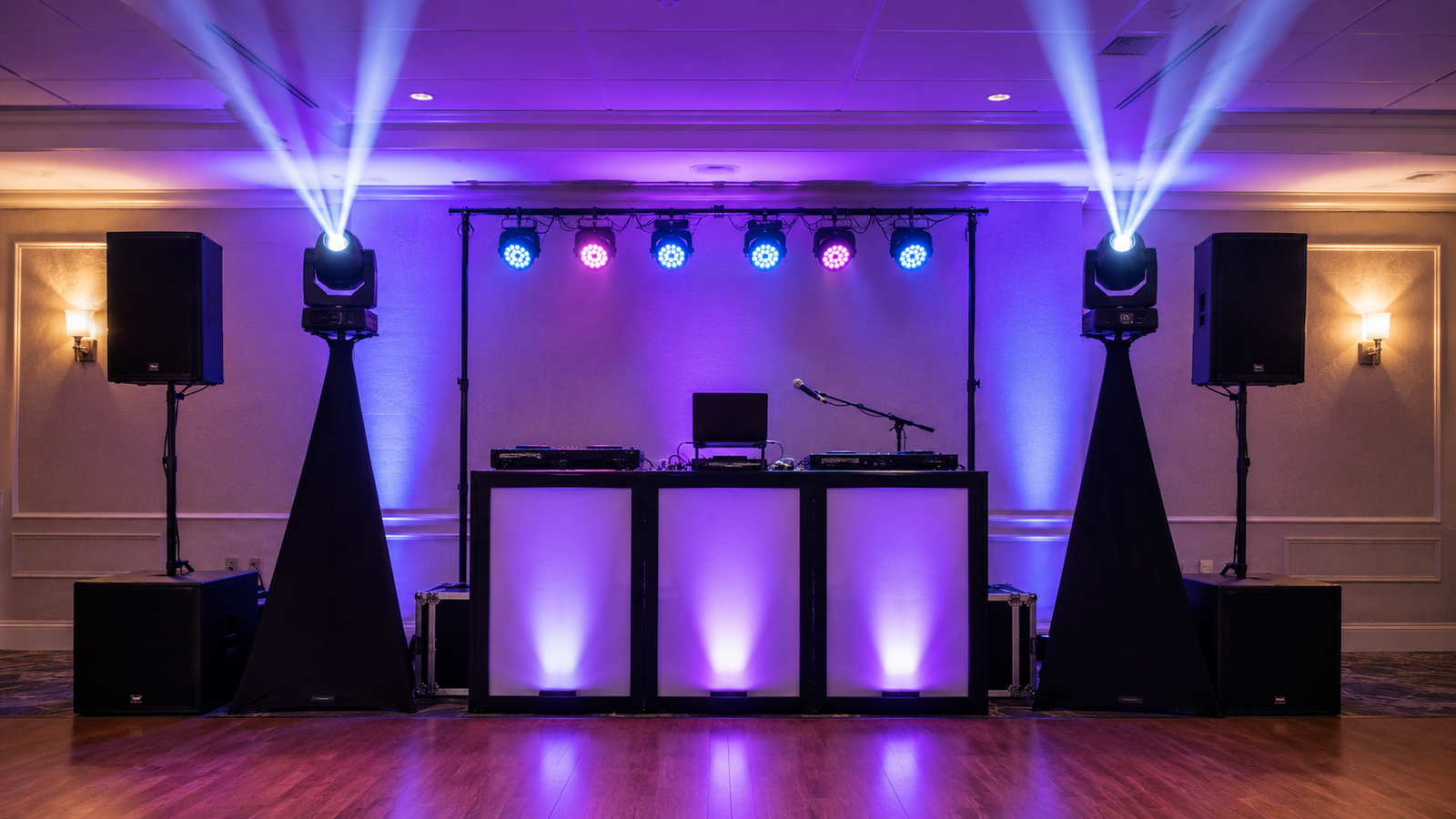
DJ moving head lights should be selected by the visual job they must perform, not by wattage or effect count alone. A mobile DJ may need compact fixtures that set up quickly, while a club or rental supplier may need a larger system with stronger output, repeatable positioning, multiple DMX modes, and serviceable transport protection. The right choice depends on venue size, ambient light, mounting position, control method, crew workflow, and the type of events the equipment must cover.
For many DJ systems, the most useful starting combination is a pair or small group of moving heads for symmetry, supported by PAR or wash fixtures for reliable room color. Beam fixtures create narrow aerial effects, spot fixtures project defined patterns, and wash fixtures cover wider areas. Some hybrid products combine several roles, but buyers should still confirm which job each fixture will perform before ordering.
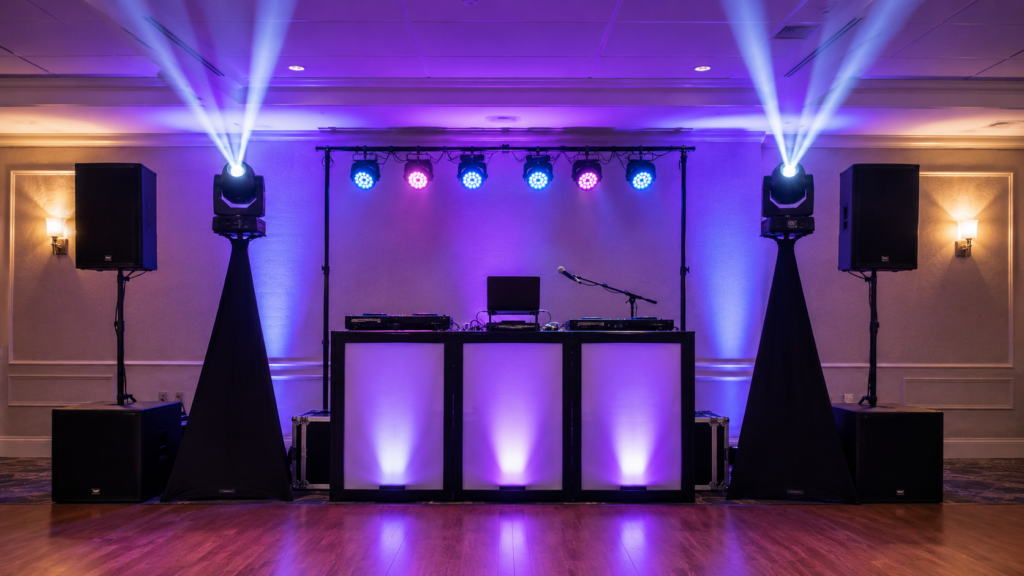
Start with the show requirement. Write down the events, room sizes, mounting positions, available power, control system, transport method, and typical setup time. Then assign the moving heads one or more clear functions.
Common functions include:
A fixture with many effects is not automatically the best choice. A simple unit with suitable output, useful optics, predictable control, and reliable positioning may be more valuable than a complex fixture that is slow to rig or difficult to program.
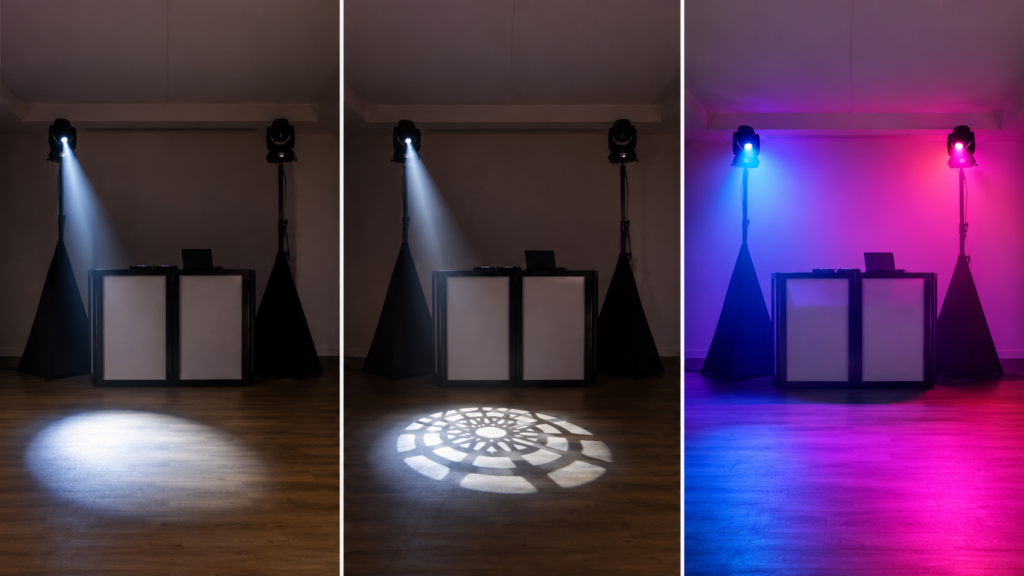
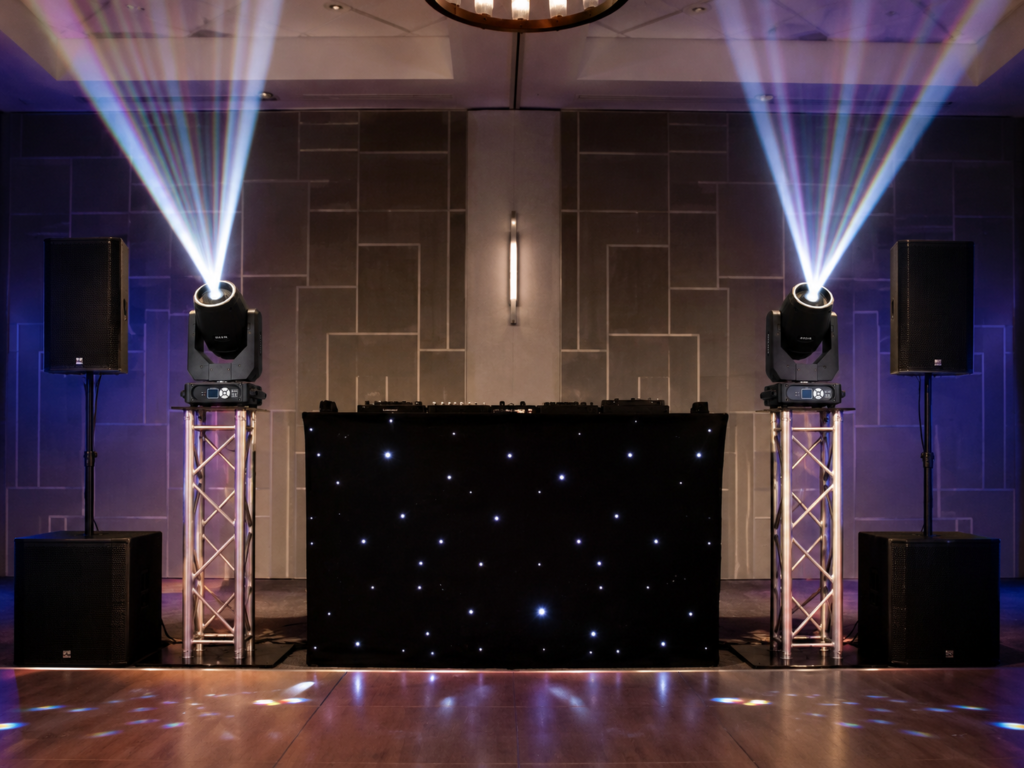
Beam fixtures produce a narrow, concentrated shaft of light. They are effective when haze is permitted and the goal is to create aerial movement, prisms, and energetic looks. They are usually strongest in medium and larger rooms where the beam has enough distance to become visible.
A beam fixture is not a substitute for general room wash. Without supporting wash or PAR fixtures, faces and room surfaces may remain dark even when the air is filled with effects.
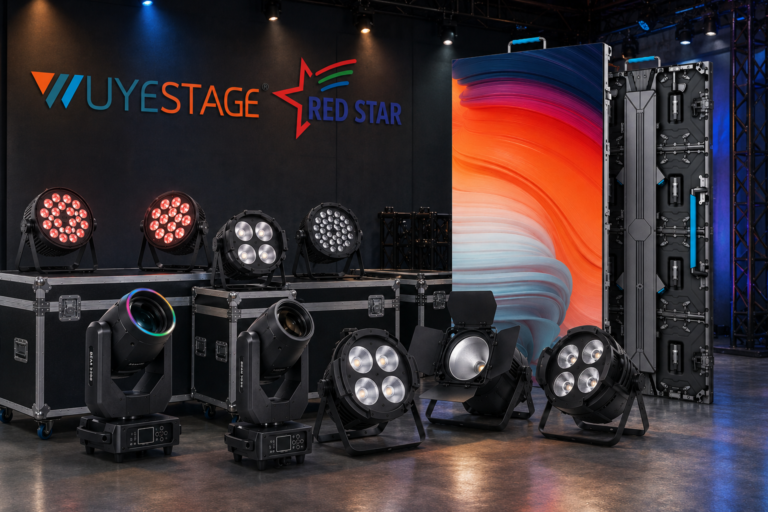
WUYESTAGE’s 295W beam moving head light provides a verified 275W or 295W lamp option, 13 colors plus white, 14 fixed gobos plus white, prism effects, adjustable strobe, and DMX, master-slave, sound, and automatic operation. Its concentrated effect role can suit clubs, event stages, and rental inventories when the buyer has confirmed throw distance, mounting position, haze policy, and local operating requirements.
Spot fixtures use a wider and more defined projected field than a beam fixture. They are useful for gobos, textured movement, logo-like patterns without claiming custom projection, and controlled highlights on dance floors or scenic areas.
When comparing spot fixtures, check focus, gobo type, projection clarity, edge quality, zoom if available, and the distance required to form a usable image. A spot that looks sharp in a small showroom may perform differently across a long venue.
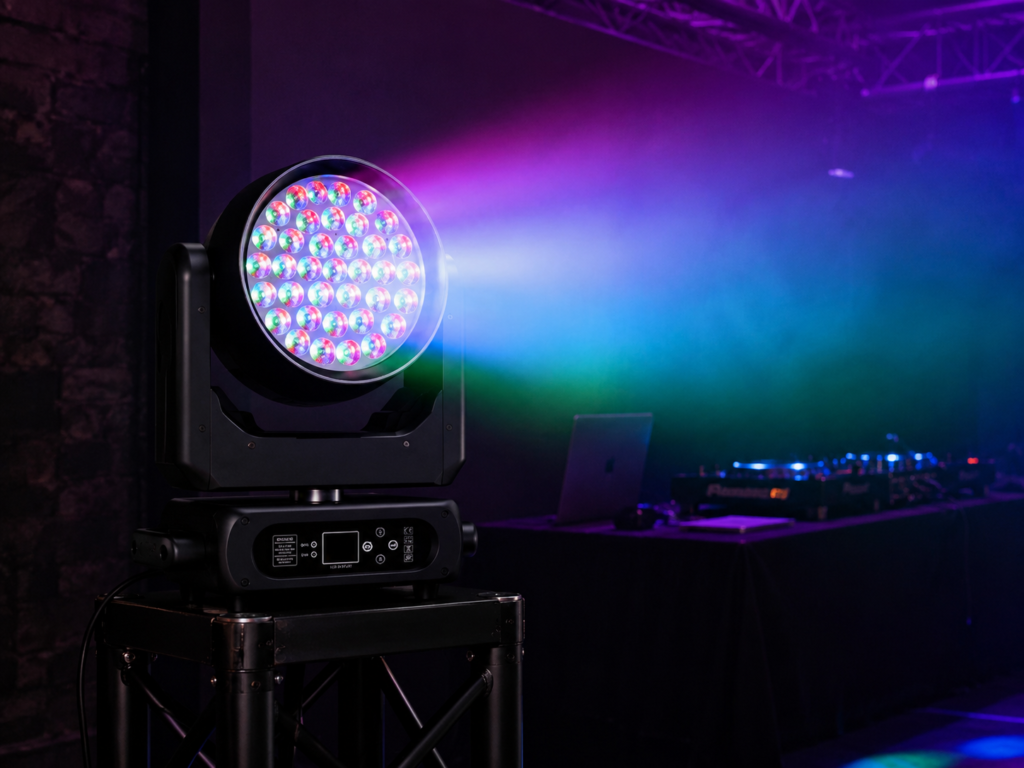
Wash fixtures provide broad color coverage. They are useful for dance floors, stages, walls, ceilings, and background lighting. Zoom is valuable when the same inventory must serve both compact rooms and wider event spaces.
The verified RG-812 LED beam wash light combines one 200W LED beam source with twelve 40W RGBW wash sources. The catalogue also confirms linear CTO from 2500K to 8000K, 34-channel DMX control, master-slave, automatic, and sound modes. It is a higher-capacity fixture, so buyers should evaluate its 800W machine power, 46 x 28 x 52 cm dimensions, and 26 kg net weight against transport, mounting, power, and crew requirements.
A hybrid can combine beam, spot, and wash functions. This may reduce fixture count, but it does not remove the need to compare each mode. Check whether the beam is narrow enough, the wash is even enough, the focus is usable, and transitions between functions match the intended show.
For a small mobile system, several lighter dedicated fixtures may be easier to transport than one large hybrid. For a fixed club or larger rental package, a multifunction fixture may reduce the number of positions needed. The right answer depends on the complete workflow rather than the feature list.
Output should be evaluated in the real visual environment. Venue size matters, but so do ambient light, LED screens, projection, wall color, ceiling height, haze, and the location of the fixtures.
Ask the supplier for:
Do not compare fixtures only by lamp or LED wattage. Optical efficiency, lens design, beam angle, color system, thermal management, and measurement method all affect the visible result.
For low ceilings and short throws, an extremely narrow beam can feel harsh and may create limited coverage. In wider rooms, a broad low-output fixture may disappear against screens or architectural lighting. Use the beam-angle guide to compare how angle and distance change coverage before selecting a beam product.
There is no universal quantity, but symmetry gives buyers a useful planning method.
| Application | Planning starting point | Main consideration |
|---|---|---|
| Compact mobile DJ setup | 2 moving heads | Fast setup, symmetry, low transport burden |
| Medium wedding or event room | 4 moving heads | Wider coverage and more varied positions |
| Club or entertainment venue | 4-8 moving heads | Repeatable zones, room architecture, programming |
| Larger event stage | Plot-based quantity | Throw, positions, sightlines, cameras, redundancy |
These are planning ranges, not fixed packages. Two fixtures can create a balanced left-right look, but four fixtures allow crossing movements and separate front and rear positions. Larger quantities only help when the venue has suitable mounting positions, control capacity, power, programming time, and safe access.
Before ordering a DJ moving head light pair, draw a simple plan showing the DJ booth, audience area, stage, truss or stands, ceiling, power points, and viewing directions. This exposes blind spots and prevents quantity decisions based only on photographs.
DMX gives the operator repeatable control over position, color, gobo, dimming, strobe, prism, and other functions supported by the fixture. It is the preferred approach when the show needs programmed scenes, synchronized movement, or integration with other stage lighting products.
Before purchase, confirm:
More channels provide finer control but consume more programming and universe capacity. A smaller channel mode may be practical for mobile work, while a full mode can be useful for installations and programmed productions.
Automatic and sound-active modes can support simple setups without a dedicated operator. Master-slave operation can synchronize compatible fixtures. However, these modes provide less precise control than a programmed DMX show.
Buyers should test sound response in the actual environment. A fixture reacting well in a quiet demo room may behave differently near subwoofers, crowd noise, or a loud booth monitor. Also confirm whether master-slave operation requires matching models, channel modes, firmware, or cable arrangements.
Moving heads are transported, handled, mounted, cabled, focused, and packed repeatedly. A useful buying comparison should therefore include the complete event cycle.
Record fixture dimensions and weight, then calculate the total for cases, clamps, safety cables, signal cables, power cables, stands, and controllers. Confirm whether one person can safely handle each packed unit and whether the cases fit the intended vehicle.
Check handle placement, base stability, mounting points, display access, power and signal connector orientation, and the time required to assign addresses. A visually impressive fixture can become inefficient when connectors are difficult to reach or menus vary across units.
Use suitable structures, approved hardware, secondary retention, and qualified personnel. Confirm load limits, stand or truss suitability, overhead clearance, public access, cable routing, and local requirements before operation. Do not treat product photographs as installation instructions.
Allow lamp cooling where applicable, protect lenses and moving assemblies, and inspect cables and hardware before packing. A consistent fixture ID and case position can reduce errors during the next setup.
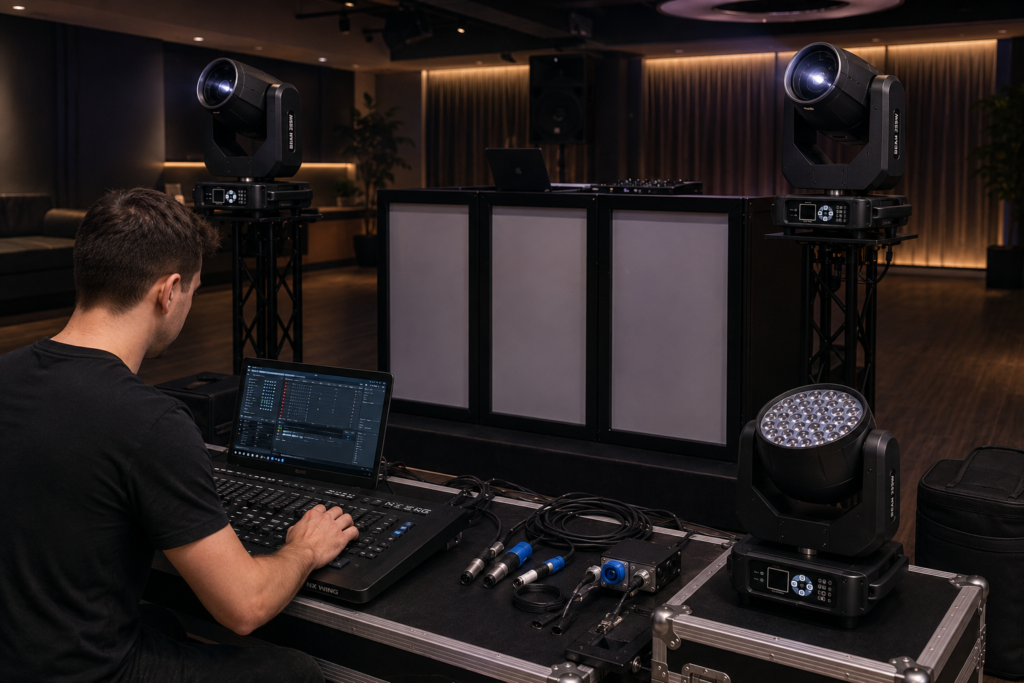
For rental companies and frequent mobile work, serviceability matters as much as effects.
Ask the supplier to confirm:
Do not assume an IP rating. If the event may be outdoors, verify the protection rating of the complete fixture and relevant connectors. An indoor fixture should not be exposed to rain merely because a temporary cover is available.
For nightclub beam-light selection, also consider continuous operating time, ambient temperature, fan noise, ceiling access, cleaning schedules, and how quickly a fixture can be removed for service.
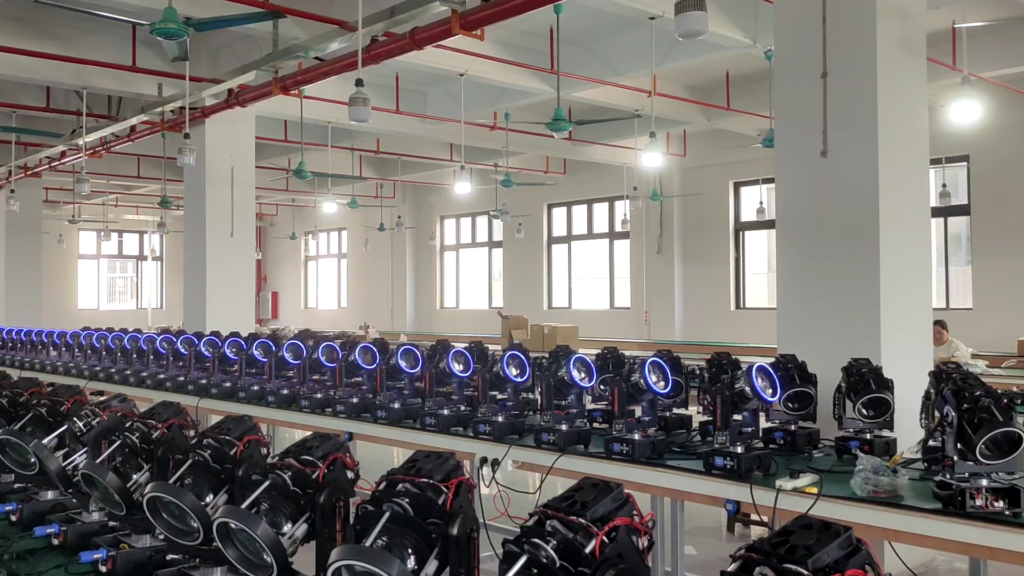
A sample test is especially useful for distributors, rental suppliers, and multi-unit installations. Use the same checklist for every candidate fixture.
Record the exact sample configuration. A later bulk order should match the approved source, optics, channel mode, connectors, accessories, firmware, labels, and packing unless changes are agreed in writing.
Send suppliers the following information when requesting a quotation:
The quotation should identify the exact model and ordered configuration. Confirm source, optics, color system, control modes, voltage, connectors, accessories, packing, and documentation instead of relying only on a product-family name.
Yes, when the fixture size, weight, output, control method, setup time, and effect type match the events. A compact pair may suit smaller mobile setups, while larger rental and club systems may require more fixtures and stronger control infrastructure.
Choose beam fixtures for narrow aerial effects, spot fixtures for defined patterns, and wash fixtures for broad color coverage. Many systems combine moving heads with PAR or wash fixtures so effects do not replace essential room and performer lighting.
Two fixtures are a common symmetry-based starting point for compact setups. Four can provide wider coverage and more varied programming. Final quantity depends on room size, positions, throw distance, effect goals, control capacity, and setup workflow.
DMX is not always necessary because some fixtures support automatic, sound, or master-slave modes. However, DMX provides more repeatable control over position, color, movement, and effects and is preferable for programmed shows.
Test output, optics, colors, movement, positioning, dimming, strobe, DMX channels, menu operation, power cycles, operating duration, connectors, mounting hardware, case fit, and the complete setup and pack-down workflow.
Only under conditions allowed by the confirmed complete-fixture protection rating and the approved installation plan. Do not expose an indoor fixture to rain. Outdoor electrical systems, structures, rigging, weather controls, and public safety should be reviewed by qualified professionals under applicable local requirements.
Planning a mobile DJ package, club installation, rental inventory, or event-stage upgrade? Send WUYESTAGE your venue sizes, mounting positions, throw distances, control method, local power standard, preferred effects, fixture quantity, case requirements, and delivery country. We can help your purchasing team compare suitable beam moving head lights, verified product configurations, sample checks, accessories, and packing options before a bulk-order quotation.
Do not publish this section as reader-facing article copy. Insert all six images at the stated positions. Prefer approved real WUYESTAGE product photographs whenever a fixture is identifiable. RG-119 source images already exist in the local product-material library. Before generating any image that identifies RG-812 or another specific model, confirm that an approved real source photograph is available; otherwise pause and request it from the user.