




Rental LED panels should be compared as working inventory, not as a one-time screen purchase. For an event company, the better system is usually the one that can be transported, assembled, tested, serviced and redeployed with predictable labor and limited downtime. A lower cabinet price can lose its advantage when it requires more cases, more connections, difficult repairs or a separate pool of incompatible spares.
This changes the buying question. Do not ask only, “What is the price per square metre?” Ask, “What will these rental LED panels require across repeated shows, and how quickly can the crew return them to service when something fails?”
The practical decision principle is simple: compare fleet value per completed event, not cabinet price alone. This guide provides a scorecard, a cabinet-format calculation and a sample acceptance protocol that rental buyers can use before placing a trial or bulk order.
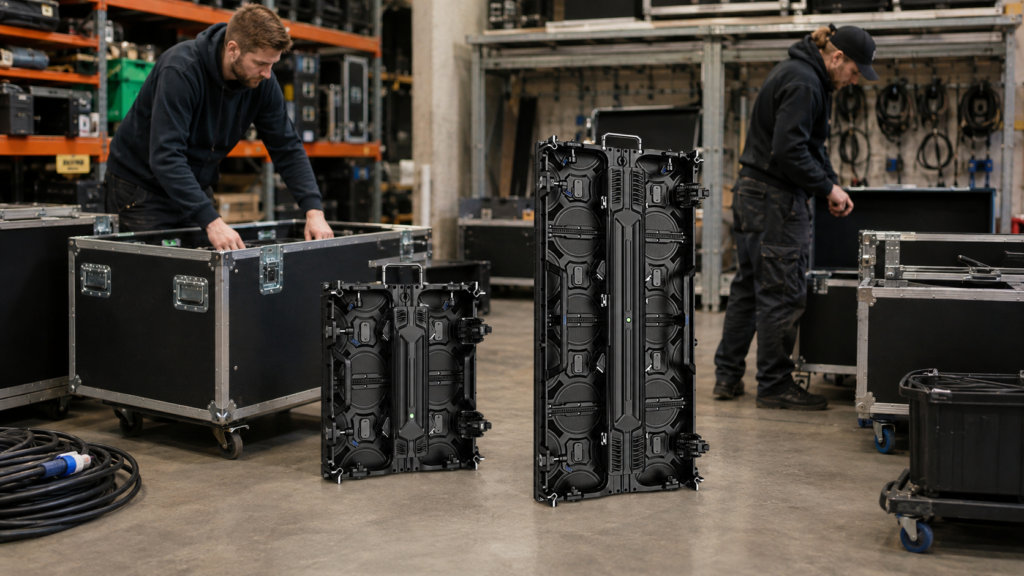
The purchase price of rental LED panels is visible on the first quotation. Several operational costs appear later: flight cases, crew time, spare components, bench repair, calibration, failed-show risk and inventory that cannot be mixed with an existing fleet.
A useful comparison does not need invented lifetime claims or a universal currency figure. Start with the cost categories that your own operation can measure:
Fleet cost per completed event =
  acquisition and shipping
  + packing and transport
  + setup and teardown labor
  + maintenance parts and bench labor
  + downtime and substitute-inventory cost
  + control, calibration and accessory overhead
  - expected residual value
  divided by completed revenue events
This is a planning model, not a supplier promise. Each rental company should use its own labor rates, route costs, event sizes, expected utilization and accounting period.
Professional conclusion 1: a small purchase-price difference matters less when one set of rental LED panels repeatedly reduces handling, connections, repair time or unavailable inventory.
Use the formula to compare complete rental LED panels for the same event requirement. Do not compare a cabinet-only quote with another quote that includes processors, structure, cases, cables and spares.
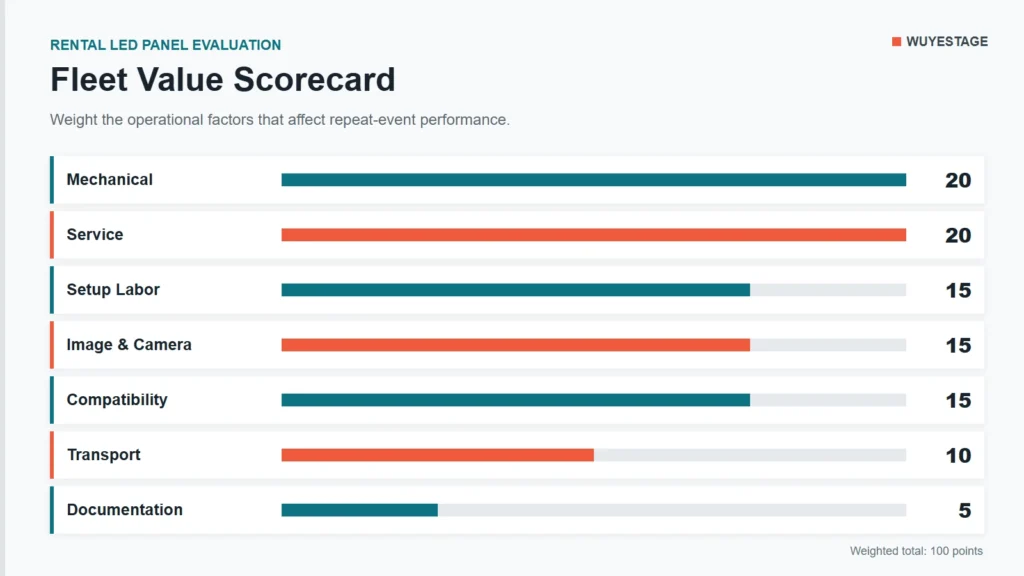
The following scorecard helps buyers compare rental LED panels through checkable evidence. The example weights total 100, but they are not universal. A touring supplier may assign more weight to transport and setup; a broadcast rental company may prioritize camera behavior and color consistency.
| Evaluation area | Example weight | What to verify |
|---|---|---|
| Mechanical repeatability | 20 | Locks, alignment, seams and flatness after repeated assembly |
| Service and downtime | 20 | Module, power, receiving-card and cabinet replacement workflow |
| Setup labor | 15 | Cabinet count, connection count, case handling and crew steps |
| Image and camera performance | 15 | Refresh configuration, grayscale, scan behavior, color and camera test |
| Fleet compatibility | 15 | Mechanical, electrical, firmware, calibration and accessory compatibility |
| Transport and packing | 10 | Case capacity, cabinet weight, loading sequence and protection |
| Documentation and supply scope | 5 | Packing list, spares, labels, configuration records and support boundary |
Score each area from 1 to 5 after the sample test, multiply by its weight and keep the test notes beside the score. A number without evidence is not useful. For example, a serviceability score should point to the measured replacement steps and the parts included with the sample.
The scorecard also prevents one attractive specification from dominating the decision. A high refresh-rate configuration does not compensate for poor mechanical alignment, and a light cabinet does not automatically reduce total labor if the proposed wall requires more pieces and connections.
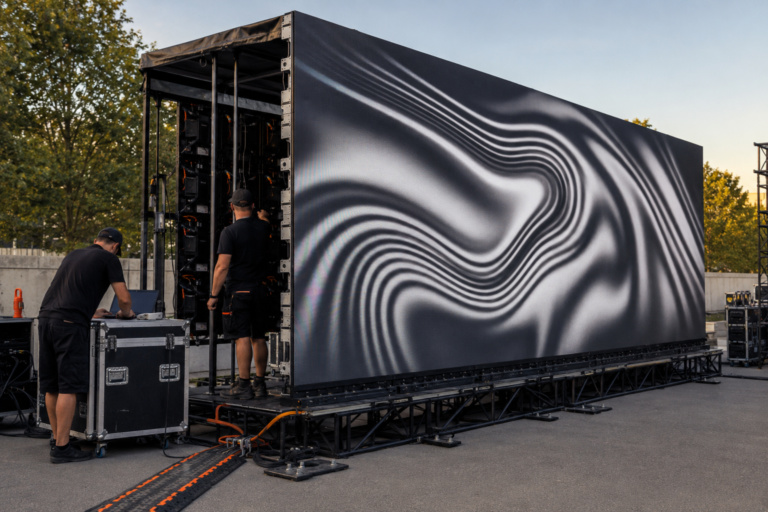
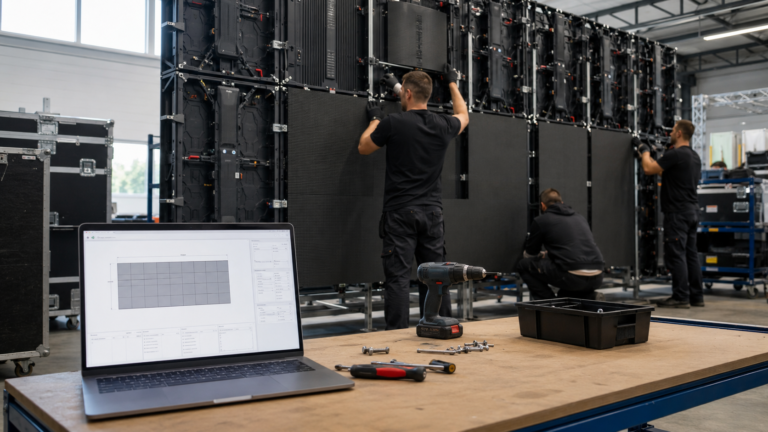
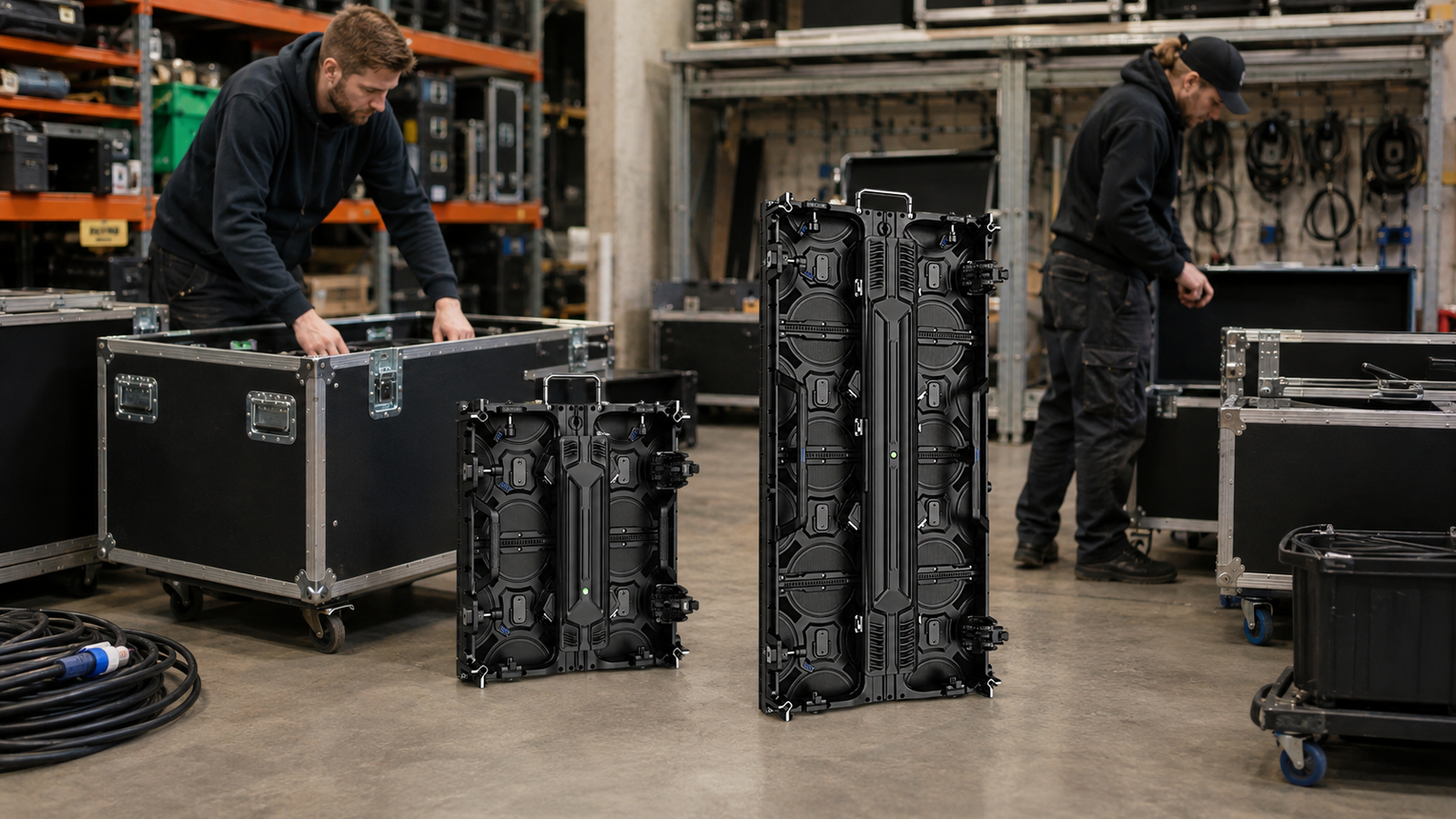
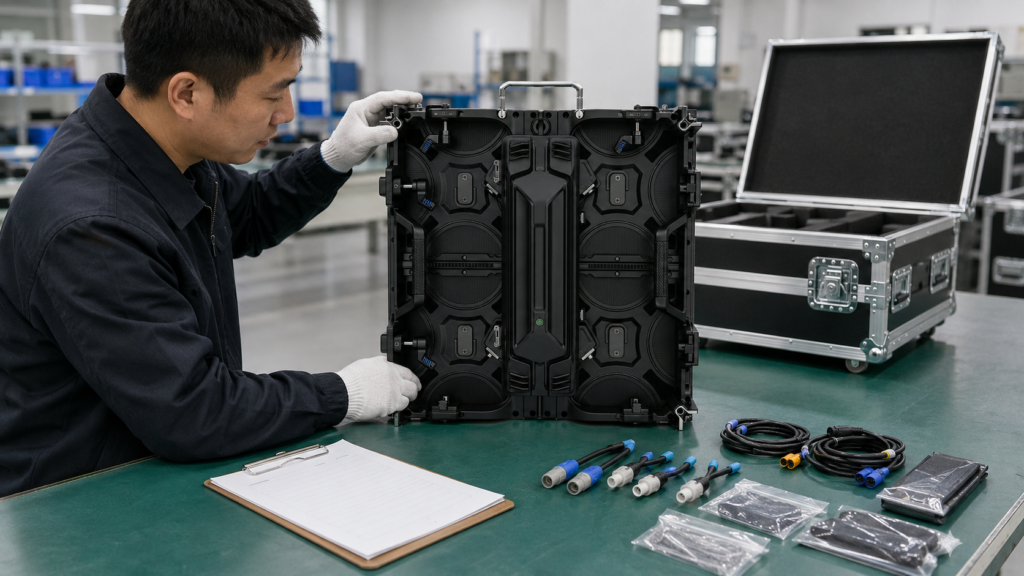
Crews do not evaluate rental LED panels in a product brochure. They unload cases, identify cabinets, assemble the wall, connect power and signal, map the processor, inspect seams and solve faults under a deadline.
Run the same representative build with each proposed set of rental LED panels. Record:
Do not turn one fast demonstration by an experienced supplier technician into a universal labor claim. Your own crew should repeat the build using the proposed labels, cases, cables and documentation.
Professional conclusion 2: cabinet size affects labor through the complete handling sequence, not through cabinet count alone.
This is why a larger cabinet can be faster for a standard rectangle but less flexible for unusual heights, corners or mixed event sizes. Case design, safe handling, available crew and the supporting structure remain part of the result.
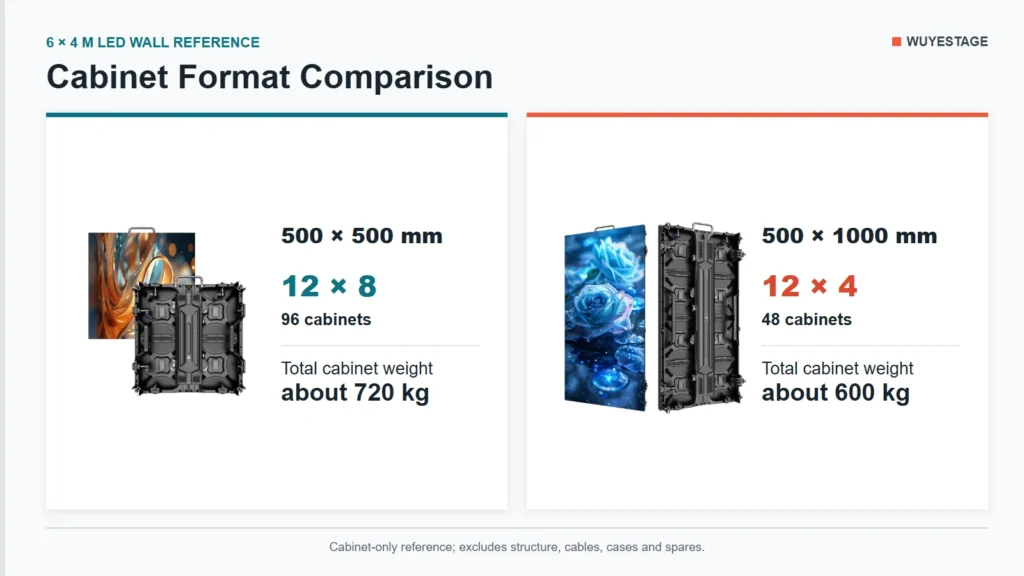
When comparing rental LED panels, consider a 6 m wide by 4 m high LED wall. A 500×500 mm format requires 12 cabinets across and 8 high, or 96 cabinets. A vertical 500×1000 mm format requires 12 across and 4 high, or 48 cabinets.
Using WUYESTAGE’s verified P3.91 reference weights, the 500×500 mm cabinets weigh about 7.5 kg each and the 500×1000 mm cabinets about 12.5 kg each. The cabinet-only totals are therefore approximately 720 kg and 600 kg respectively. Neither figure includes hanging hardware, structure, cables, cases, spares or other equipment, so neither is a final rigging load.
| 6 x 4 m wall | 500×500 mm | 500×1000 mm vertical |
|---|---|---|
| Cabinets across | 12 | 12 |
| Cabinets high | 8 | 4 |
| Total cabinets | 96 | 48 |
| Reference cabinet weight | 7.5 kg | 12.5 kg |
| Approximate cabinet-only total | 720 kg | 600 kg |
| Main operational advantage | Half-metre height flexibility | Fewer cabinets and connections |
| Confirm before ordering | Case count, labor and mixed-layout needs | Handling, case design and allowed orientation |
The calculation shows a real operational difference, but it does not prove that one format is always better. A rental company serving many small rooms may value half-metre height increments. A supplier building large rectangular walls repeatedly may value fewer cabinet connections.
When combining rental LED panels, matching pixel pitch is not proof that two cabinet sizes can share one fleet. Confirm locks, cabinet depth, module alignment, power, receiving cards, firmware, calibration, color, cabling and processor mapping before planning a mixed inventory.
Buyers can use the LED wall calculator to test other wall sizes before deciding how much of each format to stock.
Most professional rental LED panels can be serviced in some way. The commercial question is how much inventory becomes unavailable, for how long and with which spare parts.
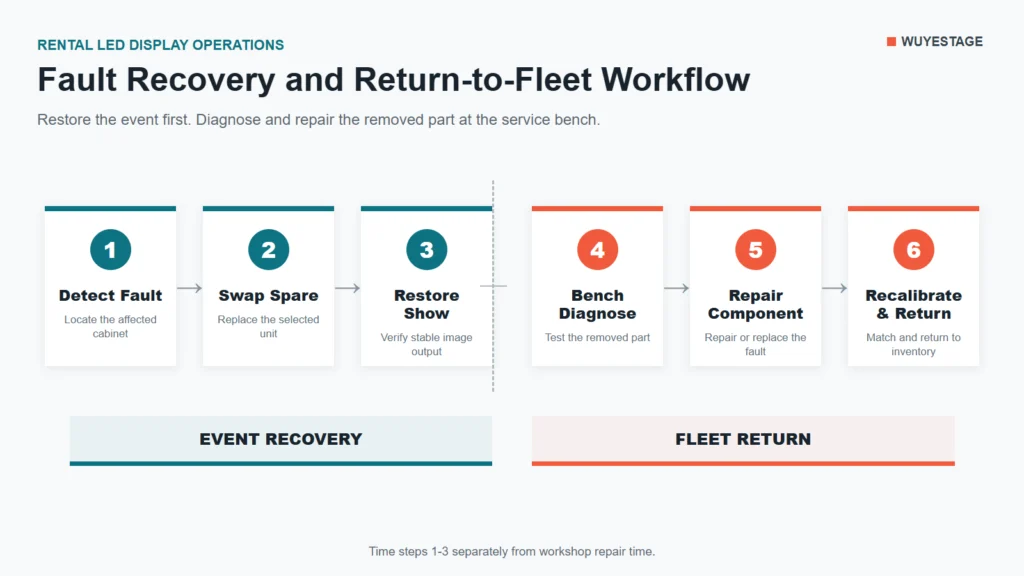
Create a fault-to-return workflow for the proposed rental LED panels:
Time the first three steps separately from the bench repair. Event recovery and final repair are different operational problems. A spare cabinet may restore the show quickly even when component diagnosis takes longer.
Build the spare list from the failure paths you can actually service. It may include LED modules, power supplies, receiving cards, signal cables, power jumpers and complete cabinets. The correct quantity depends on fleet size, event overlap, repair turnaround and the support agreement. Avoid presenting one universal spare percentage as fact.
Professional conclusion 3: the most valuable service feature is not merely access to a component; it is a verified path from visible fault to restored screen and then back to calibrated inventory.
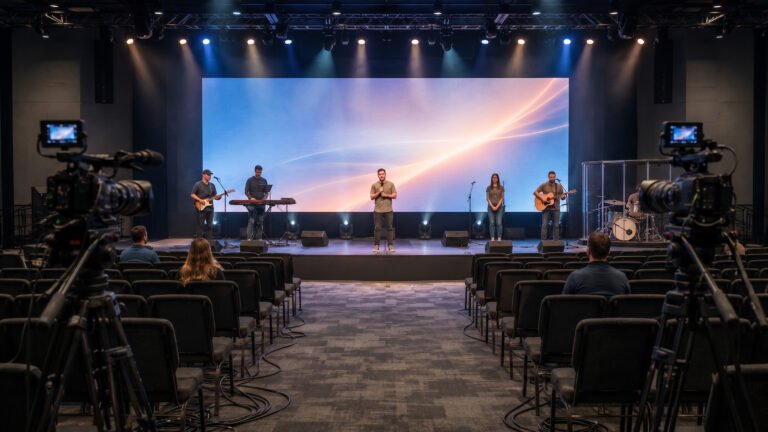
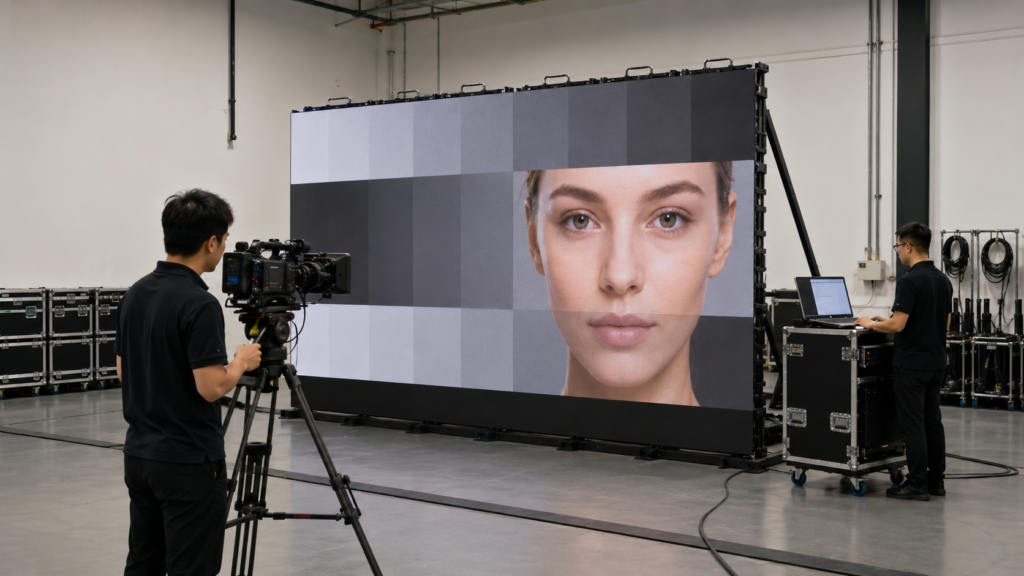
Rental LED panels may be used for live cameras, presentation graphics, IMAG, sponsor content or outdoor playback. Test the sample with the signal chain and cameras used in your projects.
WUYESTAGE’s verified rental LED reference includes a 7680 Hz refresh-rate configuration. That can support camera-facing applications, but it does not guarantee flicker-free footage by itself. Receiving cards, scan mode, grayscale, brightness, processor settings, frame rate, shutter, exposure and content must work together.
Use this acceptance sequence to evaluate rental LED panels:
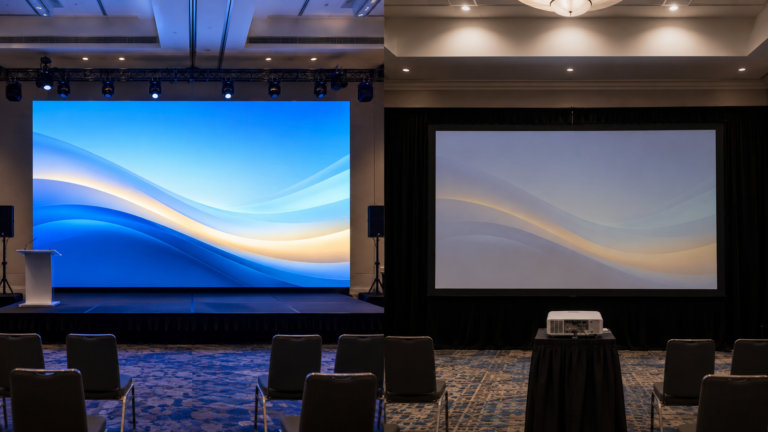
A bright showroom image is not enough. The purpose is to reproduce the operating conditions that create revenue and complaints for your company.
P3.91 is practical for rental LED panels, but it is not a universal answer. The verified reference lists 65,536 pixels per square metre and a viewing-distance planning reference above 4 m.
For outdoor projects, the verified P3.91 reference includes 3500-4200 cd/m2 brightness and IP65 protection. For indoor projects, the reference is 800-1200 cd/m2 and IP31. These values must remain attached to the ordered indoor or outdoor configuration rather than generalized to every cabinet.
The P3.91 500×1000 LED display is a fit when a rental buyer wants a larger cabinet format for repeated rectangular builds and the project conditions match the verified P3.91 range. The P3.91 outdoor 500×500 rental screen is a fit when half-metre layout flexibility and outdoor configuration are required. For protected indoor applications, buyers can compare the P3.91 indoor 500×1000 rental screen.
P3.91 may not be suitable when important viewers are much closer than the planning reference, small text must remain highly detailed at close range, the environment needs a different protection design, or the project requires a cabinet shape or service method not covered by the verified configuration.
Before ordering, confirm the exact LED package, brightness, IP configuration, refresh setup, cabinet hardware, processor, spares, cases, cables, voltage and support scope. WUYESTAGE currently offers CMS130, CMS260 and NovaStar VX1000 as project-dependent processor options for P3.91 systems; CMS130 is the primary recommended and highest-selling option in the verified sales configuration. Final selection still depends on pixel load, inputs, mapping, redundancy and workflow.
Use a written acceptance sheet so a successful demonstration can be repeated at delivery.
For project safety references, buyers can consult the ESTA Technical Standards Program while qualified professionals apply local structural, rigging and electrical rules.
| Test stage | Evidence to retain | Decision question |
|---|---|---|
| Identity and packing | Model labels, cabinet photos, packing list and case allocation | Is the delivered configuration the approved one? |
| Mechanical build | Crew time, lock notes, seam photos and cabinet count | Can the crew build it repeatedly without unusual correction? |
| Power and signal | Cable map, voltage, processor file and backup route | Is the complete system scope documented? |
| Image and camera | Test files, camera settings and recorded clips | Does it perform under the buyer’s real content and cameras? |
| Fault recovery | Timed replacement steps and spare-parts list | Can the event wall be restored quickly? |
| Return to fleet | Firmware and calibration records | Can the serviced part rejoin inventory consistently? |
Reject or pause an order for rental LED panels when the sample differs from the quotation, compatibility is assumed but not demonstrated, outdoor claims are not tied to the ordered configuration, the spare scope is unclear, or the camera test cannot be reproduced.
When comparing rental LED panels, check the complete fleet workflow: mechanical repeatability, setup labor, service time, spare parts, transport, camera performance, compatibility, documentation and total supplied scope. Cabinet price is only one input.
No. They can reduce cabinet and connection count on standard rectangular walls, but actual labor also depends on handling, case design, crew, structure, alignment, cabling and test procedures. The 500×500 format may provide more layout flexibility.
Only after the supplier verifies mechanical and electronic compatibility. Matching pixel pitch alone does not confirm locks, depth, modules, power, receiving cards, firmware, calibration, color or mapping compatibility.
There is no universal percentage. Plan spares around fleet size, concurrent events, failure paths, repair turnaround, shipping distance and support terms. Confirm modules, power supplies, receiving cards, cables and complete spare cabinets as separate needs.
No. It can support camera-facing work, but the receiving system, scan mode, grayscale, brightness, processor, frame rate, shutter, exposure and content must be tested together.
Provide target screen sizes, indoor or outdoor use, viewing distance, installation method, camera requirements, event schedule, expected utilization, cabinet preference, processor inputs, voltage, destination, cases, accessories, spare scope and required support.
The strongest purchase of rental LED panels is not the cabinet with the most attractive isolated specification. It is the system your crew can deploy repeatedly, recover quickly, keep visually consistent and support with a manageable pool of cases, cables and spares. Buyers can compare available configurations on the rental LED display category page.
Contact WUYESTAGE with your common screen sizes, environment, camera workflow, destination and expected fleet use. We can help compare P3.91 cabinet formats and prepare a project-specific system and sample-check plan before a bulk order.