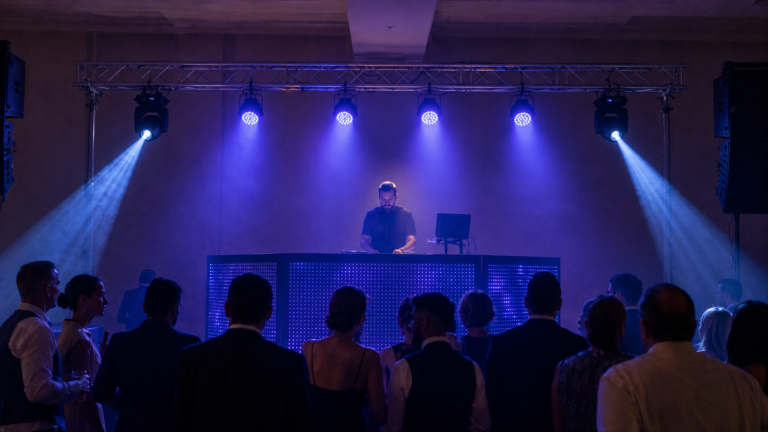





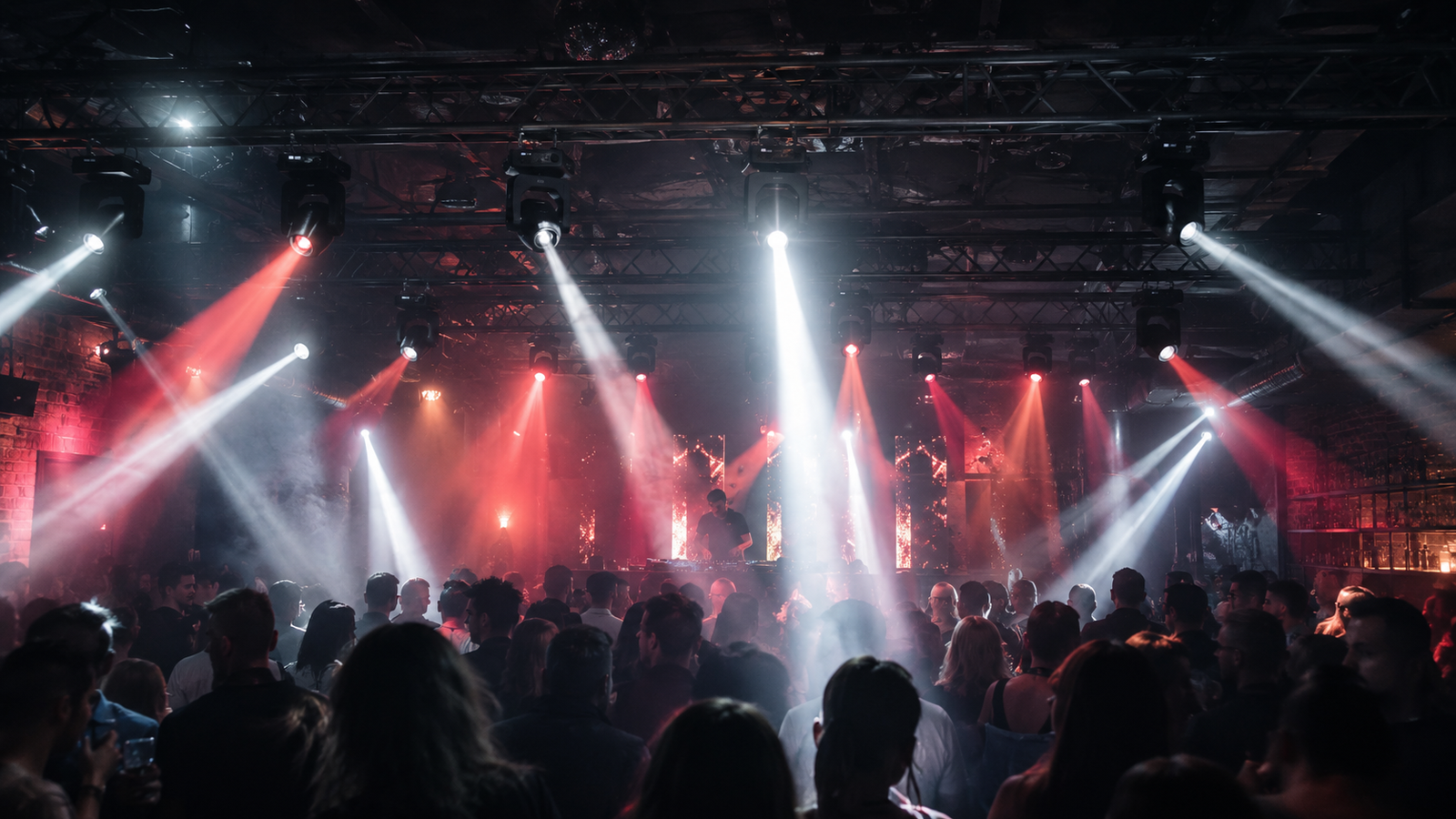
Moving head beam lights can give a nightclub the sharp aerial lines, fast sweeps, prism bursts, and synchronized movement that make a dance floor feel energetic. However, choosing a fixture only by lamp wattage or price can lead to weak coverage, uncomfortable brightness, difficult programming, or higher maintenance costs.
The right nightclub fixture depends on the room, not just the product brochure. Ceiling height, throw distance, dance-floor dimensions, haze level, control system, operating hours, and installation position all affect the final result. Buyers also need to consider reliability, spare parts, packing, and consistency when ordering multiple units.
This guide explains how to choose moving head beam lights for nightclubs and which specifications matter before requesting a quotation.
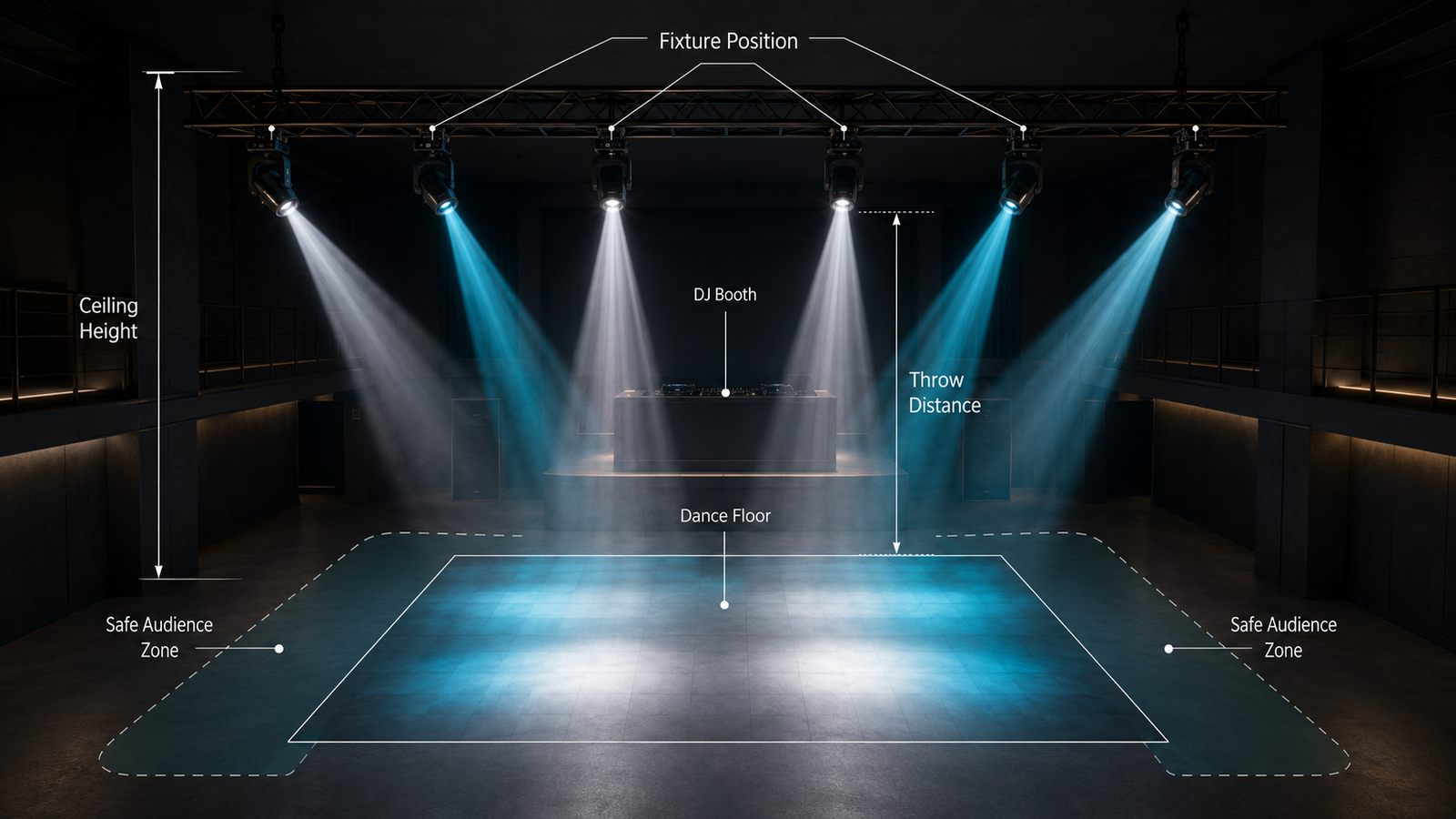
Before comparing models, record the dimensions of the lighting area. A supplier or lighting designer should know:
A compact club with a low ceiling does not need the same beam system as a multi-level venue with a high central truss. In a low room, an extremely tight and powerful beam may become uncomfortable when aimed toward guests. The programming will also need smaller tilt ranges and carefully controlled dimmer values.
In a larger nightclub, fixtures must remain visible across longer distances and compete with LED screens, wash lights, strobes, and ambient lighting. More output and stronger optical performance may be justified, but the layout still determines how many fixtures are required.
Plan the positions first, then select the output class and quantity. This avoids buying powerful fixtures that cannot be used effectively in the available space.
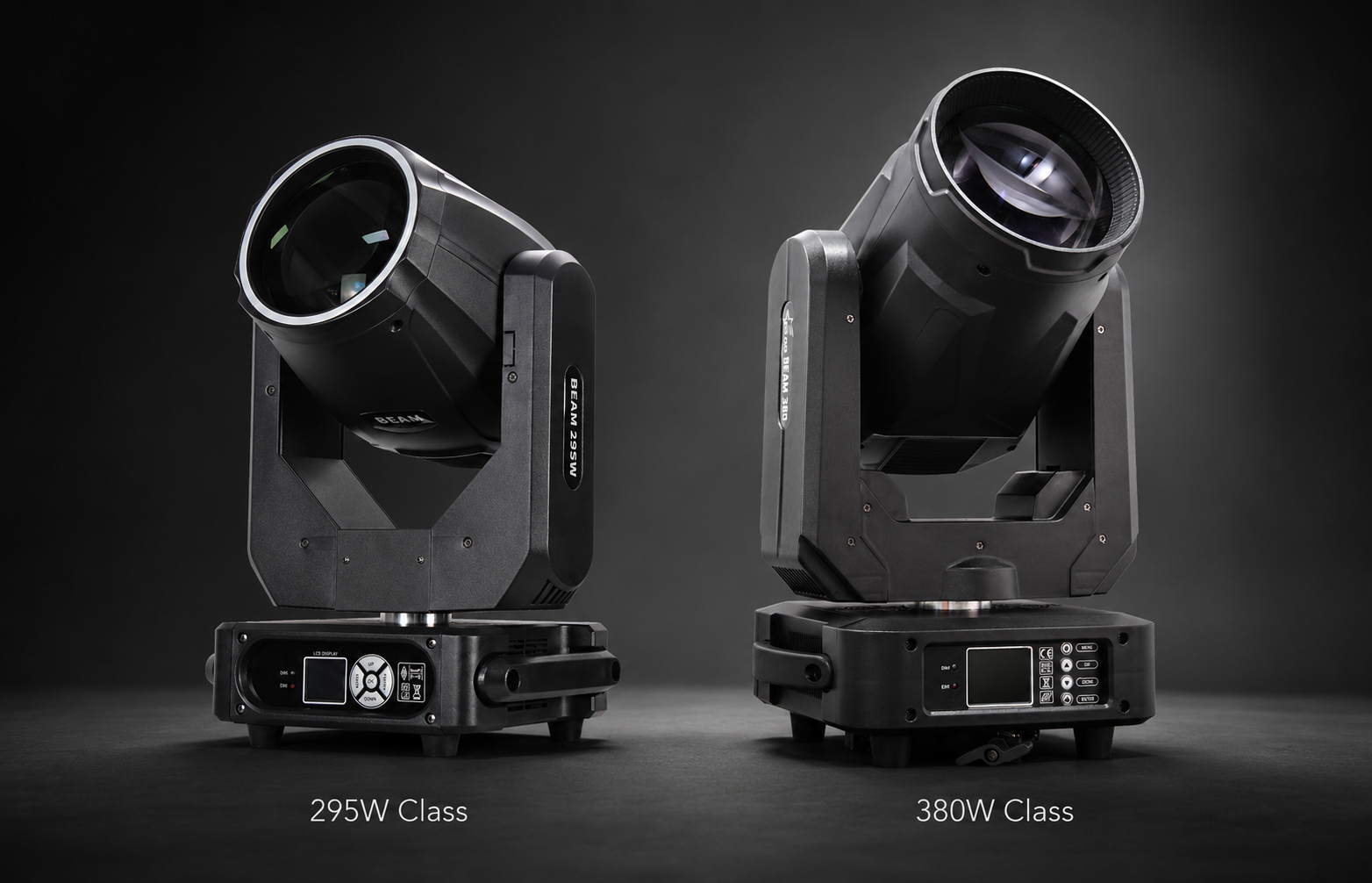
Beam fixtures create impact by concentrating light into a defined shaft. The apparent strength of that shaft depends on optical efficiency, beam angle, haze, ambient light, and throw distance. Wattage alone does not describe the final effect.
For a medium nightclub with moderate ceiling height, a 295W-class beam moving head can provide a practical balance of output, effect variety, fixture size, and purchasing cost. The WUYESTAGE RG-119 uses a 275W or 295W high-brightness bulb and is designed for clubs, rental stages, concerts, and entertainment venues.
For a larger room, a high truss, or a design with longer cross-room throws, buyers can also compare a 380W-class fixture such as the RG-128 PLUS. The larger model should be evaluated against the actual mounting distance and the venue’s other lighting sources rather than selected only because the wattage number is higher.
Beam angle is another important part of this decision. Narrow beams stay visually defined over distance, while wider effects can feel fuller at shorter range. For a deeper comparison, read our guide on how to choose the right beam angle.
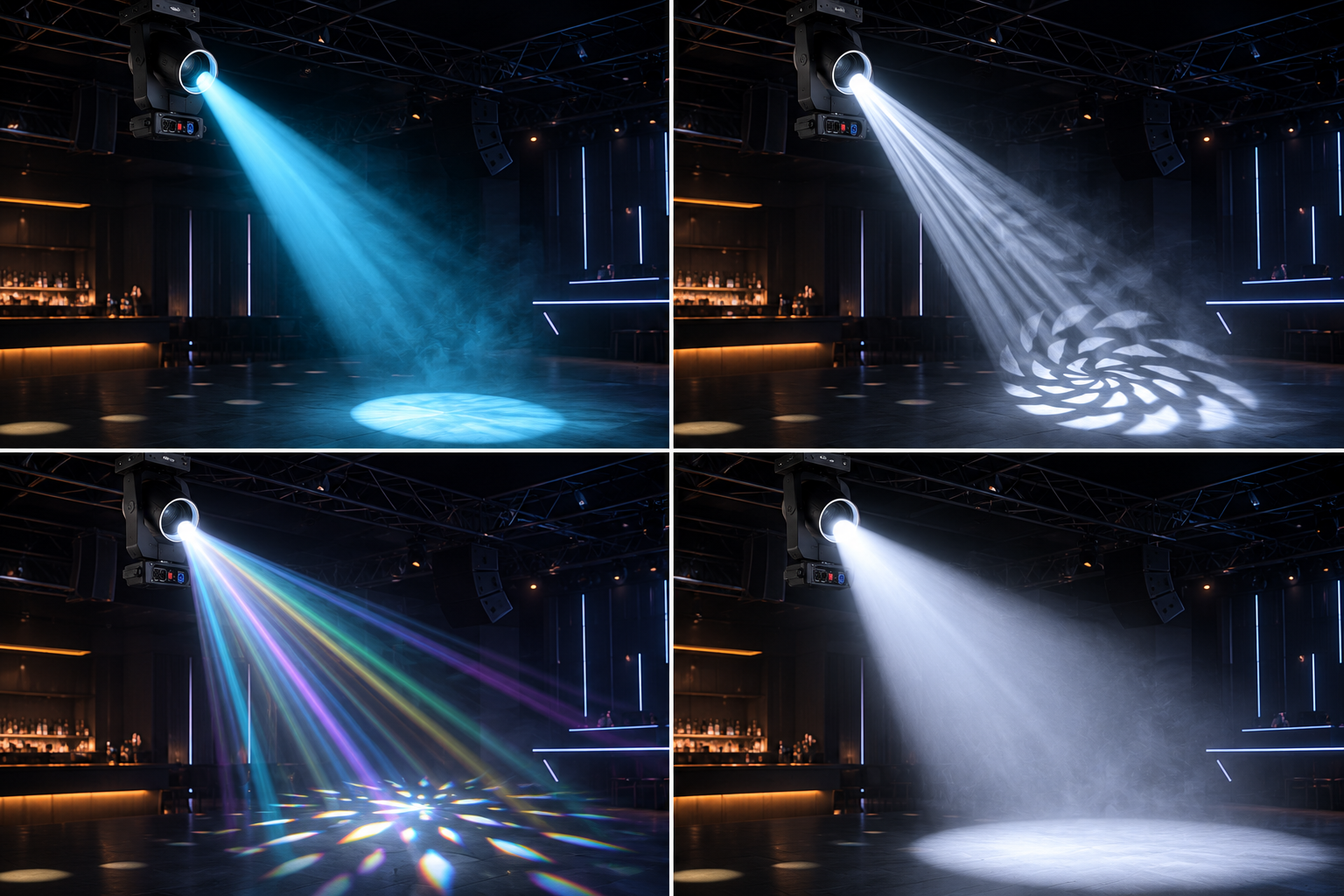
A nightclub needs enough visual variety to support different music styles and event formats. Fixed colors and gobos allow the operator to change the mood without adding another fixture type.
The RG-119 includes 13 colors plus white and 14 fixed gobos plus white. This gives programmers a useful library for clean beams, colored chases, patterned aerial effects, and music-synchronized sequences. When comparing other fixtures, ask for a photo of the actual color and gobo wheels instead of relying only on a general feature list.
Prisms multiply one beam into several beams, creating a larger effect from a single fixture. This is especially useful above a dance floor, where rotating prism effects can fill the room during a musical peak.
The RG-119 supports a 16-facet prism and a combined 8+16+24 prism configuration. Its gradual frost function can widen and soften the output for a different look. Buyers should confirm which prism configuration is included in the quoted version because factories may offer several configurations under a similar product name.
Fast movement creates energy, but smooth low-speed movement is equally important. Nightclubs often use slow sweeps during opening hours or lounge sessions and faster chases later in the night.
The RG-119 provides 540-degree pan and 270-degree tilt. During a sample test, check whether several fixtures return to the same position after repeated movement. Also inspect noise, vibration, brake behavior, and movement at low speed. Consistent positioning matters when multiple units are programmed as a symmetrical group.
Professional nightclub installations normally use DMX control. Confirm the channel modes, DMX chart, addressing method, and compatibility with the venue’s console or software before ordering.
The 295W RG-119 provides 18- and 22-channel modes, while its control options include DMX, master-slave, sound, and auto operation. DMX offers the best control for programmed shows. Sound and auto modes can be useful for simple rooms or backup operation, but they should not replace a properly designed control workflow in a venue with scheduled performances.
There is no universal number of beam lights for a nightclub. A small room may create a strong effect with four carefully placed fixtures, while a larger venue may need eight, twelve, or more to build symmetrical fans, crossing beams, and layered movements.
Use these planning principles:
It is often better to install a smaller number of reliable fixtures in useful positions than to fill the ceiling with low-cost products that are difficult to maintain. Ask the supplier to review a simple venue drawing before confirming the quantity.
Nightclub lights may run for many hours several nights per week. Fans, heat, and dust therefore matter more than they do in occasional-use installations.
Ask how the fixture manages heat and whether fans are temperature controlled. Listen to a powered sample in a quiet room, especially if the fixture will also be used during dining, lounge, or private-event periods. Check the air path and determine how easily filters, lenses, and fans can be cleaned.
Regular cleaning is essential because haze fluid residue and dust can collect on optical parts and cooling channels. A maintenance schedule should include lens cleaning, fan inspection, movement checks, DMX testing, and examination of clamps and safety cables.
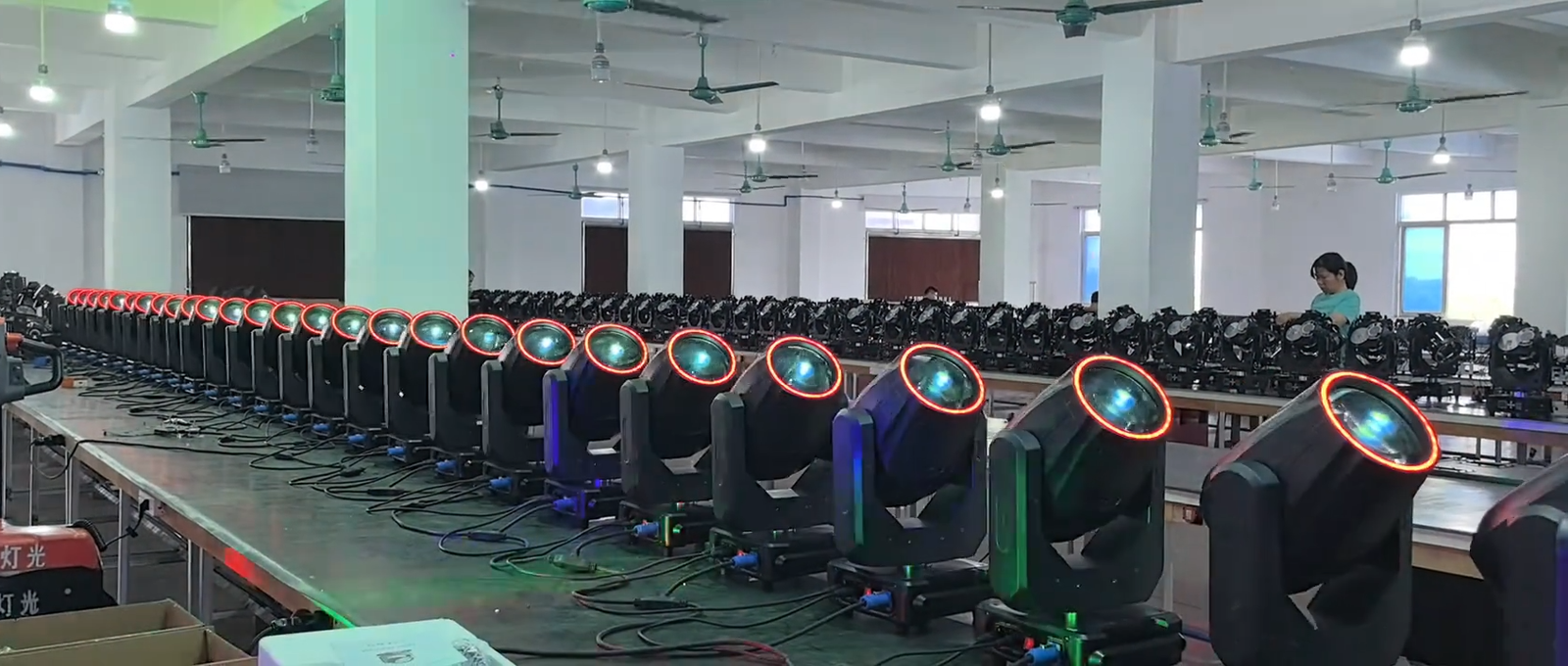
For a nightclub, a failed fixture is visible to every guest. For a distributor or installer, repeated failures also create travel, labor, and spare-parts costs.
Before placing a bulk order, request a sample and test:
WUYESTAGE can perform pre-shipment function testing, including the lamp source, color wheel, gobo wheel, prism, movement, strobe, frost, and DMX response. For a multi-unit order, buyers should also agree on inspection criteria and ask how batch consistency is controlled.
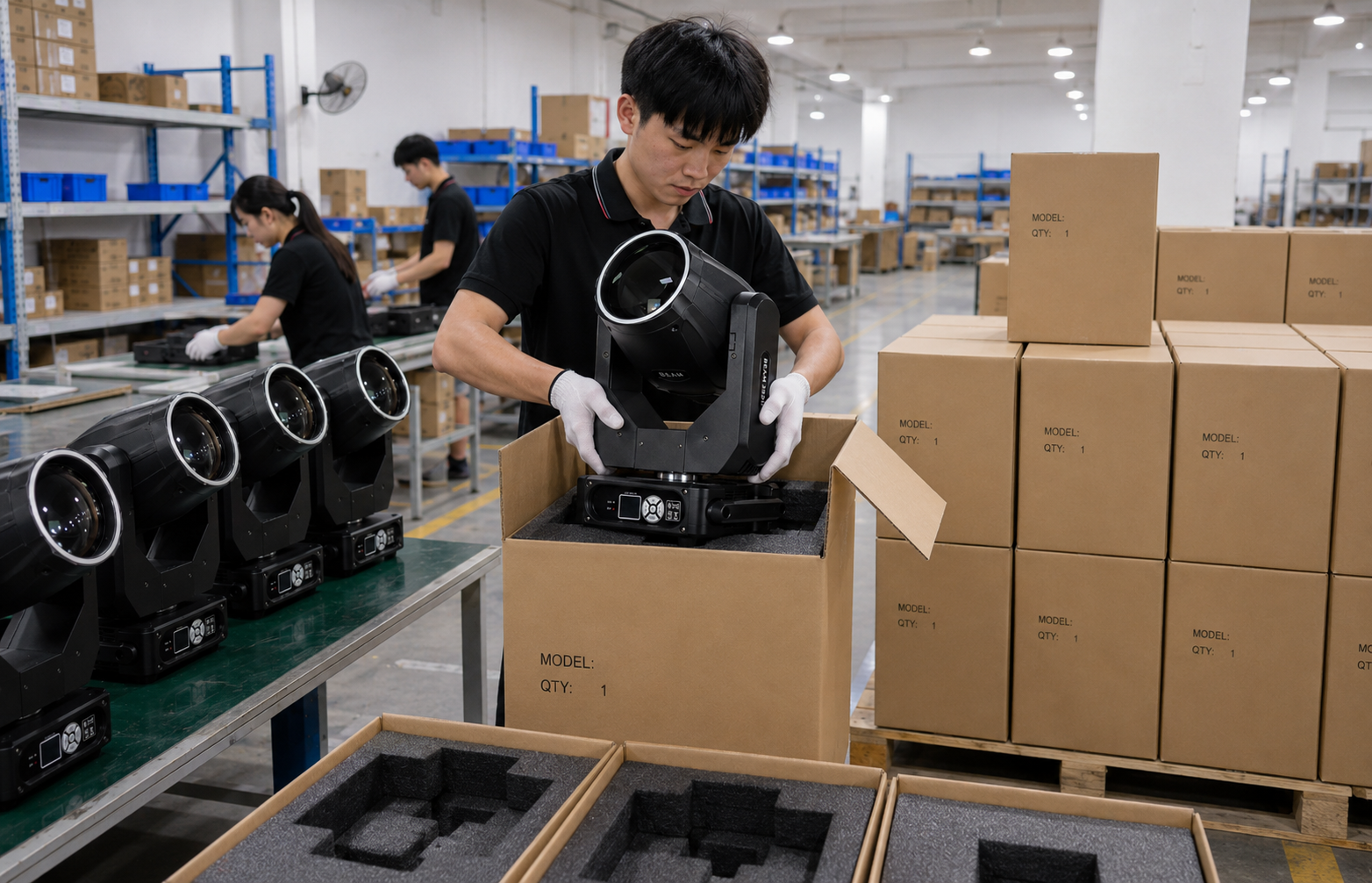
The lowest quotation is not always the lowest project cost. A nightclub buyer should include freight, installation, clamps, safety cables, signal distribution, spare parts, replacement lamps where applicable, maintenance labor, and after-sales response.
Packing is particularly important for international orders. The RG-119 standard carton is one unit per carton, with a listed carton size of 53.5 x 37.5 x 40.5 cm and gross weight of approximately 14.5 kg. Flight-case packing can be discussed for buyers who need frequent transport or stronger protection.
For long-term projects, ask whether the supplier can provide the same configuration in repeat orders. Stable specifications, appearance, firmware, and accessories make expansion and maintenance easier.
Neither power class is automatically better. The suitable choice depends on the room.
Choose a 295W-class beam moving head when the venue is small to medium, mounting distances are moderate, and the project needs a flexible balance of beam output, gobos, prisms, movement, and budget. The RG-119 is a practical reference for this type of installation.
Compare a 380W-class beam moving head when the venue has higher mounting points, longer throws, stronger competing light sources, or a design that requires a more dominant beam presence. A sample test in the real venue, or a test using the planned throw distance, is the best way to confirm the decision.
You can review the available Beam Moving Head Lights and compare 295W and 380W options for your project.
A 295W-class fixture can be a practical starting point for many small and medium clubs, but the final choice depends on ceiling height, throw distance, haze, ambient light, and installation position. Test the fixture at the intended distance before ordering a full set.
Small venues may begin with four units, while larger clubs may use eight, twelve, or more. Quantity should be based on fixture positions and the lighting scenes the programmer needs, not on floor area alone.
Sound-active mode is useful for simple operation, but DMX control is recommended for professional venues. DMX allows repeatable cues, synchronized movement, controlled brightness, and safer beam positions.
Compare real output at the planned distance, beam angle, colors, gobos, prisms, frost, pan and tilt quality, DMX modes, cooling, noise, packing, spare parts, and supplier testing. Confirm the exact configuration in writing.
Yes, but the lighting designer must account for differences in output, color, movement, and beam appearance. Using matching fixtures in symmetrical positions usually makes programming easier. Different power classes can be assigned to separate zones when the design requires them.
For small and medium nightclub projects, the WUYESTAGE RG-119 295W Beam Moving Head is a versatile option with 13 colors plus white, 14 fixed gobos plus white, multiple prism effects, gradual frost, 18/22-channel DMX modes, and 540-degree pan with 270-degree tilt. It is suitable for nightclub installations, event rental, concerts, and stage projects.
For larger venues or longer throw distances, ask WUYESTAGE to compare the RG-119 with the RG-128 PLUS 380W Beam Moving Head based on your layout, mounting height, quantity, and required effects.
Send WUYESTAGE your nightclub dimensions, ceiling or truss height, fixture positions, target quantity, control system, and a few venue photos. We can help you compare 295W and 380W beam moving heads, confirm the required configuration, and prepare a quotation for a sample or bulk order.
View our Beam Moving Head Lights or contact WUYESTAGE with your project details.